Jonathan Franzen Reading Order: Where to Start
This curriculum moves from Franzen's most accessible and celebrated novel into his denser, more ambitious fiction, and finally into his essay collections where his literary and cultural thinking is laid bare. Each stage builds familiarity with his voice, themes (family dysfunction, technology, nature, American society), and prose style before asking more of the reader.
The Entry Point
BeginnerGet hooked on Franzen's voice and his signature blend of social satire, family drama, and emotional realism — with his most beloved and readable novel.
▸ Study plan for this stage
Pace: 4–5 weeks, ~25–30 pages/day — allowing time to linger on Franzen's dense, layered prose without rushing the emotional payoff of the Lambert family's unraveling
- The Dysfunctional Family as Social Microcosm: The Lambert family serves as Franzen's lens for examining broader American anxieties — consumerism, decline, nostalgia, and the gap between aspiration and reality
- Free Indirect Discourse & Deep-POV Narration: Franzen burrows deep into each character's consciousness, blending third-person narration with a character's inner voice so seamlessly that the reader inhabits multiple, often contradictory worldviews
- Social Satire vs. Emotional Realism: Franzen simultaneously mocks and mourns — skewering corporate culture, pharmaceutical capitalism, and bourgeois self-delusion while generating genuine empathy for flawed, suffering people
- The 'Corrections' as Metaphor: The title operates on multiple levels — neurological correction (Alfred's Parkinson's), financial correction (market crashes), and the family's desperate, often failed attempts to 'fix' themselves and each other
- Generational Conflict & the American Midwest: The tension between the stoic, duty-bound WWII-era values of Alfred and Enid and the self-expressive, therapy-saturated lives of their Boomer/Gen-X children maps onto a broader cultural rupture in late-20th-century America
- The Body in Decline: Alfred's Parkinson's disease is not merely a plot device — it is a sustained meditation on bodily autonomy, shame, masculinity, and the terror of losing control of one's own mind
- Structural Polyphony — Five Voices, One Story: The novel's architecture, giving each Lambert a dedicated section, forces the reader to hold multiple, self-serving perspectives simultaneously and resist settling on a single 'truth'
- The Christmas Reunion as Narrative Engine: The deferred, dreaded family gathering creates a slow-burn dramatic tension that unifies the novel's sprawling timelines and character studies
- How does Franzen use each Lambert sibling's section (Gary, Chip, Denise) to critique a specific strand of late-1990s American culture, and what does each character's failure or compromise reveal about that critique?
- In what ways does Alfred Lambert's Parkinson's disease function as both a literal illness and a symbolic force in the novel — what ideas about control, masculinity, and decay does it embody?
- How does Franzen balance satirical distance with emotional intimacy? Identify at least one scene where you felt both mocked and moved simultaneously, and analyze how he achieves that dual effect.
- What does the novel's title, 'The Corrections,' mean across its different narrative layers — neurological, financial, familial, and moral — and how do these meanings converge in the final section?
- How does Enid Lambert's perspective challenge or complicate the reader's sympathy? Is she a victim of her circumstances, a villain of her family's story, or something more ambiguous?
- What role does setting play — particularly the contrast between St. Jude (the Midwestern hometown) and the East Coast cities where the children live — in dramatizing the novel's themes of rootlessness and belonging?
- Character Voice Journal: After finishing each major character section (Gary, Chip, Denise, Alfred, Enid), write one paragraph in that character's voice — mimicking their diction, obsessions, and self-justifications. This trains you to hear Franzen's distinct free indirect style for each POV.
- Satirical Target Mapping: Create a two-column list as you read. In column one, note every institution or cultural trend Franzen satirizes (e.g., pharmaceutical companies, dot-com mania, academia, cruise-ship tourism). In column two, write one sentence on how he humanizes or complicates that satire within the same scene. Look for the tension between the two columns.
- Title Unpacking Exercise: Each time you encounter a moment that could be read as a 'correction' — a character trying to fix themselves, a relationship, a financial situation, or a memory — mark it and write a one-sentence note on what kind of correction it is. At the end, review your list and write a short paragraph on how the title earns its resonance.
- Scene Reread & Craft Analysis: Choose one scene that hit you emotionally (a strong candidate: Alfred's struggle on the cruise ship, or Enid's final confrontation with her own desires). Reread it slowly and annotate: Where does the narration shift from external description to internal thought? How does Franzen signal those shifts? What sentences do the most emotional work?
- The Family Dinner Test: Before reading the final 'At Sea' and 'One Last Christmas' sections, write a half-page prediction: What do you think will — and won't — get 'corrected' by the reunion? After finishing, compare your prediction to what actually happens and reflect on how Franzen subverts or fulfills expectations.
- Personal Connection Reflection: Write a one-page response to this prompt: 'Which Lambert are you most afraid of becoming, and why?' This is not a literary exercise — it is an exercise in understanding why Franzen's emotional realism lands so hard on readers, and what it means for fiction to feel personally threatening.
Next up: Mastering The Corrections' multi-voice family architecture and Franzen's blend of satire with empathy gives you the critical vocabulary and emotional baseline needed to tackle his more politically expansive and thematically ambitious follow-up work, where the same techniques are applied to an even wider social canvas.
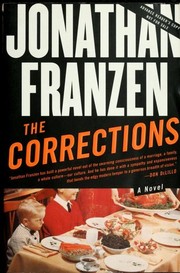
This is the essential starting point: Franzen's breakthrough novel and the book that defined him. Its multigenerational Lambert family story is gripping and accessible, introducing all his core obsessions — decline, desire, and the American family under pressure.
Deepening the Family Epic
IntermediateUnderstand how Franzen evolved his novelistic ambitions, expanding from family to ecology and ideology, and see how his second major family saga both echoes and departs from The Corrections.
▸ Study plan for this stage
Pace: 4–5 weeks, ~25–30 pages/day (Crossroads runs ~580 pages); allow extra time on dense family-conflict chapters and the theological passages
- The multi-generational family saga as moral laboratory: Crossroads uses the Hildebrandt family to test competing ethical and spiritual frameworks against one another
- Theological and ideological scaffolding: unlike The Corrections, Crossroads embeds its family drama inside explicit religious questioning — Christianity, doubt, and 1970s countercultural spirituality all function as structural forces, not mere backdrop
- Character interiority as competing first-person universes: Franzen gives each Hildebrandt a sealed, self-justifying inner world, and the novel's tension arises from how these worlds collide and fail to communicate
- The period setting as moral pressure: the early 1970s (Vietnam, the counterculture, the fracturing of mainline Protestantism) are not decorative — they are the ideological weather that shapes every character's choices
- Ecological and geographical consciousness: the novel's Midwestern landscape and the New Mexico desert sequences signal Franzen's expanding interest in place and environment as moral actors, anticipating the ecological ambitions of the planned trilogy
- Ambition of the trilogy form: Crossroads is Book 1 of the planned 'A Key to All Mythologies' trilogy, so readers should track how Franzen plants narrative seeds — unresolved tensions, character arcs left open — that are designed to extend across multiple volumes
- The Corrections echo and departure: both novels center on a dysfunctional Midwestern family under patriarchal strain, but Crossroads replaces satirical distance with empathetic interiority and swaps postmodern irony for earnest moral inquiry
- Franzen's evolving authorial stance: compare the implied author of Crossroads — warmer, more spiritually curious, less contemptuous — with the cooler, more satirical voice of his earlier work
- How does Franzen use the Crossroads youth group itself — its social dynamics, its charismatic leader, its rituals — as a microcosm for the larger ideological conflicts playing out inside the Hildebrandt family?
- Each major Hildebrandt (Russ, Marion, Clem, Becky, Perry) operates from a distinct moral or spiritual framework. Choose two characters and analyze how their inner justifications are constructed to be internally coherent yet mutually incompatible.
- In what specific ways does Crossroads depart from the satirical mode of The Corrections, and what does that shift reveal about Franzen's evolving relationship to his characters and his readers?
- How does the 1970s historical setting function as more than atmosphere — in what ways do period-specific ideological forces (the Vietnam War, the counterculture, evangelical Christianity's rise) directly determine plot and character outcome?
- Franzen has described this novel as the first volume of a trilogy with sweeping ecological and civilizational ambitions. What narrative or thematic elements in Crossroads feel deliberately unresolved or 'planted' for future volumes, and what do they suggest about where the larger project is headed?
- How does Franzen represent the relationship between personal sin, self-deception, and redemption in Crossroads, and how does this differ from the way moral failure is handled in The Corrections?
- Character moral-map exercise: create a one-page chart for each of the five main Hildebrandt characters listing (a) their core desire, (b) their self-justifying narrative, (c) the lie or blind spot at the center of that narrative, and (d) the moment in the novel where that blind spot is most exposed
- Comparative passage analysis: select one scene from Crossroads and one thematically parallel scene from The Corrections (e.g., a family dinner, a moment of parental failure, a character's private self-reckoning). Write a 500-word close reading comparing Franzen's prose style, narrative distance, and moral tone across the two passages
- Period-context annotation: choose two chapters set in or around the Crossroads youth group and annotate them with brief notes on the real-world 1970s religious and cultural context (mainline Protestant decline, Jesus Movement, Vietnam-era disillusionment). Then write a paragraph on how this context changes your reading
- Trilogy architecture exercise: re-read the final 30 pages of Crossroads and write a one-page speculative outline of what thematic and narrative threads you predict the subsequent volumes must resolve — then articulate what ecological or civilizational theme you think Franzen is building toward
- Voice imitation exercise: write a 300-word interior monologue in the style of one Hildebrandt character (using Franzen's free indirect discourse technique) for a scene not depicted in the novel — e.g., Russ driving home after a pivotal confrontation. Focus on self-justification and selective memory
- Reading journal — weekly reflection: at the end of each reading week, write a half-page entry answering: 'What did Franzen make me believe about this character that I later had to revise?' Track how your sympathies shift across the novel's full arc
Next up: Crossroads establishes the Hildebrandt family as a moral and spiritual proving ground rooted in a specific American moment, preparing the reader to follow Franzen's expanding ambitions as the trilogy moves outward — from family psychology toward ecological crisis, civilizational critique, and the full sweep of late-twentieth-century American ideology.

Franzen's most recent major novel and the start of a planned trilogy, set in the 1970s and centered on a pastor's family. It rewards readers already fluent in his style by adding a new moral and religious dimension to his family drama.
The Earlier Voice
IntermediateEncounter Franzen's raw, pre-fame ambition and understand where his mature style came from — seeing the seeds of The Corrections in a more difficult, experimental early work.
▸ Study plan for this stage
Pace: 4–5 weeks, ~25–30 pages/day — Strong Motion is dense and rewards slow, attentive reading; budget extra time for re-reading key seismic/political set-pieces
- Franzen's early maximalism: Strong Motion deploys a sprawling, systems-novel architecture (ecology, seismology, corporate malfeasance, family dysfunction) that anticipates but is rawer and more unwieldy than his later work
- The tension between social critique and intimate character study: the novel tries to indict late-capitalist environmental destruction while simultaneously telling a deeply personal love story between Louis Holland and Renée Seitchek — tracking where these two impulses clash or fuse is central
- Franzen's use of science as metaphor: seismic activity (earthquakes triggered by illegal chemical waste disposal) functions as an extended metaphor for repressed social and familial violence suddenly rupturing to the surface
- The dysfunctional family as microcosm: the Holland family — particularly the toxic dynamic between Louis and his parents — previews the Lambert family template Franzen would perfect in The Corrections
- Ambivalence toward political commitment: Renée's radical environmentalism is portrayed with both admiration and irony, establishing Franzen's career-long discomfort with ideological certainty
- Narrative voice and free indirect discourse: Franzen experiments here with close third-person perspective, shifting focalization between characters — studying these shifts reveals the craft he was developing
- The 'difficult' novel problem: Strong Motion is self-consciously literary and at times over-engineered; recognizing where the ambition outpaces execution is as instructive as admiring what works
- Boston as a character: the novel's specific New England geography, class landscape, and institutional settings (Harvard, the EPA, the media) are not backdrop but active social forces shaping every character's choices
- How does Franzen use the earthquakes — their cause, their cover-up, and their public reception — as a structural and thematic spine for the novel's social critique? Where does this metaphor feel earned, and where does it feel strained?
- Compare Louis Holland and Renée Seitchek as moral and ideological foils. What does their relationship reveal about Franzen's own ambivalence toward activism, cynicism, and personal responsibility?
- The Holland family dynamic is often cited as a dry run for the Lamberts. Identify at least three specific family tensions or character traits in Strong Motion that you can trace forward as evolved versions in The Corrections.
- How does Franzen manage — or struggle to manage — the novel's multiple registers: satirical corporate thriller, romantic drama, family saga, and ecological polemic? Where do these registers enrich each other, and where do they compete?
- Strong Motion was written before Franzen's famous 'Harper's Essay' crisis of literary faith. What evidence in the novel suggests a writer already wrestling with the question of what serious fiction is for and who it is for?
- Seismic mapping exercise: Draw a simple diagram with 'surface plot' (the earthquake/corporate conspiracy storyline) on one axis and 'subterranean plot' (family and romantic dysfunction) on the other. For each of the novel's major scenes, place it on the diagram. Write a one-paragraph reflection on the pattern you see — does Franzen keep these layers synchronized or does one dominate?
- Character genealogy: Write a one-page side-by-side character sketch pairing one Holland family member with their closest Lambert-family counterpart (e.g., Louis → Chip, or Louis's mother → Enid). Focus on psychological mechanism, not plot similarity — what emotional wound or coping strategy do they share?
- Close-reading drill: Select any three-page passage written in close third-person from Louis's perspective and annotate it for free indirect discourse — mark every sentence where the narrator's voice bleeds into Louis's interiority. Then do the same for a Renée passage. Write two sentences on how Franzen's sympathy or irony differs between them.
- The science-as-metaphor journal: Keep a running log (a few bullet points per reading session) every time a seismological or geological term or event is used in a way that seems to carry social or psychological meaning. At the end of the novel, review your log and draft a thesis sentence about what 'ground instability' means in Franzen's moral universe.
- Rewrite a scene: Choose one scene where you feel Franzen's social-critique ambitions overwhelm the human drama (a common criticism of the novel). Rewrite one page of it, trimming the expository scaffolding and pushing the emotional stakes of the characters to the foreground. Reflect on what you had to sacrifice and what you gained.
- Pre-bridge comparison essay (300–400 words): Before moving on, write a short informal essay answering: 'What one narrative or thematic problem does Strong Motion leave unsolved that you expect Franzen to solve in his next major work?' This primes your reading of The Corrections as a deliberate artistic evolution.
Next up: Completing Strong Motion gives the reader a precise baseline — the raw materials, recurring obsessions, and unresolved craft tensions — against which The Corrections can be read not just as a great novel in isolation, but as Franzen's conscious, decade-long answer to everything Strong Motion attempted and couldn't quite achieve.
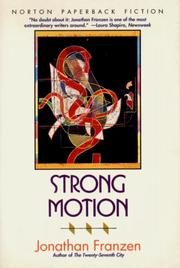
Franzen's second novel, set in Boston and built around earthquakes and corporate malfeasance, is rougher and more overtly political than his later work. Reading it after his masterpieces gives you crucial context for his development without overwhelming a new reader.
The Essays: Franzen Thinking Out Loud
ExpertUnderstand Franzen's intellectual framework — his views on the novel, technology, social media, bird conservation, and literary culture — and see the ideas that animate his fiction argued directly.
▸ Study plan for this stage
Pace: 10–12 weeks total, roughly divided as follows — "How to Be Alone": 3 weeks (~20–25 pages/day); "Farther Away": 3–4 weeks (~20 pages/day); "The End of the End of the Earth": 3–4 weeks (~18–20 pages/day). Read one essay per sitting where possible, pausing to journal before moving on. Treat each collec
- The 'contract' between novelist and reader: Franzen's argument in 'How to Be Alone' that serious literary fiction fulfills a social and moral function that no other medium can replicate
- Solitude as a prerequisite for both reading and selfhood — the tension between privacy and the demand for constant social performance, central to 'How to Be Alone'
- The Harper's Essay controversy and Franzen's evolving, self-critical stance on 'literary ambition vs. commercial culture' — his willingness to revise his own polemics
- Grief, isolation, and the Robinson Crusoe myth in 'Farther Away' — the island as a metaphor for the writer's necessary withdrawal from the connected world
- The David Foster Wallace elegies in 'Farther Away': friendship, competition, suicide, and what it means to lose a peer who embodied a different answer to the same literary questions
- Technology and social media as engines of narcissism and attention fragmentation — Franzen's sustained critique across all three collections, sharpening from essay to essay
- Bird conservation as moral seriousness and as a counter-model to online activism: the argument in 'The End of the End of the Earth' that embodied, patient attention to the non-human world is an ethical practice
- Climate grief and the 'apocalyptic' imagination: how 'The End of the End of the Earth' positions the novelist — and the birder — as witnesses rather than problem-solvers in the face of ecological collapse
- According to 'How to Be Alone,' what specific social and psychological conditions make serious novel-reading possible, and why does Franzen believe those conditions are under threat?
- How does Franzen use the figure of Robinson Crusoe and the real geography of Más a Tierra in 'Farther Away' to articulate his grief for David Foster Wallace and his own ambivalence about literary solitude?
- Trace Franzen's critique of technology and social media across all three collections: how does the argument evolve in tone, target, and sophistication from 'How to Be Alone' through 'The End of the End of the Earth'?
- In 'The End of the End of the Earth,' how does bird conservation function as more than a hobby — what ethical and aesthetic values does Franzen claim it embodies, and how does he connect it to the practice of writing fiction?
- Where is Franzen most self-contradictory or vulnerable to his own critiques across these three collections, and how does his willingness (or unwillingness) to acknowledge those contradictions shape your trust in him as an essayist?
- How do the essays collectively construct a coherent — if contested — theory of what literature is for? What would a reader who disagreed with Franzen's premises need to argue against?
- 'Steel-man' exercise: After finishing 'How to Be Alone,' write a 400-word summary of Franzen's case for the novel as a social good — then write a 400-word rebuttal from the perspective of a digital-media advocate. Compare both to see where his argument is strongest and most vulnerable.
- Annotation map: As you read 'Farther Away,' track every appearance of the words 'alone,' 'connected,' 'bird,' and 'Wallace' in the margins. At the end, draw a concept map showing how these four threads intersect — this will reveal the essay collection's hidden architecture.
- Comparative close-reading: Select one paragraph from the Harper's Essay (reprinted in 'How to Be Alone'), one from the title essay of 'Farther Away,' and one from 'The End of the End of the Earth.' Analyze Franzen's prose style in each — sentence length, use of the first person, rhetorical moves — and write a one-page note on how his essayistic voice changes across a decade.
- Field observation journal: Choose one non-digital activity Franzen champions (birdwatching, long-form reading, solitary walking) and practice it for one week, keeping a daily 150-word journal entry. At the end, write a page responding to Franzen's claims about embodied attention from your own experience.
- Debate preparation: Identify the three essays across the three collections where Franzen is most polemical about social media or technology. Draft a structured debate outline — Franzen's position, the strongest counter-evidence available today, and a synthesis — to stress-test whether his arguments have aged well.
- Essay imitation: Write a 600-word personal essay in Franzen's mode — begin with a concrete, physical experience (a place, an animal, a loss), then spiral outward to a cultural or literary argument. Use 'Farther Away' or 'The End of the End of the Earth' as your structural model.
Next up: Having absorbed Franzen's intellectual framework in his own argumentative voice, the reader is now equipped to return to his novels and recognize — beneath the surface of character and plot — the precise ideas, anxieties, and moral commitments that the essays argue for directly.

This essay collection, published just after The Corrections, contains his famous and controversial 'Harper's Essay' on the social contract of the novel. It's the essential companion to his fiction and the best place to hear him argue for literature's importance.

A second essay collection ranging from a moving tribute to David Foster Wallace to his passion for birding and solitude. It deepens the portrait of Franzen the thinker and should be read after How to Be Alone to trace the evolution of his nonfiction voice.

His most recent essay collection, focused heavily on climate change, bird conservation, and cultural despair. Reading it last places his mature worldview in full context after you've experienced both his fiction and his earlier essays.
Discussion
Keep reading
Paths that share books, cover the same subject, or open a related topic.