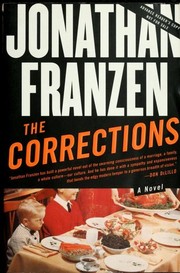
Start with The Corrections. It is the 2001 novel that made his name — a Midwestern family, a father sinking into Parkinson's and dementia, three adult children failing in three distinct metropolitan ways, and a mother trying to assemble one last Christmas. It is very long and it is never slow, which is a rarer combination than it sounds, and its comic setpieces are among the best written by any American novelist of the last thirty years.
The one genuine alternative is Crossroads, published in 2021 and set mostly in 1971 around an Illinois pastor, his wife, and their four children. It is the warmest and least sneering thing he has written, and readers who found the earlier novels contemptuous of their own characters often report that this one changed their mind. If the reputation for chilliness has put you off, start here instead. It is also the first book of a planned trilogy, which is worth knowing before you commit.
The novels
The Corrections, then Crossroads, then the two novels between them — Freedom and Purity — which are not in this catalogue but which sit chronologically between the two. Freedom is the closest thing to a companion volume to The Corrections and is where the arguments about Franzen's politics and his female characters mostly happen.
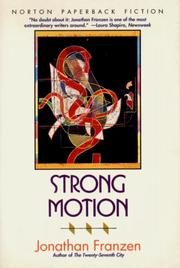
Then, if you are still going, Strong Motion. This is early work from 1992, a novel about earthquakes in Massachusetts, seismology, abortion politics and a family fight over an inheritance. It has the ambition and none of the control, and the seams show badly. Read it as an origin document rather than a novel you would recommend. His first novel, The Twenty-Seventh City, is likewise interesting mainly to people already invested.
The essays
Franzen's nonfiction is a separate proposition and it is where his public reputation was largely made and unmade. How to Be Alone collects the 1990s essays, including the famous piece about the diminishing role of the serious novel in American life and a long, genuinely moving account of his father's dementia that reads as the source material for The Corrections. Start here if you want the essays at all.
Farther away is the middle collection — birdwatching, Robinson Crusoe, a memorial address, and criticism. The End of the End of the Earth is the most recent, dominated by birds, climate and the question of what conservation is for when the larger fight looks lost. That essay is the best thing in it, and the argument it makes about triage in environmental spending was contested when it appeared and remains so.
Be aware that Franzen's essayistic persona is divisive in a way the fiction is not. Critics have long objected to the tone as much as the positions. Whether that lands as bracing or insufferable is a matter of temperament, and there is no point pretending there is a consensus.
Where to stop
Two novels and one essay collection — The Corrections, Crossroads and How to Be Alone — give you everything distinctive. The completist path adds Freedom and the two later essay collections. Strong Motion is for people who want to see the machinery before it worked.
Does order matter?
No plot connects any of these, so no. What order buys you is fairness: entering through The Corrections or Crossroads means you meet him at full strength, whereas entering through Strong Motion or through the essays alone gives a much weaker and more argumentative first impression than the fiction deserves. More author reading orders sit on Discover.
Follow the full ordered path here: Jonathan Franzen Reading Order: Where to Start.
Ready to learn something deeply?
Build a reading path — free