Jill Lepore Reading Order: Where to Start
Jill Lepore writes in two modes that look unrelated until you read enough of her: enormous synthetic histories of the United States, and small, strange books that take one obscure life and use it to open a whole era. Start with the big one, because it gives you the frame everything else fits into, then work down in scale to the narrow books, then back to the academic monographs where the method was formed.
Start here: the big argument
IntermediateGet Lepore's account of American history whole, and understand the question about truth and evidence that drives all her work.
▸ Study plan for this stage
Pace: Eight to ten weeks. These Truths runs to roughly 930 pages and is the largest single commitment in this path; thirty pages a day finishes it in about a month, and readers who try to take it faster generally stop. This America is 160 pages and can be read in two evenings straight afterwards — do not
- Lepore writes in two modes that look unrelated until you have read enough of her: enormous synthetic histories of the United States, and small strange books that use one obscure life to open a whole era — this stage is the first mode
- These Truths is a single-volume history of the United States organised around one question: whether the nation has lived up to the truths it declared self-evident
- It is written for a general reader and moves fast; the pleasure is the sentences and the selection of episodes, not exhaustive coverage
- Its organising interest is evidence and inquiry — who gets to know things, who records them, and what counts as proof — which is the thread running through everything else she has written
- The book has been criticised for what it compresses, particularly foreign policy and economic history, and for the amount of weight it puts on political ideas relative to material conditions; those objections are fair and worth holding as you read
- Lepore is a professional historian and a New Yorker staff writer at the same time, and These Truths is where the two roles are least distinguishable
- This America is a short polemic written immediately afterwards, arguing for a liberal nationalism against both its rivals — it makes explicit the political commitment These Truths carries implicitly
- Read together, they give you the frame that every smaller book in this path fits inside
- What are the truths of the title, and what test does Lepore apply to them across nine hundred pages?
- Which episodes does she choose to dwell on, and which centuries does she move through quickly? What does the distribution tell you about her priorities?
- Where does These Truths treat evidence and record-keeping as the subject rather than the method?
- This America argues for a nationalism of a particular kind. State it precisely, and state the strongest objection to it.
- What is missing from These Truths that you would expect in a survey history, and does the omission damage the argument?
- Set a daily page target before opening These Truths and hold to it. It is the only book in this path that requires scheduling.
- Keep a running list of the episodes she uses as hinges — a trial, an invention, a pamphlet. That list is her theory of American history in miniature.
- After finishing, write the book's thesis in three sentences. If you cannot, reread the introduction, which states it plainly.
- Read This America immediately afterwards and mark every place where it says outright something These Truths only implied.
Next up: With the whole frame in place, the small books stop looking like curiosities and start looking like core samples taken from it.

A single-volume history of the United States and the obvious entry point — nine hundred pages, but written for a general reader and structured around one question. Everything else she has written is a footnote to it.

A short polemic written straight after These Truths, arguing for liberal nationalism against both its rivals. Read it second; it is the argument These Truths makes implicitly, said out loud.
The narrow histories
IntermediateSee her best trick — one forgotten life or company used to explain a century — and learn why these are the books people fall in love with.
▸ Study plan for this stage
Pace: Six to seven weeks for the three, at roughly 450, 465 and 430 pages. These read much faster than their page counts because each is built as a narrative with characters — a week to ten days each is normal. Read them in the order given: Wonder Woman teaches the method, Book of Ages strips the archive
- This is Lepore's best trick: one forgotten life or company used to explain a century, and it is why readers who like her tend to love these three most
- The Secret History of Wonder Woman starts as a comic-book origin story and becomes a history of American feminism, birth control, the lie detector and a very strange household — the most enjoyable book she has written
- It works because the sources are astonishing: family papers, suffrage archives and psychological research all converging on one character nobody thought had a history
- Book of Ages reconstructs Benjamin Franklin's sister from almost nothing, and is as much a book about the absence of records as about the woman — read after Wonder Woman to see the same method with the archive removed
- That absence is the point: the surviving evidence for an eighteenth-century woman's life is a fraction of what survives for her famous brother, and Lepore makes the disparity the subject
- If Then tells the story of a 1960s data company that tried to predict voters, and is the clearest link between her historical work and present-day anxieties about prediction and persuasion
- All three depend on the same move — find the archive nobody has read, and use it to argue that a familiar story is the wrong story
- The narrow books are also where her prose is best, because a single life gives her the scenes that a survey history cannot afford
- What does The Secret History of Wonder Woman prove about the character's origins that changes how you would read the comics?
- Book of Ages is built on gaps. What techniques does Lepore use to write history from missing evidence, and where do they strain?
- How does she signal her own uncertainty in Book of Ages, and is the signalling honest or is it a device?
- If Then treats a 1960s company as an ancestor of the present. Where is the analogy strong, and where is she flattering the parallel?
- In each of the three, name the archive. What did the existence of that archive make possible?
- Which of these three would you give to someone who says they do not read history?
- Before reading Book of Ages, list what you know about Benjamin Franklin. The asymmetry with his sister is the book's whole argument and is best felt rather than told.
- Note every point in Wonder Woman where Lepore moves from the comic to the household to the suffrage movement. The transitions are the craft.
- In If Then, write down the company's claims about prediction alongside a present-day equivalent. That comparison is the reading Lepore wants.
- Pick one of the three and identify the sentence where the small subject opens into the large one. Every one of these books has that hinge.
Next up: The trade books make the method look effortless; the academic monographs show where it was built and how much labour it hides.
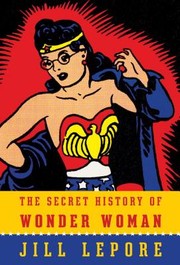
The most enjoyable book she has written: a comic-book origin story that turns into a history of American feminism, birth control and the lie detector. The best demonstration of her method.

Benjamin Franklin's sister, reconstructed from almost no surviving evidence — a book about the absence of records as much as the woman. Read it after Wonder Woman to see the same method with the archive stripped away.

The 1960s data company that tried to predict voters, and the clearest link between her historical work and the present. A natural bridge from the narrow books to the political ones.
The early scholarship
IntermediateRead the academic monographs where the method was built, and see her arguing with historians rather than with a general audience.
▸ Study plan for this stage
Pace: Five to six weeks for two books of roughly 340 and 325 pages. These are denser than everything before them and should be read at half the pace — twenty pages an evening, with the footnotes at least skimmed. They are academic monographs, not trade history, and reading them like trade history is the m
- The Name of War is Lepore's first book, on King Philip's War in seventeenth-century New England and on how the winners wrote it down
- It is the origin of her lifelong preoccupation with who gets to record events, which is the exact question These Truths asks at scale
- The war was among the deadliest in American history in proportional terms, and the book's real subject is the gap between what happened and the printed accounts that survived it
- New York Burning covers the 1741 slave conspiracy trials in New York and is a study of how a panic manufactures its own evidence — testimony extracted under threat becoming a documented conspiracy
- It is the most rigorous thing she has written, and the one where the historian's discipline is most visible: she reconstructs the trials from the records while showing why the records cannot be trusted
- Reading these after the trade books makes the trade books look different — the fluency is a compression of this kind of work, not an alternative to it
- Both books are about violence and its documentation, which is a colder subject than Wonder Woman and is written accordingly
- The apparatus matters here: the notes are where the argument with other historians happens, and skipping them removes half the book
- In The Name of War, what did the printed accounts of the war do that the war itself did not, and who benefited?
- How does Lepore handle Native accounts and the near-total absence of Native written records?
- In New York Burning, at what point does the evidence become self-generating? Trace one testimony to its consequences.
- What does she believe actually happened in 1741, and how confident does she allow herself to be?
- Compare her handling of an archive here with her handling of one in Book of Ages. What has the trade format changed?
- Read the notes of one chapter in full. That is where she argues with other historians, and it is the difference between the monograph and the trade book.
- Write a paragraph on what The Name of War claims about printing and memory, then hold it against These Truths' account of the same period.
- In New York Burning, chart the confessions against the dates. Seeing the sequence makes the manufacture of the conspiracy visible.
- Slow deliberately for this stage. Note the pages-per-hour difference from the previous stage; it is a fair measure of what academic prose costs and buys.
Next up: Having seen the scholarship, the magazine work reads as the same historian working at speed rather than as a different writer.
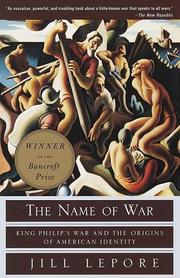
Her first book, on King Philip's War and how the winners wrote it down. Denser than the trade books and the origin of her preoccupation with who gets to record events.
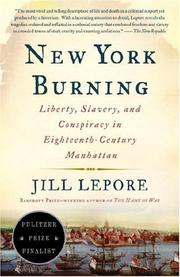
The 1741 slave conspiracy trials in New York, and a study of how a panic manufactures its own evidence. The most rigorous thing she has written.
The essays and the shorter books
IntermediateRead the magazine work, where her range and her voice are clearest, and finish with the oddest of her books.
▸ Study plan for this stage
Pace: Five to six weeks for the three, at roughly 430, 235 and 280 pages. The two collections are best read a few essays at a time over several weeks rather than straight through — that is how they were written and how they read best. Joe Gould's Teeth is short and should be read in one or two sittings; i
- The Story of America collects essays on American origin stories, from the Declaration to Poe, and is effectively a workshop version of These Truths — best read after it rather than before
- Its recurring subject is how a nation's founding documents get retold, and it shows her testing at essay length the arguments she later made at book length
- Joe Gould's Teeth is a short, unsettling book about a Greenwich Village eccentric who claimed to be writing the longest book ever written, and about the historian who goes looking for it
- It is the strangest thing in her catalogue because she visibly loses her own detachment: the search turns up a life far darker than the legend, including an allegation of sexual violence against the sculptor Augusta Savage, and Lepore refuses to keep her distance from it
- That loss of detachment is the point — it is her one book about what happens when the historian becomes a participant, which is a question the monographs never raise about themselves
- The Mansion of Happiness is a history of American ideas about life and death told through board games, breast pumps and cryonics, and is the widest-ranging of the collections
- Its method is the narrow-history trick applied at essay scale: one strange object, one large argument, repeated a dozen times
- Read together, these three show the range of the magazine work and explain how someone produces a nine-hundred-page survey and a hundred-page oddity in the same decade
- Which essays in The Story of America became chapters or arguments in These Truths? Find two.
- What is Joe Gould's Teeth actually about — Gould, his lost manuscript, or Lepore's own pursuit of it?
- Where does Lepore stop being a historian in Joe Gould's Teeth, and does the book justify the shift?
- How does she use an object — a board game, a breast pump — to open an argument in The Mansion of Happiness? Take one chapter apart.
- Having read across the whole catalogue, what is the single question Lepore keeps asking, in her own terms?
- Which of her two modes — the survey and the miniature — do you now think is her real work?
- Read Joe Gould's Teeth in one sitting. It is the shortest book here and its unease depends on continuity.
- Pick three essays from The Mansion of Happiness and identify the object at the centre of each. The pattern is the method stated three times.
- Take one essay from The Story of America and one chapter of These Truths on the same subject, and compare them. The compression between them is instructive.
- Write your own one-page version of the Lepore move: an obscure object or life, and the large argument it opens. Doing it badly is the fastest way to see how it is done.
- List her books in the order you would now hand them to a friend. It will not match this path, and the divergence is your reading of her.
Next up: You have both Lepores — the surveyor and the miniaturist — and the scholarship that shows they were always the same historian.

Essays on American origin stories, from the Declaration to Poe. Effectively a workshop version of These Truths and best read after it.

A short, unsettling book about a Greenwich Village eccentric and the historian who goes looking for him — including Lepore losing her own detachment. The strangest thing in her catalogue.
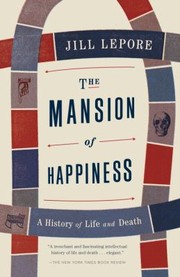
A history of American ideas about life and death, told through board games, breast pumps and cryonics. The widest-ranging of the essay collections.
Discussion
Keep reading
Paths that share books, cover the same subject, or open a related topic.