TypeScript reading path: from types and generics to large-scale apps
This curriculum takes JavaScript developers on a structured journey into TypeScript, starting with the core type system and progressively advancing to generics, architectural patterns, and large-scale tooling. Each stage builds directly on the last — you'll develop the vocabulary and mental models needed to tackle each new layer of complexity before moving on.
JavaScript Foundations Refresh
BeginnerSolidify modern JavaScript knowledge (ES6+) so that TypeScript's additions feel like natural extensions rather than foreign concepts.
▸ Study plan for this stage
Pace: 4–5 weeks, ~40–50 pages/day (Crockford's "JavaScript" is dense and philosophical; expect slower, reflective reading)
- Prototypal inheritance and the prototype chain as JavaScript's core object model
- Functions as first-class objects and closures as the foundation for encapsulation
- The difference between primitive types and objects; type coercion and truthiness
- Scope, hoisting, and the execution context (this binding)
- Objects as the primary data structure; object literals and dynamic properties
- Functional programming patterns: higher-order functions, composition, and pure functions
- The module pattern and how it enables privacy and namespace management
- Common pitfalls and 'bad parts' of JavaScript that TypeScript helps mitigate
- Explain how prototypal inheritance differs from classical inheritance, and why JavaScript chose this model.
- What is a closure, and how does it enable data privacy in JavaScript?
- How does the 'this' keyword behave in different contexts (method calls, function calls, arrow functions), and why is this important?
- What are the 'bad parts' of JavaScript that Crockford identifies, and how do they lead to bugs?
- How can you use the module pattern to create private variables and methods in JavaScript?
- Describe the difference between == and === coercion, and why === is generally preferred.
- Implement a simple constructor function with methods on the prototype; create instances and verify the prototype chain using Object.getPrototypeOf() and hasOwnProperty().
- Write a closure-based counter function that increments a private variable; verify that external code cannot directly access or modify the counter.
- Create a module using the Immediately Invoked Function Expression (IIFE) pattern that exports public methods while keeping internal state private.
- Refactor a callback-heavy function to use function composition and higher-order functions; compare readability and reusability.
- Trace through a complex 'this' binding scenario (method call, function call, apply/call/bind) and predict the output; verify with console.log().
- Identify and fix type coercion bugs in a provided code snippet (e.g., loose equality comparisons that produce unexpected results).
Next up: Mastering Crockford's core principles—prototypes, closures, and functional patterns—establishes the mental model that TypeScript's type system and advanced features (interfaces, generics, decorators) build upon, making the transition from dynamic to statically-typed JavaScript feel like a natural evolution rather than a paradigm shift.
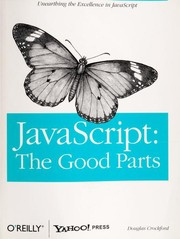
A concise tour of JavaScript's reliable core — understanding what JS does well (and poorly) makes TypeScript's safety guarantees immediately meaningful.
TypeScript Foundations
BeginnerUnderstand TypeScript's core type system — primitive types, interfaces, type aliases, enums, and basic tooling setup — well enough to annotate real JavaScript code.
▸ Study plan for this stage
Pace: 4–5 weeks, ~40–50 pages/day. Start with "Learning TypeScript" (Chapters 1–5, ~2.5 weeks), then "TypeScript Quickly" (Chapters 1–4, ~1.5–2 weeks) for reinforcement and practical patterns.
- TypeScript's type system as a compile-time safety layer over JavaScript
- Primitive types (string, number, boolean, null, undefined) and their literal types
- Interfaces and type aliases for defining object shapes and contracts
- Enums for representing fixed sets of named constants
- Union and intersection types for composing and combining types
- Type inference and explicit type annotations
- TypeScript compiler setup, tsconfig.json configuration, and basic tooling
- How TypeScript prevents common runtime errors through static analysis
- What is the difference between a type alias and an interface, and when would you use each in 'Learning TypeScript' examples?
- How do union types and literal types help you express constraints that plain JavaScript cannot enforce?
- What does the TypeScript compiler do during the compilation phase, and why can't it catch all runtime errors?
- How would you convert a JavaScript object with mixed property types into a properly typed interface or type alias?
- What is the purpose of enums, and how do they differ from simple object constants?
- How does type inference work in TypeScript, and when should you explicitly annotate types instead of relying on inference?
- Set up a new TypeScript project with tsconfig.json (following 'Learning TypeScript' Chapter 1 or 'TypeScript Quickly' setup guide) and verify compilation works
- Convert 3–5 existing JavaScript files with mixed types into TypeScript by adding explicit type annotations for function parameters, return types, and object properties
- Create 2–3 interfaces or type aliases that model real-world entities (e.g., User, Product, BlogPost) with required and optional properties, then write functions that accept and return these types
- Define and use an enum for a fixed set of values (e.g., UserRole, OrderStatus) and refactor a function that currently uses string literals to use the enum instead
- Write union type examples that constrain function inputs (e.g., a function that accepts string | number) and use type guards (typeof checks) to handle each case safely
- Annotate a function with multiple parameters and a return type, then intentionally pass wrong types to see TypeScript's error messages and understand what they mean
Next up: This foundation in primitive types, interfaces, enums, and basic type composition prepares you to tackle more advanced type features—generics, conditional types, and utility types—that let you write reusable, flexible type-safe code.

The most approachable modern introduction to TypeScript; it methodically builds the type system from scratch, making it the ideal first TypeScript book for JS developers.

Complements the foundations with practical, project-oriented examples — reinforces type annotations, interfaces, and tsconfig tooling through hands-on exercises.
Going Deeper — Generics, Advanced Types & Patterns
IntermediateMaster generics, conditional types, mapped types, utility types, and declaration files — the tools needed to write reusable, expressive, type-safe abstractions.
▸ Study plan for this stage
Pace: 6–8 weeks, ~40–50 pages/day (focusing on Items 1–5 and selected chapters from Items 6–7 in Effective TypeScript)
- Generic type parameters and constraints: writing reusable functions and classes that work across multiple types while maintaining type safety
- Conditional types and type inference: using the ternary operator at the type level to create types that adapt based on input types
- Mapped types and transforming existing types: iterating over object keys and properties to generate new types programmatically
- Utility types (Partial, Pick, Record, Readonly, etc.): leveraging TypeScript's built-in type helpers to reduce boilerplate and express common patterns
- Declaration files (.d.ts) and type definitions: creating type stubs for untyped libraries and publishing type-safe packages
- Type narrowing and discriminated unions: using type guards and exhaustiveness checking to refine types in control flow
- The relationship between runtime behavior and type-level abstractions: understanding how types constrain and document code without affecting performance
- How do generic constraints (e.g., <T extends SomeType>) help you write safer, more expressive generic functions, and what happens when you violate them?
- Explain conditional types: when would you use T extends U ? X : Y, and how does type inference with the infer keyword enable powerful abstractions?
- What is a mapped type, and how would you use it to transform an object type (e.g., converting all properties to readonly or optional)?
- Describe three utility types from TypeScript's standard library (e.g., Partial, Pick, Record) and demonstrate a real-world scenario where each is useful.
- What is a declaration file, when should you create one, and how do you ensure it stays in sync with your implementation?
- How do discriminated unions and type narrowing work together to enable exhaustive pattern matching in TypeScript?
- Write a generic function that accepts an array of any type and returns the first element, with a constraint ensuring the array is non-empty (using function overloads or conditional types).
- Create a conditional type that checks if a type is a Promise; if yes, extract the resolved value; if no, return the type as-is. Test it with Promise<string>, number, and Promise<boolean>.
- Build a mapped type that takes an object type and returns a new type where all properties are readonly and optional. Apply it to a User interface.
- Implement a utility type called DeepPartial that recursively makes all nested properties optional. Test it on a complex nested object.
- Write a discriminated union for different API response types (Success, Error, Loading) and implement a function that exhaustively handles each case using type narrowing.
- Create a .d.ts declaration file for a simple untyped library (e.g., a math utility module), then consume it in a TypeScript file and verify type checking works.
Next up: This stage equips you with the advanced type-level tools needed to design robust, reusable abstractions—preparing you to tackle real-world patterns like dependency injection, plugin architectures, and framework internals in the next stage.

62 concrete, item-based lessons that sharpen your mental model of the type system; covers generics, type narrowing, and common pitfalls that trip up intermediate developers.
Large-Scale Architecture & Tooling
ExpertConfidently design and maintain large, type-safe TypeScript codebases using proven architectural patterns, strict compiler options, and professional-grade tooling.
▸ Study plan for this stage
Pace: 8–10 weeks, ~40–50 pages/day (with 2–3 days per week for deep-dive exercises and architecture labs)
- Distributed system fundamentals: reliability, scalability, and maintainability as core design pillars
- Data storage engines and indexing strategies (B-trees, LSM trees, hash indexes) and their performance trade-offs
- Replication patterns (single-leader, multi-leader, leaderless) and consistency models (strong, eventual, causal)
- Partitioning and sharding strategies for scaling data systems across multiple nodes
- Transaction semantics, ACID properties, and isolation levels in distributed contexts
- Stream processing and event-driven architectures for real-time data pipelines
- Practical system design patterns: how to apply theoretical concepts to TypeScript backend architectures
- Operational concerns: monitoring, debugging, and maintaining data-intensive systems at scale
- What are the three core design goals for data-intensive applications, and how do they often conflict with one another?
- Explain the trade-offs between different replication strategies (single-leader vs. multi-leader vs. leaderless) and when to use each in a TypeScript backend
- How do different isolation levels (read uncommitted, read committed, repeatable read, serializable) affect application correctness and performance?
- What is the difference between logical and physical partitioning, and how would you implement consistent hashing in a TypeScript service?
- Describe how event sourcing and stream processing patterns can be applied to build maintainable, auditable TypeScript systems
- How would you design a TypeScript application to handle eventual consistency, and what guarantees can you provide to users?
- Implement a simple B-tree or LSM tree data structure in TypeScript with benchmarks comparing read/write performance trade-offs
- Build a single-leader replication system using Node.js and a message queue (e.g., RabbitMQ or Redis), with TypeScript types for replication logs
- Design and code a consistent hashing ring in TypeScript for a distributed cache or database sharding layer, including node addition/removal
- Create a TypeScript event sourcing system that stores immutable events and rebuilds application state from an event log
- Implement a distributed transaction coordinator (two-phase commit) in TypeScript across multiple mock database nodes
- Build a stream processing pipeline in TypeScript (using a library like Kafka or RxJS) that processes and aggregates event data in real-time
- Architect a full TypeScript backend service with strict compiler options (strict mode, noImplicitAny, etc.) that applies 3+ patterns from the book (replication, partitioning, event sourcing)
- Write a design document for a data-intensive TypeScript system, explicitly addressing reliability, scalability, and maintainability concerns from the book
Next up: Mastering the architectural and distributed systems patterns from this book provides the theoretical and practical foundation needed to implement them reliably in large-scale TypeScript codebases, setting the stage for the next level's focus on advanced type systems, testing strategies, and deployment infrastructure.

While not TypeScript-specific, this book teaches the systems-thinking and data-modeling discipline needed to architect the kind of large, reliable applications TypeScript is built to support.
Discussion
Keep reading
Paths that share books, cover the same subject, or open a related topic.