Italo Calvino Reading Order: Where to Start
This curriculum moves through Calvino's work in four carefully sequenced stages: starting with his most beloved and accessible novel, then advancing into his playful experimental fiction, followed by his deep dive into world folklore, and finally arriving at his celebrated theoretical lectures. Each stage builds the imaginative vocabulary and conceptual fluency needed to fully appreciate the next, turning a beginner into a confident, well-rounded Calvino reader.
The Accessible Entry: Calvino's Warmth & Wonder
BeginnerFall in love with Calvino's voice, his playful storytelling, and his ability to blend realism with fantasy — building the emotional and imaginative foundation for everything ahead.
▸ Study plan for this stage
Pace: 6–8 weeks total: Weeks 1–4 for "The Baron in the Trees" (~20–25 pages/day, savoring slowly), Weeks 5–7 for "Marcovaldo" (~15–20 pages/day, reading 2–3 vignettes per session), with Week 8 reserved for reflection, re-reading favorite passages, and completing exercises.
- Calvino's narrative voice: warm, ironic, and gently philosophical — a storyteller who winks at the reader without breaking the spell
- The 'impossible premise, lived seriously' technique: Cosimo's life in the trees and Marcovaldo's misadventures are absurd on the surface but emotionally and logically consistent within their own rules
- Realism vs. fantasy as a spectrum, not a binary: both books are grounded in specific historical and social textures (18th-century Liguria; postwar Italian industrial city) while embracing the fantastical
- Character as lens: Cosimo and Marcovaldo are both outsiders and dreamers whose naïve or idealistic perspectives expose the absurdity and beauty of the 'normal' world around them
- Nature as counterpoint to civilization: trees, seasons, animals, and weather are active forces in both books, constantly in tension with human society and ambition
- The episodic and the epic: 'Marcovaldo' is a cycle of self-contained vignettes while 'The Baron in the Trees' is a sustained novel — both show Calvino's mastery of pacing and structure at different scales
- Humor as a vehicle for pathos: Calvino's comedy is never cruel; it opens a door to genuine tenderness and melancholy
- Italian postwar context: both books quietly reflect anxieties about modernity, consumerism, and the loss of a more enchanted relationship with the world
- What motivates Cosimo to climb into the trees, and how does his choice evolve from childish rebellion into a genuine philosophical and political stance by the end of the novel?
- How does Calvino use the changing seasons in 'Marcovaldo' to structure Marcovaldo's repeated cycles of hope and disappointment — and what does this rhythm suggest about the human condition?
- Both Cosimo and Marcovaldo are dreamers living at odds with their societies. What distinguishes their relationships to the world below/around them, and what does each character ultimately gain or lose?
- Identify two or three moments in either book where Calvino shifts seamlessly between the comic and the genuinely moving. How does he achieve that tonal balance?
- How does Calvino use a specific natural element — a tree, an animal, a snowfall, a mushroom patch — as more than mere backdrop? Choose one example from each book and analyze its symbolic or narrative function.
- In 'The Baron in the Trees,' the narrator is Cosimo's brother Biagio. How does this narrative distance shape the reader's understanding of Cosimo's choices, and what would be lost if Cosimo narrated his own story?
- **The Impossible Premise Journal:** Invent your own 'impossible premise, lived seriously' scenario (e.g., a person who only walks backwards, a family that never enters buildings). Write 1–2 pages in Calvino's style — commit to the internal logic, keep the tone warm and slightly ironic. This directly mirrors the imaginative engine of both books.
- **Seasonal Vignette Imitation:** After finishing 'Marcovaldo,' write your own Marcovaldo-style vignette set in your own city or town, in the current season. Focus on one small natural intrusion into an urban setting (a weed in a parking lot, a bird on a subway platform). Keep it under 600 words.
- **Character Outsider Map:** Draw or diagram the social world of each book — place Cosimo and Marcovaldo at the center, then map the characters and institutions around them. Draw arrows showing attraction, conflict, and indifference. Annotate: what does each outsider want that the world won't give them?
- **Passage Comparison:** Select one passage from 'The Baron in the Trees' and one from 'Marcovaldo' that you find equally funny and sad. Write a one-page reflection comparing how Calvino achieves the emotional double-effect in each — focus on word choice, pacing, and what is left unsaid.
- **Nature Log:** While reading both books, keep a running list of every plant, animal, weather event, or natural phenomenon mentioned. After finishing, review the list: which appear in both books? What patterns emerge? Write a short paragraph on what 'nature' means to Calvino based solely on this evidence.
- **Re-read the Opening & Closing Pages:** Go back to the first and last pages of 'The Baron in the Trees.' Write down what has changed — in Cosimo, in the narrator's tone, in your own understanding. Then do the same for the first and last vignettes of 'Marcovaldo.' What emotional arc does each book complete?
Next up: By falling in love with Calvino's playful logic and his outsider dreamers, the reader has internalized the emotional grammar of his imagination — making them ready to encounter the more formally daring, self-aware, and structurally experimental works ahead, where that same warmth is refracted through increasingly complex narrative architectures.

The most beloved and human of Calvino's early novels, it tells the story of a boy who lives his entire life in the treetops — a perfect first book because it is warm, witty, and narratively straightforward while already introducing Calvino's signature theme: the self-imposed rule as a lens for exploring freedom and identity.
A collection of short, linked vignettes about a dreamer lost in industrial Italy — ideal as a second step because its brevity and humor ease the reader into Calvino's ironic, fable-like style without demanding sustained attention to a long plot.
The Experimental Novels: Games of Structure & Story
IntermediateUnderstand and enjoy Calvino's postmodern, self-referential fiction — grasping how he uses formal constraints and narrative games not as tricks but as tools for exploring consciousness, desire, and the act of reading itself.
▸ Study plan for this stage
Pace: 8–10 weeks total: Weeks 1–3 for The Complete Cosmicomics (~20–25 pages/day, reading in thematic clusters of 4–5 stories per session); Weeks 4–5 for Invisible Cities (~15–20 pages/day, pausing after each of the 9 city categories to reflect); Weeks 6–8 for If on a Winter's Night a Traveler (~25–30 pag
- Formal constraint as meaning-maker: how self-imposed rules (cosmological voice, city taxonomy, second-person address) generate rather than limit insight
- The unreliable or constructed narrator: Qfwfq's faulty cosmic memory, Marco Polo's possibly invented cities, and the Reader's identity as a narrative function rather than a real person
- Self-referentiality and metafiction: texts that foreground their own status as texts, especially If on a Winter's Night a Traveler's explicit staging of the reading act
- Desire and incompleteness: how Calvino uses interrupted stories, unfinished cities, and fragmentary cosmologies to make longing and curiosity structural experiences for the reader
- The city/space as mental map: in Invisible Cities, urban descriptions are really explorations of memory, death, time, and utopia — geography as psychology
- Science and myth as twin languages: Cosmicomics translates astrophysics and evolution into fable, showing how narrative colonizes even the most abstract knowledge
- The reader as co-author: all three books demand active imaginative completion, positioning reading as a creative, not passive, act
- Postmodern playfulness with serious intent: distinguishing Calvino's games from mere cleverness — each formal trick encodes a philosophical or emotional question
- In Cosmicomics, how does Qfwfq's position as an eyewitness to cosmic events (the formation of the Moon, the first sign, the dinosaurs' extinction) create irony, humor, and pathos simultaneously — and what does this say about the limits of any first-person account?
- Invisible Cities is structured as a dialogue between Marco Polo and Kublai Khan, yet most of the book consists of Marco's monologues. How does this framing device shape your trust in the city descriptions, and what does Kublai's skepticism add to the reading experience?
- If on a Winter's Night a Traveler addresses 'you' directly throughout. By the end of the novel, what has Calvino argued — implicitly or explicitly — about what a reader actually is, and how does this challenge the conventional boundary between fiction and reality?
- All three books use fragmentation and interruption as deliberate techniques. Compare how an unfinished Cosmicomics story, an unvisited city in Invisible Cities, and a cut-off chapter in If on a Winter's Night a Traveler each produce a different emotional effect from the same structural device.
- How does Calvino use the figure of the 'series' or 'system' (the periodic table of cities in Invisible Cities, the scientific epigraphs in Cosmicomics, the genre parodies in If on a Winter's Night a Traveler) to simultaneously celebrate and undermine the idea that the world can be fully catalogued or known?
- Across all three books, female figures (Ayl, Lwll, and others in Cosmicomics; the women of the cities; Ludmilla in If on a Winter's Night a Traveler) are often objects of pursuit or idealization. How does Calvino's formal experimentation complicate or reinforce this tendency?
- Story dissection — Cosmicomics: Choose any three Qfwfq stories and write a one-paragraph 'scientific myth translation' for each: identify the real cosmological or evolutionary concept in the epigraph, then explain in your own words how the story's emotional core (jealousy, nostalgia, loss) reframes that concept. This trains you to read Calvino on two registers at once.
- City invention — Invisible Cities: After finishing the book, write your own 'invisible city' of exactly 200 words following Calvino's template: give it a woman's name, anchor it in one governing concept (time, desire, signs, memory, etc.), and embed a paradox. Then identify which of Calvino's 11 city categories yours would belong to and explain why.
- Structural mapping — Invisible Cities: Draw a visual diagram of the book's architecture — the 9 × 11 grid of city types, the placement of the Marco/Kublai dialogues, and the way the chapter numbers create a palindrome pattern. Annotate it with one word capturing the emotional 'temperature' of each city category.
- Second-person experiment — If on a Winter's Night a Traveler: Rewrite the opening two pages of Chapter 1 in first person ('I') and then in third person ('He'). Write a short reflection (150–200 words) on what is lost or gained in each version — this makes visceral what Calvino's 'you' is actually doing.
- Interrupted narrative exercise — If on a Winter's Night a Traveler: Pick one of the ten embedded novel openings and write the next 300–400 words continuing it in the style Calvino established. Then write a paragraph explaining how you would interrupt and abandon it if you were Calvino — what would the interruption 'mean' thematically?
- Cross-book synthesis essay: Write a 500–700 word comparative essay answering the question: 'In Cosmicomics, Invisible Cities, and If on a Winter's Night a Traveler, Calvino repeatedly stages the failure to fully possess something — a person, a place, a story. How does formal structure become the vehicle for this theme?' Use at least one specific passage from each book.
Next up: Mastering how Calvino uses structure as a philosophical tool in these three novels equips the reader to engage with his more explicitly theoretical and combinatorial late works — where the games become even more systematic and the stakes (mortality, totality, the limits of literature itself) even higher.

A collection of stories narrated by a primordial being who witnesses the birth of the universe — the perfect bridge from the early novels to the experimental work, because it retains Calvino's warmth and humor while introducing his love of scientific ideas and mythic abstraction.

Calvino's most celebrated work, structured as a dialogue between Marco Polo and Kublai Khan through which 55 imaginary cities are described — read here because the reader now has enough trust in Calvino to surrender to a book with almost no conventional plot, experiencing pure poetic and philosophical prose.
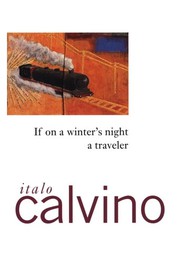
A novel addressed directly to 'You, the Reader,' made of nested, interrupted stories — saved for last in this stage because it requires the reader to already feel at home with Calvino's games; it is the fullest expression of his postmodern experimentation and rewards those who have built up context.
The Folktales: Calvino as Collector & Craftsman
IntermediateDiscover Calvino's monumental work as a folklorist and editor, understanding how the deep grammar of oral storytelling shaped his own fiction and how he saw myth and fairy tale as the bedrock of all narrative.
▸ Study plan for this stage
Pace: 6–7 weeks, ~25–30 pages/day (the collection runs ~750 pages including Calvino's notes); read tales in regional clusters of 30–40 tales per week, always pairing the tales themselves with Calvino's source notes and the Introduction in the same sitting
- Calvino's editorial method: how he selected, fused, and stylistically unified tales from 19th-century regional dialect collections into a single literary Italian voice
- The 'deep grammar' of folktales — Proppian morphology, recurring functions (departure, prohibition, helper, transformation, return), and how Calvino consciously mapped these structures
- Regional diversity vs. national unity: how the 200 tales represent Italy's fragmented cultural geography, and what Calvino's curatorial choices reveal about his vision of Italian identity
- The folktale as narrative bedrock: Calvino's argument (laid out in the Introduction) that fairy tales contain every possible story situation and every human destiny in condensed form
- Oral transmission and the 'invisible author': how Calvino preserves the voice of the anonymous storyteller while simultaneously imposing his own literary sensibility
- Myth, magic logic, and the 'economy of wishes': how folktales operate on a consistent internal logic of desire, trial, and reward that differs fundamentally from realist fiction
- The relationship between brevity and density: how the compressed, episodic structure of the tale form prefigures Calvino's later experiments with short, crystalline prose
- Calvino's critical apparatus — the tale-by-tale notes as a secondary text that reveals his sources, doubts, and aesthetic decisions, functioning almost as an essay on comparative folklore
- What criteria did Calvino use to select and sometimes merge variant tales, and what does the Introduction tell us about the tensions he felt between scholarly fidelity and literary quality?
- How does Calvino's retelling style differ from a straight translation or transcription — what specific literary techniques (rhythm, dialogue, imagery) does he introduce, and where do his notes acknowledge this?
- Identify three recurring structural patterns (Proppian 'functions') across tales from different regions. How does recognizing these patterns change the reading experience?
- Calvino argues in the Introduction that folktales are 'the catalogue of the potential destinies of men and women.' How do the tales themselves support or complicate this claim?
- How does the regional origin of a tale (Sicilian, Venetian, Tuscan, Neapolitan, etc.) leave traces in its imagery, social assumptions, or moral logic, even after Calvino's stylistic unification?
- In what ways do the tale-by-tale notes function as a critical essay? What do they reveal about Calvino's understanding of the relationship between oral tradition and written literature?
- Close-read the Introduction three times — first before reading any tales, once midway through, and once at the end — writing a one-paragraph response each time noting how your understanding of Calvino's project has shifted.
- Choose one tale and read its corresponding note, then locate the original source collection Calvino cites. Write a 300-word comparison of what Calvino changed and speculate on why, using his stated principles from the Introduction as your guide.
- Select five tales from five different Italian regions and map each onto a simple Proppian function chart (Departure → Prohibition → Violation → Consequence → Helper → Trial → Resolution). Note where tales deviate from the schema and what effect the deviation creates.
- Write your own 500-word folktale in Calvino's style — choose a region, invent a protagonist with a single burning desire, and build the plot from exactly three trials. Then annotate it as Calvino does in his notes, explaining your invented 'source' and your stylistic choices.
- Compile a personal 'bestiary and object glossary': list every magical creature and enchanted object that appears across at least ten tales, noting regional frequency. Write a short essay on what this inventory suggests about the shared symbolic imagination Calvino was drawing from.
- Re-read one tale you found unremarkable on first pass, this time reading it aloud as if performing it. Write a reflection on how oral delivery changes your sense of pacing, characterization, and the tale's moral weight — connecting your observations to Calvino's remarks on oral tradition in the Introduction.
Next up: Internalizing the structural grammar and crystalline brevity of the folktale form equips the reader to recognize how Calvino transplants these same deep patterns — the trial, the transformation, the impossible task — into his own wildly inventive fictional worlds in subsequent stages of the curriculum.

Calvino spent two years collecting and retelling 200 tales from every Italian region — reading this after the experimental novels reveals the folkloric DNA running through all his work, and his brilliant introduction is itself an essential essay on the nature of storytelling.
The Lectures: Calvino's Aesthetic & Literary Philosophy
ExpertArrive at Calvino's own articulation of what literature is for — synthesizing everything read so far through his eyes, and leaving with a complete, nuanced understanding of his values as a writer and thinker.
▸ Study plan for this stage
Pace: 6–8 weeks total: Weeks 1–3 for "The Uses of Literature" (~20–25 pages/day, reading each essay slowly and taking marginal notes); Weeks 4–8 for "Six Memos for the Next Millennium" (~10–15 pages/day, spending roughly 5–6 days per memo to allow deep reflection and re-reading)
- Literature as a cognitive tool — Calvino's argument in 'The Uses of Literature' that fiction serves distinct, irreplaceable functions: ontological, psychological, and social
- The five literary values as Calvino defines them in 'Six Memos': Lightness, Quickness, Exactitude, Visibility, and Multiplicity (with the unwritten sixth, Consistency, as a productive absence to contemplate)
- Lightness vs. weight: the philosophical distinction Calvino draws between narrative levity and existential gravity, and why he champions the former without dismissing the latter
- Exactitude as an ethical stance: precision of language, image, and concept as a moral and aesthetic obligation for the writer
- Visibility and the imagination: Calvino's theory of the mental image — how literature activates inner vision and why this faculty is endangered in modern culture
- Multiplicity and the 'hypernovel': the idea of a work that contains the whole world, and how it connects to his own experiments in combinatorial and encyclopedic fiction
- Quickness as narrative intelligence: economy of means, the folk-tale as model, and the relationship between brevity and depth
- The essay as a literary form: how Calvino's critical prose in both books enacts the same aesthetic values he theorizes — his criticism is itself a demonstration of his poetics
- According to 'The Uses of Literature,' what are the specific functions Calvino believes only literature can perform, and how does he distinguish literature from other forms of knowledge or communication?
- In 'Six Memos,' how does Calvino define 'Lightness,' and what literary and philosophical traditions does he draw on to defend it — including which authors and works he cites as exemplars?
- How do 'Exactitude' and 'Multiplicity' exist in tension with each other across the Memos, and how does Calvino propose a writer can honor both simultaneously?
- What does Calvino mean when he links 'Visibility' to a crisis of the imagination in the late twentieth century, and what does he fear literature will lose if that faculty atrophies?
- Taken together, do the five Memos form a coherent, unified aesthetic philosophy, or do they reveal productive contradictions? Use specific passages from the text to support your answer.
- How do the essays in 'The Uses of Literature' function as a retrospective lens on Calvino's own fiction — which of his narrative values, as expressed in 'Six Memos,' can already be detected in his critical arguments?
- Memo mapping: After finishing each of the five Memos, write a one-page 'counter-memo' in Calvino's style arguing for the opposite value (e.g., Heaviness, Slowness) — this forces you to truly understand what he is arguing against
- Close-reading log: Select one paragraph from 'The Uses of Literature' and one from 'Six Memos' per week and perform a sentence-level analysis, noting how Calvino's prose style enacts the very values he describes (especially Exactitude and Lightness)
- Author-tracing exercise: Calvino name-drops dozens of writers across both books (Leopardi, Ovid, Borges, Perec, etc.). Choose five authors you haven't read, read one short work by each, and write a paragraph explaining why Calvino invoked them for that specific value
- Synthesis essay: After finishing both books, write a 1,000–1,500 word essay titled 'Calvino's Ideal Novel' — construct a description of a hypothetical work that embodies all five Memo values simultaneously, grounding every claim in direct quotations from the texts
- Retrospective annotation: Return to one work of Calvino's fiction read in an earlier stage of the curriculum and re-annotate it using the vocabulary of the Memos — mark passages as 'L' (Lightness), 'Q' (Quickness), 'E' (Exactitude), etc., then reflect on which values dominate and which are absent
- Debate preparation: Formulate the strongest possible objection to one of Calvino's five values — write out the objection and then write Calvino's likely rebuttal using only evidence from 'The Uses of Literature' and 'Six Memos'
Next up: By arriving at Calvino's own first-person articulation of his literary values, the reader now possesses a complete critical framework — a set of lenses ground by Calvino himself — that can be turned outward onto world literature and inward onto their own writing or reading practice, making this stage the natural capstone from which any further comparative or creative study can depart.
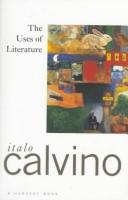
A collection of Calvino's critical essays on writers he loved — Borges, Ariosto, Stendhal, and others — read first here because it reveals the literary tradition he was consciously working within, giving rich context for the final masterpiece.

Calvino's unfinished final lectures, prepared for Harvard, proposing six literary values — Lightness, Quickness, Exactitude, Visibility, Multiplicity, and Consistency — that he believed literature must carry into the future. The perfect capstone: every book in this curriculum is now recognizable as a living demonstration of these ideals.
Discussion
Keep reading
Paths that share books, cover the same subject, or open a related topic.