Irish Traditional Music: The Best Books to Read, in Order
Irish traditional music is learned in rooms, by ear, from other players, and no book will ever be the primary source — which is why the best writing on it is about how the transmission works rather than about the notes. This path starts with the session, because that is where the music actually lives; then covers the forms, the instruments and the history; then hands over to the players themselves; then finishes with the collectors and revivalists who decided what the tradition would be. Read it alongside listening, not instead of it. One practical note on the reference works: several of these are Irish-published and out of print in the ordinary trade sense, so the library is often a better route than the bookshop.
Start at the session
BeginnerUnderstand what a session is, how tunes are chosen and started, why nobody reads music at one, and what the unwritten etiquette is — before you learn a single reel.
▸ Study plan for this stage
Pace: Two to three weeks, and read with recordings playing. Ciaran Carson's Last Night's Fun (198 pages) is a poet's memoir organised as chapters named after tunes, not a book of facts — read it in short sittings, a chapter at a time, because it is written to be dwelt on. Barry Foy's Field Guide to the Ir
- The session as the primary institution of the music — tunes are transmitted in rooms by ear, and every book on this path is secondary to that
- Sets: how tunes are joined into runs of two or three, who starts one and how the change is signalled without speech
- Session etiquette as Foy lays it out — where a beginner sits, when to play and when to sit out, what counts as taking over
- Carson's central claim in Last Night's Fun: that a tune is never played the same way twice, so a transcription is a snapshot rather than the thing itself
- The basic vocabulary from Carson's 1986 handbook — reel, jig, hornpipe, slip jig, air — and the instruments that carry them
- Why a memoir by a flute-playing poet and a comic etiquette guide are both better first books than any history
- What actually happens when a set changes tune mid-session, and how does a player who does not know the next tune handle it?
- Foy and Carson disagree in tone entirely. Where do they agree about what a beginner should do?
- What does Carson mean when he says a tune exists in its variations rather than behind them, and what does that imply about learning from notation?
- How does Carson's 1986 handbook differ in purpose from his memoir, and what does each give you that the other cannot?
- Can you tell a reel from a jig by ear yet — and if not, what specifically are you listening for?
- Take three chapter titles from Last Night's Fun, find recordings of those tunes, and listen to two different players' versions of each while rereading the chapter. Carson's argument about variation is only testable this way.
- Go to a session and sit out the whole thing without playing, using Foy's chapter on etiquette as your checklist: note who started each set, how many tunes ran together, and how the changes were signalled.
- Using Carson's 1986 handbook, write out the time signature and characteristic rhythm of reel, jig, slip jig and hornpipe on a card, then test yourself against a radio programme or a session recording until you can name each within four bars.
- Learn one tune entirely by ear from a recording — no notation at all — and note how long it takes and what you got wrong. This is the process every later book is describing.
Next up: Knowing what a session is and how a tune behaves in one, you can now put names to the forms, the instruments and the history that the rest of the path assumes.
The best book ever written about this music, and not a book of information: a poet and flute player writing about sessions, tunes, whiskey, memory and the way a tune changes every time it is played. Each chapter is named for a tune. Read it first because it will tell you what the music is for, which no manual can.
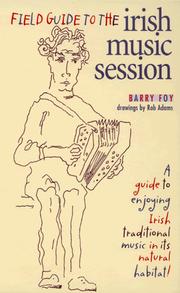
The practical companion to Carson: who sits where, when to start a set, what a beginner may and may not do, how the etiquette actually works. Funny and genuinely useful, and it will keep you from the specific embarrassments every new player commits.

Carson's short 1986 pocket guide, written years before the memoir above and doing an entirely different job — a compact factual survey of the instruments, tune types and terms. Note that its title is the same as this subject; it is a slim illustrated handbook, not a general history.
The forms, the instruments, the shape of the tradition
BeginnerLearn to tell a reel from a jig from a hornpipe, know what each instrument does in the tradition, and get the historical outline the later books assume.
▸ Study plan for this stage
Pace: Three to four weeks. Gearóid Ó hAllmhuráin's A Pocket History of Irish Traditional Music (160 pages) reads in a sitting or two and should come first as the frame. Tomás Ó Canainn's Traditional Music in Ireland (145 pages) is short but slow — it is an analytical account by a piper and academic, with
- The historical outline from Ó hAllmhuráin: the harpers, the penal era, famine and emigration, the Gaelic revival, the ceilidh bands, the 1960s revival, the present
- Ó Canainn's structural argument that sean-nós singing style underlies instrumental phrasing — the single most useful idea for making sense of what good players do
- Ornamentation as a technical vocabulary: cuts, rolls, crans, triplets, and what each does to a note rather than around it
- Variation as a system with rules, not free improvisation
- The instruments and their roles — uilleann pipes, fiddle, flute, concertina, banjo, bodhrán — and which are old in the tradition and which arrived recently
- The Companion as a reference to consult rather than read: entries for regions, styles, festivals, collectors and performers
- Reference, narrative and analysis as three different kinds of book, each answering questions the other two cannot
- What did the collapse of the harping tradition and the rise of dance music actually change about the repertoire, on Ó hAllmhuráin's account?
- How does Ó Canainn describe the relationship between sean-nós singing and instrumental ornamentation, and can you hear it in a recording?
- What is a cran, on which instrument does it originate, and why does it exist there rather than elsewhere?
- Which instruments now central to sessions are recent arrivals, and what does the Companion say about how each was absorbed?
- When would you reach for the Companion rather than Ó hAllmhuráin, and vice versa?
- Work through Ó Canainn's musical examples with a recording or an instrument, playing or singing each one rather than reading past it — his argument is about sound and does not survive being skimmed.
- Look up five entries in Vallely's Companion for terms you met in Carson — a tune type, an instrument, a region, a collector, a festival — and note in each case what the reference gave you that the narrative did not.
- Build a one-page timeline from Ó hAllmhuráin covering harpers to the present, then mark on it where each book in this path sits. You will use it in the last stage.
- Pick one ornament described by Ó Canainn and find three recordings where you can hear it clearly; write the player, tune and rough timing for each.
Next up: With the forms and the historical frame in place, the names in the next stage — regions, players, styles — will mean something specific rather than being a list.
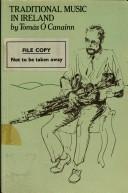
The classic structural account: how the tunes are built, what ornamentation and variation actually consist of, and how sean-nós singing style underlies instrumental playing. Written by a piper and academic, and still the clearest treatment of the music's internal logic.

The short narrative history — harpers, penal times, emigration, the Gaelic revival, the ceilidh bands, the 1960s revival, the present. Small enough to read in a sitting and the right frame to hang the rest of this path on.
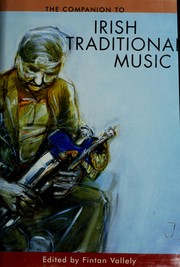
The reference book of the field, with entries on every instrument, region, style, festival, collector and performer of consequence. Not to be read straight through — keep it beside you for the rest of this path and look things up as they come.
The players
IntermediateHear the tradition described by the people who carry it, and understand that regional style and individual repertoire are the real units, not a national canon.
▸ Study plan for this stage
Pace: Four to five weeks. Fintan Vallely's Blooming Meadows (234 pages) is portraits with photographs and can be read a musician at a time. Allen Feldman's The Northern Fiddler is fieldwork from the 1970s among Donegal and Tyrone players, with transcriptions and life histories, and is slower going than it
- Regional style as the real unit of the tradition — Donegal, Sligo, Clare, east Galway — rather than a single national manner of playing
- Individual repertoire: a player's tunes as a personal inheritance with named sources, not a common pool
- Fieldwork as a method — Feldman going to players rather than to archives, and what that recovers that a collection cannot
- Sean-nós as Ó Laoire describes it: unaccompanied Irish-language song understood inside the community that keeps it, where performance is not conceived of as performance
- The insider-scholar position — Ó Laoire is a Tory singer as well as an academic, and Vallely a player as well as an editor, so both are participants describing their own tradition
- Transmission by named lineage: who a player learned a tune from, and why that question is asked at all
- What specifically distinguishes Donegal fiddling from Sligo playing, in Feldman's account, in terms you could hear?
- What do the musicians in Blooming Meadows say about how they learned, and how often does a book appear in those accounts?
- How does Ó Laoire's position as a Tory singer shape what he can say about the songs, and where does he mark the difference between insider knowledge and scholarly claim?
- What is lost when a regional style is absorbed into a general session repertoire, and do these three authors agree about whether that matters?
- Why is 'who did you get that tune from' a normal question in this music and an odd one in most others?
- Play or sing three of Feldman's transcriptions against recordings of the same players where you can find them, and note every place the transcription and the performance diverge. That divergence is Carson's point from stage one, documented.
- Pick two musicians from Blooming Meadows, find recordings of each, and write a paragraph on what you can hear that their interview explains.
- Take one sean-nós song discussed by Ó Laoire, read his account of what it means on Tory, then listen to a recording and note what you would have missed entirely without the chapter.
- Add the regions and players from this stage to the timeline you built in the previous one, so that style has a geography as well as a chronology.
Next up: Having heard the tradition described by the people carrying it, the last stage asks who decided what the tradition would consist of — the collectors, the arrangers and the revivalists.
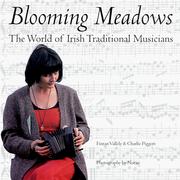
Portraits of traditional musicians in their own words, with photographs — the single best way to understand that this is a music of individuals and localities rather than a uniform national style. Read it after the survey books, when the names start meaning something.

Fieldwork among Donegal and Tyrone fiddlers in the 1970s, with transcriptions, life histories and photographs of players most of whom are now gone. The finest documentation of one regional style in existence, and a model of what this kind of book can be.

Song and singing on Tory Island, and the best English-language account of sean-nós — what the songs mean in the community that keeps them, and how performance works when nobody involved thinks of it as performance. Ó Laoire is both scholar and singer.
Collectors, revivalists and what got chosen
IntermediateSee how the repertoire that sessions now play was assembled, who did the assembling, and what the twentieth-century revival added and removed.
▸ Study plan for this stage
Pace: Five to six weeks, and be clear about what these books are before you buy them. O'Neill's Music of Ireland, Eighteen Hundred and Fifty Melodies (358 pages) is a tune collection — bar after bar of notation, a primary source published in 1903, not a history and not readable cover to cover; use it as a
- A tune collection is a primary source, not a history — O'Neill's 1850 melodies is evidence of what was played and by whom, and its 1903 publication date is the fact that matters
- O'Neill as a participant rather than a neutral collector: a Cork emigrant and Chicago police chief collecting from the emigrant musicians around him, which shaped what got written down
- Canonisation — how the tunes in one collection became the tunes sessions now play, and what that excluded
- The Chicago and New York recordings of the 1920s as the reason so much surviving repertoire was preserved outside Ireland
- Seán Ó Riada, Ceoltóirí Chualann and the invention of the ensemble format the Chieftains made famous — the origin of every argument about arrangement and authenticity in this music
- Revival as selection: what the twentieth century added, what it dropped, and who was in a position to decide
- Williams's framing of authenticity, commercialisation and diaspora as scholarly problems with a literature, rather than as opinions to be traded
- What kind of document is O'Neill's collection, and what questions can it answer that no history of the music can?
- Given that O'Neill collected largely from emigrant players in Chicago, what would you expect his collection to over-represent and under-represent?
- Which tunes you have heard in sessions can you trace to O'Neill, and how would you check?
- What exactly did Ó Riada do to traditional tunes that had not been done before, and what is the strongest objection to it?
- Where does Williams disagree with the popular accounts you read earlier, and on what evidence?
- After all of this: who chose the repertoire that a session plays tonight, and when?
- Take five tunes you have heard at a session, look each one up in O'Neill's collection, and note the setting he prints against the setting you heard. Every difference is a century of oral transmission, measurable on the page.
- Read O'Neill's Irish Minstrels and Musicians alongside the collection and find three players whose biographies explain tunes in the book — this is what turns a tune list back into people.
- Listen to a Ceoltóirí Chualann recording and a field recording of the same tune type from the same era, then read the Ó Riada biography's account of the arrangement and write down what he added, removed and fixed.
- Pick one chapter of Williams's Focus and list every claim it makes that contradicts something in O'Connor or Ó hAllmhuráin; note in each case whether the disagreement is about evidence or about framing.
- Complete your timeline: mark on it when each book on this path was written, and beside it what was happening in the music at that moment. Carson in 1996 and O'Neill in 1903 are describing different traditions.
Next up: The path ends where it started — at the session — but with the repertoire on the table now legible as something assembled by named people at datable moments.
The tune collection, published in 1903 by a Chicago police chief who had emigrated from Cork — the single most consequential document in the tradition, and still the source many session tunes descend from. Read it as an object and a source, not cover to cover; its long catalogued title is just the original subtitle.

O'Neill's prose companion: biographies of the pipers, fiddlers and collectors he knew or tracked down, and a portrait of the emigrant Chicago scene that preserved so much of this music. Read it after the collection to see who the tunes came from.
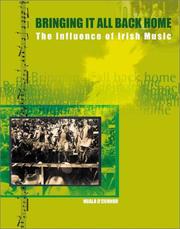
The long conversation between Irish music and America — emigration, the 78s recorded in New York in the 1920s, country music, and the traffic back the other way. The book that explains why so much of the surviving repertoire was recorded outside Ireland.
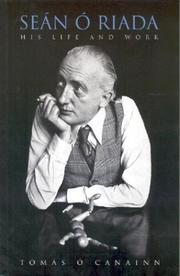
The life of the composer who arranged traditional tunes for an ensemble in the early 1960s, founded Ceoltóirí Chualann and effectively invented the format the Chieftains made famous. Every argument about arrangement and authenticity in this music starts here.

Williams's ethnomusicology textbook, catalogued under the bare series title but published as Focus: Irish Traditional Music. The most academically rigorous overview on this path, and the right closing book: it takes the questions raised by everything above — authenticity, revival, commercialisation, diaspora — and treats them as a scholarly field rather than a set of opinions.
Discussion
Keep reading
Paths that share books, cover the same subject, or open a related topic.