Indian Classical Music: The Best Books to Read, in Order
Indian classical music is unusually hard to read your way into, because the two systems — Hindustani in the north and Carnatic in the south — share a vocabulary and use it differently, and almost every English book assumes you can already hear the difference. The fix is to start with a book built around recordings, then take a musician's memoir so the gharana lineages become people, then the analytical work on raga and tala, and only then the history of how the modern tradition was assembled. Listen while you read; none of this works as reading alone.
Learn to Hear It
IntermediateDistinguish raga from scale and tala from metre, follow the shape of an alap into a composition, and recognise a handful of ragas reliably.
▸ Study plan for this stage
Pace: 4 weeks, and the reading is the smaller half of it. The Raga Guide is 184 pages and was published as a book with accompanying recordings — the recordings are the actual instrument here, and a second-hand copy without the discs does the job badly, so budget an hour of listening a day ahead of the pag
- A raga is not a scale. Bor gives each of his seventy-four ragas an ascent and descent, a characteristic phrase, and emphasised degrees — the phrase is the identity, the pitch set alone is not.
- A tala is not a time signature. It is a cycle with a named first beat, sam, and a fixed drum pattern; finding sam by ear is the skill this stage exists to build.
- The shape of a Hindustani performance: unmetred alap, then jor and jhala, then a composition with the drum entering. What has already happened before the tabla arrives is most of the raga.
- The drone is structural, not background. Everything you hear is heard against the tanpura, which is why the same phrases over a different tonic sound like a different piece.
- Hindustani and Carnatic share a vocabulary and use it differently — raga and ragam, tala and talam, that and melakarta. Wade covers both; note every term that shifts meaning as you meet it.
- Bor's ragamala iconography records the associations of season, hour and mood attached to particular ragas. These are prescriptive conventions, not descriptions of how the music sounds.
- The Masseys place classical music inside a larger field that includes film music and dance — useful early, because the classical category is smaller and more recent than it presents itself as being.
- What three things does Bor give for every raga, and can you produce them from memory for Yaman and for Bhairav?
- What does sam do that the downbeat of a bar does not?
- At what point in a performance does the tabla enter, and what has the soloist established before that?
- Which terms in Wade's book mean one thing in the north and something else in the south?
- Why does a raga sound different when the tanpura is retuned, if the intervals are unchanged?
- Take Bor's entries for Yaman, Bhairav, Bhairavi and Malkauns, play the corresponding recordings, and sing the ascent and descent along with each before reading a line of his commentary.
- Shuffle four Raga Guide tracks and try to name the raga from the characteristic phrase alone; then read Bor's entry for each and write down what you missed.
- Clap a sixteen-beat teentaal and a ten-beat jhaptaal against recordings until you can find sam without counting from the beginning of the track.
- Read Wade's chapter on instruments, then listen to one full performance and write down which instrument enters when and what each is doing; check your account against hers.
- Find two claims in the Masseys about the boundary between classical and popular music that neither Bor nor Wade makes, and note what kind of evidence each rests on.
Next up: You have heard the raw material; the next stage introduces the people who transmit it, so that the lineages behind those recordings stop being names and become an arrangement with obligations attached.

A survey of seventy-four Hindustani ragas with notation, ascent and descent, characteristic phrases and iconography, built around accompanying recordings. The single best starting point because it forces you to listen rather than read about listening.

Wade's introduction covers both systems, instruments, and the relationship between music and religion, at a level that assumes no training. Read it as the framework the Raga Guide's examples fit into.

Massey and Massey's short general history, covering both traditions plus dance and the film-music world. Third because it is the quickest way to fill the historical background the other two skip.
From Inside the Tradition
BeginnerUnderstand the guru-shishya relationship and the gharana lineages as lived arrangements rather than as a chart, and see what a lifetime of practice actually involves.
▸ Study plan for this stage
Pace: 3 weeks. My Music, My Life is 160 pages and reads in two sittings; Raga Mala is 336 pages and is a fuller, later and more score-settling autobiography; The Music Room is 313 pages and is the most readable book on this path. Read Shankar's two books close together so the reassessment between them is
- Guru-shishya parampara as Shankar actually describes it at Maihar: residential, open-ended, and organised around obligation rather than around lessons.
- A gharana is a lineage of style with named ancestors, its own repertoire and its own prohibitions — Jaipur-Atrauli through Dhondutai, Maihar through Allauddin Khan.
- Riyaz, the daily practice load, is the tradition's central discipline and the thing the analytical books later formalise as though it were theory.
- Taleem is transmitted selectively. Both books show a teacher withholding as deliberately as they give, which is a fact about the system, not about the individual.
- Shankar's Western career is the case study in what the encounter cost: Raga Mala is much franker than the 1968 book about audiences who did not know what they were hearing.
- Devidayal is documenting a line ending. What supported a musician when there was no court, no broadcaster and no student body is the practical question underneath her portrait.
- What did Shankar do day to day at Maihar, and how long was it before he performed in public?
- What does Raga Mala reframe, regret or reverse from the account given in My Music, My Life?
- What does Dhondutai withhold from Devidayal, and what reason is given?
- Is a gharana a lineage of repertoire, of technique, or of aesthetics? What do these two books show it actually transmitting?
- Who paid each of these musicians, in each period the books cover?
- Read Shankar's account of his training in My Music, My Life, then the same episodes in Raga Mala, and list every point at which the older man tells it differently.
- Take one raga Dhondutai teaches in The Music Room, open Bor's entry for the same raga, and write down how much of the lesson the reference entry does not capture.
- Listen to a Shankar recording from the 1950s and one from the 1970s, describe the difference in your own words, and only then read what he says about the change.
- Write a one-page account of the guru-shishya relationship using only what these three books show happening, excluding everything they claim about it.
Next up: With lineages now attached to faces, the analytical stage that follows reads as an argument about living practice rather than as an abstract classification exercise.
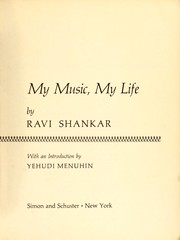
Shankar's 1968 book, half memoir and half primer, including his account of training under Allauddin Khan. Read it first here: the discipline he describes is the thing the analytical books later formalise.
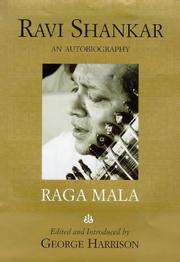
The later autobiography, edited by George Harrison, and much fuller on the Western encounter and its costs. Second, because it is Shankar reassessing the career the earlier book was still in the middle of.
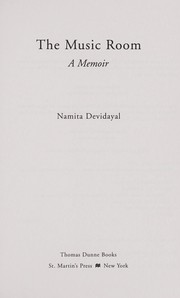
A student's account of learning khayal from Dhondutai Kulkarni of the Jaipur gharana, and the best available portrait of what a teacher-student relationship in this tradition feels like from the inside. The most readable book on the path.
Raga and Tala Analysed
IntermediateMove from recognition to analysis: raga as a set of rules and tendencies, the that classification and its limits, and improvisation as constrained composition.
▸ Study plan for this stage
Pace: 5 to 6 weeks, and slower than the page counts suggest. This is the hardest stage on the path and the first that assumes you can read staff notation and follow a technical argument about modal structure. Jairazbhoy's The Rags of North Indian Music is 222 pages of genuine academic musicology with nota
- Bhatkhande's ten-that classification: what it successfully organises, and the ragas it cannot place — the failure cases are Jairazbhoy's whole argument.
- Jairazbhoy's circular model of that relationships and his account of how ragas drift and evolve within it.
- Vadi and samvadi, and the difference between an inventory of scale degrees and a raga's characteristic movement.
- Notation is an intervention. Kaufmann's staff transcriptions carry equal-tempered assumptions into a tradition with different intonational practice, and reading them critically is part of using him.
- Khayal as a fixed frame — a composed bandish, an expanding tempo scheme, defined improvisational sections — inside which the singer composes in real time.
- Improvisation here is constrained rather than free: the useful question about any performance is what the raga forbade.
- A raga can be modelled as a pitch set, as a phrase repertoire, or as a set of tendencies. Each of these three books assumes a different answer, and that is why they disagree.
- Which ragas does the ten-that system place badly, and what does Jairazbhoy propose in its place?
- What is lost, and what is gained, when a raga is written in Western staff notation?
- Given a bandish, what exactly is fixed and what is the singer inventing on the night?
- Where do Jairazbhoy and Kaufmann give materially different accounts of the same raga?
- What does Wade's analysis of a performance show that a description of the raga could not?
- Pick three ragas covered by Bor, Kaufmann and Jairazbhoy, set the three treatments side by side, and write down every point on which they disagree.
- Follow Jairazbhoy's argument against the ten-that system with Kaufmann open, and find in Kaufmann a raga that the classification handles badly.
- Take one recorded khayal performance that Wade analyses, listen with her analysis beside you, and mark on paper where each section begins and ends.
- Transcribe eight bars of an alap yourself in any notation you like, then read Kaufmann's stated transcription conventions and list what your version discarded.
Next up: Everything analysed so far has been Hindustani, and the next stage corrects that by turning to the southern system, where composition rather than improvisation carries the structural weight.
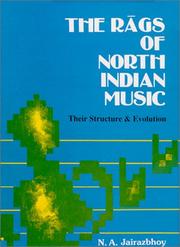
The classic analytical study of raga structure and evolution, and of Bhatkhande's ten-that classification and where it fails. The most rigorous single book here.

Kaufmann's large reference of ragas in Western notation with performance notes. Use it as a lookup beside Jairazbhoy rather than reading it through; its notational approach is itself worth arguing with.

Wade's study of creativity within the dominant Hindustani vocal genre, analysing how singers build a performance inside a fixed frame. Read it last of the three: it is where the analysis reconnects with actual performances.
The Carnatic South
IntermediateCorrect the north-heavy bias of most English-language writing, and understand the kriti, the Trinity, and the different place of composition in the southern system.
▸ Study plan for this stage
Pace: 3 to 4 weeks, and this is where the catalogue thins hardest. T. M. Krishna's A Southern Music is 588 pages by a working Carnatic vocalist, and it is an argument rather than a textbook — Krishna is a participant making a case about his own tradition and about who has historically been permitted to pe
- The seventy-two melakarta scheme as a generative system, and how differently it organises the same problem the ten thats address.
- The kriti as the central form, and the southern tradition as composer-centred: Tyagaraja, Muthuswami Dikshitar and Syama Sastri are named where northern repertoire often is not.
- Manodharma — the improvised alapana, neraval, kalpanaswaram and the drummer's tani avartanam — arranged around a composed piece rather than replacing it.
- Carnatic tala as an explicit counting system: the seven families, the anga scheme of claps and finger counts, and the laya subdivisions. Nothing in the northern system is this formalised.
- Gamaka is the defining ornamentation, and it is why a Carnatic raga cannot be usefully represented by its pitch set alone.
- The kacheri concert format was assembled in the twentieth century, and Krishna's argument is that the assembly excluded the devadasi and hereditary performers whose music it took over.
- What does the melakarta scheme do that a that cannot, and what does that completeness cost?
- In a kriti performance, which sections are composed and which are invented on the night?
- What is Krishna arguing about caste and access, and what is the argument resting on — documentary evidence, or his standing as a performer?
- How is a Carnatic tala counted, and what would your hands be doing during one?
- Which shared terms does Sambamoorthy define differently from Jairazbhoy?
- Build a two-column glossary from Sambamoorthy and Jairazbhoy covering every term the two systems share, with the meaning each gives it.
- Take one Tyagaraja kriti, find a recording, and mark the boundaries of the composed and improvised sections yourself before reading how either book describes the form.
- Count one tala from Sambamoorthy's description, using his claps and finger counts, against a recording, until you can locate the eduppu reliably.
- Read Krishna's chapters on the devadasi tradition and the sabha concert, and hold them for the final stage: Bakhle is about to make the same argument about the north.
Next up: Krishna's claim that the Carnatic concert tradition was constructed rather than inherited is the claim the final stage makes about Hindustani music, and the two are worth reading as one argument.

A leading Carnatic vocalist's book on the aesthetics of the music and, controversially, on the caste politics of who has been allowed to perform it. The best contemporary book on either tradition, and unusually willing to criticise its own.
The standard older reference series on Carnatic theory and practice — raga, tala, forms and instruments — written for students within the tradition. Dense and dated, and still the place the terminology is defined.
How the Modern Tradition Was Built
IntermediateSee classical music as a category that was constructed in the late nineteenth and twentieth centuries, and understand what that construction included and excluded.
▸ Study plan for this stage
Pace: 4 weeks. Two Men and Music is 357 pages of academic history and is the most consequential book on this path. Neuman's The Life of Music in North India is 296 pages of ethnography drawn from fieldwork among Delhi's hereditary musician families. Ranade's Hindustani Music is 166 pages and reads in an e
- Classical is a category that was made in the late nineteenth and twentieth centuries, not one that was inherited.
- Bhatkhande and Paluskar were two different projects — one systematising, notating and secularising, one nationalising and devotionalising — and their exclusions differ accordingly.
- What the projects pushed out: tawaif and courtesan performance, the authority of hereditary Muslim musicians, and oral transmission replaced by institutions, syllabi and examinations.
- Neuman's economic finding: how a hereditary musician community actually reproduces itself, through patronage, marriage, teaching and eventually salaried radio work.
- All India Radio and the conservatories became the new patron, and what they demanded in exchange shaped repertoire, performance length and who was employable.
- Ranade's survey is itself evidence — the tradition's public account of its own antiquity, readable as an artefact once you know the history.
- What did Bhatkhande and Paluskar each actually do, and where did their aims conflict?
- Who lost status when this music became classical, and through what specific mechanism?
- What replaced court patronage, and how did the replacement change what got performed?
- After Bakhle, which statements in Ranade's survey read as claims rather than as facts?
- How much of the analytic apparatus you learned in stage three descends directly from the project Bakhle is describing?
- Reread Jairazbhoy on the ten-that system immediately after Bakhle, and write down separately what the technical critique and the historical critique each say about the same scheme.
- Go through Ranade marking every point at which he states as tradition something Bakhle dates to the last century and a half.
- Set Neuman's account of how a musician's income was assembled against what Shankar and Devidayal describe for their own teachers, and note where the ethnography and the memoirs contradict each other.
- Write the two-paragraph version of this subject you would give a friend — one paragraph on what the music is, one on how the category was made — and note which books you needed for each.
Next up: You now have the sound, the lineages, the analysis and the history of the category itself, and what remains is not another book but sustained listening with The Raga Guide and Kaufmann open beside the recordings, and the Carnatic side pursued through performance where this catalogue runs out.
Bakhle's account of how Bhatkhande and Paluskar turned a courtesan-and-court practice into a national classical tradition, with all the caste and gender exclusions that involved. The book that changes how you read every other book here.

Neuman's ethnography of the hereditary musician communities of Delhi — how the profession actually reproduces itself, economically and socially. The empirical companion to Bakhle's history.
Ranade's short survey from the National Book Trust, useful as a compact statement of the tradition's own account of itself — a good final contrast with the revisionist history in the two books above.
Discussion
Keep reading
Paths that share books, cover the same subject, or open a related topic.