The difficulty with Indian art is scale. A single survey has to cover Buddhist stupas, Hindu temple sculpture, Jain manuscripts, Gandharan hybrids of Greek and Buddhist form, Chola bronzes, Mughal miniature painting and Rajput courts, across two millennia and a subcontinent with distinct regional schools. Every one-volume book therefore compresses something badly, and the useful question is which compression you can live with while you find your way to the specialist literature.
The second thing to know before buying is that much of the foundational scholarship is old and carries the assumptions of its moment — colonial-era classification on one side, and on the other a nationalist and metaphysical reading that emerged partly in reaction to it. Neither is neutral. This does not make those books unusable; it makes reading them without that context a mistake.
Surveys
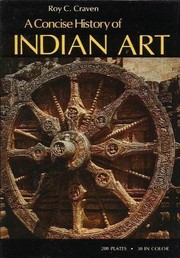
Indian art by Vidya Dehejia, in the Art and Ideas series, is the best single-volume entry: thematically organised, generously illustrated, and written to be read rather than consulted. Start here. A concise history of Indian art by Roy C. Craven is the short World of Art paperback covering the same span in a fraction of the length — useful as a chronological skeleton, and dated in some of its interpretation and terminology.
The art and architecture of the Indian subcontinent by J. C. Harle is the standard scholarly survey, part of the Pelican History of Art series, and the reference professionals actually use. It is dense, chronological and assumes you want the site names and the dynastic sequence. The art of ancient India by Susan L. Huntington is the major university textbook for the earlier material, covering Buddhist, Hindu and Jain art to roughly 1300; it is more thorough than Harle on the ancient period and better organised for teaching. Between the two, Harle gives you the wider span and Huntington the deeper foundation. Most readers need one, not both.
Sculpture and the temple
The Art of Gandhara in The Metropolitan Museum of Art by Kurt A. Behrendt is a museum collection catalogue, and the accessible route into Gandharan sculpture — the Buddhist art of the northwest that absorbed Hellenistic form. Collection catalogues are a genuinely useful book type here: object-by-object, with provenance and dating stated.
Elephanta by Carmel Berkson is a photographic and interpretive study of the rock-cut cave temple near Mumbai and its great Shiva sculptures. The Hindu temple by Stella Kramrisch is the famous two-volume 1946 work on temple form and symbolism, and it needs a warning: it is difficult, it draws heavily on Sanskrit textual sources, and its reading of the temple as the embodiment of a cosmic diagram has been questioned by later scholars who argue she over-systematised a more varied practice. It remains a landmark and it is not where a beginner should start. Indian Sculpture by Pratapaditya Pal is the Los Angeles County Museum collection catalogue, and a good practical complement — real objects, carefully described.
The Sensuous and the Sacred by Vidya Dehejia is an exhibition catalogue on Chola bronzes, and the best introduction to that tradition: how the images were made by lost-wax casting, how they were dressed and processed through streets during festivals, and why they were made to be carried. It also engages directly with the question of what happens when a devotional object becomes a museum piece.
Painting
Indian Painting by Douglas E. Barrett, with Basil Gray, is the older Skira survey of painting traditions — beautiful plates, and interpretation that reflects the 1960s. Early Mughal painting by Milo Cleveland Beach is the specialist study of the imperial atelier under Akbar and its fusion of Persian technique with local practice; it is the sharper scholarly book of the two.
The theorists, read critically
History of Indian and Indonesian art by Ananda Coomaraswamy is from 1927 and remains a foundational text — the first serious attempt at a unified account, by a scholar who was also arguing for Indian art's status against European dismissal of it. Read it as a document of that argument. The transformation of nature in art is Coomaraswamy's theoretical work, comparing Indian and medieval European aesthetics; it is philosophically demanding and its traditionalist framework is a position rather than a consensus. Readers coming from medieval art and illuminated manuscripts will find that comparison particularly useful.
The Body Adorned by Dehejia is the thematic closer: the represented body in Indian art and Sanskrit literature, and the gap between how these images were understood in their own time and how colonial and later viewers read them.
One honest gap: this path stops well short of modern and contemporary Indian art, which is a separate literature. Follow the full sequence for the pre-modern tradition, which is where it is genuinely strong.
Follow the full ordered path here: Indian Art and Sculpture: The Best Books to Read, in Order.