Indian Art and Sculpture: The Best Books to Read, in Order
Indian art covers four and a half thousand years, several religions and a dozen regional traditions, so the useful move is to get one good survey into your head before specialising. This path starts with three surveys that disagree usefully with each other, then works chronologically — Buddhist stupa and cave, the Hindu temple and its sculpture, then the painting traditions — and closes with the interpretive writing that shaped how the field talks, including the parts of it that are now contested.
The One-Volume Surveys
IntermediateAcquire a chronological and regional map — Indus, Mauryan, Kushan, Gupta, Chola, Mughal — dense enough that later specialist books have somewhere to attach.
▸ Study plan for this stage
Pace: 7–8 weeks, about 1,300 pages, and slower per page than plain text because the plates are the argument. Dehejia's Indian Art (447) is a general survey written for a broad readership and is the best-written of the three; Craven's A Concise History of Indian Art (252) is a compact chronological survey
- The chronological spine: Indus, Mauryan, Shunga, Kushan, Gupta, Pallava, Chola, Hoysala, Vijayanagara, Sultanate, Mughal
- The regional spine: north and south, Deccan, east, and why the same period looks different in each
- Materials and their consequences — sandstone, granite, schist, terracotta, bronze, and what each permits
- Iconography as a shared vocabulary across Hindu, Buddhist and Jain traditions: mudra, asana, vahana, ayudha
- Use versus appearance: Dehejia's consistent question of what an object was for, which Craven and Harle mostly leave aside
- The difference between a general survey, a compact chronology and a reference handbook, and when each is the right book to open
- Dating in this field: how much rests on inscription, how much on style, and how contested that is
- Reproduce the dynastic chronology from memory with an approximate date range and one representative monument for each.
- Where do Dehejia, Craven and Harle disagree on a date or an attribution, and how does each justify it?
- How does the available stone in a region shape what its sculpture looks like?
- What are the standard identifying attributes of Vishnu, Shiva, Durga and the Buddha?
- Which of these three books would you reach for to answer a question about a specific temple, and why?
- Build a one-page timeline with dynasty, dates, region and one named monument per row; add to it through every later stage.
- Take ten plates from Dehejia and identify period and region before reading the caption; track your accuracy as you go.
- Make a flashcard set of iconographic attributes — vahana, ayudha, mudra — and drill it until you can name a deity from a photograph.
- Pick one monument covered by all three books and write a paragraph on what each author chooses to say about it; the differences are a lesson in what a survey is for.
Next up: With a map in your head, the next stage goes back to the beginning and follows the first large-scale Indian art in detail.
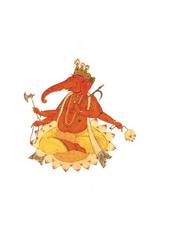
Dehejia's Phaidon survey is the best-written single volume and the most attentive to how objects were used rather than only how they look. Start here.
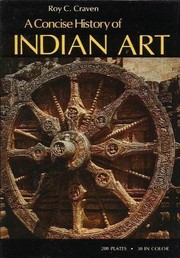
The Thames and Hudson short survey, also published as Indian Art: A Concise History. Read it second and quickly: it is the compact chronology to keep in your head, and it is the one to reread whenever you lose the thread of a dynasty.

The Pelican History of Art volume, and the reference-grade survey — much heavier than the other two and organised for looking things up. Third because it is where you go once the short surveys leave a gap.
Buddhist Beginnings: Stupa, Cave, Gandhara
IntermediateFollow the earliest large-scale Indian art — the aniconic stupa, the rock-cut monastery, and the Greek-influenced Gandharan Buddha — and understand why the Buddha image appears when it does.
▸ Study plan for this stage
Pace: 6 weeks, about 1,030 pages, but the balance is uneven. Huntington's The Art of Ancient India (786) is a scholarly textbook — dense, strong on chronology and inscriptional evidence, and the core of this stage; read it at 25–30 pages a day. Behrendt's The Art of Gandhara in the Metropolitan Museum of
- Aniconic representation: the Buddha shown by footprint, empty throne, wheel or tree, and the debate over why
- Stupa anatomy — anda, harmika, yasti, chatra, vedika, torana — and the practice of circumambulation it exists for
- Bharhut, Sanchi and Amaravati as the sequence of early narrative relief
- Rock-cut architecture: chaitya hall and vihara, and the imitation of timber forms in stone
- The Gandhara–Mathura question: two roughly contemporaneous origins for the Buddha image, and what each looks like
- Hellenistic drapery, Roman workshop contact and the trade routes that carried them into Gandhara
- The Gupta synthesis at Sarnath and Mathura as the point the two streams resolve
- Elephanta's Sadashiva and what a whole book on one monument can establish that a survey cannot
- What are the competing explanations for aniconism, and what evidence does Huntington bring to each?
- Name the parts of a stupa and explain what a worshipper physically does at one.
- How do you tell a Gandharan Buddha from a Mathuran one at sight, and what does each borrow from where?
- Why does the Buddha image appear when it does, on Huntington's account?
- What does Berkson argue about Elephanta's programme, and what would a survey chapter have had to leave out?
- Draw a labelled cross-section and plan of the Great Stupa at Sanchi from Huntington's plates, and trace the circumambulatory route on it.
- Take twenty Buddha images from Huntington and Behrendt and sort them into Gandharan and Mathuran before checking; write down which cue you used each time.
- Read one narrative relief at Sanchi panel by panel from the plates and write out the story it tells in order.
- Reconstruct Elephanta's plan from Berkson and mark where the visitor stands to see the Sadashiva as intended.
Next up: The rock-cut cave leads directly to the built temple, which the next stage treats as an instrument rather than a building.
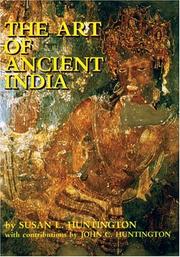
The standard scholarly account of Buddhist, Hindu and Jain art before the Islamic period, unusually strong on chronology and inscriptional evidence. The core text of this stage.

Catalogued as The Art of Gandhara in the Metropolitan Museum of Art. A short, well-illustrated introduction to the Gandhara synthesis — where Hellenistic drapery meets Buddhist iconography. Read it directly after Huntington's Gandhara chapters.
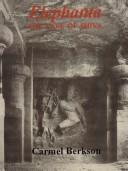
A single-site study of the great rock-cut cave and its Sadashiva. Third because after two synoptic books it is worth seeing what a scholar does with one monument for a whole volume.
The Hindu Temple and Its Sculpture
IntermediateRead a temple as a designed religious instrument rather than a building with carvings on it, and follow the sculptural traditions of the south and the Deccan.
▸ Study plan for this stage
Pace: 6 weeks, about 860 pages, and the hardest stage on the path. Kramrisch's The Hindu Temple (466) is a 1946 two-volume interpretive study of the temple as a cosmic diagram, argued from Sanskrit architectural texts — it is difficult, sometimes obscure, and foundational; read the opening chapters proper
- Vastupurushamandala: the ritual ground plan and Kramrisch's reading of the temple as a cosmic diagram
- Temple anatomy — garbhagriha, mandapa, shikhara or vimana, amalaka, gopura
- Nagara and Dravida as the two structural traditions, plus Vesara in the Deccan
- The Shilpa Shastras and Vastu texts as prescriptive sources, and the gap between prescription and surviving practice
- Chola lost-wax bronze casting, and the specific evidence for it in the objects
- Utsava murti — the processional bronze as ritual equipment that is dressed, carried and bathed, not displayed
- Object-based method: how Pal dates and attributes an individual piece from material, style and provenance
- Where Kramrisch's metaphysical reading illuminates a building and where it outruns the evidence
- Describe the vastupurushamandala and explain what Kramrisch claims it does for the building set on it.
- What are the visible differences between a Nagara and a Dravida temple, and where does each dominate?
- How is a Chola bronze made, and what does the casting method imply about workshop organisation?
- What does Dehejia establish about the ritual life of these bronzes that a museum display conceals?
- Where does Pal's evidence for a date rest on style alone, and how secure is that?
- Draw the plan and elevation of one Nagara and one Dravida temple side by side, labelling every part in Sanskrit and English.
- Take five entries from Pal's catalogue and reconstruct his reasoning to a date and region; then try to date five unlabelled plates from the survey books using the same method.
- Read one of Kramrisch's chapters and rewrite its central claim in a single plain sentence — the exercise is to find out whether it survives translation.
- Follow one Chola Nataraja through Dehejia's account from casting to procession to worship, and list every physical trace the ritual leaves on the object.
Next up: Sculpture and architecture dominate the surviving record; the next stage picks up the painting traditions, which survive differently and are attributed differently.
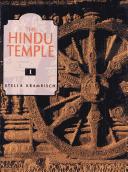
Kramrisch's 1946 two-volume study of the temple as cosmic diagram, drawing on the Sanskrit architectural texts. Difficult and foundational; read the opening chapters properly and use the rest as reference.

Pal's Los Angeles County Museum catalogue is the most useful object-by-object introduction to Indian sculpture in the round, with excellent entries on materials and dating. Read it alongside Kramrisch for the concrete against her abstraction.
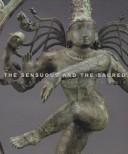
Dehejia on Chola bronzes — how they were made, processed through the streets, dressed and worshipped. Placed here because it is the clearest demonstration on this path that these objects were ritual equipment, not gallery pieces.
The Painting Traditions
IntermediateFollow Indian painting from the murals and manuscripts through the Mughal atelier to the Rajput and Deccani courts, and learn what a workshop attribution rests on.
▸ Study plan for this stage
Pace: 3 weeks, about 385 pages. Barrett and Gray's Indian Painting (213) is a compact survey from the cave murals through Mughal and Rajput schools and remains the standard short introduction; Beach's Early Mughal Painting (172) is a specialist study of the imperial ateliers under Humayun and Akbar by the
- Ajanta's murals and the technical and survival problems of wall painting in this climate
- Palm-leaf and paper manuscript illumination as the surviving continuity between murals and court painting
- The Persian inheritance: Safavid masters at Humayun's court and what they brought
- The Mughal atelier as an organised workshop — division of labour between designer, colourist and portraitist, and the ascriptions in the margins
- Akbar's Hamzanama and Razmnama as state projects, and what scale did to style
- Rajput and Pahari painting: devotional and literary subject matter, flat colour, and a different relationship to naturalism
- Deccani painting as a third tradition with its own Persian and local sources
- What a workshop attribution actually rests on: inscriptions, hands, pigment, paper and provenance
- How does a Mughal painting differ from a Rajput one of the same date, element by element?
- What do the marginal ascriptions on Mughal folios tell you about how a picture was made?
- What did the Persian painters bring to Humayun's and Akbar's ateliers, and what did Indian practice contribute?
- Why is Deccani painting treated as a separate tradition rather than a variant?
- On what evidence is a folio attributed to a named artist, and how strong is that evidence typically?
- Take twenty plates across Barrett and Beach and sort them into Mughal, Rajput, Pahari and Deccani before checking captions.
- Read the marginal ascriptions on the Hamzanama and Akbarnama folios Beach reproduces and reconstruct the division of labour on a single page.
- Compare a Persian Safavid folio with an early Akbari one on the same subject and list every element that changed.
- Pick one Rajput series — a Gita Govinda or a ragamala — and describe how the painting depends on a text the viewer is assumed to know.
Next up: You now know the objects; the final stage is about the scholarship that decided how they would be talked about.
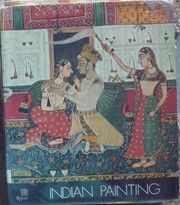
Barrett and Gray's survey of painting from the caves through the Mughal and Rajput schools — still the standard short introduction, and strong on how the regional styles relate.

Catalogued as Early Mughal Painting. Beach is the leading authority on the imperial ateliers, and this covers the formative period under Humayun and Akbar when the Persian and Indian traditions fused. Read it after Barrett's overview.
The Interpretive Tradition, and Its Critics
IntermediateMeet the scholarship that built the field's vocabulary, and be able to say where its metaphysical framing helps and where it obscures.
▸ Study plan for this stage
Pace: 4–5 weeks, about 770 pages. History of Indian and Indonesian Art (295) is Coomaraswamy's 1927 survey, the book that established the field in the West — read it as a historical document as much as a survey, since its dating has been superseded even where its framing has not. The Transformation of Nat
- Coomaraswamy's central claim: that Indian art proceeds from prescribed inner vision rather than from observation
- The traditionalist and perennialist frame he brought to the material, and where it comes from
- Why the vocabulary the field still uses — rasa, dhyana, the 'ideal' image — largely descends from him
- The essentialising critique: what is lost by treating a four-thousand-year, multi-religious body of work as expressing one metaphysic
- Dating superseded versus framing entrenched, and why the second is harder to dislodge
- Dehejia on the adorned body: sacred and erotic in the same image, and the discomfort of the colonial and nationalist readings of it
- How a field argues with its founder — and what it means that Dehejia does it using Coomaraswamy's own objects
- State Coomaraswamy's theory of the image in one paragraph. What would count as evidence against it?
- Which of Coomaraswamy's datings have been superseded, and by what kind of evidence?
- What exactly is the essentialising charge against The Transformation of Nature in Art?
- What is Dehejia's argument in The Body Adorned, and which specific Coomaraswamy claim is she answering?
- Looking back over the whole path, whose vocabulary have you been using without noticing?
- Take one object Coomaraswamy discusses and read the same object in Huntington, Pal and Dehejia; write out the four readings side by side.
- Mark every place in The Transformation of Nature in Art where a claim about all Indian art is supported by a single example.
- Go back to your stage-one timeline and correct every date that Coomaraswamy gives differently, noting what changed the dating.
- Write a 500-word assessment of what Coomaraswamy established, what he imposed, and which of his terms you would keep.
Next up: With the field's founding frame and its critics both in view, you can read a museum label, an excavation report or a monograph and see the interpretive choices it is making.
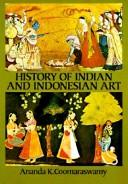
Coomaraswamy's 1927 survey, the book that established Indian art as a serious field in the West. Read it as a historical document as much as a survey — its dating has been superseded, its framing has not been displaced.
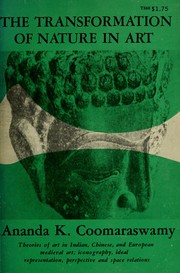
His theoretical statement, arguing that Indian art works from prescribed inner vision rather than observation. Immensely influential and much criticised for essentialising; read it second, and read it sceptically.
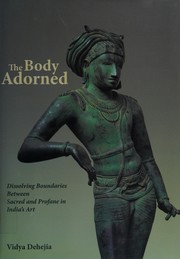
Dehejia on the sacred and profane body in Indian art, and a direct modern answer to Coomaraswamy's frame. The right closing book because it shows the field arguing with its own founder using the same objects.
Discussion
Keep reading
Paths that share books, cover the same subject, or open a related topic.