Get into voice acting: the reading path
This curriculum takes a complete beginner from raw vocal awareness through professional-grade performance craft, home studio setup, and real-world industry navigation. Each stage builds directly on the last — you must understand your instrument (your voice and body) before you can shape characters, and you must master the craft before you can market yourself effectively.
Foundations: Know Your Instrument
BeginnerUnderstand how the voice works physically, develop breath support and resonance, and build the habit of active listening — the bedrock skills every voice actor needs before touching a microphone.
▸ Study plan for this stage
Pace: 6–8 weeks total. Week 1–3: "Set Your Voice Free" by Roger Love (~20–25 pages/day, including pause days to practice exercises). Week 4–7: "The Voice Book" by Kate DeVore (~15–20 pages/day, slower pace to absorb the anatomy and clinical detail). Week 8: Review week — revisit highlighted passages from
- The voice as a physical instrument: the larynx, vocal folds, resonating chambers (chest, mouth, nasal), and articulators all work as an integrated system — not in isolation
- Breath is the engine: Roger Love's core teaching that diaphragmatic breath support is the non-negotiable foundation of vocal power, consistency, and longevity
- The three vocal qualities Love identifies — chest voice, head voice, and falsetto — and how blending them produces a full, flexible, and expressive range
- Resonance placement: understanding how shifting tonal focus between chest and head resonators changes the color, warmth, and authority of the voice
- Vocal health and hygiene: Kate DeVore's clinical framework for hydration, vocal rest, avoiding strain, and recognizing early warning signs of damage
- The anatomy of voice production as mapped in The Voice Book — how the respiratory, phonatory, and resonatory systems interact, giving the reader a 'mechanic's knowledge' of their own instrument
- Active listening as a skill: training the ear to hear pitch, pace, tone, resonance, and emotional subtext in voices encountered every day
- Habit formation over performance: both books emphasize that consistent daily practice of fundamentals — not occasional bursts — is what builds a reliable instrument
- After reading Roger Love, can you explain in plain language what diaphragmatic breathing is and demonstrate the difference between shallow chest breathing and deep supported breathing?
- What are the three vocal qualities Love describes, and how would you use each one intentionally to convey a different emotional tone in a single sentence?
- Using the anatomical framework from DeVore's The Voice Book, can you trace the journey of a single sound from breath intake through phonation to the listener's ear?
- What daily vocal hygiene habits does Kate DeVore recommend, and why does each one matter physiologically — not just as a rule to follow?
- How does resonance placement change the perceived character of a voice, and what physical sensations can you use to identify where your voice is resonating right now?
- Both Love and DeVore stress listening as a foundational skill. What specific qualities should you be training your ear to notice, and how does that awareness feed back into your own vocal choices?
- Breath mapping (from Set Your Voice Free): Lie flat on the floor with a book on your stomach. Practice Love's diaphragmatic breathing until the book rises and falls visibly with every breath. Do this for 5 minutes each morning throughout the reading of both books.
- Vocal quality blending drill (Roger Love): Pick one neutral sentence (e.g., 'The light is on in the kitchen'). Read it three times — once anchored in pure chest voice, once in head voice, once blending both. Record each take on your phone and listen back to identify the tonal differences.
- Anatomy sketch exercise (The Voice Book): After finishing DeVore's anatomy chapters, close the book and draw a simple diagram of the vocal production system from memory — label the diaphragm, larynx, vocal folds, pharynx, and oral/nasal resonators. Check it against the book and redraw any gaps.
- Active listening log: For two weeks, spend 10 minutes a day listening to a podcast, audiobook, or radio presenter with headphones. Write 3–5 observations per session about the speaker's breath support, resonance, pace, and emotional tone — using the vocabulary from both books.
- Resonance placement exploration (both books): Hum a comfortable note and place one hand on your chest, one on the top of your head. Gradually shift the pitch up and down and notice where you feel vibration. Journal what physical sensations correspond to chest-dominant vs. head-dominant resonance.
- Vocal hygiene audit (The Voice Book): Using DeVore's recommendations as a checklist, audit your current daily habits — water intake, caffeine/alcohol consumption, sleep, speaking environment, and any habitual throat-clearing. Write a one-week plan to close the gaps between your current habits and DeVore's guidelines.
Next up: Mastering how the voice works physically and building consistent breath support and listening habits gives the reader a stable, healthy instrument to bring into the next stage, where the focus shifts from the instrument itself to how it is used expressively — interpreting copy, finding character, and making deliberate performance choices in front of a microphone.
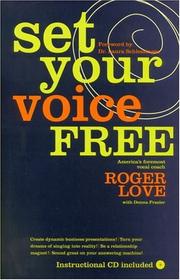
A vocal coach to major stars, Love breaks down breath, tone, and range in plain language — the perfect first book for anyone who has never formally studied their voice.

A speech-language pathologist's guide to vocal health, warm-ups, and projection; reading this second ensures you build good habits and avoid injury from the very start.
Core Craft: Performance and Interpretation
BeginnerLearn how to read copy with intention, find the emotional truth in a script, and begin developing distinct characters — the central performance skills of voice acting.
▸ Study plan for this stage
Pace: 10–12 weeks total: ~2–3 weeks on "Voice Acting For Dummies" (~20–25 pages/day), ~4 weeks on "The Art of Voice Acting" (~15–20 pages/day, slower due to density of technique), ~3–4 weeks on "There's Money Where Your Mouth Is" (~20 pages/day). Plan for 5–6 days of reading per week, reserving one day fo
- Copy reading with intention: understanding that every word in a script is a deliberate choice and must be delivered with a clear purpose, as introduced in Voice Acting For Dummies
- The PREP formula (Personalization, Relaxation, Energy, Performance) from The Art of Voice Acting — a repeatable mental framework for approaching any script
- Finding the emotional truth: identifying the underlying feeling or motivation behind a piece of copy before opening your mouth, emphasized across all three books
- The 'conversational' delivery style: sounding natural, unscripted, and human rather than 'announcer-y', a core theme in both Alburger and Clark
- Script analysis and marking: physically annotating copy for emphasis, pauses, pacing, and tone shifts, as detailed in The Art of Voice Acting
- Character development fundamentals: building distinct voices from the inside out (attitude, backstory, physicality) rather than just changing pitch or accent, covered in depth in There's Money Where Your Mouth Is
- The 'inner monologue' technique: maintaining an active internal thought process while performing to keep delivery alive and spontaneous, as taught by Elaine A. Clark
- Mic technique and performance space basics: understanding how physical presence, breath, and proximity to the mic shape the final performance, introduced in Voice Acting For Dummies and reinforced by Clark
- After reading Voice Acting For Dummies, can you explain in your own words why 'sounding like you're reading' is the single biggest mistake a beginner makes, and what Ciccarelli recommends to overcome it?
- What are the four components of Alburger's PREP formula in The Art of Voice Acting, and how do you apply each one before stepping up to the mic?
- How does Alburger distinguish between 'character' and 'personality' in a performance, and why does that distinction matter for commercial copy versus narration?
- According to Elaine A. Clark in There's Money Where Your Mouth Is, what is the role of the 'inner monologue' during a live read, and how do you practice building one for a given script?
- Across all three books, a consistent theme is 'conversational authenticity.' How do Ciccarelli, Alburger, and Clark each approach this goal differently, and what practical techniques does each one offer?
- How would you use the script-marking system described in The Art of Voice Acting to prepare a 30-second commercial spot from scratch — walk through each step?
- 'Cold vs. Prepared' drill (Voice Acting For Dummies): Record yourself reading the same 30-second piece of copy cold, then spend 10 minutes applying Ciccarelli's preparation tips (identify the audience, find your motivation, relax) and record it again. Compare the two takes and write down three specific differences you hear.
- PREP formula run-through (The Art of Voice Acting): Choose a new piece of commercial copy each week. Before recording, write out one sentence for each PREP component — who you're personalizing it for, how you'll relax into it, where your energy level should sit, and what your performance objective is. Record the take, then review whether your written intentions matched what came out.
- Script marking session (The Art of Voice Acting): Print a one-page narration script and mark it by hand using Alburger's notation system — underline key words, mark pauses with slashes, note emotional tone shifts in the margins. Record the marked version, then record an unmarked version of the same script. Analyze which felt more controlled and why.
- Inner monologue journaling (There's Money Where Your Mouth Is): Take a 60-second script and, before recording, write a full paragraph of the character's internal thoughts — what they want, what they fear, what they assume about the listener. Record the script while mentally 'thinking' those thoughts. Replay and note whether the delivery feels more alive than your baseline recordings.
- Character-building from the inside out (There's Money Where Your Mouth Is): Pick three wildly different characters (e.g., a tired nurse, an excited child, a skeptical retiree). For each, write a brief backstory (age, mood, relationship to the listener), then record the same single line of copy as each character — without changing your pitch artificially. Focus only on attitude and intention. Revie
- Weekly listening log: Each week, choose 5 real commercials, audiobook samples, or animation clips and transcribe what you hear. For each, note: What is the emotional intention? Where does the performer place emphasis? Does it feel conversational? Map your observations back to concepts from whichever book you're currently reading to build critical listening habits.
Next up: Mastering intentional performance and script interpretation here gives the reader a reliable creative foundation — so the next stage can shift focus outward to the professional and business realities of voice acting (auditioning, home studio setup, marketing, and booking work) without having to revisit basic performance insecurity.

A broad, practical survey of the entire voice-acting landscape — copy interpretation, character work, and studio etiquette — giving beginners a reliable map of the whole field.

The most widely used voice-acting textbook; it goes deeper on performance psychology, script analysis, and the 'conversational' delivery style that defines modern VO work.
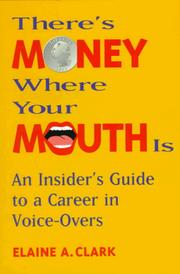
Bridges pure performance technique with real-world application across commercial, animation, and narration genres — a natural next step once you have Alburger's framework.
Home Studio: Recording and Production
IntermediateSet up a professional-sounding home recording space, understand microphones and audio interfaces, and produce clean, broadcast-ready audio files independently.
▸ Study plan for this stage
Pace: 6–8 weeks, ~25–35 pages/day, 5 days/week — prioritize chapters on microphone technique, room acoustics, and signal chain before moving into editing and mixing sections; revisit the acoustics and noise-reduction chapters after your first real recording session
- Signal chain fundamentals: how audio travels from microphone capsule → preamp → audio interface → DAW, and where quality is gained or lost at each stage
- Microphone types and polar patterns: the practical differences between condenser, dynamic, and ribbon mics, and why cardioid/hypercardioid patterns matter for voice-over isolation
- Room acoustics and acoustic treatment: understanding reflection, absorption, diffusion, standing waves, and how to identify and tame a 'roomy' or 'boxy' recording space without professional construction
- Gain staging and the noise floor: setting proper input levels to maximize signal-to-noise ratio, avoiding clipping, and understanding headroom in a digital recording environment
- Noise identification and elimination: recognizing the sources of hum, hiss, HVAC rumble, and electrical interference, and applying both physical and post-production solutions as taught by Rose
- Equalization and dynamic processing for voice: using EQ to correct proximity effect and room coloration, and using compression/limiting to even out vocal dynamics for broadcast delivery
- Editing for broadcast-ready audio: Rose's workflow for cleaning up recordings — removing breaths, clicks, and room noise — and exporting files to industry-standard specs (sample rate, bit depth, file format)
- Monitoring and critical listening: the role of studio headphones vs. nearfield monitors, how to train your ears to hear problems before a client does
- According to Rose's signal chain model, at which point in the chain is noise most damaging, and why is gain staging at the preamp/interface stage so critical for voice-over work?
- What are the acoustic trade-offs of recording in a small, untreated room, and what low-cost physical solutions does Rose recommend to reduce early reflections around the microphone?
- How does the proximity effect influence a voice actor's microphone technique, and what EQ correction can compensate for it in post-production?
- What is the difference between a noise floor problem and a room acoustics problem, and how would you diagnose which one is affecting a recording using only your DAW's meters and your ears?
- Walk through Rose's recommended workflow for taking a raw voice-over recording to a broadcast-ready deliverable: what processing steps are applied, in what order, and why?
- What file format, sample rate, and bit depth specifications does Rose identify as standard for broadcast and online audio delivery, and what happens to audio quality if you export at settings below those standards?
- Acoustic audit: Before reading past the acoustics chapters, clap once sharply in your recording space and record it. Listen back and identify flutter echo, reverb tail length, and low-end buildup. Document your findings, then re-record after adding any treatment (moving blankets, bookshelves, a closet setup) and compare the two files side by side.
- Signal chain mapping: Draw a physical diagram of your own studio signal chain — mic → cable → interface → DAW → monitors/headphones — and label every point where gain is adjusted. Use Rose's framework to set your interface input gain so your voice peaks around –12 to –6 dBFS, then record a 60-second monologue and confirm there is no clipping and the noise floor sits below –60 dBFS.
- Microphone placement experiment: Record the same 30-second script excerpt at three different mic distances (3 inches, 6 inches, 12 inches) and two off-axis angles (0° and 45°). Label each file, listen critically, and write a one-paragraph note on how proximity effect and room sound change with each position — referencing Rose's explanations.
- Noise hunt and fix session: Deliberately introduce a common noise source (a nearby fan, a phone on the desk, a loose cable) into a recording, then use your DAW's tools — noise reduction plug-in, high-pass filter, notch EQ — to clean the file as Rose describes. Compare the processed and unprocessed versions and note what was recoverable vs. what required a re-record.
- Full production pass: Record a complete 90-second commercial script, then take it through Rose's full post-production workflow: edit out flubs and excessive breaths, apply EQ and gentle compression, normalize or limit to a target loudness (e.g., –3 dBFS peak / –16 LUFS integrated), and export as a broadcast-spec WAV. Share the file with a peer or mentor for feedback.
- Critical listening log: Each week, download a professionally produced audiobook sample or broadcast commercial and import it into your DAW. Analyze its frequency balance, dynamic range, and noise floor using your meters and EQ analyzer. Write a short log entry comparing it to your own recordings and identifying one specific technical gap to close that week.
Next up: Mastering a clean, controlled home studio signal chain and post-production workflow gives you the technical foundation to focus entirely on performance in the next stage — because when recording quality is no longer a variable, you can direct your full attention to character, emotion, and delivery nuance.
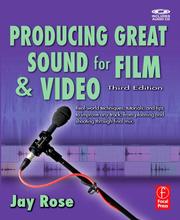
The definitive practical guide to recording, editing, and cleaning up spoken audio; gives voice actors the production literacy to self-direct and deliver polished files to any client.
Business and Industry: Breaking In and Building a Career
ExpertUnderstand how the voice-acting industry is structured, how to market yourself, build a demo, find an agent, and sustain a long-term freelance career.
▸ Study plan for this stage
Pace: 3–4 weeks, ~20–25 pages/day — Apple's book is dense with practical industry detail, so a measured pace allows time to pause and act on each chapter's advice (e.g., researching local studios, drafting copy) rather than reading passively.
- The landscape of the voice-over industry: the major markets (commercials, animation, audiobooks, corporate/industrial, promos, trailers, video games, telephony) and how they differ in pay, access, and skill demands
- Demo production: what makes a professional demo reel, how to structure it for each market, when you are truly ready to record one, and how to avoid the common trap of producing a demo prematurely
- The agent relationship: how to find and approach agents, what agents look for in new talent, the difference between union (SAG-AFTRA) and non-union work, and how to submit yourself effectively
- Self-marketing and the freelance business mindset: treating yourself as a small business, building a client list, direct marketing to ad agencies and production houses, and the role of a personal website and online casting platforms
- Home studio setup and the shift to self-directed recording: Apple's guidance on the equipment, acoustics, and professional standards required to audition and deliver work remotely
- Rate structures, contracts, and negotiation: understanding session fees, residuals, buyouts, and how to avoid undervaluing your work
- Auditioning as a numbers game: developing a consistent audition practice, managing rejection, and tracking submissions to improve booking rates
- Sustaining a long-term career: diversifying income streams across multiple VO markets, continuing education, and adapting to industry changes
- According to Apple, what are the primary voice-over markets, and what distinguishes the commercial market from the corporate/industrial market in terms of how talent is hired and paid?
- What criteria does Apple outline for determining whether a voice actor is ready to produce a demo reel, and what are the most common mistakes beginners make when creating one?
- How does Apple describe the process of approaching and securing a talent agent — what materials are needed, what do agents expect, and what should a voice actor never do in a submission?
- What does Apple say about the business infrastructure a freelance voice actor must build (website, marketing materials, tracking systems) to compete professionally?
- How does Apple address the union vs. non-union question, and what factors should an actor weigh before joining SAG-AFTRA?
- What strategies does Apple recommend for sustaining income during slow periods and for expanding into new VO markets once a foothold is established?
- Market mapping exercise: After reading Apple's market overview chapters, create a one-page personal matrix listing each VO market she covers, your current skill level for each, the equipment/training gaps you need to close, and a realistic 6-month target for entering that market.
- Demo audit: Record a raw, unproduced 60-second demo reel for one market Apple covers (e.g., commercial). Play it back against Apple's checklist of what agents and producers listen for. Write a candid self-critique identifying the three biggest weaknesses to address before investing in a professional demo.
- Agent research project: Using Apple's guidance on submissions, identify five real talent agencies in your region (or nationally for online submissions) that represent voice talent. Draft a personalized query letter and a one-sheet following her recommended format — do not send until a coach or peer has reviewed it.
- Rate calculator: Build a simple spreadsheet that models your annual income goal. Using the rate ranges Apple discusses (session fees, residuals, buyouts), calculate how many bookings per month across at least three different markets you would need to hit that goal. Identify which market offers the best return on your current skill set.
- Home studio assessment: Walk through Apple's home studio recommendations and conduct a recorded test in your current space. Compare the audio quality against a professional sample. List every gap (room treatment, microphone, interface, software) with an estimated cost and priority ranking.
- 30-day audition log: Begin submitting to online casting platforms and track every audition in a spreadsheet (date, market, copy type, rate, outcome). At the end of 30 days, calculate your booking rate and identify patterns — which copy types, markets, or time-of-day submissions perform best — mirroring the data-driven approach Apple advocates.
Next up: Mastering the business infrastructure Apple lays out — demos, agents, rates, and self-marketing — gives the reader a professional foundation from which to pursue advanced performance refinement and specialization, the natural next frontier once the career machinery is in motion.
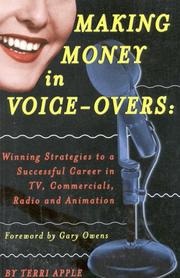
A candid, industry-insider breakdown of how to get an agent, price your work, and navigate union vs. non-union work — the most direct career-strategy guide available for aspiring voice actors.
Discussion
Keep reading
Paths that share books, cover the same subject, or open a related topic.