Run great D&D: the game master's path
This curriculum takes you from "what even is a TTRPG?" to confident, creative Game Master — one who can run tight sessions, improvise brilliantly, and build worlds players want to live in. Each stage builds on the last: first you learn the rules and the GM's role, then the craft of storytelling and improvisation, and finally the advanced art of world-building and long-form campaign design.
Foundations: Learning the Game
BeginnerUnderstand how D&D works, what a Game Master does, and run your very first session with confidence.
▸ Study plan for this stage
Pace: 6–8 weeks, ~20–25 pages/day (the DMG is dense and reference-heavy; slower, deliberate reading beats rushing). Read in three passes: (1) Chapters 1–3 in weeks 1–2 for the GM role and world-building basics, (2) Chapters 4–8 in weeks 3–5 for adventures, encounters, and magic items, (3) Chapters 9–Appen
- The Three Pillars of Adventure (Exploration, Social Interaction, Combat) and how the DM facilitates all three
- The DM's core responsibilities: adjudicating rules, portraying the world, and keeping the game fun for everyone at the table
- Session Zero: setting expectations, discussing tone, safety tools, and table rules before play begins
- The adventure structure: scenes, encounters (combat vs. non-combat), and how to string them into a coherent session
- Encounter design fundamentals: challenge rating (CR), XP budgets, and balancing difficulty for a party
- The role of improvisation — the 'Yes, and…' mindset — and how to handle unexpected player decisions
- World-building building blocks: factions, NPCs with goals and personalities, locations with history, and how they create a living world
- Magic items as rewards: rarity tiers, attunement, and pacing treasure so it enhances rather than breaks the game
- In your own words, what is the DM's job at the table, and how does it differ from being a player?
- What are the Three Pillars of Adventure, and can you give a concrete example of each from a scenario you could run?
- How do you use Challenge Rating and XP budgets to build an encounter that is 'Hard' but not 'Deadly' for a party of four level-1 characters?
- What would you cover in a Session Zero, and why is it important to do before the first session?
- How does the DMG advise you to handle a situation where the rules don't cover what a player wants to do?
- What is attunement, and why does the DMG recommend controlling the rate at which players receive magic items?
- **Map Your First Dungeon:** Using the DMG's dungeon-creation guidelines (Chapter 5), hand-draw a 5–10 room dungeon. Label each room with its purpose, a potential encounter or trap, and one piece of flavor text you'd read aloud.
- **Build Three Encounters:** Using the XP budget tables in the DMG, design one Easy, one Medium, and one Hard encounter for a party of four level-1 characters. Write down the monsters, their tactics, and the terrain.
- **Create Five NPCs:** For each NPC, fill in the DMG's NPC personality traits (ideal, bond, flaw), a one-sentence goal, and one secret they're hiding. Practice voicing them aloud.
- **Run a Solo 'Dry Session':** Sit alone and narrate a 20-minute scene out loud — describe a tavern, have two NPCs argue, then have a bandit burst in. Practice pacing, description, and improvised dialogue with no audience pressure.
- **Write Your Session Zero Checklist:** Draft a one-page document you'd hand to players covering: tone & themes, safety tools (e.g., the X-Card), house rules, and what characters to bring. Share it with a friend for feedback.
- **Loot Drop Audit:** Using the magic item tables in the DMG, plan the treasure rewards for a three-session mini-arc. Verify that rarity and attunement slots stay within the DMG's recommended guidelines for tier-1 play.
Next up: Mastering the DMG's foundational framework — how to build encounters, portray NPCs, and structure a session — gives you the mechanical and creative scaffolding needed to move into more advanced GM techniques, such as long-form campaign design, complex narrative arcs, and adapting published adventures to your table's unique style.
The official entry point to D&D 5e — it contains a simplified rulebook and a ready-to-run adventure (Lost Mine of Phandelver) so you can get a real session to the table immediately without being overwhelmed.

The canonical reference for everything a DM needs: encounter building, magic items, world-building tools, and the philosophy of running the game. Read this after your first session so the rules have real context.
Teaches you how to run monsters intelligently using their stat blocks, transforming combat from a dice-rolling exercise into a dramatic, tactical story — a skill every new DM desperately needs early.
The Craft: Storytelling & Session Mastery
BeginnerLearn how to structure compelling sessions, keep players engaged, and handle the human side of the table.
▸ Study plan for this stage
Pace: 6–8 weeks total: Weeks 1–3 cover "The Lazy Dungeon Master" (~20–25 pages/day, including journaling time); Weeks 4–7 cover "Return of the Lazy Dungeon Master" (~20–25 pages/day); Week 8 is a consolidation week — no new reading, only review, reflection, and exercise completion.
- Lazy prep philosophy: prepare only what you need, nothing more — front-load creativity at the table, not at the desk (The Lazy Dungeon Master)
- The 'strong start': opening every session with an immediate, cinematic hook that pulls players into action before exposition (The Lazy Dungeon Master & Return)
- Scene-based thinking: structuring a session as a loose sequence of potential scenes rather than a rigid plot railroad (The Lazy Dungeon Master)
- The importance of player-facing secrets and discoveries — seeding the world with things players can uncover to feel agency (Return of the Lazy Dungeon Master)
- The Lazy DM checklist: a repeatable pre-session ritual covering strong start, potential scenes, secrets, NPCs, locations, and treasure (Return of the Lazy Dungeon Master)
- Thinking in 'situations' not 'stories': designing dynamic circumstances that react to players rather than scripted narratives (Return of the Lazy Dungeon Master)
- NPC economy: keeping a small, memorable roster of NPCs with clear motivations rather than an overwhelming cast (both books)
- Reading the table: recognizing player engagement signals and adjusting pacing, tone, and challenge on the fly (both books)
- What is the core argument of the 'lazy' prep philosophy, and why does over-preparation often hurt rather than help a session?
- What makes a 'strong start' effective, and how would you design one for a session you are planning right now?
- What are the eight elements of the Return of the Lazy Dungeon Master prep checklist, and what problem does each element solve at the table?
- How does designing 'situations' instead of 'stories' preserve player agency, and what does that look like in practice?
- How do you decide which NPCs to develop deeply versus which to keep as background figures, and what minimum information does each NPC need?
- What signals at the table tell you that pacing is off, and what are two concrete techniques from either book to recalibrate mid-session?
- Run the checklist cold: Before your next session (real or imagined), complete the full Return of the Lazy Dungeon Master eight-point prep checklist and cap your total prep time at 30 minutes. Note what felt unfinished and whether it actually mattered during play.
- Strong-start workshop: Write three different strong-start openings for the same scenario — one action-based, one mystery-based, one NPC-driven. Run each past a friend or fellow player and ask which made them lean forward.
- Scene card shuffle: Write five potential scenes for a session on index cards. Lay them out and practice re-ordering them in response to three different 'what if the players do X instead' scenarios, training flexible scene thinking.
- NPC speed-build: Using only the guidance in The Lazy Dungeon Master, create a roster of four NPCs in under 20 minutes — one name, one visual trait, one motivation, one secret each. Use them in a short solo improv monologue or a quick one-on-one roleplay with a friend.
- Post-session debrief journal: After any session you run or play in, write a one-page reflection answering: What was the strong start? Which planned scenes were skipped? Which NPC landed? What would you cut from prep next time?
- Pacing audit: Watch or listen to an actual-play podcast/stream for 30 minutes with the sound off (video) or at 1.5× speed, focusing only on body language or vocal energy. Identify three moments where engagement visibly shifted, then theorize what the GM did or could have done using techniques from either book.
Next up: Mastering lean, player-responsive session structure gives you the stable creative foundation needed to tackle the next stage's deeper challenges — world-building, encounter design, and long-form campaign architecture — without collapsing under the weight of over-preparation.

Reframes prep as a tool, not a burden — teaching you to prepare less but run better by focusing on the elements that actually matter at the table. Essential for building sustainable GMing habits early.

A refined, deeper expansion of the first book with a concrete prep checklist and stronger emphasis on player-driven stories; read it immediately after to lock in the philosophy with better tools.
Improvisation: Saying Yes to Anything
IntermediateDevelop the improv instincts to handle any player curveball, generate ideas on the fly, and make every session feel alive and spontaneous.
▸ Study plan for this stage
Pace: 6–8 weeks total: Weeks 1–4 on "Impro" (~25–30 pages/day, reading all four major sections); Weeks 5–8 on "Sly Flourish's Fantastic Adventures for 5e" (~15–20 pages/day, reading each adventure front-to-back then studying its structure and GM notes).
- Status transactions: Johnstone's framework that every human interaction involves raising or lowering status — NPCs and players are always negotiating status at the table, and a GM who understands this can make every encounter feel charged and real.
- Accepting offers ('Yes, And'): Johnstone's foundational improv principle that blocking kills narrative momentum, while accepting and building on any player idea generates energy, investment, and surprise even for the GM.
- Narrative reincorporation: Johnstone's technique of looping earlier details back into the story — a throwaway NPC name or a forgotten clue becomes the twist, making the world feel planned even when it wasn't.
- Masks and character spontaneity: Johnstone's concept that characters have their own logic and 'want' to do things — GMs can let NPCs surprise them by following the NPC's internal status and desire rather than a script.
- Overacceptance and 'being changed': Johnstone's idea that great improvisers are visibly affected by what happens — GMs who let the fiction genuinely surprise and move them create contagious emotional investment at the table.
- Fantastic Adventures' modular encounter structure: Shea's adventures are built from discrete, loosely connected scenes (locations, NPCs, complications) that can be run in any order — a live model of prep that enables improvisation rather than fighting it.
- The Lazy GM's improvisational toolkit applied: Shea's GM notes demonstrate in practice how a handful of strong hooks, one or two vivid NPCs, and a single ticking threat are enough scaffolding to improvise an entire session.
- Bridging theater improv to TTRPGs: Synthesizing Johnstone's stage techniques with Shea's adventure design reveals that D&D improvisation is not about making things up from nothing — it is about having just enough structure to make 'Yes, And' safe and generative.
- After reading Johnstone, how would you use status dynamics to make a routine tavern conversation feel tense and meaningful without any pre-written script?
- What is the difference between blocking and accepting an offer at the D&D table, and can you give a concrete example of each from a typical player curveball (e.g., 'I want to seduce the dragon')?
- How does Johnstone's principle of reincorporation translate into a GM technique — what does it look like in practice during a session of one of Shea's Fantastic Adventures?
- Looking at the structure of any one adventure in Fantastic Adventures, how does Shea's modular scene design give a GM permission to improvise without losing coherence?
- How can a GM use Johnstone's 'mask' concept to play an NPC they have never prepared — letting the character's status and want drive the scene rather than a stat block or backstory?
- What is the minimum scaffolding (hooks, NPCs, threat) that Shea's adventures suggest you need before a session so that improvisation feels confident rather than panicked?
- Status walk: Before your next session, assign every major NPC a status number (1–10). During play, consciously raise or lower one NPC's status in response to player actions and note how it changes the scene's energy — debrief yourself in writing afterward.
- 'Yes, And' stress test: Ask a fellow player or friend to throw three outrageous D&D curveballs at you ('I burn down the king's castle,' 'I adopt the BBEG as my father'). Practice accepting each one out loud and building a 10-second narrative consequence — no blocking allowed.
- Reincorporation journal: Run or replay one of Shea's Fantastic Adventures. Keep a running list of every throwaway detail players invent (NPC names, rumors, random actions). At the end of the session, identify two details you could loop back as meaningful plot points in a follow-up session.
- Mask monologue: Pick an NPC from one of Shea's adventures with minimal description. Write a 1-paragraph internal monologue from that NPC's point of view — what do they want right now, and how do they feel about their own status? Use this as your only prep before roleplaying them.
- Modular scene shuffle: Take one Fantastic Adventure and physically cut (or list) its scenes on index cards. Shuffle them randomly and ask yourself: 'Could I run the adventure in this order if players went here first?' Practice narrating the connective tissue between two non-sequential scenes on the fly.
- Minimum viable session prep: Using Shea's adventure structure as a template, write your own one-page adventure with only: 3 locations, 2 named NPCs with one want each, and 1 ticking threat. Run it with zero additional notes, relying entirely on 'Yes, And' and reincorporation to fill the gaps.
Next up: Mastering spontaneous acceptance and modular structure sets the foundation for the next stage, where those improvisational instincts are channeled into deliberate, long-form campaign design — learning how to sustain a living world across dozens of sessions without losing the aliveness cultivated here.
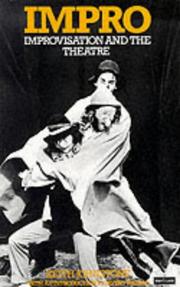
The foundational text on theatrical improvisation — its concepts of status, blocking, and 'yes-and' thinking directly translate to GMing and will permanently change how you react to players at the table.

A collection of modular, system-agnostic adventure frameworks designed to be run improvisationally, letting you practice the skills from Impro directly in a D&D context.
Advanced Craft: World-Building & Campaign Design
IntermediateBuild rich, believable worlds from scratch and design long-form campaigns that keep players invested for months or years.
▸ Study plan for this stage
Pace: 6–8 weeks, ~20–25 pages/day (the free version is ~300 pages; the full Deluxe PDF runs ~400+ pages — pace yourself to leave time for the sandbox-building exercises woven throughout)
- The Sandbox Philosophy: designing a world that exists independently of the players, with factions, histories, and agendas that evolve whether or not the PCs intervene
- Sector & Region Creation: using Crawford's step-by-step procedures to generate coherent regions — tags, relationships, and geography — that feel lived-in rather than arbitrary
- Faction Mechanics: building factions with explicit Goals, Assets, and Turn-based actions so that the political landscape shifts organically over time without GM micromanagement
- Adventure Site Design: constructing locations (ruins, dungeons, cities) using the nested 'tag' system so every site has built-in conflict, history, and reusable hooks
- The Patron & NPC Web: creating a cast of recurring NPCs with competing loyalties and personal agendas that give players meaningful relationships to invest in
- Problem & Situation Design (not Plot Design): framing campaign content as open-ended situations rather than scripted storylines, preserving player agency while maintaining narrative momentum
- Oracles & GM Tools: using Crawford's random tables and oracle procedures to generate content on the fly, keeping prep light and improvisation principled
- Pacing a Long-Form Campaign: understanding session zero, escalating stakes, and how faction turns create natural story arcs without railroading
- How does Crawford's sandbox philosophy differ from adventure-path or plot-driven campaign design, and what are the practical implications for how you prepare each session?
- Walk through the full sector/region creation procedure from Worlds Without Number — what are the key steps, and how do tags shape the feel of a location or faction?
- How do Faction Turns work mechanically, and how do you use them to simulate a living world that reacts to — and acts independently of — the player characters?
- What is the difference between a 'situation' and a 'plot,' and why does Crawford argue that GMs should design the former rather than the latter?
- How would you use the oracle and random table procedures in Worlds Without Number to handle an unexpected player decision mid-session without breaking immersion?
- What elements must a well-designed adventure site contain according to Crawford's framework, and how do you ensure it remains engaging across multiple sessions?
- **Build a Micro-Sector:** Use Crawford's region-creation procedure to build a single region with 5–7 locations. Assign tags to each, draw a rough map, and write 2–3 sentences of history for each site — then identify the tensions between them.
- **Faction Simulation Dry Run:** Create 3 factions with Goals, Assets, and rivalries. Run 4 fictional Faction Turns on paper (no players involved) and journal how the political landscape changes — notice which story hooks emerge naturally.
- **Situation, Not Plot:** Take a campaign idea you already have and rewrite it as a 'situation document': list the key NPCs, their goals, their resources, and what they will do if the PCs never show up. Strip out any assumed player actions.
- **NPC Web Mapping:** Design 6–8 recurring NPCs for your world. Draw a relationship map showing loyalties, rivalries, secrets, and wants. Identify at least two NPCs whose goals will inevitably bring them into conflict — these are your long-term story engines.
- **Oracle Practice Session:** Solo-play a 20-minute scene using only Crawford's oracle tables and your region notes to answer questions. Practice letting the dice + fiction generate surprises, then retroactively justify them as 'always true' in your world.
- **Session Zero Blueprint:** Draft a full Session Zero agenda using the book's guidance — world pitch, tone/safety discussion, patron introduction, and a starting situation that presents 3 distinct hooks with no correct answer — then run it with your actual group and debrief afterward.
Next up: Mastering Crawford's sandbox and faction systems gives you a living world as your foundation; the next stage builds on this by developing your improvisational skills, encounter design, and in-the-moment GMing techniques needed to run that world responsively at the table.

Contains the most practical, GM-focused world-building toolkit in the hobby — its oracles, faction systems, and adventure-seed generators work for any game and teach you to build worlds that feel alive and reactive.
Mastery: The Art & Philosophy of GMing
ExpertInternalize a personal GMing philosophy, understand what makes great play across all TTRPGs, and become the kind of GM players talk about for years.
▸ Study plan for this stage
Pace: 8–10 weeks total: Weeks 1–3 on "Hamlet's Hit Points" (~20–25 pages/day, with journaling days built in); Weeks 4–10 on "Invisible Sun" (treat it as a deep-dive artifact — read the core Black Cube components in thematic chunks of 1–2 hours per session, 4–5 sessions/week, pausing frequently to reflect
- Narrative beats and their emotional functions — Laws's taxonomy of beats (procedural, dramatic, action, pipe, banter, etc.) and how each serves a different player need at the table
- The 'beat map' as a GM diagnostic tool — using Laws's scene-by-scene analysis of Hamlet and Dr. No to reverse-engineer why stories feel satisfying, then applying that lens to your own sessions
- Pacing as intentional design — understanding that the rhythm of tension, release, revelation, and rest is a craft choice, not an accident, and that GMs can consciously orchestrate it
- Story vs. situation vs. experience — distinguishing between plotting a story, building a situation, and curating an experience, and knowing which mode a given moment demands
- Invisible Sun's 'Surreal Realism' as a philosophy of play — Monte Cook's design premise that the world should feel emotionally and symbolically true even when it defies literal logic, and what that demands of a GM's improvisational mindset
- The GM as auteur vs. facilitator — Invisible Sun forces a reckoning with how much authorial vision a GM should impose versus how much the table co-creates; internalizing where you personally stand
- Vislae and player-driven myth-making — how Invisible Sun's character creation and advancement systems are themselves a GMing tool, embedding player agency into the world's metaphysics
- Developing a personal GMing philosophy — synthesizing Laws's analytical framework and Cook's visionary design into a coherent, articulable statement of what you believe great play is and why
- Using Laws's beat taxonomy, can you label every scene in your last three sessions and identify which beat types were over- or under-represented — and what that cost the players emotionally?
- Laws argues that different genres have characteristic beat patterns. What is the dominant beat pattern of your preferred genre of D&D, and how does knowing this change how you prep?
- Invisible Sun treats the GM's role as closer to a surrealist novelist than a referee. Do you agree, disagree, or hold a more nuanced position — and can you defend it with specific examples from your own table?
- How does Invisible Sun's approach to secrets, the Sooth deck, and the structure of the Actuality challenge or reinforce the GMing principles you've absorbed from earlier stages of this curriculum?
- What is your personal GMing philosophy in three sentences or fewer? Can you articulate it clearly enough that a stranger could predict what your table would feel like before sitting down?
- If Laws gave you a beat map of your best session ever and your worst session ever, what pattern differences would you expect to find — and what would you do differently as a result?
- Beat-map a session: Record or take detailed notes on your next session, then go scene by scene and assign Laws's beat labels. Chart the results visually (a simple line graph of tension works). Write a one-page post-mortem identifying the two beats you neglected most.
- Rewrite a flat scene: Take a scene from a past session that fell flat. Using Laws's framework, diagnose why (wrong beat for the moment? too many pipes in a row?). Rewrite the scene as a prep note with the correct beat intentionally designed in.
- Run a 'beat-conscious' one-shot: Design a 3-hour one-shot where you explicitly plan the beat sequence in advance — write it out like a beat sheet before play. Afterward, note where players pulled you off the sheet and whether that was better or worse.
- Invisible Sun immersion exercise: Before running (or even if you never run) Invisible Sun, spend one session zero with players doing only world-touch activities — the Sooth deck, the character creation rituals, the Vislae bonds. Journal what the process revealed about your instincts as a GM.
- Write your GMing manifesto: Draft a 1–2 page personal document titled 'What I Believe Great Play Is.' Ground every claim in a specific moment from your own table history. Revise it after finishing both books. Keep it — return to it in six months.
- Teach the beat taxonomy: Explain Laws's beat types to another GM (or a trusted player) without using the book. Use only examples from D&D sessions you've both experienced. The gaps in your explanation reveal the gaps in your understanding — take notes on those gaps and fill them.
Next up: By internalizing Laws's analytical vocabulary and Cook's visionary design philosophy, the reader now possesses both the critical language to dissect any session and the imaginative ambition to transcend rulebooks entirely — the precise foundation needed to mentor other GMs, design original material, or pursue any next frontier in the craft.

Analyzes the dramatic beats of storytelling through the lens of Hamlet, Casablanca, and Dr. No, giving you a precise vocabulary for understanding why scenes work — and how to engineer them at your table.

A visionary, boundary-pushing TTRPG that challenges every assumption about what a game can be; reading it at this stage expands your creative ceiling and inspires you to bring more imagination and authorial ambition to any game you run.
Discussion
Keep reading
Paths that share books, cover the same subject, or open a related topic.