Housekeeping and cleaning routines: the best books to keep a home in order
This curriculum takes a beginner from the foundational mindset shift needed to embrace tidiness, through practical decluttering methods, and finally into advanced household management systems. Each stage builds on the last: you must first change how you think about your home before you can organize it, and you must organize it before you can run it like a well-oiled machine.
Foundations: Mindset & the Decluttering Reset
BeginnerUnderstand why clutter accumulates, develop a healthier relationship with your belongings, and complete a meaningful first declutter of your home.
▸ Study plan for this stage
Pace: 8–10 weeks, ~20–25 pages/day, with 1–2 days per week dedicated to hands-on decluttering practice
- The KonMari Method: folding, categorizing by type, and keeping only items that spark joy
- The emotional and psychological roots of clutter—why we hold onto things and what that reveals about our values
- The concept of 'sparking joy' as a decision-making filter for belongings
- Speed and momentum in decluttering—how to work efficiently without perfectionism (Dana K. White's approach)
- The difference between decision fatigue and decision clarity when evaluating possessions
- Creating a sustainable baseline: understanding your home's capacity and your personal clutter tolerance
- The role of guilt, obligation, and sentimentality in keeping items you don't use or love
- What does Marie Kondo mean by 'sparking joy,' and how can you use this principle to decide what to keep?
- Why does the KonMari Method recommend tidying by category rather than by room, and what advantage does this provide?
- According to Dana K. White, what is the relationship between decision fatigue and clutter accumulation?
- How do guilt, obligation, and sentimentality prevent us from decluttering, and what strategies can you use to overcome these emotions?
- What is your personal 'clutter tolerance,' and how does understanding it help you maintain a decluttered home long-term?
- How do the KonMari Method and Dana K. White's 'Speed of Life' approach differ, and when might you use each strategy?
- Complete the 'spark joy' test on 10–15 items in your home—physically hold each one and notice your emotional response, then journal about what you kept and why
- Declutter one complete category (e.g., all clothing, all books, all kitchen utensils) using the KonMari Method, folding and organizing as you go
- Identify and remove 50 items from your home in one week using Dana K. White's speed-focused approach; track what you removed and where it went
- Create a 'maybe box' with 15–20 items you're unsure about; revisit it after 30 days and notice which items you actually missed or used
- Write a personal 'clutter tolerance' profile: describe your ideal home baseline, what types of clutter stress you most, and how much daily tidying feels sustainable
- Photograph one 'before' area of your home, complete a full declutter of that space using either method, and photograph the 'after' to visualize your progress
Next up: By completing this mindset shift and your first meaningful declutter, you'll have a lighter home and clearer understanding of your values, preparing you to learn the practical systems and routines needed to maintain that progress and prevent clutter from re-accumulating.
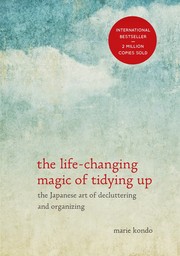
The perfect starting point: it reframes tidying as a one-time, category-by-category reset rather than a daily chore, giving beginners the motivational foundation and a clear first action plan.

Read second because it offers a realistic, no-perfectionism counterpoint to Kondo — ideal for people with busy lives or overwhelming clutter who need practical, room-by-room steps to follow immediately after their mindset shift.
Building Blocks: Organizing Systems That Stick
BeginnerLearn how to assign a logical home to every object and set up simple organizational structures that make tidying fast and intuitive going forward.
▸ Study plan for this stage
Pace: 4-5 weeks, ~25-30 pages/day (approximately 180-200 pages total)
- The 'Home Edit' philosophy: edit first, then organize (removing items before assigning homes)
- Category-based organization: grouping like items together rather than organizing by room
- The importance of visibility and accessibility: storing items where you can see and easily reach them
- Creating a logical 'home' for every object based on frequency of use and lifestyle patterns
- Using containers and labels to maintain systems and make tidying intuitive for all household members
- The difference between organizing and decluttering: why both are necessary for lasting change
- Designing systems that match your actual habits and daily routines, not idealized versions
- What is the core difference between the 'Home Edit' approach and traditional organizing methods, and why does editing come before organizing?
- How do you determine the logical 'home' for an object in your space?
- Why is visibility important in organizational systems, and how does it affect whether people will maintain the system?
- What role do containers and labels play in making organizational systems stick long-term?
- How should you organize items based on frequency of use, and why does this matter?
- What is the relationship between your daily routines and habits and the organizational systems you create?
- Complete a full edit of one category (e.g., kitchen utensils, bedroom clothes, or bathroom products) by sorting items into keep/donate/discard piles, then assign each kept item a specific home
- Photograph one organized space from 'The Home Edit' and recreate it in one area of your own home, noting what works and what needs adjustment for your lifestyle
- Map out your daily routine for one room (e.g., morning bathroom routine or dinner prep) and redesign the organizational system to match those actual movement patterns
- Label and containerize one cabinet, drawer, or shelf using the book's principles, then test the system for one week and document what needs refinement
- Interview one household member about their daily habits in a shared space, then reorganize that space to accommodate their actual usage patterns
- Create a 'before and after' documentation of organizing one problem area, identifying which 'Home Edit' principles you applied and why
Next up: This stage establishes the foundational systems and mindset needed to maintain an organized home; the next stage will build on these basics by teaching you how to sustain and adapt these systems over time as your life and needs evolve.

Introduces the concept of categorizing, containing, and labeling everything in a visually clear way — a natural next step after decluttering that teaches you how to organize what remains.
Core Skills: Cleaning Routines & Schedules
IntermediateDevelop reliable daily, weekly, and seasonal cleaning habits and routines so that maintaining a tidy home becomes automatic rather than overwhelming.

A compassionate, shame-free guide to building sustainable cleaning habits — read first in this stage because it dismantles perfectionism and establishes a healthy, realistic baseline for any cleaning routine.

Provides the practical, room-by-room cleaning techniques, product knowledge, and time-saving methods that turn good intentions into a concrete, repeatable cleaning system.
Advanced Mastery: Running a Well-Managed Household
ExpertIntegrate cleaning, organizing, meal planning, budgeting, and household logistics into a unified, proactive system for a calm and efficiently run home.
▸ Study plan for this stage
Pace: 4–5 weeks, ~25–30 pages/day, with 2–3 days per week dedicated to implementing routines in your home
- The FlyLady system: baby steps and incremental habit formation as the foundation for sustainable household management
- The 'shine your sink' ritual as a psychological anchor and daily reset point for motivation and momentum
- Zone cleaning and monthly deep-clean rotations to prevent overwhelm and maintain consistent household standards
- The importance of routines (morning, evening, and weekly) as the backbone of an efficiently run household
- Decluttering and organizing as prerequisites to sustainable cleaning—you cannot clean what you cannot see
- Time-blocking and realistic scheduling to integrate meal planning, budgeting, and household tasks without burnout
- The mind-set shift from perfectionism to 'good enough' as the key to long-term household management success
- What is the FlyLady system, and how does the concept of 'baby steps' help prevent overwhelm when establishing household routines?
- Why does Cilley emphasize shining the sink as a daily ritual, and how does this single action create momentum for broader household management?
- How should you structure zone cleaning and monthly rotations to maintain a well-managed home without dedicating excessive time to cleaning?
- What are the core morning, evening, and weekly routines Cilley recommends, and how do they integrate with meal planning and budgeting?
- How does decluttering fit into the overall system, and why is it necessary before implementing cleaning routines?
- What does Cilley mean by 'CHAOS' (Can't Have Anyone Over Syndrome), and how does her system help you overcome it?
- How can you adapt the FlyLady system to your specific household size, schedule, and lifestyle without abandoning the core principles?
- Shine your sink every evening for one full week, noting how this single ritual affects your motivation and mindset the following morning
- Implement the first baby step (shining your sink) for week 1, then add one new baby step each subsequent week, tracking which routines stick and which need adjustment
- Map out your home into zones and create a monthly deep-clean rotation schedule; assign one zone per week and complete it fully
- Establish a morning routine (30 minutes max) and an evening routine (15 minutes max) based on Cilley's recommendations; practice for 2 weeks and refine
- Conduct a full declutter of one room or zone using Cilley's principles; photograph before and after to visualize the impact on your ability to maintain it
- Create a weekly meal-planning template integrated with your cleaning zones and budget constraints; plan and execute one full week of meals
- Design a 'control journal' or household management binder with your routines, zone assignments, and a simple tracking system; use it daily for 3 weeks
Next up: This stage equips you with the foundational systems and daily habits needed to run a calm, organized household; the next stage will deepen your mastery by teaching you how to scale these routines, manage complex household dynamics (family, guests, emergencies), and optimize budgeting and meal planning for long-term sustainability and financial health.
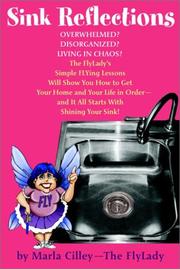
The classic FlyLady system — introduces the concept of zones, habit stacking, and 15-minute bursts of housework, providing a proven, schedulable framework for maintaining everything you have built across the prior stages.
Discussion
Keep reading
Paths that share books, cover the same subject, or open a related topic.