Declutter without the overwhelm
This curriculum moves from mindset and motivation through practical method and finally into the deeper philosophy of intentional living — because lasting decluttering is as much an inner shift as an outer one. Each stage builds on the last: you first understand *why* to let go, then *how* to do it systematically, and finally *how to sustain* a home that truly reflects your values.
Foundations — Shifting Your Mindset
BeginnerUnderstand the emotional and psychological roots of clutter, build a compassionate vocabulary for letting go, and feel genuinely motivated to begin.
▸ Study plan for this stage
Pace: 4–5 weeks total: Week 1–2 — Read "The Life-Changing Magic of Tidying Up" (~20–25 pages/day, including pausing to journal after each chapter); Week 3–4 — Read "Goodbye, Things" (~20–25 pages/day, with reflective breaks after each section); Week 5 — Review notes from both books, complete synthesis exe
- The KonMari 'spark joy' criterion — using emotional resonance, not utility or guilt, as the primary filter for keeping possessions (Kondo)
- Tidying as a one-time 'event' rather than a daily habit — the idea that a thorough, category-by-category reset creates lasting change (Kondo)
- Tidying by category, not by room — working through Clothes → Books → Papers → Komono → Sentimental items in a specific order to build decision-making confidence (Kondo)
- Gratitude as a release mechanism — thanking objects before letting them go to dissolve emotional attachment without shame (Kondo)
- The relationship between physical clutter and mental/emotional noise — how excess possessions drain attention and create low-level anxiety (Sasaki)
- Minimalism as self-discovery, not deprivation — Sasaki's personal narrative reframes owning less as gaining freedom, identity clarity, and presence (Sasaki)
- The 'comparison trap' and social pressure as root causes of accumulation — recognizing how advertising and status-signaling drive clutter (Sasaki)
- Letting go as an ongoing practice of values alignment — possessions as a mirror of what you truly want your life to look like (both books)
- According to Kondo, why is tidying by category more effective than tidying by room, and what emotional purpose does the prescribed category order serve?
- What does 'sparking joy' actually mean as a decision-making tool — and what does Kondo suggest you do when an item does NOT spark joy but feels impossible to discard?
- How does Sasaki's personal backstory (his before/after transformation) illustrate the psychological link between clutter and a fragile sense of self-worth?
- Both Kondo and Sasaki argue that clutter is not primarily a practical problem. What deeper emotional or psychological roots do they each identify, and where do their diagnoses overlap?
- What role does gratitude play in the letting-go process for Kondo, and how does Sasaki's concept of freedom through subtraction echo or extend that idea?
- After reading both books, how would you define 'enough' in your own words — and what personal values would you use to decide what belongs in your home?
- The 'Joy Audit' Warm-Up: Pick one small drawer or shelf. Hold each item and honestly note your gut reaction — relief, joy, guilt, or indifference. Don't discard anything yet; just practice naming the feeling, as Kondo trains you to do.
- Clutter Origin Journal: Choose 3 items you've been unable to let go of for years. For each one, write a short paragraph answering: 'Why did I acquire this? What story am I telling myself about it?' Use Sasaki's lens of self-image and social comparison to probe your answers.
- The Category Inventory (Clothes Only): Following Kondo's method, gather every single piece of clothing you own into one pile. Count the items. Sit with the visual reality of the total — this is a core KonMari moment of honest reckoning, before any decisions are made.
- Sasaki's '55 Reasons' Reflection: Sasaki lists dozens of reasons minimalism improved his life. After finishing his book, write your own list of 10–15 reasons YOU personally want less clutter. Make them specific to your life, not generic — this becomes your motivational anchor for the rest of the curriculum.
- Side-by-Side Philosophy Map: Draw a simple two-column chart — Kondo on one side, Sasaki on the other. Fill in each author's answers to: What is clutter? Why do we keep things? How do we let go? What does life look like after? Identifying the overlaps and differences deepens comprehension and prepares you for more advanced frameworks.
- Write a 'Home Manifesto' (1 page): Using insights from both books, write a personal statement describing the feeling and function you want your home to have. This is not a to-do list — it is a values document. You will return to it at every subsequent stage of the curriculum.
Next up: By internalizing the emotional 'why' behind clutter through Kondo and Sasaki, the reader has the motivational foundation and self-awareness needed to engage confidently with the practical systems and room-by-room strategies that intermediate-stage books will introduce.
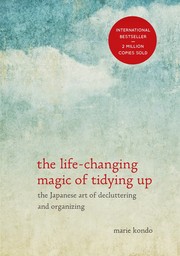
The ideal starting point: it reframes decluttering as a joyful, values-driven act rather than a chore, and introduces the foundational question — 'Does this spark joy?' — that anchors the whole curriculum.
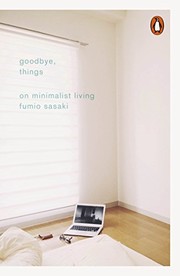
Read second to deepen the 'why' with a personal, honest account of how excess possessions affect well-being; its gentle, non-prescriptive tone complements Kondo's method without overwhelming a beginner.
Practical Method — Room by Room
BeginnerAcquire concrete, step-by-step strategies for sorting, categorizing, and organizing every area of the home in a sustainable sequence.
▸ Study plan for this stage
Pace: 8–10 weeks total: Week 1–3 — "Spark Joy" by Marie Kondo (~20–25 pages/day, including time to handle objects and practice the folding/category methods as you read); Week 4–6 — "The Home Edit" by Clea Shearer (~15–20 pages/day, photo-heavy layout rewards slower, visual reading with notebook in hand);
- The KonMari category order (clothes → books → papers → komono → sentimental) and why tackling by category rather than by room prevents re-scattering clutter (Spark Joy)
- Tactile decision-making: holding each object and asking 'Does this spark joy?' as a concrete, repeatable filter for every possession (Spark Joy)
- Kondo's precise folding and vertical storage method as a space-multiplying technique that also makes disorganization immediately visible (Spark Joy)
- The EDIT framework — Edit, Decant, Insert, Transfer — as a four-step visual system for containing and labeling everything that remains after decluttering (The Home Edit)
- Categorize → Contain → Label: using uniform bins, clear containers, and consistent labeling to create systems anyone in the household can maintain (The Home Edit)
- The 'container concept': the container itself defines the limit of how much of any category you own — if it doesn't fit, something must go (Decluttering at the Speed of Life)
- The 'easy-in, easy-out' principle: sustainable organization means putting things away must be as effortless as getting them out (Decluttering at the Speed of Life)
- Dana K. White's 'procrastination station' and 'donate box always open' habits as daily maintenance rituals that prevent re-accumulation (Decluttering at the Speed of Life)
- After reading Spark Joy, can you explain why Kondo insists on working by category across the whole home rather than room by room, and what problem this sequence solves?
- How does the 'spark joy' question function as a decision-making tool, and what does Kondo suggest you do when you feel uncertain about an object?
- What are the four steps of The Home Edit's EDIT framework, and how does each step build on the previous one inside a single space like a pantry or closet?
- How does The Home Edit's approach to visual uniformity (matching bins, labels, color-coding) serve both aesthetic and functional goals for a household?
- What is Dana K. White's 'container concept,' and how does it reframe decluttering decisions so that the question is never 'do I have room?' but rather 'what stays and what goes?'
- How do the three authors' methods complement and differ from each other — specifically, where does Kondo's category-first philosophy, The Home Edit's containment system, and White's real-life maintenance habits each do their heaviest lifting?
- KonMari Clothing Blitz (Week 2): Pull every item of clothing you own into one pile on the bed — exactly as Spark Joy instructs. Hold each piece, apply the spark-joy test, and re-fold and store only what passes using Kondo's vertical folding method. Document before/after photos and note how the category-first approach felt different from your usual tidying.
- Komono Mapping (Week 3): Choose one 'miscellaneous' komono subcategory from Spark Joy (e.g., kitchen tools, hobby supplies, or cables). Gather every item in that subcategory from every room, sort by spark joy, then group survivors by function before putting them away.
- EDIT a Single Zone (Week 5): Select one contained space — a pantry shelf, bathroom cabinet, or junk drawer — and walk through all four steps of The Home Edit's EDIT framework. Decant items into clear containers, insert dividers or bins, and create a label for every section. Photograph the finished result and assess whether a family member can intuitively use and return items.
- Container Audit (Week 8): Pick one category White addresses in Decluttering at the Speed of Life (e.g., linens, kids' toys, or craft supplies). Designate a specific container or shelf as its permanent home, fill it with the best items in the category, and donate whatever doesn't fit — without adding more storage. Write one sentence explaining what you let go of and why.
- Cross-Method Room Review (Week 9): Choose one complete room and apply all three lenses in sequence: (1) Kondo — does everything in this room spark joy and belong to its correct category? (2) The Home Edit — is everything contained, labeled, and visually coherent? (3) White — is the system easy enough to maintain on a busy weekday? Write a short paragraph on which method did the most work in that r
- Maintenance Habit Log (Week 10): For two weeks after finishing all three books, keep a simple daily log (5 minutes/day) tracking whether you used White's 'donate box always open' habit and Kondo's 'return everything to its place' rule. Note which habit was harder to sustain and brainstorm one adjustment to make it stick.
Next up: By completing this stage, the reader has moved from philosophy to hands-on room-by-room practice and now has working systems in place — making them ready to explore the deeper behavioral and psychological patterns (such as why clutter accumulates in the first place and how mindset, identity, and habit loops drive long-term success) that a more advanced stage on the psychology of clutter and sustai
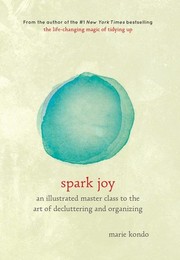
Kondo's illustrated follow-up translates her philosophy into detailed, room-by-room guidance — the natural next step after absorbing her mindset book, now with hands-on technique.

Introduces a complementary, highly visual system for organizing what remains after decluttering, covering kitchens, closets, and living spaces with practical categories and product-agnostic principles.

Addresses the real-world messiness that idealized systems ignore — limited time, resistant family members, and imperfect homes — making it the essential bridge from theory to lasting daily practice.
Going Deeper — The Psychology of Stuff
IntermediateUnderstand the emotional, identity-based, and habitual reasons clutter returns, so you can address root causes rather than just symptoms.
▸ Study plan for this stage
Pace: 6–8 weeks total: Weeks 1–4 on "Buried in Treasures" (~20–25 pages/day, including pausing for the self-assessments and worksheets embedded in the text); Weeks 5–8 on "The Clutter Connection" (~15–20 pages/day, with extra time to complete Aarssen's clutter personality quiz and reflect on your type).
- Hoarding as a spectrum — Tolin's framework positions hoarding disorder not as a binary condition but as a continuum of acquiring, saving, and difficulty discarding behaviors that many people share to varying degrees
- The three core deficits Tolin identifies — problems with information processing (decision-making), emotional attachment to objects, and beliefs about the nature of possessions drive clutter far more than laziness or busyness
- Cognitive distortions around stuff — Tolin catalogs specific thought patterns (e.g., 'I might need this someday,' 'This object IS my memory') that keep clutter in place, and teaches readers to recognize and challenge them
- Motivational ambivalence — Tolin applies motivational interviewing principles to show why people simultaneously want to declutter and resist it, and how to resolve that internal conflict
- Identity and objects — both authors converge on the idea that possessions become proxies for self-concept, past selves, future aspirations, or relationships, making discarding feel like self-erasure
- Aarssen's four clutter personalities (Butterfly, Ladybug, Bee, Cricket) — each type has a distinct relationship with visual clutter, systems, and organization styles, meaning one-size-fits-all solutions fail most people
- Habit loops and clutter re-accumulation — Aarssen explains why clutter returns after a purge when the underlying behavioral style and environment are not redesigned to match the person's natural tendencies
- Designing systems for your brain, not a magazine — the practical takeaway from Aarssen is that sustainable organization must be built around how you actually think and move, not an idealized standard
- According to Tolin, what are the three core psychological deficits that underlie problematic clutter and hoarding, and can you give a personal or observed example of each?
- What is motivational ambivalence as Tolin describes it, and what strategies does he suggest for moving through it rather than getting stuck?
- Which of Aarssen's four clutter personality types resonates most with you, and what specific organizational strategies does she recommend for that type?
- How do both Tolin and Aarssen explain the phenomenon of clutter returning after a successful purge — what root causes do they each point to?
- What cognitive distortions around possessions does Tolin identify, and how would you use his questioning techniques to challenge one you personally hold?
- How does the concept of identity attachment to objects (covered in both books) change the way you would approach helping yourself — or someone else — let go of items?
- Complete every self-assessment and worksheet in 'Buried in Treasures' as you encounter them — do not skip them in favor of just reading. After finishing the book, review your answers and write a one-page summary of your personal clutter profile as Tolin would describe it.
- Cognitive distortion journal: For one full week while reading Tolin, keep a small notebook nearby during any decluttering attempt. Each time you hesitate over an item, write down the exact thought that stops you, then identify which of Tolin's named distortions it matches and write a rational counter-statement.
- Take Aarssen's clutter personality quiz (available in 'The Clutter Connection') and then audit one room of your home through the lens of your result — list three ways your current storage system conflicts with your personality type and three adjustments that would align with it.
- Identity mapping exercise: Choose 10 items you have been unable to discard. For each one, write one sentence about what keeping it says about who you are or who you want to be. Then ask: 'Is this object the only way to honor that part of me?' This draws directly on the identity-attachment concepts in both books.
- Design a 'clutter re-entry audit': After any decluttering session, set a 30-day calendar reminder. When it goes off, return to that space and note what has come back and why. Use Aarssen's personality framework to redesign the system so it resists re-accumulation.
- Discussion or journaling synthesis: After finishing both books, write a 1–2 page personal essay answering the question, 'Why does clutter keep coming back into my life?' — drawing explicitly on at least one concept from Tolin and one from Aarssen. This forces integration of both frameworks.
Next up: Having diagnosed the emotional and psychological roots of clutter through Tolin and Aarssen, the reader is now ready to move into more advanced, whole-home systems thinking — translating self-knowledge into durable, practical structures that work at scale.

Written by clinical psychologists, this is the most evidence-based look at why letting go is genuinely hard; it equips you with compassionate, therapeutic tools for the items that feel impossible to release.

Introduces the idea that different personality types need different organizing systems, helping you stop blaming yourself for failed methods and instead find an approach that matches how your brain actually works.
Sustaining — Intentional Living for the Long Term
ExpertIntegrate decluttering into a broader philosophy of intentional consumption and home design so the results last for life, not just for a season.
▸ Study plan for this stage
Pace: 6–8 weeks total: Weeks 1–3 on "The More of Less" (~20–25 pages/day, including reflection time); Weeks 4–7 on "Essentialism" (~20–25 pages/day); Week 8 reserved for integration review, journaling, and completing capstone exercises across both books.
- Becker's core thesis that owning fewer possessions creates more room for what matters most — relationships, purpose, and experiences over accumulation
- The distinction between minimalism as aesthetic trend vs. minimalism as a values-driven, ongoing life philosophy (Becker's 'more of less' paradox)
- Identifying and dismantling the cultural and emotional scripts that drive overconsumption — keeping up with neighbors, retail therapy, sentimental hoarding
- McKeown's Essentialist mindset: the disciplined pursuit of 'less but better,' treating your time, energy, and space as finite and precious resources
- The power of the 'trade-off' lens — every 'yes' to one thing is a 'no' to something else, applied to both possessions and commitments
- Creating systems and routines (Becker's 'maintenance rhythms,' McKeown's 'effortless execution') that make the right choice the default choice
- Designing your home environment intentionally so that the physical space reinforces your values and reduces decision fatigue over time
- Aligning household purchasing decisions with a personal 'enough' threshold — a conscious, revisited standard rather than a moving goalpost
- After reading Becker, can you articulate in one or two sentences your own personal reason — your 'why' — for maintaining a less-cluttered home, beyond tidiness or aesthetics?
- How does Becker argue that minimalism benefits not just the individual but also family, community, and even the environment? Do you agree with his case?
- What is McKeown's definition of an Essentialist, and how does it differ from simply being a minimalist or being frugal?
- Using McKeown's trade-off framework, identify three recurring 'non-essential' categories of purchases or commitments in your own life — what have they been crowding out?
- How do both Becker and McKeown treat the concept of 'enough,' and where do their philosophies converge or diverge?
- What specific systems or routines — drawn from either book — will you implement to ensure your home and schedule don't gradually re-clutter over the next year?
- **Personal 'Why' Statement (Week 1):** After the first few chapters of Becker, write a 1-page manifesto explaining your specific, personal motivation for intentional living. Post it somewhere visible and revisit it at the end of Week 8 to see if it has deepened or shifted.
- **Consumption Audit (Week 2–3, during Becker):** Track every non-essential purchase for two weeks — note the item, the trigger emotion, and whether it aligned with your stated values. Use Becker's framework to evaluate the pattern.
- **'Enough' Threshold List (End of Becker):** For each major category in your home (clothing, books, kitchen tools, décor, etc.), write down your personal 'enough' number or standard. This becomes your living household policy.
- **The 'Essential Intent' Exercise (Week 4–5, during McKeown):** Apply McKeown's 'essential intent' concept to your home: write one clear, inspiring statement about what your home is *for* — what life it is designed to support. Use it to evaluate any future purchase or addition.
- **90-Day Ownership Review (Week 6):** Conduct a room-by-room walk using McKeown's 90% rule — if an item doesn't score at least a 9/10 in usefulness or joy, it goes. Log what you remove and notice any resistance or relief.
- **Maintenance Rhythm Design (Week 8, Capstone):** Using insights from both books, design a written seasonal declutter and purchasing-review ritual — monthly, quarterly, and annual checkpoints — that fits your real lifestyle. Share it with a household member or accountability partner to increase commitment.
Next up: By internalizing Becker's values-based 'why' and McKeown's disciplined trade-off thinking, the reader is now equipped to move beyond reactive decluttering into proactive life design — the natural foundation for exploring deeper topics such as mindful consumption ethics, sustainable living, or intentional financial independence.

Zooms out from tactics to lifestyle, making the case for minimalism as a long-term value system — ideal for cementing the habits built in earlier stages into a durable, humane way of living.

Though broader than home organization, its discipline of pursuing 'less but better' in all areas of life provides the philosophical capstone that prevents future clutter from accumulating in the first place.
Discussion
Keep reading
Paths that share books, cover the same subject, or open a related topic.