Hermann Hesse Reading Order: Where to Start
This curriculum moves through Hermann Hesse's work from his most accessible, lyrical novellas up to his densest philosophical masterpieces, mirroring the spiritual and intellectual journey Hesse himself charted across his career. Each stage builds the thematic vocabulary — self-discovery, Eastern philosophy, duality, and the life of the mind — that the next stage demands. By the time you reach Steppenwolf and The Glass Bead Game, you will recognize the ideas as old friends rather than strangers.
First Steps: The Lyrical Hesse
BeginnerGet a feel for Hesse's prose style, his recurring themes of youth, longing, and the search for self, through his shortest and most emotionally immediate works.
▸ Study plan for this stage
Pace: 6–8 weeks total: Weeks 1–3 for Peter Camenzind (~20–25 pages/day), Weeks 4–6 for Beneath the Wheel (~20–25 pages/day), with Weeks 7–8 reserved for reflection, journaling, and completing exercises. Both novels are short (~200 pages each), so a relaxed, contemplative pace is encouraged — Hesse rewards
- The Bildungsroman tradition: both novels follow a young protagonist's painful formation and search for identity, a template Hesse returns to throughout his career.
- Nature as spiritual mirror: In Peter Camenzind, landscapes — the Alps, Lake Lucerne — are not mere backdrops but reflections of the hero's inner states and longings.
- The tension between individual and society: Both Peter Camenzind and Hans Giebenrath are crushed or alienated by social expectations — family, school, the church — that cannot accommodate their sensitive inner lives.
- Longing (Sehnsucht) as a driving force: Hesse's protagonists are defined less by what they achieve than by what they yearn for — belonging, beauty, artistic expression, spiritual meaning.
- The destructive power of institutionalized education: Beneath the Wheel is a direct critique of the rigid German Gymnasium system and the toll it takes on gifted, feeling children like Hans.
- Friendship and its fragility: Both novels feature intense, formative male friendships (Peter and Richard; Hans and Hermann Heilner) that are lost or broken, leaving the hero more isolated.
- Hesse's lyrical prose style: Pay attention to his use of poetic imagery, interior monologue, and the elegiac, melancholic tone that gives even simple scenes emotional weight.
- Autobiographical resonance: Recognize that both novels draw heavily on Hesse's own youth, his struggles with school and family piety, and his early artistic awakening — reading them as veiled memoir enriches interpretation.
- How does Peter Camenzind's relationship with nature evolve across the novel, and what does it reveal about his emotional and spiritual development?
- In Beneath the Wheel, how does the school system function as an antagonist, and what specific mechanisms does Hesse use to show its damage to Hans Giebenrath?
- Both protagonists experience a defining friendship that ends in loss — compare Peter's friendship with Richard and Hans's friendship with Heilner. What does each friendship give the hero, and what does its loss cost him?
- What does Hesse suggest about the conflict between artistic/sensitive temperaments and the demands of bourgeois society in these two novels?
- How does Hesse's prose style — his imagery, pacing, and tone — create an atmosphere of longing and melancholy? Identify at least two specific passages from each book that exemplify this.
- In what ways can Peter Camenzind and Beneath the Wheel be read as autobiographical works, and why might Hesse have chosen fiction rather than memoir to process these experiences?
- **Passage Annotation Journal:** As you read, mark 3–5 passages per chapter where Hesse's prose feels especially lyrical or emotionally charged. After finishing each book, write 2–3 sentences on each passage explaining what technique Hesse uses (metaphor, rhythm, imagery) and what emotional effect it produces.
- **Character Comparison Chart:** Create a side-by-side chart for Peter Camenzind and Hans Giebenrath tracking: their social background, their relationship with authority, their key friendship, their artistic/intellectual gifts, and their ultimate fate. Use this to write a one-page reflection on what Hesse sees as the fate of the sensitive outsider.
- **Nature Description Exercise:** Choose one outdoor scene from Peter Camenzind and rewrite it in a flat, purely factual style, stripping out all lyrical language. Then write a paragraph reflecting on what is lost — this will make Hesse's stylistic choices concrete and visible.
- **Letter in Character:** Write a one-page letter from Hans Giebenrath to Hermann Heilner (after Heilner has been expelled) expressing what Hans cannot say aloud. This exercise forces you to inhabit Hans's repressed emotional world and understand the gap between his inner life and his outward compliance.
- **Thematic Timeline:** Draw a simple timeline for each novel marking the protagonist's emotional highs and lows. Annotate each turning point with the social or relational event that caused it. At the end, compare the two timelines — what structural similarities do you notice in how Hesse builds and breaks his heroes?
- **Contextual Mini-Research:** Spend one hour reading about Hesse's own schooling (his time at Maulbronn seminary and his breakdown at age 14). Write half a page on how this biographical context changes or deepens your reading of Beneath the Wheel specifically.
Next up: Mastering Hesse's lyrical voice and his core preoccupations — the alienated self, the pull between nature and civilization, the cost of conformity — in these early novels builds the emotional and thematic vocabulary needed to follow his protagonists into the more philosophically complex and spiritually ambitious journeys of his middle works.
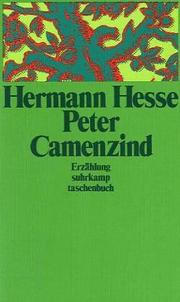
Hesse's debut novel is short, autobiographical, and gentle — a young man leaves his village to find himself in the wider world. It introduces the nature mysticism and romantic yearning that run through all of Hesse's work.
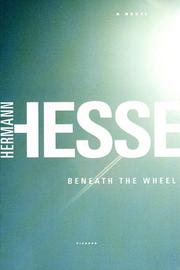
A slim, emotionally direct story about a gifted student crushed by societal expectations. It deepens the theme of the sensitive individual vs. conformist society that will recur constantly in later, harder books.
The Awakening Self
BeginnerUnderstand Hesse's core spiritual and psychological preoccupations — individuation, shadow selves, and Eastern thought — through his most beloved and readable mid-length novels.
▸ Study plan for this stage
Pace: 10–12 weeks total (~3–4 weeks per book): Demian (weeks 1–3, ~20 pages/day), Siddhartha (weeks 4–6, ~15 pages/day — slower, more meditative reading), Narcissus and Goldmund (weeks 7–10, ~20 pages/day), with weeks 11–12 reserved for review, journaling, and synthesis across all three books.
- Individuation: the Jungian process of becoming one's true self, traced through Emil Sinclair's awakening in Demian and Goldmund's wandering life in Narcissus and Goldmund
- The Shadow Self: Demian and Kromer as projections of Sinclair's repressed inner forces — recognizing and integrating the dark side of the psyche
- The Abraxas Principle: the god who unites good and evil in Demian, challenging binary moral thinking and orthodox religion
- The Two Worlds: Hesse's recurring division between the ordered, 'light' world of bourgeois society and the chaotic, 'dark' world of instinct and spirit, dramatized in all three novels
- The Inward Path vs. The Outward Path: Siddhartha's rejection of all external teachers (including the Buddha) in favor of direct, lived experience as the only route to enlightenment
- Samsara and the River: the Hindu/Buddhist concepts of cyclical existence and timelessness, embodied by the river in Siddhartha as a symbol of unity and the eternal present
- The Artist vs. The Ascetic: the central tension in Narcissus and Goldmund between Narcissus's life of pure intellect/spirit and Goldmund's life of sensory creation, love, and mortality
- The Mother Archetype: the feminine principle as a source of creative and spiritual energy — Goldmund's longing for the 'World Mother' and its role in driving his art and wandering
- In Demian, how does Hesse use the character of Max Demian to represent the 'higher self' or inner guide, and what does Sinclair's evolving relationship with him reveal about the individuation process?
- Siddhartha refuses to accept enlightenment from the Buddha himself — what does this rejection argue about the nature of wisdom, and how does the river ultimately teach what no human teacher could?
- How does the symbol of the mark of Cain in Demian function as a reinterpretation of a Biblical myth, and what does this reinterpretation say about Hesse's view of the 'chosen' individual versus the conformist crowd?
- Compare the life paths of Narcissus and Goldmund: in what ways does each man's path represent a valid but incomplete approach to self-realization, and does the novel suggest one is superior to the other?
- Across all three books, Hesse's protagonists must leave behind a safe, structured world (school, the Brahmin household, the monastery) to find themselves. What does this repeated pattern suggest about Hesse's philosophy of personal growth?
- How does Eastern thought (Hinduism and Buddhism) shape the spiritual vocabulary of Siddhartha, and in what ways does Hesse adapt or Westernize these traditions to speak to a European audience?
- Dual-World Mapping: For each book, draw a simple two-column map labeled 'Light World' and 'Dark World.' Populate each column with characters, settings, and values the protagonist associates with each. At the end, write one paragraph on how — or whether — the protagonist reconciles the two.
- Shadow Journal: After finishing Demian, write a 1–2 page first-person journal entry from the perspective of Sinclair at the moment he first truly acknowledges Demian as a part of himself. Focus on what he fears, desires, and finally accepts.
- The River Meditation (Siddhartha): Hesse asks readers to feel the river's lesson, not just understand it. Sit quietly for 10 minutes near any body of moving water (or with ambient river sounds), then free-write for 15 minutes on what 'the present moment contains everything' means in your own life.
- Character Dialogue Exercise (Narcissus and Goldmund): Write a 1-page imagined dialogue between Narcissus and Goldmund set after the novel ends, in which each man honestly admits what he envies or lacks from the other's way of life. This forces deep engagement with both archetypes.
- Thematic Throughline Essay: After completing all three books, write a 500–700 word comparative essay answering: 'What does Hesse believe is the single greatest obstacle to self-knowledge?' Use at least one specific scene from each of the three novels as evidence.
- Personal Archetype Inventory: Hesse populates each novel with clear archetypes (the Mentor, the Temptress, the Ascetic, the Artist, the Shadow). Make a list of the key archetypes in each book, then reflect in writing on which archetype from any of the three novels you most identify with and why.
Next up: Mastering the intimate, personal scale of individuation in these three novels builds the essential foundation for encountering Hesse's more complex, ironic, and structurally ambitious later works — where the self is not just awakening, but fracturing, multiplying, or dissolving entirely into society and art.

Written after Hesse's encounter with Jungian psychoanalysis, Demian introduces the idea of the 'mark of Cain' and the duality of good and evil within the self — essential scaffolding for Steppenwolf. It reads like a coming-of-age story but operates as a philosophical initiation.
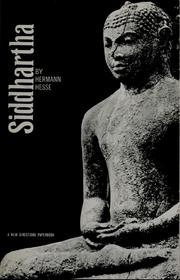
Hesse's most universally loved book distills his engagement with Hindu and Buddhist thought into a perfectly shaped parable. Reading it here gives you the Eastern philosophical lens you will need for The Glass Bead Game.

A rich, accessible novel that dramatizes the tension between the contemplative life and the life of the senses — the same tension at the heart of The Glass Bead Game, but told as a vivid medieval adventure story.
Into the Abyss: Steppenwolf
IntermediateTackle Hesse's most experimental and psychologically intense novel, now equipped with the thematic and stylistic preparation from the earlier works.
▸ Study plan for this stage
Pace: 4–5 weeks total: Week 1 — read "Klingsor's Last Summer" (~30–40 pages/day, including re-reading key passages); Weeks 2–4 — read "Der Steppenwolf" (~25–30 pages/day, allowing time for reflection after each major section: the Preface/Harry's Records, the Treatise on the Steppenwolf, and the Magic Thea
- The divided self: the tension between the bourgeois and the untamed, animalistic spirit, as embodied by Klingsor's feverish creativity and Harry Haller's wolf-man duality
- Expressionist intensity and prose as fever dream: how 'Klingsor's Last Summer' uses fragmented, color-saturated language to mirror psychological dissolution
- The Treatise on the Steppenwolf as a meta-fictional device: a text-within-a-text that analyzes the protagonist from the outside, fracturing narrative authority
- The Magic Theatre as psychological allegory: 'For Madmen Only — Price of Admission: Your Mind' as a space where repressed selves are dramatized and identity is shattered
- Immortals and timelessness: Mozart, Goethe, and Pablo as figures who transcend the bourgeois-versus-wolf binary and point toward a higher, ironic acceptance
- Eros, art, and self-destruction: how both Klingsor and Harry Haller use erotic and artistic experience as vehicles for ego dissolution
- Humor and the Gallows: Hesse's argument in Steppenwolf that genuine laughter and irony — not despair — are the mark of the Immortals
- Modernist structure and the unreliable frame: the role of the editor's preface in Steppenwolf and the three-layered narrative (editor, Harry's manuscript, the Treatise)
- How does Klingsor's relationship to his own mortality and creative exhaustion in 'Klingsor's Last Summer' prefigure Harry Haller's crisis in 'Der Steppenwolf' — and where do the two protagonists' responses to despair diverge?
- What narrative and philosophical work does the Treatise on the Steppenwolf perform that Harry's own first-person account cannot, and why might Hesse have chosen this structural device?
- In what ways does the Magic Theatre function as both a psychological map of Harry's unconscious and a critique of his self-pity and rigidity?
- How do the figures of Hermine, Pablo, and Maria collectively dismantle Harry's binary self-conception, and which of them comes closest to the role Hesse assigns to the 'Immortals'?
- Compare the use of visual art and color in 'Klingsor's Last Summer' with the use of music (jazz, Mozart) in 'Der Steppenwolf': what does each medium represent about the path to self-transcendence?
- By the end of 'Der Steppenwolf', has Harry Haller been saved, condemned, or left in deliberate ambiguity — and what textual evidence supports your reading?
- Close-reading journal: After finishing 'Klingsor's Last Summer', write a one-page character sketch of Klingsor using only imagery and metaphors drawn directly from the text — then revisit it after finishing Steppenwolf and annotate where Harry Haller echoes or departs from Klingsor.
- Treatise imitation: Write a 300–500 word 'treatise' on yourself in the third person, identifying your own internal dualities in the style of the Steppenwolf Treatise. Reflect on what the outside-observer perspective reveals that self-narration conceals.
- Magic Theatre scene mapping: Draw or diagram the Magic Theatre sequence, labeling each 'booth' or episode with the psychological conflict or repressed self it represents. Annotate with direct quotes from the text.
- Music and art playlist/gallery: Curate a short playlist of jazz and classical pieces (as referenced or implied in Steppenwolf) and a set of Expressionist paintings that match the mood of Klingsor's summer. Write 2–3 sentences per item explaining the thematic connection.
- Comparative character matrix: Create a table with Klingsor and Harry Haller as rows, and columns for: relationship to death, relationship to art, relationship to women/eros, relationship to humor/irony, and ultimate fate. Use direct textual evidence in each cell.
- Debate with the text: Write a one-page rebuttal to the Treatise's claim that Harry is 'a Steppenwolf' — argue, using evidence from Harry's own manuscript sections, that the Treatise misreads him. Then write a counter-rebuttal defending the Treatise.
Next up: Having confronted the most radical fragmentation of self in Hesse's canon — and the possibility of ironic, multi-souled acceptance as an answer — the reader is now prepared to explore how Hesse resolves these tensions through Eastern philosophy, collective spiritual seeking, and the integration of opposites in his later, more serene masterworks.

This short story collection (especially the title novella) is Hesse at his most expressionistic and feverish — a direct stylistic bridge to Steppenwolf. Reading it immediately before Steppenwolf prepares you for its fragmented, hallucinatory sections.
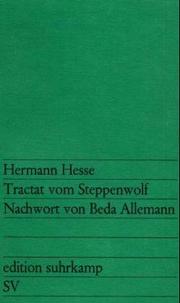
Now the centerpiece of the curriculum: Harry Haller's crisis of the divided self, the Magic Theatre, and the 'Treatise on the Steppenwolf' will feel like a culmination of everything you have read. The prior books make its symbolism and structure fully legible.
The Summit: The Glass Bead Game
ExpertRead and fully appreciate Hesse's Nobel Prize-winning magnum opus — a vast, meditative novel about the life of the mind, the tension between art and life, and the limits of pure intellectualism.
▸ Study plan for this stage
Pace: 8–10 weeks total: Week 1 — Journey to the East (~120 pages, read in 2–3 sittings, ~40 pages/day); Weeks 2–9 — The Glass Bead Game (~550 pages, ~25–30 pages/day, with deliberate pauses after each major section: the Introduction, each chapter of Knecht's life, and each of the Three Lives appendices);
- The League and the 'higher reality': Journey to the East introduces the idea of a secret, timeless fellowship devoted to spiritual and artistic pilgrimage — a direct precursor to Castalia's ethos in The Glass Bead Game.
- Castalia as utopia and critique: The Glass Bead Game's fictional province is both an idealized world of pure intellect and a cautionary portrait of an elite cut off from lived human experience and historical responsibility.
- The Glass Bead Game itself as symbol: The Game is never fully defined — it functions as a supreme metaphor for the synthesis of all human knowledge (music, mathematics, philosophy, art), and its ambiguity is intentional and central.
- Josef Knecht's arc — service and transcendence: Knecht's name means 'servant'; his entire life dramatizes the tension between devoted service to an institution and the individual soul's need for growth, risk, and authentic living.
- The tension between vita contemplativa and vita activa: Both books circle the same question — is a life of pure mind and spirit sufficient, or does it ultimately require immersion in the world, history, and other people?
- The unreliable/constructed narrator: The Glass Bead Game is framed as a future historian's biography, making the narrator's perspective a layer of meaning — what is remembered, idealized, or omitted shapes the reader's understanding of Knecht.
- The Three Lives as mirrors: The three fictional 'autobiographies' Knecht writes (the Rainmaker, the Confessor, Father Jacobus's world, the Indian life) are not appendices but thematic keys — each shows an earlier incarnation of the servant-of-spirit archetype.
- Hesse's synthesis of East and West: Drawing on his deep engagement with Indian philosophy, Jungian psychology, and Western classical music, Hesse weaves a spiritual cosmology that refuses to privilege any single tradition.
- In Journey to the East, the narrator H.H. loses faith in the League and believes it has dissolved — what does the novel's resolution reveal about the nature of memory, meaning, and the individual's role in a collective spiritual endeavor, and how does this prepare you for Castalia?
- How does Hesse use the deliberate vagueness of the Glass Bead Game's rules and content to make it a more powerful symbol than any precisely defined game could be?
- Trace Josef Knecht's relationship with three key figures — the Music Master, Plinio Designori, and Father Jacobus — and explain how each represents a different answer to the question of how the intellectual life should relate to the wider world.
- The narrator of The Glass Bead Game is a future Castalian historian writing centuries after Knecht's life. How does this framing device shape what we are told, and what does it suggest about the limits of institutional memory?
- Knecht's final act — leaving Castalia and then dying almost immediately — has been read as failure, liberation, and sacrifice. Which reading does the text most support, and why?
- How do the Three Lives (the Rainmaker, the Confessor, and the Indian life) function thematically in relation to Knecht's biography — what does Hesse achieve by placing them at the end rather than integrating them into the main narrative?
- Mapping the League/Castalia parallel: After finishing Journey to the East, write a one-page comparison of the League of the Journey and Castalia. Identify at least three structural or thematic parallels and one key difference — this will sharpen your lens before entering the novel.
- Game notation journal: Each time the novel describes or alludes to a Glass Bead Game meditation or session, log it in a dedicated notebook. Sketch what 'themes' are being combined (e.g., a Bach fugue structure + a Confucian concept). By the end, you will have a concrete map of what Hesse implies the Game actually is.
- Character relationship diagram: Draw a web of Knecht's significant relationships (Music Master, Tegularius, Designori, Father Jacobus, Ferromonte, the Elder Brother). Annotate each connection with the philosophical position that character represents. Use this to write a short paragraph on why Knecht cannot be reduced to any single influence.
- Close reading of the 'Introduction': Re-read the novel's long fictional Introduction (the history of the Game) after finishing the book. Write a half-page on how your understanding of it changed — what did you miss on first reading that now seems loaded with irony or foreshadowing?
- The Three Lives essay: Choose one of Knecht's three fictional autobiographies and write a 400–600 word essay arguing for its specific thematic relationship to Knecht's 'official' biography. What does this earlier life illuminate about his choices in Castalia?
- Vita contemplativa vs. vita activa debate: Stage a written debate with yourself — write one paragraph passionately defending Castalia's way of life using evidence from the novel, then write an equally passionate paragraph attacking it using Designori's or Knecht's own late arguments. Conclude with a third paragraph stating your own position.
Next up: Completing The Glass Bead Game — Hesse's most architecturally ambitious and philosophically resolved work — gives the reader a commanding view of his entire career, making any subsequent stage (whether critical biography, comparative literature with Thomas Mann or Robert Musil, or a retrospective re-reading of earlier Hesse) feel like a return journey with a fully earned map in hand.
This short, enigmatic novella is set in the same spiritual universe as The Glass Bead Game and introduces the 'League' — a brotherhood of seekers. It is the perfect final warm-up, acclimatizing you to Hesse's late, mythic register.

Hesse's final and greatest novel rewards everything you have built: the Eastern philosophy from Siddhartha, the contemplative-vs-active tension from Narcissus and Goldmund, and the psychological depth from Steppenwolf all converge here into a lifetime's meditation on culture, meaning, and the examined life.
Discussion
Keep reading
Paths that share books, cover the same subject, or open a related topic.