Start with Siddhartha. It is about a hundred and fifty pages, the prose in most English translations is limpid, and it is the clearest statement of the one idea Hesse spent his life restating: that a person has to walk through their own errors rather than around them, and that no teacher can do it for you.
If you already read Siddhartha at school and want the adult version, start with Narcissus and Goldmund instead. It gives you the same argument as a medieval double portrait — the scholar who stays in the monastery and the artist who leaves — and it is the warmest and most humane novel he wrote.
The short spine
Siddhartha, then Demian, then Narcissus and Goldmund.
Demian is the pivot book of his career, written just after the First World War, and it is where the Jungian machinery enters: the double, the mark of Cain, the boy who must destroy his safe world to be born. It is short and intense and it has been the book that captured a certain kind of eighteen-year-old for a century, which is both its strength and the reason critics are sniffy about it.
The difficult middle
Der Steppenwolf — published in English simply as Steppenwolf — is the most ambitious of the mid-career novels and the most often misread. Hesse complained publicly that young readers took the howling wolf and the drugs and the jazz and missed that the book is a comedy about a middle-aged man's self-pity, and that the Magic Theatre is meant to cure him of taking himself seriously.
Two warnings. The interpolated "Treatise on the Steppenwolf" stops the narrative dead about fifty pages in, and the closing Magic Theatre sequence abandons realism entirely. Both are load-bearing. Readers who skim them come away with the adolescent version of the book.
Klingsor's Last Summer and JOURNEY TO THE EAST are the short works either side of it. The first is a feverish novella about a painter in his final productive summer; the second is a slim allegory about a pilgrimage and a lost order, and it functions as the sketch for the last novel.
The early novels
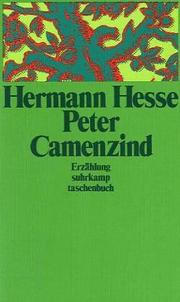
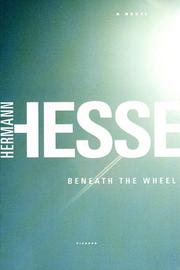
Peter Camenzind and Beneath the Wheel are apprentice work, and only the second earns a place on most reading lists. It is a straightforward, angry novel about a gifted boy destroyed by the German school system, and it is still the most emotionally direct book Hesse wrote. Read it whenever; it needs no preparation.
The summit, if you want it
The Glass Bead Game (Penguin Modern Classics) is his last and longest novel, the one specifically cited when he won the Nobel Prize, and it is a genuine wall. It is presented as a scholarly biography, written centuries hence, of a master of an invented intellectual game in a monastic order of pure scholarship. There is very little plot. The first hundred pages are an essay in the voice of a fictional academic.
If you loved the essayistic side of Der Steppenwolf, this is your reward and it is magnificent. If you read Hesse for lyricism and forward motion, it will feel like a punishment. There is no dishonour in stopping before it.
An honest note on reputation
Hesse's standing is genuinely contested. He was enormous with the 1960s counterculture in the English-speaking world, and a number of German critics have long treated him as a writer for the young rather than a major novelist. Both positions have serious people behind them; read three of the books and you will have your own.
Where to stop
Siddhartha, Demian and Narcissus and Goldmund are a complete introduction. Add Der Steppenwolf for the ambitious Hesse. Add The Glass Bead Game only with your eyes open.
Build your own sequence in the list builder.
Follow the full ordered path here: Hermann Hesse Reading Order: Where to Start.