Best Books for Heavy Equipment Careers, in Order
This curriculum takes a beginner from zero industry knowledge to job-ready competence in heavy equipment operation, earthmoving, and site safety. Each stage builds on the last — starting with how machines work and why they matter, moving into hands-on operating technique and grading science, then finishing with the safety standards and certification knowledge that employers actually screen for.
Foundations: Industry & Machine Basics
BeginnerUnderstand how the heavy equipment industry is structured, what excavators and dozers actually do, and how their major systems (hydraulics, undercarriage, drivetrain) function — building the vocabulary needed for every later stage.
▸ Study plan for this stage
Pace: 8–10 weeks total: Weeks 1–5 cover "Heavy Equipment Operation" by Millard (~25–30 pages/day, 4–5 days/week); Weeks 6–10 cover "Fundamentals of Construction Equipment" by Harris (~20–25 pages/day, 4–5 days/week). Allow one review day per week to revisit diagrams, glossary terms, and notes.
- Industry structure: how construction and heavy equipment sectors are organized, including contractor tiers, equipment ownership vs. rental, and operator career pathways — as introduced in Millard's opening chapters
- Machine identification and purpose: distinguishing excavators, bulldozers, motor graders, scrapers, and loaders by their primary functions and job-site roles, using Millard's machine-by-machine breakdowns
- Hydraulic systems fundamentals: how hydraulic fluid, pumps, cylinders, and control valves work together to generate and transmit force — covered in depth by both Millard and Harris
- Undercarriage systems: components of track-type undercarriages (track shoes, rollers, idlers, sprockets) and their wear patterns, as detailed in Harris's construction equipment fundamentals
- Drivetrain and power transmission: how engine power moves through torque converters, transmissions, and final drives to the ground, per Harris's powertrain chapters
- Operator controls and cab ergonomics: the layout and logic of joystick, pedal, and lever controls for excavators and dozers, grounded in Millard's operator-focused perspective
- Safety and pre-operation inspection: daily walk-around procedures, fluid checks, and OSHA-relevant safety protocols outlined by Millard
- Core industry vocabulary: mastering the technical terminology (e.g., breakout force, drawbar pull, swing bearing, dipper stick) needed to read service manuals and job specifications in later stages
- After reading Millard, can you describe the three main career entry points into the heavy equipment industry and what qualifications each typically requires?
- How does a hydraulic cylinder convert fluid pressure into mechanical movement, and what role does the control valve play — as explained across both Millard and Harris?
- What are the five major undercarriage components on a track-type dozer, and how does each contribute to machine mobility and wear, per Harris's coverage?
- Using Millard's pre-operation checklists as a guide, what are the critical fluid and visual checks an operator must complete before starting an excavator?
- How does a torque converter differ from a standard mechanical clutch in terms of power transmission, and why is it preferred in heavy equipment drivetrains according to Harris?
- What distinguishes an excavator's work cycle (dig, swing, dump, return) from a dozer's primary blade functions, and how do their hydraulic systems reflect those different demands?
- Vocabulary flashcard deck: As you read each chapter in both Millard and Harris, write every bolded or defined term on a flashcard (front: term; back: definition + the machine/system it applies to). Aim for 80–100 cards by the end of the stage and self-quiz weekly.
- Machine sketch labeling: After finishing Millard's excavator and dozer chapters, draw a simple side-view outline of each machine from memory and label at least 15 components (boom, arm, bucket, track frame, sprocket, etc.). Check your labels against the diagrams in Harris.
- Hydraulic circuit diagram: Using Harris's hydraulic system chapters as a reference, hand-draw a basic open-center hydraulic circuit showing the pump, reservoir, control valve, cylinder, and return line. Annotate the flow path and explain it aloud as if teaching someone else.
- Job-site role mapping: Create a one-page chart listing 6–8 machine types covered by Millard, and for each write: primary task, typical job-site phase (site prep, excavation, grading, etc.), and one key hydraulic or drivetrain feature from Harris that enables that task.
- Pre-operation inspection checklist: Using Millard's safety and inspection sections, write your own one-page daily walk-around checklist for either an excavator or a dozer. Include fluid types, check locations, and pass/fail criteria. Compare it to any manufacturer checklist you can find online.
- Site visit or video audit: Visit a local construction site (safely, from a public vantage point) or watch at least three professional equipment operation videos online. For each machine you observe, identify it by type, narrate its work cycle using Millard's terminology, and note one hydraulic or drivetrain behavior described in Harris.
Next up: Mastering the machine types, system vocabulary, and hydraulic/drivetrain fundamentals in this stage gives you the technical language and mental models needed to tackle the next stage's deeper focus on equipment operation techniques, productivity calculations, and job-site planning — where Millard's and Harris's foundational concepts become the assumed baseline.
A widely used vocational-school text that introduces the full range of heavy equipment — types, controls, and basic operating principles — giving beginners a broad map of the field before specializing.
In the Cab: Operating Excavators & Dozers
BeginnerLearn the step-by-step procedures for safely starting, moving, and working with excavators and crawler dozers, including pre-operation inspections, basic digging and pushing techniques, and common beginner mistakes to avoid.
▸ Study plan for this stage
Pace: 4–5 weeks, ~25–30 pages/day, with 2–3 days per week dedicated to hands-on practice or review
- Pre-operation inspection procedures: checking hydraulic fluid, fuel, coolant, tire/track condition, and safety devices before starting any machine
- Safe startup and shutdown sequences: proper engine start procedures, warm-up protocols, and controlled shutdown to prevent equipment damage
- Excavator controls and movements: understanding boom, arm, bucket, and swing operations, plus travel controls for smooth, precise digging
- Dozer blade operation: angling, tilting, and depth control techniques for pushing, grading, and material handling
- Basic digging techniques: proper bucket angles, swing patterns, and load management to maximize efficiency and minimize strain on the machine
- Situational awareness and safety: maintaining visibility, understanding blind spots, communicating with spotters, and avoiding common hazards on job sites
- Common beginner mistakes: overloading the bucket, jerky control inputs, ignoring maintenance warnings, and unsafe positioning relative to other equipment
- What are the critical items you must check during a pre-operation inspection, and why does each matter for safe operation?
- Walk through the correct startup sequence for an excavator or dozer, including warm-up and initial control checks.
- Describe the relationship between boom, arm, and bucket movements in an excavator, and how coordinating them improves digging efficiency.
- What are the main techniques for controlling a dozer blade when grading or pushing material, and how do you adjust for different soil conditions?
- Identify at least five common beginner mistakes in excavator or dozer operation, and explain the safety or efficiency consequence of each.
- How do you maintain situational awareness and communicate hazards when operating heavy equipment in a busy work environment?
- Create a laminated pre-operation checklist for either an excavator or dozer based on the handbook; use it to inspect actual equipment on a job site or training facility.
- Perform a full startup and shutdown sequence on a training machine (or simulator), narrating each step aloud to internalize the procedure.
- Practice excavator digging patterns in a sandbox or training pit: execute 10 consecutive bucket fills using proper boom-arm-bucket coordination, focusing on smooth, controlled movements.
- Record a short video of yourself operating a dozer blade (or simulator) while grading a small area; review the footage to identify jerky inputs or inefficient blade angles.
- Write a 1–2 page reflection on three beginner mistakes you observed (in the handbook, videos, or live operation) and the correct technique to avoid each one.
- Pair with an experienced operator and shadow them for 2–3 hours, noting their pre-operation checks, control inputs, and safety habits; document three key practices you'll adopt.
Next up: Mastering safe startup, basic movement, and fundamental digging/pushing techniques prepares you to advance to more complex tasks such as precise grading, trench work, and operating in confined or high-traffic environments where efficiency and hazard awareness become critical.
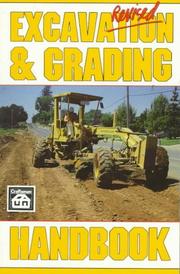
The single most recommended field reference for equipment operators — covers excavator and dozer operation, blade and bucket control, and practical trade tips that bridge classroom knowledge and real jobsite work.
Grading, Earthmoving & Site Work
IntermediateMaster grading calculations, cut-and-fill earthwork, soil behavior, and production estimating so you can read a grading plan, set grade stakes, and move material efficiently — skills that separate entry-level operators from lead operators.
▸ Study plan for this stage
Pace: 4–5 weeks, ~25–30 pages/day, with 2–3 days per week dedicated to hands-on surveying exercises and site calculations
- Benchmark and datum systems: establishing reference points and vertical control for grading work
- Grade stakes and slope calculations: reading grades, setting stakes, and computing cut/fill depths on site
- Horizontal and vertical distance measurement: chaining, taping, and level-based methods for accurate layout
- Contour interpretation and cross-sections: translating plans into three-dimensional earthwork reality
- Grading calculations and material volume estimation: computing cubic yards of cut and fill for production planning
- Soil behavior and compaction: understanding how soil type affects grading, drainage, and equipment performance
- Site layout and staking procedures: practical workflows for marking grades and controlling equipment movement
- How do you establish and verify a benchmark, and why is it critical before starting grading work?
- Given a grading plan with contours and a target elevation, how do you calculate the cut or fill depth at a specific stake location?
- What is the difference between a grade stake and a slope stake, and when would you use each on a grading project?
- How do you read a cross-section from a construction drawing and translate it into staking instructions for an operator?
- Walk through the steps to estimate the total volume of material to be moved (cut and fill) from a grading plan using Crawford's methods.
- How do soil type and existing site conditions affect your grading strategy and equipment selection?
- Set up a benchmark on your own property or a local site; establish a datum and verify it with a level or transit; document the process and calculate elevations at three test points.
- Obtain a simple grading plan (or sketch one); identify contours, calculate cut/fill depths at five stake locations, and lay out grade stakes on the ground using a level and measuring tape.
- Measure a 100-foot line using a steel tape; compare results using chaining and pacing to understand measurement error and precision requirements.
- Draw a cross-section from a grading plan; calculate the area of cut and fill in the section, then estimate total volume using the average-end-area method.
- Observe or participate in a real grading operation; identify how stakes are set, how the operator reads grades, and how cut/fill is verified during work.
- Create a staking sheet for a small grading project (5–10 stakes); include elevation, grade, cut/fill depth, and slope information in a format a heavy equipment operator can use.
Next up: Mastery of surveying, staking, and grading calculations provides the technical foundation and site-reading skills needed to move into production estimating, equipment selection, and managing multi-phase earthwork projects—where you'll apply these fundamentals to optimize cost, schedule, and quality across larger, more complex sites.
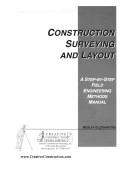
Teaches how to read grade stakes, use a builder's level, and interpret site plans — the field skills that allow an operator to grade accurately without constant supervision, read here after earthwork math is solid.
Site Safety: Standards & Hazard Control
IntermediateKnow OSHA construction standards, excavation and trenching safety, struck-by and caught-in hazards, and the safety management practices that keep crews alive and keep employers compliant.
▸ Study plan for this stage
Pace: 4–5 weeks, ~25–30 pages/day, with 2–3 days per week dedicated to review and exercises
- OSHA's regulatory framework: the General Duty Clause, standards hierarchy, and how construction employers must comply with CFR 1926 (construction standards)
- Excavation and trenching hazards: soil classification, cave-in mechanics, atmospheric hazards, and protective systems (shoring, sloping, trench boxes)
- Struck-by hazards: equipment blind spots, swing radius awareness, and control measures for mobile equipment on active sites
- Caught-in hazards: pinch points, rotating machinery, and lockout/tagout (LOTO) principles in construction contexts
- Hazard assessment and job safety analysis: identifying risks before work begins and documenting controls
- Personal protective equipment (PPE) selection and limitations: when PPE is a control and when it is not sufficient alone
- Safety management systems: toolbox talks, incident investigation, near-miss reporting, and continuous improvement in construction safety culture
- What is the OSHA General Duty Clause and how does it apply to construction employers who may not have a specific standard that covers a hazard?
- Explain the three soil classifications used in trenching and why each requires different protective systems.
- What are the primary causes of struck-by incidents on heavy equipment sites, and what control measures can prevent them?
- Describe the difference between caught-in and caught-between hazards, and give two examples of each in a construction setting.
- What steps should a supervisor take when conducting a job safety analysis before starting an excavation project?
- Why is personal protective equipment considered the last line of defense in the hierarchy of controls, and what should come before it?
- Read and annotate Chapter 2 (OSHA Standards Overview) and create a one-page flowchart showing how to determine which OSHA standard applies to a specific construction task.
- Study the soil classification tables in the excavation chapter; then visit a local construction site (with permission) or review site photos and classify the soil type, explaining what protective system would be required.
- Conduct a struck-by hazard walk-through: map the swing radius of an excavator or loader, identify blind spots, and propose three control measures (engineering, administrative, and PPE).
- Write a 2–3 page job safety analysis for a simulated trenching project, including hazard identification, risk assessment, and control measures for at least five hazards.
- Review a real or simulated incident report (cave-in, struck-by, or caught-in) and trace back to the root causes; identify what safety management practice(s) would have prevented it.
- Prepare and deliver a 10-minute toolbox talk on one topic from the book (e.g., trenching safety, blind spots, or LOTO) to a peer or small group, then receive feedback.
Next up: This stage equips you with the regulatory knowledge and hazard-recognition skills needed to move into equipment-specific operation and maintenance, where you'll apply these safety principles to the daily tasks of running and servicing heavy machinery.

The definitive textbook on OSHA 29 CFR 1926 construction regulations — covers excavation, equipment operation, PPE, and hazard communication in the exact framework inspectors and employers use.
Focuses specifically on trenching and excavation hazards — cave-ins, soil classification, shoring, and sloping — which are the highest-fatality risks for equipment operators and a frequent OSHA inspection focus.
Certifications & Career Advancement
ExpertPrepare for the NCCER Heavy Equipment Operations credentials and understand the broader certification landscape (OSHA 10/30, operator qualification cards) so you can document your skills and compete for higher-paying positions.
▸ Study plan for this stage
Pace: 8–10 weeks, ~40–50 pages/day (accounting for technical diagrams, equipment specifications, and hands-on lab work alongside reading)
- NCCER Heavy Equipment Operations certification pathway and credential requirements (Level One and Level Two prerequisites, exam structure, and documentation standards)
- Safe equipment operation fundamentals: pre-operation inspections, load calculations, stability principles, and hazard recognition specific to heavy equipment
- Equipment-specific operation and controls: dozers, excavators, loaders, graders, and other machinery covered in the trainee guides (controls, attachments, operational techniques)
- Regulatory compliance and safety standards: OSHA 10/30 integration, operator qualification cards, and documentation requirements for job site credibility
- Site-specific competencies: reading grade stakes, understanding job site layouts, communicating with spotters, and working within crew hierarchies
- Maintenance and troubleshooting basics: daily maintenance checks, identifying mechanical issues, and knowing when to escalate problems to supervisors
- Practical skill demonstration: hands-on operation of equipment (or simulators) to meet NCCER performance standards and build muscle memory for real-world work
- What are the specific prerequisites and exam requirements for NCCER Level One and Level Two Heavy Equipment Operations certification, and how do they differ?
- How do you perform a pre-operation inspection on a dozer or excavator, and what critical safety checks must be completed before operating?
- Explain load stability principles and how to calculate safe load limits for a loader or crane-adjacent equipment—why does this matter for job site safety?
- What is an operator qualification card, how does it relate to OSHA 10/30 certification, and why is it essential for advancing to higher-paying positions?
- Describe the proper communication protocols between an equipment operator and spotters/crew members on a job site, and why clear communication prevents accidents.
- What are the most common maintenance issues covered in the trainee guides, and how do you document them for supervisor review?
- Complete a full pre-operation inspection checklist (from the trainee guides) on actual equipment or a high-fidelity simulator, documenting each step and photographing critical components.
- Practice reading and interpreting grade stakes, slope percentages, and job site blueprints; calculate cut/fill depths and verify against equipment specifications.
- Operate a dozer, excavator, or loader (or use NCCER-approved simulator software) for at least 5–10 hours, focusing on smooth control, precision positioning, and safe load handling.
- Create a personal operator qualification card portfolio: gather evidence of training hours, document completed exercises, and prepare for the NCCER written and practical exams.
- Conduct a mock communication drill with a peer acting as spotter; practice hand signals, radio protocols, and emergency stop procedures until responses are automatic.
- Write a maintenance log for a piece of equipment over a 1–2 week period (real or simulated), identifying wear patterns, fluid levels, and issues requiring supervisor escalation.
Next up: Mastery of NCCER Level One and Two certifications, combined with documented operator qualification cards and OSHA 10/30 compliance, positions you to pursue specialized equipment certifications (e.g., crane operations, pile driving) or supervisory roles, unlocking access to premium job sites and significantly higher compensation.

The official NCCER curriculum used by union halls, trade schools, and contractors nationwide — studying this is the most direct preparation for the NCCER operator credential that many large employers require for hire.

Builds on Level One with advanced machine control, production efficiency, and site leadership topics; completing both levels mirrors the two-part credential path and signals to employers that you are promotion-ready.
Discussion
Keep reading
Paths that share books, cover the same subject, or open a related topic.