Best Books on Ethnobotany and Plant Medicine, in Order
Ethnobotany is the study of what people do with plants — as food, medicine, poison, building material, dye and sacrament — and of what botanists learned by asking rather than by collecting. It sits awkwardly between disciplines: it is fieldwork in anthropology, taxonomy in botany, and the origin of a real share of the modern pharmacopoeia. This path opens with the three narrative books that made the subject famous, moves to the standard surveys and reference works, spends a stage on the psychoactive plants that dominate the field's public reputation, then covers the fieldwork methods, and closes with two books that put plant knowledge back into wider circulation. The ethics of bioprospecting — who owns knowledge that a community gave freely to a visiting scientist — runs through every stage rather than sitting in one.
The Narrative Openers
BeginnerUnderstand what ethnobotanical fieldwork actually looks like, and why the discipline's founding figures were as much travellers as scientists. After this stage you should be able to say what an ethnobotanist does on an ordinary day and what the recurring ethical problem is.
▸ Study plan for this stage
Pace: Four to five weeks. One River is a long book of around 550 pages and deserves three weeks on its own; Tales of a Shaman's Apprentice is around 320 pages and reads in a week; The Serpent and the Rainbow is around 300 pages and is fast. Read them in that order. What they cover: One River includes the
- What an ethnobotanist actually does on an ordinary day, which is the first thing these books supply: walk with a knowledgeable person, collect the plant they name, press and voucher it, record the use in the local language, and later have the specimen identified taxonomically. The romance in these n
- Richard Evans Schultes as the field's central figure — twelve years in the Colombian Amazon from 1941, over 24,000 collections, and a lineage of students that includes both Davis and Plotkin. Almost every book in this path connects back to him.
- One River's double structure: Davis narrating Schultes's expeditions from the archive and his own coca fieldwork from memory. Note that Davis is a student writing about his teacher, which shapes what is emphasised and what is not.
- Plotkin's argument in Tales of a Shaman's Apprentice, made at close range with the Tirio in Suriname: the knowledge is held by ageing individuals, the transmission chain to the next generation is breaking, and recording it is a race against that. He is an advocate for a conservation programme as wel
- The apprenticeship model as a method — learning by becoming a shaman's student rather than by interviewing him — and its obvious problem, which is that the researcher's account is shaped by one teacher.
- The Serpent and the Rainbow's claim, and how to read it: Davis proposed that tetrodotoxin from pufferfish in a prepared powder could produce the state described as zombification. The pharmacological chain was contested by other researchers, samples analysed elsewhere gave inconsistent results, and t
- Bioprospecting ethics arriving already in stage one: in every one of these books a researcher receives knowledge freely given and takes it somewhere it can be published, patented or commercialised. Nothing in the narratives resolves this and the later stages sharpen it rather than settling it.
- The narrative form itself as a variable. These are books written to be read by non-specialists, and the selection of what is dramatic is not the same as the selection of what is representative.
- Describe an ethnobotanist's working day from One River. What proportion of it is collecting, and what proportion is something else?
- What did Schultes actually do in the Amazon, and what did he publish? Distinguish the expeditions from the scientific output.
- What is Plotkin's conservation argument, and what evidence does he give that knowledge is being lost rather than changing?
- State the pharmacological chain in The Serpent and the Rainbow step by step. Which steps were disputed and on what grounds?
- In each of the three books, who gave the knowledge, what did they receive, and who decided the terms?
- Davis is Schultes's student writing Schultes's life. Where would you expect that to affect the account, and can you find a place where it does?
- Take one plant discussed in One River and trace everything the book says about it: who used it, for what, how prepared, what the active compound is said to be, and what Schultes or Davis did with the specimen. The trace is the shape of an ethnobotanical record and doing it once tells you what the discipline actually produces.
- Write out the tetrodotoxin argument from The Serpent and the Rainbow as a numbered chain of claims, then mark each as established, plausible or unsupported on the evidence the book itself supplies. This is the single most useful exercise in the stage and it transfers to every popular science book you read afterwards.
- List every occasion in Tales of a Shaman's Apprentice where Plotkin is told something in confidence or under a condition. Then check what the book does with each. The list is the consent problem made concrete rather than discussed in the abstract.
- Compare the first ten pages of One River with the first ten of The Serpent and the Rainbow. Same author, ten years apart, and the difference in how carefully claims are hedged is visible in the sentences.
Next up: Three narratives have shown you what fieldwork looks like from inside; the next stage replaces the adventure with the field's actual structure, methods and reference literature.
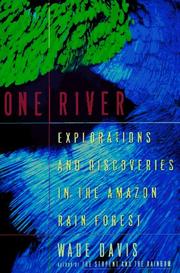
The best single book on the subject and the correct entry point: Davis retraces his teacher Richard Evans Schultes's twelve years in the Colombian Amazon while narrating his own fieldwork with coca. It is the book that turns ethnobotany from a word into a discipline with a history and a cast, and every later stage of this path connects back to it.

Read second. Plotkin, another Schultes student, worked with Tirio shamans in Suriname and writes the fieldwork at close range — the apprenticeship, the plants, and the fact that the knowledge was dying faster than it could be recorded. Shorter and more personal than One River, and the clearest statement of the conservation argument.

Davis's earlier and far more contested book, on the pharmacology behind Haitian zombification. Read it third and read it critically: it is a case study in what happens when an ethnobotanical claim outruns its evidence, and the scholarly pushback it drew is itself part of the education.
The Standard Surveys
IntermediateGet the field's actual structure — its methods, its sub-fields, its major results and its reference literature — rather than its adventure stories. This is the stage that turns interest into working knowledge.
▸ Study plan for this stage
Pace: Six to eight weeks. Balick and Cox's Plants, People, and Culture is a university survey of around 300 pages and should be read straight through over three or four weeks; the Schultes and von Reis anthology Ethnobotany: Evolution of a Discipline is a large edited collection of around 400 pages of ind
- The scope of the discipline as Balick and Cox define it: plants as food, medicine, material, poison, stimulant and sacrament, plus the study of the knowledge systems that organise those uses. It assumes no botany, which is why it is the right first survey.
- Folk taxonomy and how it relates to Linnaean taxonomy — the finding that local classification systems are often finely discriminating and sometimes cut nature at different joints. This is the discipline's most durable intellectual contribution and it belongs to anthropology as much as to botany.
- The drug-discovery pipeline as it actually works: ethnobotanical lead, extraction, bioassay, isolation of the active compound, structural characterisation, synthesis. The canonical cases — quinine, aspirin from willow, the vinca alkaloids, artemisinin — and the very high attrition rate between lead
- The honest version of the drug-discovery argument, which the popular books overstate: ethnobotanical leads improve hit rates over random screening, but most leads fail, and the pharmaceutical industry largely moved to combinatorial and computational screening. Balick and Cox are more measured about
- The Convention on Biological Diversity and the Nagoya Protocol as the legal frame for access and benefit-sharing, which turns the ethical problem from stage one into an administrative process with signatures, permits and agreed terms.
- The Schultes and von Reis anthology as the field's own account of itself — how it formed, where it splits between botanical, anthropological, pharmacological and conservation orientations, and who claims it. Read three or four essays from different sub-fields rather than the whole thing.
- Van Wyk and Wink's structure, which is the model of what a rigorous reference in this field looks like: species, botany, traditional use, active constituents, pharmacology, and the state of the clinical evidence. The last column is the one that matters, because it is where most traditional claims ru
- The distinction that makes the reference usable: a plant with documented traditional use, a plant with a characterised active compound, and a plant with clinical evidence of efficacy are three different things, and popular writing routinely merges them.
- Define ethnobotany as Balick and Cox define it. What falls outside the definition?
- What is folk taxonomy, and give one documented case where it discriminates more finely than the Linnaean system does.
- Walk through the drug-discovery pipeline from ethnobotanical lead to marketed compound, using one real example. Where does attrition occur?
- What does the Nagoya Protocol require of a researcher collecting plant material and associated knowledge? Name the concrete steps.
- Take one species from Van Wyk and Wink and state its traditional use, its known constituents, and the clinical evidence. Where are the three inconsistent?
- The essays in the Schultes anthology come from different sub-fields. What do a botanist and an anthropologist in that volume disagree about?
- Take three plants named in One River and look each up in Medicinal Plants of the World. For each, write down what the narrative claimed and what the reference supports. This is the exercise that converts stage one from stories into data, and the mismatches are the finding.
- Build the record for a single species in Van Wyk and Wink's own format — botany, use, constituents, pharmacology, evidence — for a plant used medicinally where you live. Filling in the evidence column honestly is harder than it looks.
- Trace one drug from ethnobotanical lead to pharmacy shelf using Balick and Cox, and write the timeline with dates. Artemisinin or the vinca alkaloids work well. Note how many decades separate the lead from the drug.
- Draft a benefit-sharing agreement outline for a hypothetical collection, following what the Nagoya Protocol requires: who gives consent, on whose behalf, for what uses, with what return. Then note every question the framework does not answer.
- Read one essay each from a botanist, an anthropologist and a pharmacologist in the Schultes anthology and write a paragraph on what each thinks the discipline is for. The disagreement is the discipline.
Next up: The survey has given you the field's structure; the next stage goes deep into the sub-field it is best known for, in the primary sources rather than the popular literature.

Balick and Paul Alan Cox's survey, the standard general text and the one to read first here. It covers plants as food, medicine, material and stimulant, the drug-discovery pipeline, and intellectual-property questions, at a level that assumes no botany. The 2020 second edition is the record that resolves.
An anthology edited by Schultes with Siri von Reis, tracing how the field formed and where it splits. Note the catalogue record displays as the bare word Ethnobotany, and a different book in stage four displays the same way — check the author. Read it as the field's own account of itself.
The reference volume: several hundred medicinal species, each with its botany, traditional uses, active compounds and the state of the clinical evidence. Read it alongside the others rather than through — it is the book that lets you check whether a claim in a narrative account has pharmacology behind it.
The Psychoactive Plants
IntermediateCover the sub-field the discipline is best known for, in the primary sources rather than the popular ones — what the plants are, how they are prepared, and what role they play in the societies that use them.
▸ Study plan for this stage
Pace: Four to five weeks. Plants of the Gods is around 200 large-format pages, heavily illustrated, and can be read in a fortnight; Vine of the Soul is a photographic book of around 280 pages built around Schultes's own images from the 1940s and 1950s and reads quickly; The Healing Forest is a systematic
- Schultes and Hofmann's approach in Plants of the Gods, which is the reason it is the foundational text: each species is treated botanically first — identification, distribution, family — then chemically, then ethnographically. The restraint is deliberate and is a useful contrast to almost everything
- The major families and compounds: the tryptamines in Anadenanthera snuffs and in Psychotria viridis, the beta-carbolines in Banisteriopsis caapi, the phenethylamines in peyote, the tropane alkaloids in the daturas and brugmansias, and the ergot alkaloids in ololiuqui.
- The ayahuasca case in particular, which Vine of the Soul documents: a preparation combining two plants where the pharmacological effect depends on the combination, and the ethnobotanical question of how such combinations were arrived at. Note carefully what the sources claim about this and what they
- Ritual context as data rather than as colour. Schultes records who uses a preparation, on what occasions, with what preparation and dosage and under whose supervision, because those are the variables that determine what the plant does.
- Vine of the Soul's status as a documentary record: these are Schultes's own photographs from the 1940s and 1950s of the people and practices One River narrates, which makes it the primary source behind the story you read in stage one.
- The Healing Forest as the technical counterpart — a systematic inventory of medicinal and toxic plants of the northwest Amazon arranged by family, with uses recorded and voucher references. This is what a career of collecting produces.
- The sourcing question you should keep asking: how much of the ethnographic detail in these books comes from Schultes's own observation and how much from informants or from earlier literature. He is generally explicit; check.
- Why these books read as restrained: they were written by a Harvard botanist and a Sandoz chemist for a scientific readership, and the popular literature that followed had different incentives.
- For three species in Plants of the Gods, state the family, the active class of compound, and the cultural context of use. What varies most across the three?
- Explain the pharmacological basis of the ayahuasca combination. What does Vine of the Soul establish about how it is prepared, and what does it not establish about origins?
- How does Schultes record ritual context, and why is dosage and supervision treated as botanical data rather than as ethnographic detail?
- What is the difference in purpose between Vine of the Soul and The Healing Forest? Which questions can each answer?
- Take one claim in Plants of the Gods and identify its source: Schultes's own observation, an informant, or prior literature.
- Compare the tone of these three books with The Serpent and the Rainbow. What accounts for the difference, beyond the authors?
- Build a table of ten species from Plants of the Gods: family, active compounds, region, method of preparation, and the group using it. Ten rows makes the chemical families and their geographic distribution visible in a way the book's page-by-page organisation does not.
- Match the photographs in Vine of the Soul to the corresponding passages in One River. Davis was writing from Schultes's archive and seeing the source images beside the prose shows exactly what a narrative does to a documentary record.
- Use The Healing Forest to look up three plants mentioned in Plants of the Gods and note what the systematic catalogue adds and what it leaves out. The two books were written by the same man for different purposes and the comparison is instructive.
- Take one preparation described in these books and write down every variable that would have to be controlled to study it scientifically — species, part, season, preparation, dose, admixtures, setting. The length of the list is the honest answer to why this literature is hard to translate into pharmacology.
- Find a recent popular article about ayahuasca and check its factual claims against Plants of the Gods and Vine of the Soul. The exercise makes the value of a restrained primary source obvious.
Next up: Having read the field's most famous sub-field in its primary sources, the next stage is the methods — how a plant-use survey is actually designed, run and made defensible.
Schultes with the chemist Albert Hofmann, and the foundational work on psychoactive species: identification, chemistry, preparation and ritual use, plant by plant. Read it first in this stage — everything else on the topic is downstream of it, and its restraint is a useful contrast to the popular literature.
Schultes and Robert Raffauf on ayahuasca and the medicine men of the northwest Amazon, built around Schultes's own photographs from the 1940s and 50s. The narrowest and deepest of the three, and the direct documentary record behind the story One River tells.
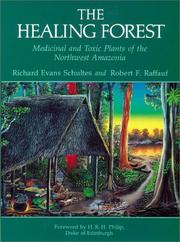
The technical counterpart to the two above: Schultes and Raffauf's systematic catalogue of medicinal and toxic plants of the northwest Amazon, arranged by plant family. A reference rather than a read, and the place to go when a narrative account names a species and you want the botany.
Doing the Fieldwork
IntermediateLearn the actual methods — how to design a plant-use survey, run quantitative interviews, voucher a specimen, and negotiate consent and benefit-sharing before collecting anything.
▸ Study plan for this stage
Pace: Six to eight weeks, and this is the most technical stage. Martin's Ethnobotany: A Methods Manual is around 270 pages and is a working handbook to be studied rather than read — expect to reread the quantitative chapters. Cunningham's Applied Ethnobotany is around 300 pages and covers resource assessm
- Research design before entry: what question is being asked, what would count as an answer, what permits and consents are required, and who the community's actual decision-making body is. Martin puts this first and it is not a formality.
- Interview technique specific to plant use — free listing, pile sorting, triad tests, walk-in-the-woods interviews where the plant is present and named in situ. Each produces a different kind of data and the choice determines what can be analysed.
- Voucher specimens and why they are non-negotiable: without a pressed, numbered, deposited specimen tied to the interview record, a plant-use claim cannot be verified and the local name cannot be matched to a species. This single practice separates ethnobotany from anecdote.
- Quantitative ethnobotany: use-value indices, informant consensus factors, relative importance measures, and their limitations. These convert interview data into comparable numbers, and Martin is explicit that the numbers are only as good as the sampling behind them.
- Sampling: how many informants, chosen how, and the systematic problem that knowledge is unevenly distributed by age, gender and specialisation, so a convenience sample of available men will misrepresent the community's knowledge.
- Cunningham's applied turn: once a wild plant has commercial value, the questions become ecological — what is the standing stock, what is the sustainable offtake, which part is harvested and does harvesting kill the plant, and what happens to the population under market pressure.
- Where bioprospecting ethics stop being abstract, which is Cunningham's contribution to this path: prior informed consent, benefit-sharing agreements, who has authority to sign on a community's behalf, and harvest quotas that determine whether a species survives commercialisation.
- The bark and root problem specifically: harvesting leaves is survivable for a population, harvesting bark or roots often is not, and commercial demand for medicinal plants frequently targets exactly the destructive part.
- Design a plant-use survey for a stated question: what interview method, how many informants, selected how, and what would the voucher protocol be?
- Why is a voucher specimen essential? Describe what is lost when a use is recorded without one.
- Explain one quantitative use index from Martin — how it is computed and what it assumes about the sample.
- How is knowledge distributed unevenly within a community, and what does that do to a naive sampling strategy?
- What determines whether a wild-harvested medicinal plant can sustain commercial demand? Give the ecological criteria from Cunningham.
- Who can give prior informed consent on behalf of a community, and what happens when the answer is contested?
- Run a free-listing exercise for real: ask five people you know to list every plant they can name that is used for food or medicine, then compute a simple frequency and salience ranking from the results. The method works on any population and doing it once teaches more than the chapter does.
- Press, dry, label and number a voucher specimen of a common local plant following Martin's protocol exactly, including the collection data. The clerical discipline is the point and it is unteachable in the abstract.
- Compute a use-value index from a small dataset — your own free-listing results will serve — and then write down every way the number could mislead. Martin lists the objections; find them yourself first.
- Take one commercially harvested wild medicinal plant and, using Cunningham's framework, write the resource assessment you would need: population, growth rate, harvested part, offtake, regeneration. Note which figures are actually available and which are not.
- Write the prior informed consent document you would present to a community for the survey you designed, in plain language. Then list every question it fails to resolve. That list is the honest state of the ethics.
- Return to the plants you traced from One River in stage two and write down what would be required to make each of those records defensible by Martin's standards. Almost none of the popular literature meets them.
Next up: With the methods in hand, the last stage steps outside the academic frame to see the same relationship written from inside a tradition and from outside the discipline altogether.
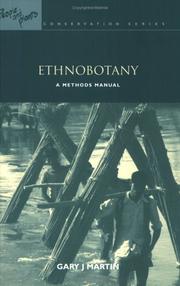
The standard practical handbook: interview design, quantitative measures of plant use, herbarium technique and data handling, written for people about to go into the field. The catalogue record displays as the bare word Ethnobotany, and a different book in stage two displays identically, so match on the author.
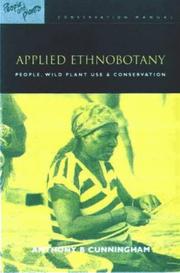
Read after Martin. Cunningham covers the applied end — resource assessment, sustainable harvest and the conservation of wild plant populations under commercial pressure — and it is where the bioprospecting ethics stop being abstract and become a question about harvest quotas and who signs the agreement.
Plants and People Beyond the Discipline
IntermediateStep outside the academic frame and see the same relationship handled by an Indigenous scientist and by a journalist — a useful test of what the discipline's methods do and do not capture.
▸ Study plan for this stage
Pace: Three to four weeks. Braiding Sweetgrass is around 390 pages of essays and reads slowly by design — it is written to be taken a chapter at a time rather than consumed; The Botany of Desire is around 270 pages and reads fast. Read Kimmerer first and unhurried, then Pollan.
- Kimmerer's dual position, which is the whole reason the book closes this path: she is a trained plant ecologist and a member of the Citizen Potawatomi Nation, writing plant knowledge from inside a tradition rather than as a visiting researcher collecting it.
- Reciprocity as the organising idea, against the extraction model implicit in stages one to four. The Honourable Harvest — take only what is given, take no more than half, use everything, give something back — is presented as a practice with rules, not as a sentiment.
- What that does to the consent and ownership questions from the previous stage: if knowledge is held in a relationship of obligation, then prior informed consent is a procedural approximation of something the framework cannot fully represent. This is a real challenge to Nagoya-style instruments, not
- The sweetgrass study is the concrete meeting point: a traditional harvesting practice tested by controlled experiment, with the result supporting the practice. Note both what that establishes and what a single result cannot establish.
- Kimmerer writes as an advocate for a way of relating to the natural world, in essay form, and the book's authority is moral and personal as much as scientific. Reading it as a counterweight to stages one to four rather than as a survey is the correct use.
- Pollan's inversion in The Botany of Desire: four domesticated species — apple, tulip, cannabis, potato — presented as organisms that exploited human desire to spread themselves. It is a rhetorical device, and Pollan is explicit that it is one.
- The co-evolution argument underneath the device is real: domestication is a mutual process, and the traits humans selected for made these species vastly more successful than their wild relatives.
- Pollan is a journalist working from secondary sources and interviews, and the book's value here is framing rather than evidence. Read it as a closing reframe of the whole subject rather than as a source.
- What is the Honourable Harvest, stated as rules? How would it change the collection protocol you designed in stage four?
- How does Kimmerer's position differ from Plotkin's in Tales of a Shaman's Apprentice? Answer in terms of who holds the knowledge and who is recording it.
- Describe the sweetgrass study — the question, the design, the result. What does it establish, and what does it not?
- Does Kimmerer's account of reciprocity make benefit-sharing agreements adequate, inadequate, or beside the point? Defend the answer.
- What is Pollan's inversion, and where does it stop being a device and start being a claim about co-evolution?
- After the whole path, whose account of the relationship between people and plants do you find most useful, and for which questions?
- Take the consent document you drafted in stage four and rewrite it under Kimmerer's framework of reciprocity. Where the two are incompatible, note it precisely. That incompatibility is the most interesting thing in the whole subject and it is easy to talk around and hard to write around.
- Practise the Honourable Harvest on one plant — identify it, take only what is offered, take under half, use all of it, return something. Kimmerer's argument is about a practice and the practice is available to anyone with a garden or a hedgerow.
- Read Kimmerer's sweetgrass chapter beside Cunningham's chapter on sustainable harvest from stage four. Both are about how much you can take without destroying a population; write half a page on what each has that the other lacks.
- Pick one of Pollan's four plants and write the same species up in Van Wyk and Wink's reference format from stage two. Doing the same plant in two registers shows exactly what each form of writing captures and discards.
- Write a one-page statement of what you now think ethnobotany is for, naming at least four books from this path and disagreeing with at least one of them. The discipline has not settled this and neither should you.
Next up: This is the final stage; you have the field's narratives and their limits, its structure and reference literature, its most famous sub-field in primary sources, its working methods, and two accounts from outside the discipline that keep it honest.
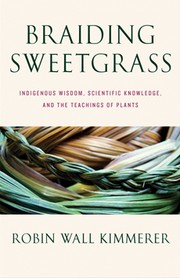
Kimmerer is a botanist and a member of the Citizen Potawatomi Nation, and she writes plant knowledge from inside the tradition rather than as a visiting researcher — which reframes the consent and ownership questions raised in stage four as a matter of relationship rather than of permission. The best possible counterweight to stage one.

Four domesticated plants — apple, tulip, cannabis, potato — told from the plant's point of view, as species that used human desire to spread. A good closing book because it inverts the field's usual framing: not what people do with plants, but what plants have done with people.
Discussion
Keep reading
Paths that share books, cover the same subject, or open a related topic.