For most of a century gravitational waves were a theoretical embarrassment. Einstein derived them, then talked himself out of them, and at one point submitted a paper arguing they did not exist; physicists spent decades unsure whether the waves were real or an artefact of the coordinates used to describe them. That argument was only settled properly in the late 1950s, and the first direct detection came in September 2015. Read the books out of order and you meet the triumph without the doubt that makes it interesting.
The practical problem is the range. This shelf runs from a 1916 popular pamphlet to a research monograph in field theory. Roughly half of these books contain no equations at all; the last four are graduate physics.
The theory, told as history
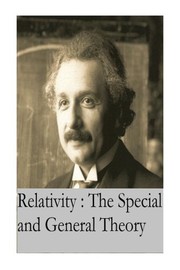
Start with The Perfect Theory by Pedro Ferreira, a century-long history of general relativity that keeps the fights in: whether black holes were physical, whether the waves carried energy, whether any of it could ever be measured. It beats the obvious first choice, Einstein's own Relativity : the Special and General Theory, which is short and admirably honest but was written before most of the ideas that matter here existed. Read Einstein second, as a primary source rather than as an introduction.
A Journey into Gravity and Spacetime by John Wheeler is the best purely visual explanation of curved spacetime in print, and it is worth reading at any point in the sequence.
The detection, from four angles
Einstein's Unfinished Symphony by Marcia Bartusiak was written while detection was still a promise, which is exactly why it is good on the difficulty. Ripples in spacetime by Govert Schilling is the fullest popular account written afterwards and the best single book on what was actually observed.
Black Hole Blues and Other Songs from Outer Space by Janna Levin is a short, personal book about the people who spent forty years building the instrument, and it is the one to read if you read only one. Harry Collins wrote the other two, and they are a different animal: Gravity's Shadow is an enormous sociological study of the field from the era of resonant bar detectors onward, and Gravity's Kiss is his account of the 2015 detection from inside the collaboration, including the months of secrecy. Take Gravity's Kiss first and treat the earlier volume as a reference. Black holes and time warps by Kip Thorne, from one of the founders of the LIGO project, remains the most generous popular explanation of the sources themselves.
Where the mathematics starts
The little book of black holes is the hinge. It is short but it uses real metrics and real algebra, so it tells you honestly whether you want to continue. If you do, Gravity by James Hartle is the standard undergraduate entry to general relativity, published as Gravity: An Introduction to Einstein's General Relativity; it puts physics before differential geometry and assumes multivariable calculus. Spacetime and geometry by Sean Carroll is the graduate follow-on and does the geometry properly.
The last two are research texts. Michele Maggiore's Gravitational waves is catalogued here as the first volume only, subtitled Theory and Experiments; the second volume, on astrophysics and cosmology, is a separate book and is not part of this path. It assumes field theory and is genuinely hard. Gravitational-Wave Astronomy by Nils Andersson is the more source-focused graduate treatment, on neutron stars, binaries and what the signals encode.
What the detectors can and cannot do
Worth keeping straight as you read: the ground-based interferometers are sensitive roughly from tens of hertz to a few kilohertz, which means they hear the final seconds of compact binary mergers and very little else. They do not image anything, their sky localisation is poor unless several detectors observe the same event, and supermassive black hole binaries sit far below their frequency band, which is what pulsar timing arrays and proposed space missions are for.
Follow the path in order and the 2015 announcement stops being a headline and becomes a measurement you can describe.
Follow the full ordered path here: Best Books on Gravitational Waves and LIGO, in Reading Order.