Feng shui: arrange your space with intention
This curriculum moves from accessible, principle-first introductions through room-by-room practical application and finally into the classical and philosophical roots that explain *why* feng shui works the way it does. Each stage builds the vocabulary and spatial intuition needed for the next, so by the end the learner can evaluate any space with both practical confidence and genuine conceptual depth.
Foundations — What Feng Shui Actually Is
BeginnerUnderstand the core concepts (chi, the bagua, the five elements, yin/yang) in plain language, and develop an eye for how energy and layout interact in a living space.
▸ Study plan for this stage
Pace: 6–8 weeks total. Week 1–3: Read "Move Your Stuff, Change Your Life" by Karen Rauch Carter (~20–25 pages/day, including time to pause and observe your own space). Week 4–7: Read "Feng Shui" by Nancy SantoPietro (~15–20 pages/day, taking notes on each concept as it deepens what Carter introduced). Wee
- Chi (life-force energy): what it is, how it moves, stagnates, or rushes through a space — introduced accessibly in Carter's room-by-room walkthroughs
- The Bagua map: the eight life-area grid (wealth, fame, relationships, family, health, creativity, knowledge, career, helpful people) and how to overlay it on a floor plan, as Carter makes practical and SantoPietro deepens with classical context
- Yin and Yang: the balance of opposing but complementary energies (dark/light, soft/hard, quiet/active) and how interior choices tip the scale
- The Five Elements (Wood, Fire, Earth, Metal, Water): their shapes, colors, materials, and seasons, and the productive and destructive cycles that govern how they interact — a core focus in SantoPietro
- Intention and mindset: Carter's emphasis that personal intention amplifies every physical feng shui adjustment, making the practitioner an active participant
- Clutter as blocked chi: Carter's foundational argument that accumulated objects literally dam the flow of energy in a home
- Space as biography: SantoPietro's framing that a living environment is a three-dimensional mirror of the occupant's inner life and beliefs
- Cures and enhancements: the practical toolkit (mirrors, plants, light, color, sound, symbols) used to redirect or amplify chi in specific bagua areas
- In your own words, what is chi, and what physical or design conditions cause it to flow freely versus stagnate or rush — drawing on Carter's examples?
- How do you overlay the bagua map onto a room or home floor plan, and what does each of the eight guas represent in daily life?
- What are the Five Elements, what are their associated colors and shapes, and how do the productive and destructive cycles determine which elements should or should not be placed near each other?
- How does Carter distinguish between a 'cure' and an 'enhancement,' and can you give one example of each from the book?
- According to SantoPietro, in what ways does a person's living space act as a reflection of their psychological and emotional state?
- Why does Carter treat clutter removal as the single most important first step before any other feng shui adjustment, and do you agree with her reasoning after reading both books?
- Bagua mapping exercise: Print or sketch your home's floor plan, then overlay the bagua grid as Carter instructs. Label each gua and write one observation about what currently occupies that zone — does the physical reality match the life area it governs?
- Chi walk: Move slowly through your home as Carter suggests, noticing where you feel energized, stuck, or uneasy. Write a one-paragraph 'energy diary' entry for each room, then compare your notes to Carter's descriptions of blocked versus flowing chi.
- Clutter audit: Choose one gua identified in your bagua map that feels 'off' in your life. Remove, donate, or reorganize everything in that zone that you no longer use or love, following Carter's guidance. Journal how the space — and your mood — shifts over 48 hours.
- Five Elements inventory: Walk through your home and catalog which of the five elements (Wood, Fire, Earth, Metal, Water) are present in each room by color, shape, and material. Using SantoPietro's productive/destructive cycle charts, identify one imbalance and propose a single adjustment to correct it.
- Intention-setting ritual: Before making any physical change, write a clear, present-tense intention statement for the gua you are working on (e.g., 'Supportive, loving relationships flow easily into my life'). Place it under an object in that area for one week, as Carter recommends, and note any shifts in perception or circumstance.
- Comparative reading journal: After finishing both books, write a one-page reflection comparing Carter's intuitive, humor-driven approach with SantoPietro's more structured, psychologically grounded method. Note where they agree, where they diverge, and which framework resonates more with how you naturally think about space.
Next up: Mastering chi, the bagua, the five elements, and yin/yang through Carter and SantoPietro gives you the perceptual vocabulary and spatial awareness needed to move into more advanced or specialized feng shui study — whether that means exploring classical Black Hat or Form School traditions, applying feng shui to specific life challenges, or working with the deeper energetic layers of a space.
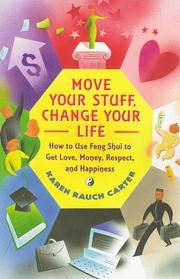
The most accessible, jargon-free entry point available — Carter strips away mysticism and explains the bagua map and chi flow through humor and concrete examples, giving beginners an immediate, usable mental model.

Builds directly on the vocabulary introduced in the first book by grounding feng shui in Western psychological and design thinking, making the principles feel rational and unmystical rather than superstitious.
Room by Room — Practical Application
BeginnerApply feng shui principles room by room — entrance, bedroom, kitchen, home office — using layout, color, light, and decluttering as real design tools.
▸ Study plan for this stage
Pace: 6–7 weeks total: Weeks 1–4 for "The Western Guide to Feng Shui" (~25–30 pages/day, reading room-focused chapters actively with floor plan in hand); Weeks 5–7 for "Clear Your Clutter with Feng Shui" (~20–25 pages/day, slower pace to allow for simultaneous decluttering action in your own space).
- The Bagua map as a room-by-room diagnostic tool — how Collins overlays it onto each space (entrance, bedroom, kitchen, home office) to identify energy zones
- The five elements (Wood, Fire, Earth, Metal, Water) as practical design ingredients — using color, shape, and material to balance or activate a specific room
- Entrance/Foyer as the 'Mouth of Chi' — how the first impression of a home sets the energetic tone for every room beyond it
- Bedroom as a sanctuary for rest and relationships — Collins's guidelines on bed placement, mirror use, electronics, and color for restorative yin energy
- Kitchen as the center of health and abundance — stove placement, the cook's command position, and balancing fire and water elements
- Home office and the command position — desk orientation, clutter-free surfaces, and activating the Wealth and Career gua for productivity
- Karen Kingston's four categories of clutter (things you do not use or love, untidy/disorganized items, too much in too small a space, unfinished projects) and how each category blocks chi differently
- Clutter as an energetic record — Kingston's concept that objects hold 'predecessor energy' and that clearing them is an emotional and spatial act, not just a tidying exercise
- Using Collins's Bagua overlay, which gua (life area) falls in the far-left corner of a room entered from its main doorway, and what color, element, and life theme does it correspond to?
- According to Collins, what makes the entrance the single most important area to address first, and what are three specific adjustments she recommends to welcome chi into a home?
- How does Kingston define clutter, and why does she argue that even 'loved' objects kept in excess or in the wrong place can still block energy?
- What is the 'command position' for a bed or desk, and how do Collins's room-by-room chapters translate this concept differently for the bedroom versus the home office?
- Kingston identifies four distinct clutter categories — can you name and briefly describe each, and give one real-world example of how each might appear in a kitchen or home office?
- How do the two books complement each other in practice: where does Collins's design-and-placement guidance leave off, and where does Kingston's clutter-clearing framework pick up?
- Bagua room audit: Print or sketch the floor plan of one room (start with your entrance or bedroom). Overlay Collins's Bagua map, label all nine zones, and note which areas feel 'heavy,' empty, or blocked. Write two specific adjustments Collins would recommend for the weakest zone.
- Command-position walk-through: Stand at the doorway of your bedroom and your home office. Assess whether your bed and desk are in the command position Collins describes. If not, physically rearrange or note exactly what furniture move would achieve it and why it matters.
- Five-elements color audit: Choose one room and list every dominant color, material, and shape present. Using Collins's five-elements framework, identify which element is overrepresented and which is missing, then propose one addition (a plant, a candle, a metal frame) to restore balance.
- Kingston's four-category clutter sort: Pick one drawer, shelf, or corner in your home office or kitchen. Sort every item into Kingston's four categories. Discard or donate anything in categories 1 and 3; schedule a completion date for anything in category 4 (unfinished projects).
- Entrance activation project: Apply both books simultaneously to your front entrance — use Collins's Bagua and element guidance to arrange, light, and color the space, then use Kingston's clutter audit to clear anything that doesn't belong. Photograph before and after, and journal how the space feels energetically different.
- Cross-book reflection journal: After finishing both books, write a one-page room prescription for any single room in your home. It must cite at least two specific recommendations from Collins (layout/color/light) and two from Kingston (clutter type and clearing strategy), showing how the two approaches work as one integrated method.
Next up: Mastering room-by-room application and clutter clearing builds the spatial literacy and observational habit needed to zoom out and work with whole-home energy flow, exterior environments, and more advanced Bagua work — the natural focus of a deeper or intermediate feng shui stage.
Collins is one of the most respected Western practitioners; this book walks through every room systematically and is full of before/after examples that translate abstract principles into actionable changes.

Clutter is the single biggest feng shui obstacle in most homes; Kingston's focused treatment of this one topic deepens the reader's understanding of how physical environment affects mental state, complementing the room-by-room work.
Going Deeper — Design, Space, and the Five Elements
IntermediateDevelop a more sophisticated understanding of the five-element system, spatial proportion, and how feng shui intersects with interior design and architecture.
▸ Study plan for this stage
Pace: 3–4 weeks, ~20–25 pages/day; Linn's chapters are richly descriptive, so allow extra time to pause, reflect, and journal after each section rather than rushing through.
- The Five Elements (Wood, Fire, Earth, Metal, Water) as a dynamic, cyclical system — understanding both the Nourishing (Sheng) and Controlling (Ko) cycles and how imbalance in one element ripples through the others
- Soul-level intention: Linn's core argument that feng shui works most powerfully when spatial arrangement is aligned with the occupant's inner emotional and spiritual life, not just aesthetic rules
- The energetic 'personality' of a space — how rooms accumulate memory, emotion, and chi over time, and techniques Linn offers for clearing and resetting that energy
- Spatial proportion and flow: how the size, shape, and orientation of rooms and furniture affect the movement of chi, including the importance of the commanding position
- Symbolic resonance of objects and décor — how every item in a space carries meaning and either supports or undermines the occupant's intentions
- The Bagua as a living map: applying the nine life-area grid to individual rooms as well as the whole home, and using it as a diagnostic tool for life challenges
- Sensory feng shui — Linn's emphasis on sound, scent, texture, and light as carriers of chi, expanding feng shui beyond purely visual or spatial concerns
- Ritual and ceremony in space: how intentional acts (clearing, blessing, dedicating a space) anchor energetic changes made through design
- How do the Nourishing and Controlling cycles of the Five Elements apply practically to a room's color palette, materials, and décor choices — and what does Linn say happens when an element is over- or under-represented?
- According to Linn, why is inner intention considered as important as physical rearrangement, and how does she suggest a practitioner align the two before beginning a feng shui consultation or redesign?
- What methods does Linn recommend for clearing stagnant or negative chi from a space, and what is the reasoning behind each method?
- How would you use the Bagua to diagnose a specific life challenge — for example, financial stress or relationship difficulty — and translate that diagnosis into concrete spatial changes within a home?
- In what ways does Linn extend traditional feng shui principles into sensory and ceremonial dimensions, and how does this broaden the definition of 'good design' beyond furniture placement?
- How does the concept of 'soul of the space' differ from conventional interior design thinking, and what practical steps does Linn outline for honoring it?
- Five-Element Room Audit: Walk through every room in your home and assign a dominant element to each based on colors, shapes, materials, and décor. Note which elements are missing or excessive, then sketch one concrete change per room to restore balance using the Nourishing cycle.
- Bagua Life-Area Mapping: Draw a floor plan of your home, overlay the Bagua grid, and identify the gua (area) corresponding to a current life challenge. List three physical changes — one involving an object, one involving light, one involving color or material — that Linn's framework would support for that area.
- Sensory Chi Inventory: Spend 10 minutes in each main room with eyes closed. Note what you hear, smell, and feel on your skin. Write a one-paragraph 'energetic portrait' of each room, then compare it to what Linn says each element and life area should feel like.
- Space-Clearing Ceremony: Following Linn's guidance, perform a full space-clearing ritual in one room — using sound (clapping, bells, or singing bowls), intention-setting, and a closing blessing. Journal about any shifts in how the space feels before and after.
- Object Symbolic Audit: Choose 10 objects currently displayed in your home. For each, write down what memory, emotion, or message it carries. Identify any that conflict with your stated intentions for that space and decide whether to relocate, repurpose, or remove them.
- Commanding Position Practice: Rearrange your primary workspace or bedroom so the main seat or bed is in the commanding position as Linn describes. Live with the change for one full week and keep a brief daily log noting any differences in how you feel, focus, or sleep.
Next up: Linn's soul-centered, element-rich framework builds the intuitive and symbolic vocabulary needed to engage confidently with more technical or tradition-specific feng shui systems — such as Classical or Black Hat schools — that the next stage will introduce, where precise compass directions, flying stars, and architectural calculations demand a solid elemental and spatial foundation.
Collins's follow-up goes into greater detail on elemental balance and spatial relationships, bridging the gap between beginner application and the more nuanced classical theory ahead.
Linn connects the physical arrangements learned so far to the psychological and emotional dimensions of space, adding depth without abandoning the practical focus the learner has built up.
Classical Roots — Traditional and Compass School Feng Shui
ExpertUnderstand the classical Chinese origins of feng shui — Form School, Compass School, flying stars — so you can evaluate any system or practitioner with genuine intellectual grounding.
▸ Study plan for this stage
Pace: 4–5 weeks, ~20–25 pages/day; treat dense chapters on the Pa Kua, flying stars, and the Lo Shu grid at half-pace (10–12 pages/day) and re-read before moving on
- Form School (Luan Tou): reading landscape, mountains, water, and the 'dragon' — how physical terrain channels or disperses qi
- Compass School (Li Qi): the use of the Luo Pan (geomantic compass) and its rings to orient a site relative to the eight directions
- The Eight Trigrams (Pa Kua / Bagua): their classical derivation from the I Ching, their directional assignments, and their dual arrangements (Early Heaven / Later Heaven sequences)
- The Lo Shu Magic Square: its numerical structure, its role as the template for flying-star calculations, and its cosmological significance in Chinese thought
- Flying Stars (Xuan Kong Fei Xing): how time-period stars (annual and monthly) are overlaid on a natal chart to produce a dynamic, time-sensitive energy map of a space
- The Five Elements (Wu Xing) in classical context: productive, controlling, and weakening cycles as diagnostic and corrective tools within the Compass School
- Sha qi vs. sheng qi: classical definitions of harmful versus nourishing qi, and how both Form and Compass Schools identify and remedy each
- The concept of 'sitting and facing' (Zuo Shan Xiang Shui): how a building's orientation is determined and why it is the foundation of any classical audit
- How does Walters distinguish the Form School from the Compass School, and in what historical periods did each emerge as the dominant tradition in China?
- What is the relationship between the Lo Shu Magic Square and the flying-stars system — how does the square's numerical logic generate a flying-star natal chart?
- Explain the difference between the Early Heaven (Fu Xi) and Later Heaven (King Wen) Bagua arrangements: what does each represent, and where is each applied in classical practice?
- How does the Luo Pan encode multiple layers of information (directions, trigrams, elements, stars), and what is the practitioner's process for taking a reading and interpreting it?
- Using the Five Elements productive and controlling cycles as described by Walters, how would you diagnose a 'clash' between a flying star combination and prescribe a classical remedy?
- What criteria does Walters present for evaluating an 'ideal' classical site in Form School terms, and how do those criteria map onto modern urban environments?
- Luo Pan simulation: Draw a simplified compass rose with the eight directions and manually assign the Later Heaven Bagua trigrams, their elements, and their Lo Shu numbers to each sector — cross-check every assignment against Walters until the map is error-free.
- Lo Shu flying-star chart construction: Using Walters's instructions, calculate the natal flying-star chart for your own home or a chosen building (identify its period, sitting, and facing direction) and plot the nine-sector grid by hand.
- Form School site analysis: Take a walk in your neighborhood and apply Walters's Form School criteria — identify the 'Black Tortoise' backing, 'Green Dragon' and 'White Tiger' flanking landforms, and 'Red Phoenix' facing feature for at least two different buildings; photograph and annotate your findings.
- Five Elements diagnostic drill: Select three flying-star number combinations from Walters's interpretations, identify the elemental relationship between the two stars in each pair, and write a one-paragraph classical remedy prescription citing the productive or controlling cycle.
- Glossary of classical terms: Compile a personal reference glossary of at least 20 Chinese technical terms introduced by Walters (e.g., qi, sha, sheng qi, zuo shan xiang shui, xuan kong), writing each definition in your own words alongside the original Chinese characters where Walters provides them.
- Practitioner evaluation checklist: Based on everything Walters covers, draft a 10-question checklist you could use to assess whether a feng shui practitioner is working from genuine classical foundations — note which questions target Form School knowledge, which target Compass School, and which target flying stars.
Next up: Mastering the classical vocabulary, cosmological logic, and audit methodology in Walters equips the reader to critically engage with modern adaptations and derivative systems — distinguishing authentic classical inheritance from popularized simplifications — which is precisely the analytical lens needed for any subsequent stage examining contemporary or Western feng shui traditions.

Walters is a leading Western scholar of Chinese metaphysics; this handbook is the most rigorous and historically grounded English-language overview of classical feng shui, covering both Form and Compass schools with real depth.
An anthropologist's careful study of feng shui as a coherent intellectual tradition, this book explains the cosmological and philosophical framework (qi, landform, orientation) that underlies everything the learner has practiced — providing the 'why' behind all the earlier 'what.'
Discussion
Keep reading
Paths that share books, cover the same subject, or open a related topic.