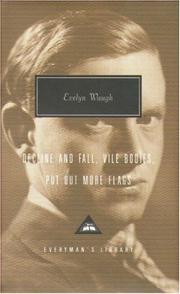
Start with Decline and Fall. It is his first novel, it is barely two hundred pages, and it is the funniest debut in twentieth-century English fiction: a mild undergraduate is sent down for indecent exposure through no fault of his own and falls through a series of institutions — a terrible Welsh school, a fashionable marriage, a prison — each described with total deadpan. Nothing in it is earnest. It tells you immediately whether Waugh's particular cruelty is something you enjoy.
The book you have heard of is Brideshead Revisited, and it is the wrong place to start. It is sincere where the early novels are heartless, it is romantic about aristocracy and Catholicism in a way the satires would have mocked, and Waugh himself later described it as overwritten and produced under wartime conditions of austerity that made him greedy for luxury on the page. Read it, but read it sixth, when you can see what he is doing differently.
The early satires, in publication order
Decline and Fall, Vile Bodies, Scoop, A Handful of Dust, The Loved One. Publication order works here and there is no competing scheme; the books are unconnected.
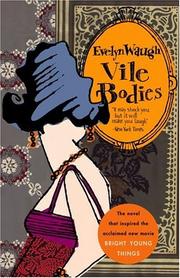
Vile Bodies is the Bright Young Things novel — parties, gossip columns, motor racing — and it is the most fragmentary and the most modern in construction. It also darkens sharply at the end in a way first-time readers rarely see coming.
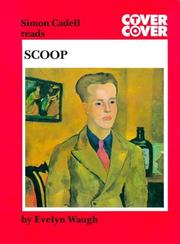
Scoop is the Fleet Street novel: a nature columnist is sent to cover a war in Africa by mistake. It is the most purely enjoyable book he wrote and remains, uncomfortably, the most accurate satire of foreign correspondence ever published.
A Handful of Dust is the best of them and the one that most rewards attention. It begins as another social comedy and ends somewhere genuinely appalling, and the transition is managed so smoothly that most readers only notice afterwards what has been done to them. If you read one Waugh, read this.
The Loved One is the short Californian funeral-industry satire, written after a trip to Los Angeles. It is nasty, brief and very funny.
Brideshead Revisited, in its place
Now read Brideshead Revisited. Approached after five satires, its warmth registers as a deliberate change of register rather than as sentimentality, and its Catholicism — which is the actual subject of the book, not the country house — is legible as an argument rather than an atmosphere. It is his most popular novel by a wide margin and his least characteristic.
The war trilogy
Men at Arms, Officers and Gentlemen, Unconditional Surrender, in that order, published between 1952 and 1961 and collectively known as Sword of Honour. The third volume appeared in the United States as The End of the Battle, which causes confusion; it is the same book.
This is the mature work and, on many readings, the best thing he did. A middle-aged Catholic gentleman joins up in 1939 expecting a crusade against modern barbarism and spends six years discovering that his own side is neither honourable nor competent. It is comic throughout and it is not really a comedy. The first volume is the slowest — a great deal of regimental detail and training — and readers who stall usually stall there. The second and third repay it.
The biography, and a note
Evelyn Waugh by Selina Hastings is the life, and it is a good one: sympathetic without being defensive about a man whose snobbery, reactionary politics and personal cruelty are matters of record and of continuing argument. This article does not attempt to settle any of that. It is worth knowing about because his convictions are inseparable from the later books, and reading the war trilogy without them is reading it half-blind.
What is missing
Black Mischief, Put Out More Flags and The Ordeal of Gilbert Pinfold, the last a strange autobiographical novel about hallucination, are not on this path. Pinfold in particular is worth chasing once the rest has you.
Follow the full ordered path here: Evelyn Waugh Reading Order: Where to Start.