Inequality writing tends to arrive pre-loaded with a conclusion, which makes it easy to read five books and encounter only one position. It also tends to conflate several distinct things — income inequality, wealth inequality, poverty, and social mobility — that move independently and respond to different policies. A country can reduce poverty while wealth concentration rises, and most arguments in this literature turn on which of those quantities the speaker means.
The order below starts with short accessible books, moves through ground-level reporting, then to the global data, and ends with the genuine disagreement about remedies. That last section is the point of the path: two of its books reach opposite conclusions from overlapping evidence, and neither has won.
The overviews
Brief History of Equality is the accessible Piketty, a short argument that the long historical trend has been toward equality and that this was achieved by political conflict rather than by growth. It is the right entry point precisely because it is brief. Note that his famous 2013 volume on capital in the twenty-first century is not on this path — that gap is ours rather than a judgement on the book.
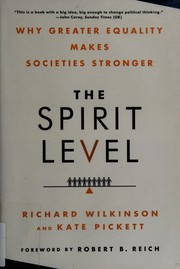
The spirit level argues that more unequal rich countries do worse on health, violence, trust and education. It has been enormously influential and it is also the most contested book on this list: critics have argued the correlations are sensitive to country selection and do not establish causation, and Wilkinson and Pickett have replied at length. Read it, and read it knowing the argument about it is unresolved.
From the ground
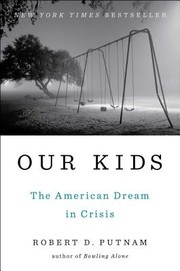
Our kids is Robert Putnam on the widening gap in what American children can expect, told through paired portraits from his own home town. Evicted is the outstanding book on this path — Matthew Desmond followed eight families and their landlords through eviction in Milwaukee, and it makes the mechanism visible in a way no statistic does. If you read only one book here, read that one.
The Price of Inequality is Joseph Stiglitz's case that high inequality is economically inefficient rather than merely unfair, which is the argument most likely to persuade a sceptical reader. The broken ladder covers the psychology — how perceiving oneself as low in a hierarchy changes health, risk-taking and decision-making. Some of the social psychology it draws on comes from a literature that has had replication problems, so treat individual studies more lightly than the overall pattern.
The global picture
Global inequality is Branko Milanović on inequality between countries as well as within them, and the source of the elephant curve that reframed the whole debate about globalisation. Capitalism, Alone is the same author — our catalogue records his name with two different spellings, which is a cataloguing artefact rather than two people — asking what follows when every major economy is capitalist and the only real choice is between varieties.
What actually reduces it
Capital and Ideology is Piketty's long book, over a thousand pages, on how societies justify inequality and how those justifications change. Skim rather than abandon; the historical case studies stand alone.
Then the disagreement. The Great Leveler argues, with a great deal of historical evidence, that inequality has only ever been substantially reduced by mass mobilisation warfare, revolution, state collapse or plague — that peaceful policy has never done it. Inequality is Anthony Atkinson's direct counter, a list of concrete proposals from an economist who spent his career measuring the thing. Scheidel and Atkinson cannot both be right, and this path does not pick between them. Reading them consecutively is the most useful thing on the whole list. The history of economic thought hub covers where these arguments came from.
Work the path in order and you finish with the evidence, the mechanisms and the live argument, in that sequence.
Follow the full ordered path here: Best Books on Economic Inequality, in Reading Order.