Dry Stone Walling: The Best Books to Read, in Order
Dry stone walling is building without mortar, so the wall stands on friction, gravity and the mason's judgement about which face of a rock goes where. This path starts with the short introductory books that get you to a first course of stone, moves to the fuller craft manuals covering batter, hearting, through-stones and copes, then to the wider stonemasonry that a walling habit inevitably leads into, and closes with the books about what walls mean in a landscape. Three of the practical titles are by Charles McRaven and are genuinely separate books, not editions of one.
Before you lift a stone
BeginnerGet the vocabulary, the tools and enough technique to lay a short garden wall.
▸ Study plan for this stage
Pace: One to two weeks of reading, then a weekend of building — just 148 pages between the two books, the lightest stage in the path. Dry Stone Walls (Lawrence Garner) is a 40-page illustrated introduction and can be read in an evening. Building Stone Walls (John Vivian) is 108 pages and is the practical
- The vocabulary you will need for every other book: foundation, footing, course, face, batter, hearting, through-stone, cope
- That a dry wall stands on friction, gravity and stone placement alone — no mortar, no ties, nothing hidden
- Sorting stone before building: face stones, hearting, throughs and copes are different piles and the sorting is most of the work
- The two golden rules restated by every author here — one stone over two, two over one, and every stone laid with its length into the wall rather than along it
- Site work before stone work: stripping turf, digging a level footing trench, and setting a line
- Tools that are actually required, which is fewer than you expect: line and pins, a batter frame, a lump hammer, a walling hammer, gloves and boots
- What is batter, why does a dry wall need it, and roughly what taper do these books recommend?
- What is hearting, where does it go, and why is throwing rubble into the middle of a wall not the same thing?
- What does a through-stone do, and what happens to a wall built without any?
- How deep and how wide should the foundation trench be for a wall of a given height?
- Why is the length of a stone laid into the wall rather than along the face, and what fails if you do it the other way?
- Build a batter frame to the taper Vivian specifies in Building Stone Walls and use it — the frame is the stage's real deliverable
- Sort a delivered load or a gathered pile into the four categories these books name, and count what proportion is usable face stone; the ratio will change how you buy stone from now on
- Lay a wall three feet long and knee high, then take it down and rebuild it; the second build is where the reading turns into judgement
- Walk to the nearest dry wall you can find and identify, on the actual stone, every term from the glossary in Dry Stone Walls
Next up: Having built something short, you now need the technique that makes a wall stand for a hundred years rather than a season, which is where the full manuals start.
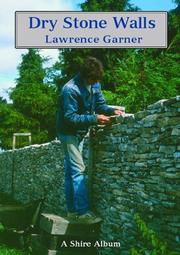
A short British introduction to the regional wall types, the terminology and the basic method. The quickest way to be able to read a wall before you try to build one.

The classic slim North American manual, direct about foundations, batter frames and how much stone you will actually need. Read it second for the practical arithmetic Garner leaves out.
The craft properly
IntermediateLearn the technique that makes a wall stand for a century: batter, hearting, through-stones and a good cope.
▸ Study plan for this stage
Pace: Four to five weeks reading, 552 pages, with building alongside it. A Guide to Dry Stone Walling (Andy Radford) is the closest thing here to a British walling course in book form, 128 pages, and is the technical spine of the stage. The Granite Kiss (Kevin Gardner) is the longest at 224 pages and teac
- Batter as a measured quantity rather than a lean — how the frame, the lines and the coursing enforce it up the full height
- Hearting packed tight and level by hand, course by course, so it wedges rather than fills
- Through-stones and their spacing: how many courses up, how far apart, and why the rhythm matters more than the individual stone
- Copes as the structural finish — set on edge, tight, and heavy enough to lock the top course
- Wall ends, cheek ends and how a wall is finished where it stops, which is the single hardest piece of technique in this stage
- The difference between British field walling as Radford describes it and New England fieldstone walling as Gardner does — stone shape, sorting, and how much dressing is acceptable
- Gaps and features: stiles, lunkies or sheep creeps, and how openings are framed without mortar
- How is batter measured and maintained on a wall of varying height, and what does Radford do at a change in ground level?
- How far apart do through-stones go, and what determines whether a wall gets one band or two?
- What does Gardner's New England method do differently from Radford's, and is the difference tradition or the stone itself?
- How is a wall end built, and why is it the part most likely to fail?
- Which of McRaven's techniques in Building with Stone are dry work and which depend on mortar?
- Build a wall end to Radford's method — a proper cheek end with long stones bonded alternately — and then take it apart and build it again; nothing else in walling repays a second attempt this much
- Build ten feet of wall to Radford's specification with a full band of through-stones at the height he gives, then push hard on the face and note what the throughs are doing
- Repair a section of an existing collapsed wall using Gardner's approach in The Granite Kiss, keeping the salvaged stone in its own sorted piles as he directs
- Set a cope to Radford's method along a finished section, then remove and reset it three different ways — flat, on edge and mixed — and see which one you can push over
- Take one technique described in both Radford and Gardner, write out both instructions side by side, and build a short length of each to see what the difference is on the ground
Next up: Field walling technique transfers directly to steps, foundations, arches and repair, which is where a walling habit almost always goes next.
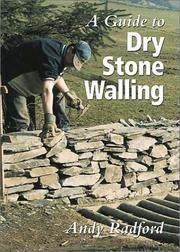
The most focused instructional book on the list, working step by step through stripping out, foundations, coursing and finishing ends. This is the one to keep in the field.

Gardner teaches the New England method, where the stone is round and glacial rather than quarried and flat, which is a genuinely different problem. Essential if your stone will not stack obligingly.
McRaven's broadest book on working with stone, covering dry-laid and mortared work and the judgement calls that separate them. Read it here as the bridge from walls to everything else made of stone.
Beyond the wall
IntermediateExtend the same skills to steps, foundations, arches and repair work.
▸ Study plan for this stage
Pace: Four to five weeks, 621 pages. Stone Primer (Charles McRaven) is the longest at 264 pages and is project-led. Stonework (McRaven again) is 183 pages of techniques and projects. The Art of the Stonemason (Ian Cramb) is 174 pages and is the most authoritative here — Cramb was a Scottish master mason a
- Retaining walls: drainage, backfill and the fact that a retaining wall is a structural problem in a way a field wall is not
- Steps built in stone — tread and riser sizing, bedding, and how each step transfers load to the one below
- Arches without mortar: voussoirs, centring formwork, keystones, and Cramb's account of striking the centring
- Foundations and footings under stone structures, including frost depth and why it decides the dig
- Repair and restoration as its own discipline — reading an existing failure before rebuilding into it
- Where dry work ends and mortar becomes structurally necessary, and how each of these authors draws that line differently
- What makes a retaining wall different from a free-standing wall, in loading and in drainage?
- How does Cramb build and strike an arch, and what determines the shape of the centring?
- What does a stone step need at the back that a wall stone does not?
- How do you diagnose why an existing wall failed before rebuilding it, and what evidence does Cramb say to look for?
- In each of these books, where is mortar treated as necessary rather than as a convenience?
- Build a set of three stone steps into a slope following McRaven's project in Stone Primer, checking tread and riser against his figures
- Make the centring for a small arch to Cramb's instructions and build the arch over it, then strike the centring — this is the exercise that proves whether the voussoirs were shaped properly
- Build a short dry retaining wall with the drainage and backfill McRaven specifies, then watch it through a wet season and record any movement
- Take a failed section of existing wall, write a one-page diagnosis in Cramb's terms before touching it, and then rebuild it and see whether the diagnosis held
Next up: With the technique broad enough to build most things in stone, the last stage turns to what the walls already in the landscape are telling you.
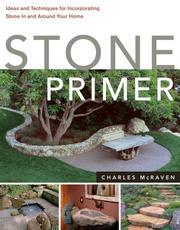
A separate, later McRaven title organised around materials and finishes rather than projects. Useful for choosing and sourcing stone once you have decided you will keep doing this.
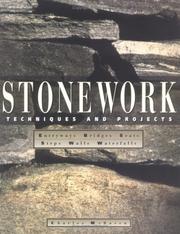
The third distinct McRaven book here, project-driven: walls, walks, steps, retaining structures. Read it for the retaining-wall material, which is where amateur walling most often fails.
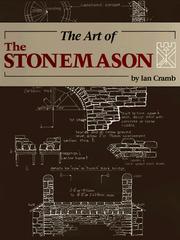
Cramb was a Scottish master mason and writes about proper masonry, including arches, chimneys and restoration. The most demanding book in the path and the one that shows you what mastery looks like.
Reading walls, and living with them
IntermediateUnderstand what the walls in a landscape are telling you, and what building one does to the builder.
▸ Study plan for this stage
Pace: Five weeks, 772 pages, and this is the reading stage rather than the building stage. Sermons in Stone (Susan Allport) is 208 pages on the history of New England's stone walls — why they exist, who built them and what happened to the farms around them. Exploring Stone Walls (Robert M. Thorson) is 192
- Why New England has so many walls: deforestation, frost heave bringing stone up through the soil, and sheep-farming economics — Allport's causal chain
- Thorson's typology — what wall shape, stone size and coursing tell you about date, purpose and who built it
- Walls as archaeological evidence of abandoned farmland, now standing in second-growth woods
- Jerome's account of what building a wall does to the builder: time, obsession, and the specific pleasure of a physical task with no deadline
- Lew French's contemporary design work as the other end of the same craft — stone as deliberate composition rather than boundary
- The legal and conservation status of historic walls, and why removing stone from one is not a neutral act
- What combination of causes does Allport give for the sheer number of New England walls, and in what order did they operate?
- Using Thorson's categories, how would you date and classify a wall you found in woodland?
- What does Jerome say he learned that he did not expect to, and does his account match your own experience from the earlier stages?
- How does French's design work depart from the traditional methods in stage two, and what does it keep?
- What can a wall in a landscape tell you about the land use that is no longer there?
- Take Thorson's field-guide categories out to three walls near you, classify each one, and write down which features made the classification and which were ambiguous
- Read a wall as an artefact using Allport's history — estimate its date and purpose from stone size, coursing and position relative to old field boundaries — then check it against local maps or records
- Read Jerome's Stone Work at the pace he builds in it, a chapter a week alongside your own wall, and note where his experience and yours diverge
- Photograph one section of French's work in Stone by Design that you admire and write out, in the vocabulary from the first stage, exactly how it was built
- Write a maintenance plan for one wall you have built or repaired across this path: what to inspect, how often, and what failure to expect first
Next up: This completes the path: vocabulary and a first wall, the full craft, the wider stonework it leads into, and the history and experience that make the walls in a landscape legible.

A history of New England's stone walls: who built them, why there are so many, and what they say about agricultural collapse. It changes what you see on a country walk.
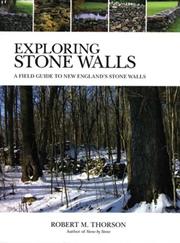
A geologist's field guide to identifying wall types and dating them from their construction. The natural companion to Allport, and the more technical of the two.
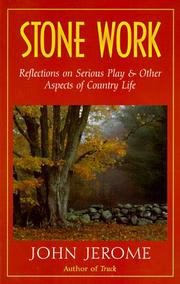
Jerome's account of a year spent rebuilding a wall in New Hampshire, which is the best writing here on what the work is actually like hour by hour.

French's photographic book of dry-laid stonework as design, from fireplaces to garden structures. Read it last, as the argument that a wall can be more than a fence.
Discussion
Keep reading
Paths that share books, cover the same subject, or open a related topic.