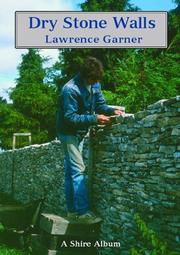
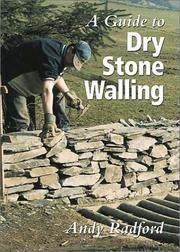
Start with A Guide to Dry Stone Walling if you are building in the British and Irish tradition, and Building stone walls if you are working with North American fieldstone. Settle that first, because the two are not quite the same craft: a British waller builds a double-faced, battered, coursed structure with throughstones and a cope, to a specification a certification scheme can grade, while most North American practical books cover fieldstone walls, retaining walls and a fair amount of mortared work alongside the dry.
The second thing to settle is what kind of book you are holding. This list mixes four kinds — instruction manuals, master mason's references, cultural histories and photographic monographs — and on a shelf they look alike. Trying to build from a history is a bad afternoon.
The manuals
A Guide to Dry Stone Walling (2001) is a compact British practical manual by Andy Radford: foundations, batter frames, coursing, throughs, cheek ends, copes and the standard repair cases. It assumes nothing. Building stone walls (1976) is John Vivian's Storey manual, the North American classic, still in print for good reason — cheap, direct and honest about how much of the work is simply lifting. It covers mortared as well as dry work. Dry Stone Walls (2005) is Lawrence Garner's short illustrated Shire volume and the best orientation to British walls themselves: regional styles, why a Cotswold wall does not resemble a Yorkshire one, and enough technique to know what you are looking at. It is an introduction, not an instruction book.
The masonry references
Charles McRaven wrote three of the books on this list and they overlap heavily. Building with stone is the general one; Stonework is organised around projects, from walls to fireplaces; Stone Primer is broadest, covering stone across a whole property. Pick one — most readers want Stonework — rather than buying all three expecting three books.
The art of the stonemason (1992) is Ian Cramb writing about the whole trade from inside it: rubble and ashlar, arches, chimneys, lime mortar, restoration practice. It is the most technically serious book here and a good deal of it is not dry walling at all. Read it once the basic wall has stopped being hard.
Reading walls rather than building them
Sermons in Stone (1990) is Susan Allport on the stone walls of New England — who built them, why there are so many, and what happened to the farms that produced them. Cultural history. Exploring Stone Walls (2005) is a geologist's field guide: Robert Thorson on stone type, construction sequence and what a collapse tells you. His larger point is that most New England walls were disposal heaps for cleared field stone rather than crafted structures, which is worth knowing before you take them as models.
The granite kiss (2001) is Kevin Gardner writing as a working New England waller, mixing history with technique. It is the most enjoyable prose here and genuinely instructive, though not systematic enough to build from alone. Stone work (1989) is John Jerome's memoir of a year spent building a wall in New Hampshire — a book about labour and attention rather than method. Stone by Design (2005) is Lew French's photographic monograph of his own commissions: inspiration, with no instructions in it, and it does not pretend otherwise.
What books cannot do here
Walling is learned through the hands. Stone selection — which face is the face, which stone will lock two others, when to reject one rather than force it — is a judgement built by handling several tonnes of material, and no photograph teaches it. A two-day course with a qualified waller, or a day on a volunteer repair party, will move you further than any book on this list.
What the books are genuinely for: the vocabulary, so an instructor's directions make sense; the regional styles, so you know what you are copying and why; the failure cases, so you understand why a wall without throughstones or without a proper batter comes apart in a decade; and the histories, which turn a landscape you walk through into something legible. Browse more craft reading paths on Discover.
Follow the full ordered path here: How to Learn Dry Stone Walling from Books, in Order.