Douglas Hofstadter in Order: Where to Start Before Godel, Escher, Bach
Godel, Escher, Bach is eight hundred pages, won a Pulitzer, and is one of the most frequently abandoned books on any shelf — usually somewhere in the formal-systems chapters, by readers who came for the Escher and were not expecting to prove things. This path builds the two things that make it finishable: a working grasp of what Godel's incompleteness theorem actually says, and a short prior statement of the strange-loop idea in Hofstadter's own words. Then it takes on the big book, and then the two later works that most readers never reach.
The one prerequisite
BeginnerUnderstand incompleteness well enough that the formal-systems chapters of the big book read as elaboration rather than as an obstacle.
▸ Study plan for this stage
Pace: About a week. Nagel and Newman is roughly a hundred pages and can be done in two unhurried evenings, but do not treat it as background reading — work the sketch of the arithmetization argument until you can restate it. Smullyan is optional and puzzle-paced, so give it a second week only if you want
- What a formal system is: axioms, rules of inference, and strings that are manipulated without regard to meaning — the distinction Nagel and Newman build the whole exposition on
- Gödel numbering — the trick of encoding statements about a system as statements inside it, which is the single move Godel, Escher, Bach spends hundreds of pages elaborating
- The difference between truth and provability, and why a consistent system rich enough for arithmetic must contain true statements it cannot prove
- The second incompleteness theorem: such a system cannot prove its own consistency, which is the part readers usually forget
- Self-reference as a technical device rather than a rhetorical flourish — the Gödel sentence says something about itself only because the numbering makes that literal
- Smullyan's knight-and-knave framing, where consistency and self-knowledge become properties of a reasoner who can or cannot assert things about their own beliefs
- State Gödel's first incompleteness theorem in one sentence without using the word paradox. What are its hypotheses, and which of them does an arithmetic system actually need to satisfy?
- What does Gödel numbering buy you that a system talking about itself in ordinary language would not?
- Why is 'this statement is unprovable' not simply a version of the liar paradox, and what did Nagel and Newman do to keep those two apart?
- Why does incompleteness say nothing at all about whether a human mind can be a machine — and where in Nagel and Newman is that caution stated?
- In Smullyan's terms, what goes wrong for a reasoner who believes they are consistent?
- Summarise Nagel and Newman's argument in 300 words for someone who has not read it, without using the words 'paradox' or 'infinite'. If you cannot, reread the chapters on the arithmetization of syntax before going further.
- Draw the mapping by hand: pick three short formal expressions and assign them Gödel numbers under a scheme of your own. Do this once and the corresponding chapters of the big book stop being an obstacle.
- Work through Smullyan's knight-and-knave problems up to the ones about self-referential belief, then write down which of them you had to look up. Those are the intuitions you are still missing.
- Note Hofstadter's foreword to the revised Nagel and Newman and mark the two or three claims he makes there about what incompleteness is for. You will meet each of them again, at length.
Next up: With the formal system no longer an obstacle, you can read the strange-loop thesis as an argument about self-reference rather than as a metaphor, which is exactly what the next stage states in its compact form.

Nagel and Newman's hundred-page classic, and the reason it comes first is entirely practical: the readers who stall in Godel, Escher, Bach almost always stall on the formal system, and this book removes that failure mode in an evening. Hofstadter wrote the foreword to the revised edition.

Smullyan teaches the same logic through knight-and-knave puzzles you actually solve, which builds the intuition rather than describing it. Optional, and the right choice if Nagel and Newman felt too much like being told and not enough like doing.
The idea, stated short
IntermediateGet the strange-loop thesis — that a self is a pattern that models itself — in its compact form before meeting its eight-hundred-page form.
▸ Study plan for this stage
Pace: Four to five weeks. I Am a Strange Loop is 400 pages and should be read continuously, in about two weeks. The Mind's I is an anthology and works best a piece at a time — one story plus its reflection per sitting. Metamagical Themas is 850 pages of columns and is explicitly modular: read six or eight
- The strange loop itself: a self is a pattern that has grown able to model and refer to itself, so that the level you thought you were on turns out to close back on itself
- Hofstadter's central move — that the 'I' is a hallucination in the technical sense, real as a pattern and unreal as a thing, which he defends personally rather than only argumentatively
- Souls as a matter of degree, and the argument that a person is partly instantiated in the brains of those who knew them (the thesis he builds around his wife's death)
- The Chinese Room, Nagel's bat and the Borges pieces in The Mind's I as the standing objections Hofstadter is arguing against, each with a commentary that models how he wants a text interrogated
- The reflection-after-the-piece structure as a reading method — Dennett and Hofstadter demonstrate rather than describe how to attack an argument
- Self-reference as a portable tool across domains, which is what the Metamagical Themas columns on Rubik's cube, the prisoner's dilemma, sexist language and Chopin are collectively for
- State the strange-loop thesis in your own words. What would have to be true for it to be false?
- Hofstadter wrote I Am a Strange Loop because he believed almost nobody had understood Godel, Escher, Bach. What does he say the earlier book was about, and what would you have guessed?
- Take the Chinese Room as presented in The Mind's I. Does Hofstadter and Dennett's reflection answer it, or does it change the subject? Argue both sides before deciding.
- How does the incompleteness material from the previous stage actually do work in the strange-loop argument — is it a proof, an analogy, or an existence result?
- Which of the Metamagical Themas columns did you find weakest, and does its weakness matter to the thesis?
- Write the strange-loop thesis in 200 words from I Am a Strange Loop alone, then find the passage in The Mind's I that most directly challenges what you wrote.
- For three pieces in The Mind's I, write your own reflection before reading the editors'. Then compare — the gap tells you what kind of objection you habitually miss.
- Read six Metamagical Themas columns chosen at random rather than by title, and for each write one sentence on what it has to do with self-reference. Where you cannot, say so.
- Find the point in I Am a Strange Loop where the personal material takes over from the argument, and decide in writing whether the book is stronger or weaker there. This is the standing critical objection to it.
Next up: You now hold the thesis in its compact form, so the eight hundred pages ahead read as an argument being built rather than as a series of digressions.
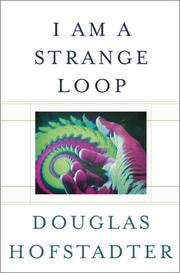
Written thirty years later because, in his own account, almost nobody had understood what Godel, Escher, Bach was about. It says the central thing plainly and personally, structured around the death of his wife. Read it before the big book, not after: it is the thesis statement, and having it in hand converts eight hundred pages of play into eight hundred pages of argument.
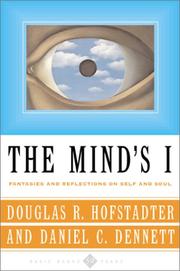
Co-edited with Daniel Dennett: an anthology of stories and papers on personal identity — Borges, Nagel's bat, Searle's Chinese Room — each with a commentary. It gives you the wider conversation Hofstadter is arguing inside, and the reflections model exactly how he wants a reader to interrogate a text.
His Scientific American columns: self-reference, Rubik's cube, the prisoner's dilemma, sexist language, Chopin, nucleic acids. Uneven by design and completely modular, so it is the low-risk way to spend real time in his sensibility before committing to the long book.
The book itself
BeginnerRead Godel, Escher, Bach the way it is meant to be read — as a single sustained argument with the dialogues doing real work, not as a curiosity to dip into.
▸ Study plan for this stage
Pace: Ten to twelve weeks at roughly a chapter a sitting. Godel, Escher, Bach is around 780 pages and it is not a book that rewards speed — the readers who finish it are almost always the ones who set a small fixed quota and kept it. Two chapters a week, dialogue plus chapter as one unit, finishes it in a
- The MU puzzle and the MIU system as the reader's first working formal system — everything later about levels, rules and derivability is calibrated on this
- The Achilles-and-Tortoise dialogues as structural argument: each one enacts in form the thing the following chapter explains, so the dialogue is content and not relief
- Isomorphism as the book's engine — the claim that meaning arises where one system's structure mirrors another's
- Typographical Number Theory and the construction of a self-referential sentence inside it, which is the incompleteness material from stage one, now built rather than described
- Levels and tangled hierarchies: Escher's hands and Bach's canons as instances of the same closure, used as illustration rather than as proof
- The AI chapters and the ant-colony dialogue, where the strange loop is applied to minds — the destination the whole braid has been heading toward
- What does the MU puzzle demonstrate, and why does Hofstadter put it before any discussion of Gödel?
- Pick one dialogue and say what it does that its chapter could not. If your answer is 'it is entertaining', read it again.
- How is Hofstadter's construction of a self-referential statement inside Typographical Number Theory different from the summary you read in Nagel and Newman?
- Where does the Escher and Bach material do genuine argumentative work, and where is it decoration? Defend a specific instance of each.
- Does the book actually argue that consciousness arises from self-reference, or does it argue that it could? Point to the passage that decides it.
- Do the puzzles as they appear rather than reading past them, starting with MU. Keep your attempted derivations — the failure is the point of that one.
- Keep a two-column log: for each dialogue, one line on its formal trick, and one line on the chapter it precedes. By the halfway mark the pattern should be predictable, which is a good sign.
- After the Typographical Number Theory chapters, write out the self-referential construction from memory. Where you get stuck is where you were reading rather than following.
- If you stall — most readers stall in the formal-systems stretch — reread the corresponding twenty pages of Nagel and Newman rather than pushing on. That is what stage one was for.
- Note the edition you are reading: the accented spelling of Gödel varies, and our catalogue holds it under a shorter title than the full Eternal Golden Braid subtitle. It is the same 1979 book.
Next up: Having followed the braid to its conclusion about minds, you can read the later work as Hofstadter narrowing to the one mechanism he thinks does the work: analogy.
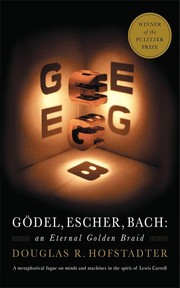
The 1979 Pulitzer winner, subtitled An Eternal Golden Braid. Two practical notes: do not skip the Achilles-and-Tortoise dialogues, which carry the formal content in disguised form, and do the small exercises rather than reading past them. Catalogued under the shorter title; the accents on Godel vary by edition.
After the braid
BeginnerFollow the analogy-as-cognition thesis into the two late works, and read the researcher best placed to say what became of the research programme.
▸ Study plan for this stage
Pace: Eight to ten weeks. Le Ton beau de Marot is 630 pages but reads far faster than the big book — three to four weeks. Fluid Concepts and Creative Analogies is technical and worth a slower five weeks, chapter by chapter. Mitchell's Analogy-Making As Perception is short and best read immediately after t
- Translation as the test case for meaning: whether anything survives transformation, staged through dozens of versions of one small French poem
- Constraint as generator rather than obstacle — Le Ton beau de Marot's argument that the formal restrictions are where the meaning is made
- The grief that runs under Le Ton beau de Marot, and Hofstadter's refusal to separate the personal from the technical claim, which is the same move as in I Am a Strange Loop
- Copycat, Jumbo and Tabletop as actual programs: what each takes as input, what it produces, and what about analogy each is designed to isolate
- Analogy-making as perception rather than as reasoning — Mitchell's title is the thesis, and it is the sharpest statement of the research programme
- The lab-report register of Fluid Concepts, which is deliberate: this is the book where the claims are made falsifiable
- The gap between what the programs do on microdomains and what the philosophy claims about minds — the honest question the whole stage raises
- What does Le Ton beau de Marot conclude about whether a poem can be translated, and does the book actually settle it?
- How is the analogy thesis in Fluid Concepts related to the strange-loop thesis — is one a mechanism for the other, or are they separate claims?
- Describe what Copycat does in three sentences, using Mitchell's account rather than Hofstadter's. Which is clearer, and why?
- Fluid Concepts works in tiny artificial domains. What is the argument that results there generalise, and how convincing do you find it?
- Why is Le Ton beau de Marot Hofstadter's least-read book despite being widely called his best-written? Give a reason from the book itself.
- Take a short poem in a language you have some access to and produce three translations under three different constraints. Then compare your own reasoning with the versions Hofstadter collects.
- Trace one Copycat run through the analogy problems Mitchell sets out, on paper, before reading her explanation. The mechanism only becomes real when you have simulated a few steps yourself.
- Write 400 words on where Fluid Concepts overclaims, citing a specific chapter. Then find the place where Hofstadter himself concedes the same limit.
- Read Mitchell's account of Copycat and the corresponding Fluid Concepts chapters side by side, and list three things she explains that he does not.
Next up: You now know what the research programme actually built, which is the only position from which the final stage's question — whether it got anywhere — can be asked fairly.
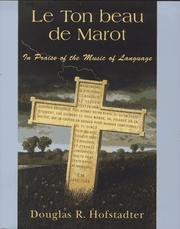
Ostensibly about translating a small sixteenth-century French poem, actually about whether meaning survives any transformation at all — and a grief memoir underneath. Widely regarded as his best-written book and by far his least read. It assumes you have absorbed the strange-loop material.
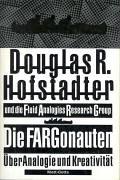
The research book: the actual AI programs — Copycat, Jumbo, Tabletop — that his group built to model analogy-making. This is the technical statement of what everything else gestures at, and it reads like a lab report, which is the point.

Mitchell's account of Copycat, written as his doctoral student and clearer than the corresponding chapters in Fluid Concepts. The natural next step if the research programme rather than the philosophy is what caught you.
What became of the programme
BeginnerJudge the strange-loop and analogy-making project against what artificial intelligence actually turned into, and against the strongest philosophical objection to it.
▸ Study plan for this stage
Pace: Five to six weeks. Mitchell's Artificial Intelligence is roughly 330 pages of clear prose and takes two to three weeks. Penrose is the harder read of the two and deserves three weeks on its own; the physics chapters can be skimmed on a first pass without losing the argument, but the Gödel material c
- Mitchell's central distinction between systems that perform well on benchmarks and systems that understand, and the specific failure cases she uses to draw it
- The barrier of meaning — her framing of what deep learning has not done, written by someone who worked inside the analogy programme rather than against it
- Penrose's inference from Gödel: that a mathematician sees the truth of the unprovable sentence, therefore human understanding is not algorithmic
- The standard reply, which Hofstadter and Dennett hold — that the inference smuggles in an unwarranted assumption about the consistency of the human system
- That this is a live and unresolved dispute: Penrose defended the argument at length in a later book, his critics did not concede, and neither side has been shown to be wrong
- The distinction between an empirical question (can machines do X) and a mathematical one (does incompleteness forbid it), which both books insist on and popular accounts routinely collapse
- Reconstruct Penrose's argument in premise-conclusion form. Which premise is the one his critics reject?
- Mitchell reports Hofstadter's alarm at modern systems without endorsing it. What exactly alarms him, and is it the same thing that worries her?
- Does anything in Mitchell's account of deep learning bear on Penrose's argument at all, or are they answering different questions?
- Having read the whole path, what would count as evidence that the analogy-making programme was right — and has any of it appeared?
- Which of the two books is more honest about its own weakest point? Cite the passage.
- Write the strongest 300-word case for Penrose, then the strongest 300-word case against him. Do not decide between them in writing until you have written both.
- List the specific failure cases Mitchell uses, then check each against a system available to you now. Record what has and has not changed, with dates.
- Return to the summary of incompleteness you wrote in stage one and mark every place Penrose's argument requires more than what you wrote. That gap is the whole dispute.
- Write 500 words assessing whether the strange-loop and analogy programme has been vindicated, superseded or simply set aside — citing Fluid Concepts, Mitchell and Penrose. Note that Mitchell's book is catalogued under the bare title Artificial Intelligence; it is the one subtitled A Guide for Thinking Humans, and Penrose's is filed here under a mangled bookseller string but is the 1989 Emperor's N
Next up: This is the end of the path. The natural next move is a reread of the Godel, Escher, Bach dialogues with the research programme and its critics in mind, where the difference between what Hofstadter proved and what he hoped is finally visible.

Published as Artificial Intelligence: A Guide for Thinking Humans, and the honest epilogue to this path: an assessment by a Hofstadter student of how far deep learning has and has not got toward the understanding his programme was after. She reports Hofstadter's own alarm at modern systems rather than editorialising for him.
Penrose uses Godel's theorem to argue the opposite conclusion — that human understanding cannot be computational and needs new physics. Hofstadter and Dennett reject the inference outright and Penrose has defended it at length in Shadows of the Mind; the dispute is unresolved and is the most interesting objection to everything above.
Discussion
Keep reading
Paths that share books, cover the same subject, or open a related topic.