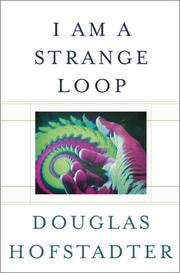
Start with I Am a Strange Loop. It is roughly a third the length of the famous book, it states the central claim directly instead of dramatising it, and Hofstadter wrote it partly because so many readers of the earlier book had missed what it was about. The claim is that a self is a pattern that has become able to refer to itself, and that this loop is what consciousness is.
The obvious alternative is to plunge straight into Gödel, Escher, Bach, which won a Pulitzer and is one of the most abandoned books in the history of publishing. It alternates chapters of exposition with Lewis Carroll dialogues, it teaches formal logic in passing, and readers who do not know why any of it is happening tend to stall somewhere around chapter eight. Read I Am a Strange Loop first and you always know what the game is.
Optional groundwork
Two short books by other authors sit at the front of this path, and they are genuinely optional. Godel's Proof by Ernest Nagel — written with James R. Newman, though the catalogue record names only Nagel — is a hundred-page walk through the incompleteness theorem, and it is the clearest short account there is. Raymond Smullyan's Forever undecided teaches the same territory through logic puzzles about knights, knaves and self-referential belief.
If Gödel's theorem is already familiar, skip both. If it is not, one of them will make the middle third of Gödel, Escher, Bach dramatically easier, and Godel's Proof is the faster of the two.
The main sequence
I Am a Strange Loop, then The Mind's I, the anthology he co-edited with Daniel Dennett. It is a collection of stories and papers about personal identity — Borges, Nagel's bat, Searle's Chinese room — each followed by a reflection from the editors. It is the most enjoyable book in the path and the best possible preparation for the big one.
Then Metamagical Themas, his Scientific American columns: self-referential sentences, the prisoner's dilemma, Rubik's cube, pattern in music. Browsable, uneven, and the place where several later obsessions first appear.
Then Gödel, Escher, Bach. Take it slowly, do not skip the dialogues even when they seem like decoration, and give yourself permission to reread the formal chapters rather than push through them. It is not a difficult book so much as a long one that rewards patience.
The deep end
Le Ton beau de Marot is six hundred pages about translating a short French poem, and it is the most divisive thing he wrote. Readers who love it consider it his richest book; others find the accumulation of variations exhausting and the personal material hard to take. Sample fifty pages before committing.
Fluid Concepts and Creative Analogies is not popular science. It is a set of research reports on the computer models his group built to study analogy-making, and it reads like the laboratory notebook it partly is. Melanie Mitchell's Analogy-Making As Perception goes further in the same direction — it is her doctoral work on one of those programs, and it is a technical monograph.
Mitchell's Artificial Intelligence, published as Artificial Intelligence: A Guide for Thinking Humans, is the opposite: a clear, current, sceptical survey of what machine learning does and does not do, from someone trained inside Hofstadter's own research tradition. For most readers it is the more useful of her two books here by a wide margin.
The book that argues back
Roger Penrose's The Emperor's New Mind holds that human understanding cannot be computational, using an argument built on Gödel's theorem — precisely the theorem Hofstadter uses to argue that a sufficiently rich self-referential system can produce a mind. Logicians and philosophers have contested Penrose's reasoning since it appeared and he has never conceded the point. Reading it after Gödel, Escher, Bach is the sharpest test of whether you actually accepted the argument or merely enjoyed it.
Where to stop
I Am a Strange Loop, The Mind's I and Gödel, Escher, Bach are the complete Hofstadter for almost everyone. Add Metamagical Themas to browse and Mitchell's Artificial Intelligence to bring it up to date. More sequences like this are on Discover.
Follow the full ordered path here: Douglas Hofstadter in Order: Where to Start Before Godel, Escher, Bach.