Start with The Grass is Singing. It is her 1950 debut, it is under two hundred and fifty pages, and it is a complete, controlled novel about a white farmer's wife in Southern Rhodesia and the murder that opens the book. You know the ending from the first page; the novel is the explanation. It gives you Lessing's actual subject — how ordinary people are deformed by the systems they live inside — in a form that asks nothing unusual of you.
The book you have heard of is The Golden Notebook, and it should be your third or fourth Lessing, not your first. It is a great novel and it is a difficult object: a conventional narrative called Free Women interleaved with four coloured notebooks in which the same woman separates her life into political, emotional, fictional and factual accounts, plus a fifth notebook that tries to reconcile them. The structure is the argument. Readers who arrive without knowing that often experience the first hundred pages as a mess.
The African books first
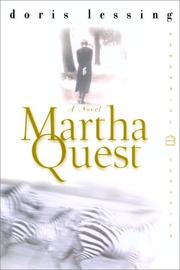
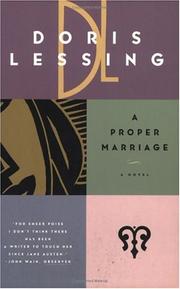
The Grass is Singing, then the Children of Violence sequence. This path holds the first two volumes: Martha Quest, in which a clever, furious girl escapes a colonial farm for the small-town politics of the city, and A proper marriage, which is the marriage she then has to survive. They are the most straightforwardly readable long stretch of Lessing and the closest to autobiography.
Be aware the sequence continues past the catalogue: A Ripple from the Storm, Landlocked and The Four-Gated City complete it, and the final volume swerves into apocalyptic territory that surprises readers who expected social realism to the end. If you want the whole arc you will need to source those three separately.
The Golden Notebook
Now read The Golden Notebook. Two practical notes. First, do not try to read the notebooks in isolation from each other or reorder them — the arrangement is doing the work. Second, it has been read for sixty years as a feminist landmark, which Lessing herself resisted; she maintained it was about fragmentation and breakdown rather than about women's liberation specifically. Both readings are live, and you can hold them at once.
The breakdown novels
Briefing for a Descent into Hell and The Summer Before the Dark belong together as the next stage. Briefing is the harder of the two: a man found wandering with amnesia, most of the book taking place inside a delirium that may be psychosis or may be revelation, written under the influence of R. D. Laing's ideas about madness as a sane response to an insane world. It is the point where a lot of readers get off. The Summer Before the Dark is much more approachable — a middle-aged woman with a summer to herself and no role to perform — and is one of her most underrated books.
Canopus in Argos, and the honest warning
Then the science fiction, which is where the readership genuinely splits. Shikasta recasts human history as a colonial administrative report from a galactic empire; The marriages between zones three, four, and five is a fable about three neighbouring realms, and it is the most beautiful of the sequence; The Sirian experiments is the driest, essentially bureaucratic in tone.
Say it plainly: many readers who love the realist novels find this sequence unreadable, and many science fiction readers find it slow and preachy. Lessing regarded it as her most important work and was contemptuous of critics who wanted her to keep writing the earlier kind of book. Try The marriages between zones three, four, and five first — if that does not work for you, the rest will not either.
Where to stop
After The Golden Notebook and The Summer Before the Dark you have read the essential Lessing, and stopping there is entirely reasonable. Continue into Canopus only if the fabular register appeals. She won the Nobel in 2007 at eighty-seven, having published across almost sixty years, and no single reading order will contain all of it.
Follow the full ordered path here: Doris Lessing Reading Order: Where to Start.