Best books to learn and improve at disc golf
This curriculum takes a beginner disc golfer from zero knowledge to a well-rounded, strategically sharp player across four progressive stages. Each stage builds on the last — first establishing physical fundamentals and disc knowledge, then layering in course management, and finally sharpening the mental and competitive edge that separates good players from great ones.
Foundations: Discs, Throws & the Basics
BeginnerUnderstand how discs fly, learn the core throwing mechanics (backhand and forehand), and build a starter bag with the right discs for a new player.
A true beginner's primer that covers rules, equipment, and basic throwing form in plain language — the perfect first read before touching any other resource.
Technique Deep Dive: Power, Form & Shot Shaping
IntermediateDevelop a consistent, powerful throwing motion, understand the biomechanics behind distance and accuracy, and learn to shape shots intentionally (hyzer, anhyzer, roller).
▸ Study plan for this stage
Pace: 4–5 weeks, ~25–30 pages/day, with 2–3 dedicated practice days per week on the course
- The X-step and run-up: footwork foundation for generating power and consistency
- Grip mechanics: how hand position, finger placement, and pressure affect release and flight
- Reach-back and acceleration: the kinetic chain from lower body through arm to disc
- Hyzer and anhyzer angles: how disc tilt at release shapes flight paths and distance
- Roller shots and advanced shot shaping: when and why to use unconventional releases
- Biomechanics of distance: how body rotation, arm speed, and timing compound to maximize throw length
- Accuracy through form consistency: reducing variables to repeat reliable shots under pressure
- Reading disc stability and flight numbers: matching disc selection to intended shot shape
- Describe the complete X-step footwork pattern and explain how each phase contributes to power generation and balance
- What are the key grip differences between a power throw and an approach shot, and how does each affect disc release?
- Explain the kinetic chain in a disc golf throw: how does power originate from the lower body and transfer through to the disc?
- How do hyzer and anhyzer angles at release affect the disc's flight path, and when would you intentionally throw each?
- What is a roller shot, why would you throw one, and what form adjustments are necessary compared to a standard throw?
- How do disc flight numbers and stability ratings relate to shot shaping, and how would you select a disc for a specific shaped shot?
- Film yourself throwing 20 drives and analyze your X-step footwork frame-by-frame; identify inconsistencies and practice 50 X-steps daily without a disc
- Practice grip drills: 30 power grip throws, 30 fan grip throws, and 30 mixed grip throws, noting feel and release consistency for each
- Perform 10 slow-motion throws focusing solely on reach-back and acceleration timing; record and compare to Menickelli's described mechanics
- On the course, throw 5 intentional hyzer shots and 5 anhyzer shots on the same hole, documenting how each disc responds and how release angle affected the result
- Execute 10 roller shots on open field or course, experimenting with different disc stabilities and release angles; note which combinations feel most controllable
- Throw 3 rounds focusing on one form element per round (e.g., X-step consistency, grip pressure, follow-through); score and compare results
- Create a personal disc selection chart mapping flight numbers to intended shot shapes (hyzer, anhyzer, straight); test each combination on 5 different holes
Next up: Mastering these fundamental mechanics and shot-shaping tools prepares you to apply them strategically in course management and competitive play, where you'll learn to read terrain, wind, and obstacles to execute the right shot at the right time.

A research-backed, comprehensive breakdown of throwing mechanics and disc physics — the most thorough technical manual available for players ready to move beyond basics.
Bridges physical technique with mindful practice habits, helping intermediate players ingrain consistent mechanics through deliberate, focused repetition.
Course Strategy & Shot Selection
IntermediateLearn to read a hole, manage risk vs. reward, build a strategic game plan for any course layout, and make smarter disc and shot choices under pressure.
▸ Study plan for this stage
Pace: 4–5 weeks, ~25–30 pages/day, with 2–3 practice rounds per week on an actual course
- Every shot must have a clear, intentional purpose tied to your overall hole strategy
- Reading course layout: identifying hazards, elevation changes, wind, and how they affect disc selection and line choice
- Risk vs. reward assessment: evaluating when to play conservative vs. aggressive based on lie, skill level, and course conditions
- Disc selection strategy: matching disc type, stability, and distance to specific shot demands and course features
- Pre-shot routine and decision-making framework: developing a consistent mental process to commit to a shot before execution
- Pressure management: staying calm and trusting your strategy when stakes are high or conditions are challenging
- Course management for different skill levels: adapting your game plan based on your current abilities and the hole's design
- What does it mean for a shot to have purpose, and how do you determine the purpose before throwing?
- How do you read a hole to identify the key hazards, elevation changes, and wind effects that should influence your strategy?
- When should you choose a conservative, safe shot over an aggressive, high-reward shot, and what factors should guide that decision?
- How do you select the right disc for a given shot, and what role does stability and distance play in that choice?
- What is a pre-shot routine, and why is having a consistent routine important for executing your strategy under pressure?
- How can you manage risk and stay committed to your game plan when playing in challenging conditions or high-pressure situations?
- Read a hole on your home course and write down: the layout, hazards, elevation, wind direction, and your strategic plan (including disc choices and shot types) before playing it
- Play 3–5 holes with a specific strategy written down beforehand; after each hole, reflect on whether your strategy worked and what you would change next time
- Practice your pre-shot routine on the practice field: pick a target, assess conditions, select your disc, and commit to the shot with the same steps every time
- Play a full round focusing only on shot purpose: before each throw, verbally state or write down why you're throwing that specific disc on that specific line
- Analyze a hole that gave you trouble: identify what went wrong (poor read, wrong disc choice, lack of commitment) and design a new strategy for next time
- Play the same course twice in one week and compare your strategy and results; identify patterns in what works and what doesn't
- Film yourself playing 3–5 holes and review the footage, noting moments where you committed fully to your strategy vs. moments of doubt or hesitation
Next up: This stage builds the mental framework and decision-making skills needed for advanced course management; the next stage will likely deepen your ability to execute these strategies under real-world conditions, refine your shot-making consistency, and adapt your game plan to different course types and competitive pressure.
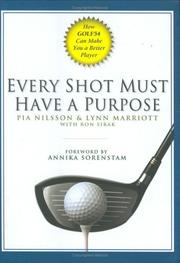
Though rooted in ball golf, this landmark book on pre-shot routine and intentional decision-making translates directly to disc golf course management and is widely recommended in the disc golf community.
Focuses specifically on disc golf course reading, landing zone selection, and risk management — a practical field guide for lowering scores through smarter play rather than more power.
The Mental Game & Competitive Excellence
ExpertMaster the psychological side of disc golf — focus, composure under pressure, resilience after bad shots, and the mindset of a competitive player.
▸ Study plan for this stage
Pace: 6–7 weeks, ~25–30 pages/day (alternating between both books; Rotella's work is more accessible, Gallwey's requires deeper reflection)
- Trust and commitment: The importance of committing fully to your shot selection without doubt or second-guessing (Rotella's core thesis)
- Process over outcome: Focusing on controllable elements (routine, mechanics, breathing) rather than results or external judgment
- The Self 1 vs. Self 2 framework: Quieting the analytical, judgmental mind to allow natural, intuitive performance to emerge (Gallwey)
- Pressure as opportunity: Reframing competitive stress as a chance to prove your skill rather than a threat
- Recovery from adversity: Developing mental resilience to bounce back from poor shots and maintain composure in tournaments
- The role of visualization and imagery: Using mental rehearsal to build confidence and program successful shot execution
- Presence and flow: Achieving a state of focused awareness where technique becomes automatic and distractions fade
- Self-imposed expectations vs. external pressure: Managing the gap between your own standards and others' expectations
- What does Rotella mean by 'trust' in golf, and how does it differ from mere confidence? How would you apply this to disc golf?
- Explain the Self 1 vs. Self 2 distinction from Gallwey's model. Which one typically interferes with your disc golf performance, and why?
- How does focusing on process rather than outcome change the way you approach a competitive round? Give a specific disc golf example.
- Describe a moment when you experienced 'the inner game' working against you. What was your Self 1 doing, and how could you have quieted it?
- What is your pre-shot routine, and how does it help you achieve the mental state Rotella and Gallwey describe?
- How do you currently handle a bad shot or a missed putt? What mental strategy from these books would help you recover faster?
- Develop a detailed pre-shot routine (30 seconds or less) that incorporates breathing, a trigger word, and a commitment statement. Practice it on 20 throws before analyzing what works.
- Play a full practice round focusing exclusively on process: rate yourself 1–10 on commitment, composure, and routine execution—not on score. Do this weekly for 4 weeks.
- Record yourself playing (audio or video) and identify moments when 'Self 1' (the critic) took over. Write down what it said and how you could redirect to Self 2 (the doer).
- Create a 'pressure simulation' by playing 9 holes where every shot counts toward a fictional tournament score. Afterward, journal on how your mental state differed from casual play.
- Practice the 'trust drill': throw 10 shots from the same spot without analyzing mechanics between throws. Notice how your performance changes as you stop thinking and start trusting.
- Identify one recurring negative self-talk pattern (e.g., 'I always miss these putts'). Write a counter-statement based on Rotella's principles and repeat it 5 times before your next round.
Next up: This stage equips you with the mental framework and resilience needed to handle the demands of tournament play and course management, preparing you to integrate these psychological skills with strategic shot selection and course-specific tactics in the next stage.
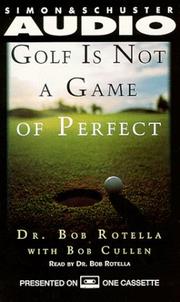
The gold standard sports psychology book for target-based precision sports; disc golfers at every level cite this as transformative for building confidence and a short memory after mistakes.

A classic on quieting self-interference and trusting muscle memory — its principles apply directly to the disc golf pre-shot routine and performing under tournament pressure, and it is the philosophical backbone of modern sports psychology.
Discussion
Keep reading
Paths that share books, cover the same subject, or open a related topic.