Best books to learn windsurfing and kitesurfing
This curriculum is built for an intermediate water-sports enthusiast who already has basic board and wind awareness and wants to go deep on both windsurfing and kitesurfing — covering gear selection, reading wind and water, mastering water starts, and progressing toward advanced riding. The three stages move from consolidating core technique and gear knowledge, through wind theory and water-start mastery, to advanced riding skills and discipline-specific progression. Books within each stage are ordered so that foundational vocabulary and concepts are in place before tackling more technical material.
Wind Theory & Reading the Water
IntermediateDevelop a deep, practical understanding of wind patterns, weather windows, and how wind interacts with water — the knowledge that separates competent riders from truly skilled ones.
▸ Study plan for this stage
Pace: 4–5 weeks, ~25–30 pages/day. Start with "Wind Strategy" (2 weeks), then "Instant Wind Forecasting" (2–3 weeks), with 3–4 days of overlap for synthesis and field practice.
- Wind gradient and shear: how wind speed and direction change with altitude and proximity to water, and why this matters for sail trim and positioning
- Pressure systems and isobars: reading weather maps to predict wind strength, direction, and stability from high/low pressure patterns
- Thermal and sea-breeze effects: how land heating and water temperature differentials create predictable wind patterns throughout the day
- Frontal systems and wind shifts: recognizing cold fronts, warm fronts, and squall lines to anticipate sudden changes in wind direction and intensity
- Water-wind interaction: how waves, chop, and water state reveal wind history and predict immediate conditions
- Strategic positioning: using wind knowledge to choose launch spots, timing, and routes that maximize performance and safety
- Instant forecasting techniques: visual cloud patterns, wind indicators, and on-site observations to make real-time micro-forecasts without instruments
- How does wind gradient affect your sail trim and body position, and why does it matter differently near shore versus offshore?
- What do isobars tell you about wind strength, and how can you estimate wind speed from a weather map?
- How do thermal winds and sea breezes develop throughout the day, and what conditions favor their formation?
- What visual signs (clouds, water texture, wind indicators) can you read on-site to forecast the next 30–60 minutes of wind without a forecast app?
- How do you recognize an approaching cold front or squall line, and what should you do to prepare?
- Given a weather map and water conditions, how would you choose your launch spot and timing to catch the best wind window?
- Collect 5 weather maps from different days (varying seasons/pressure patterns). For each, identify high/low pressure centers, isobars, fronts, and predict wind direction and relative strength before checking the actual forecast.
- Spend 3 separate sessions at your local spot observing and sketching cloud formations, water texture, and wind shifts over 2–3 hours. Correlate what you see with Houghton's and Watts' visual indicators.
- Create a personal 'wind window journal': record launch time, observed conditions, water state, cloud patterns, and actual wind behavior. After 10–15 sessions, review for patterns and test your predictions against outcomes.
- Practice 'instant forecasting' by observing conditions on-site for 10 minutes without checking your phone, then predicting the next 30–60 minutes. Compare your prediction to what actually happens; track accuracy over 5 sessions.
- Analyze 3 past sessions where wind shifted unexpectedly. Using Houghton's and Watts' frameworks, identify what you missed and what visual cues you should have caught.
- Interview an experienced local rider or instructor about their personal wind-reading strategies and how they choose launch spots. Document their rules of thumb and test them against the book concepts.
Next up: Mastering wind theory and real-time forecasting equips you to consistently find and exploit optimal conditions, which is the foundation for the next stage—advanced technique and tactical decision-making in varied wind and water states.
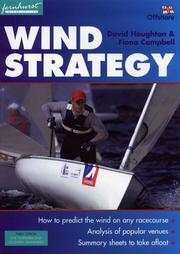
The canonical text on reading and predicting wind on the water; though written for sailors, its wind-shift, pressure, and sea-breeze theory is directly applicable to windsurfing and kitesurfing session planning.
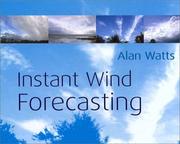
A compact, visual guide to interpreting clouds, pressure systems, and local effects — read after Houghton to translate strategic wind theory into on-the-beach, real-time decisions.
Water Starts, Transitions & Advanced Riding
ExpertMaster water starts in both disciplines, nail key transitions (gybes, tacks, body drags), and build a clear progression path toward freestyle or wave riding.
▸ Study plan for this stage
Pace: 4–5 weeks, ~25–30 pages/day, with 2–3 days per week dedicated to water practice and skill application
- Wave mechanics and how energy transfer applies to water starts and transitions in both windsurfing and kitesurfing
- Hydrodynamic principles governing board control during gybes, tacks, and body drags
- The role of wind and water interaction in timing transitions and maintaining momentum
- How understanding wave formation and breaking patterns informs advanced riding progression
- Biomechanics of weight distribution and body positioning during dynamic maneuvers
- Energy conservation techniques to sustain performance through multiple transitions
- Reading conditions (wind, swell, current) to optimize water start execution and transition planning
- How do the hydrodynamic principles in Surf Science explain why a water start fails or succeeds in different wind and water conditions?
- What role does wave energy transfer play in executing a smooth gybe or tack, and how can you apply this to both windsurfing and kitesurfing?
- How does understanding the physics of wave breaking help you choose the right location and timing for water starts?
- What biomechanical adjustments does Surf Science suggest for maintaining board control during body drags and transitions?
- How can you use the science of wind-water interaction to predict when conditions are optimal for practicing advanced transitions?
- What does Surf Science reveal about energy efficiency in sustained riding, and how does this apply to chaining multiple transitions together?
- Perform 10 water starts in varying wind conditions (light, moderate, strong) while consciously applying the hydrodynamic principles from Surf Science; document what changes in board angle, weight placement, and timing
- Execute 5 consecutive gybes (windsurfing) or equivalent directional transitions (kitesurfing), focusing on maintaining the energy principles described in the text
- Practice 5 body drags in different water states (flat, choppy, small swell) and analyze how the physics of water resistance affects your technique and recovery
- Read and annotate the chapters on wave mechanics, then sketch diagrams showing how energy flows through a wave and how you can harness it during a tack or water start
- Conduct a condition analysis: observe your local break for 30 minutes, identify wind/swell/current patterns using Surf Science concepts, and predict the best spots and times for water starts
- Film yourself performing 3 water starts and 3 transitions, then review the footage against the biomechanical principles in Surf Science to identify inefficiencies in body positioning or timing
Next up: This stage equips you with the scientific foundation to understand why advanced maneuvers work, preparing you to move into specialized freestyle or wave-riding techniques where you'll apply these hydrodynamic and biomechanical principles to more extreme conditions and stylized movements.
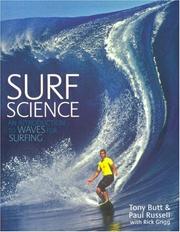
Explains wave formation, swell, and break behavior in depth; essential for riders in both disciplines who want to progress into wave riding and understand how to read and position on moving water.
Discussion
Keep reading
Paths that share books, cover the same subject, or open a related topic.