Learn fencing: the physical game of chess
This curriculum takes a complete beginner from zero fencing knowledge to a tactically aware, competition-ready fencer across four carefully sequenced stages. Each stage builds on the last — first establishing the language and culture of the sport, then drilling the physical fundamentals, then layering in tactical depth, and finally opening the door to the mental game and competitive mastery that makes fencing "physical chess."
The World of Fencing — Context & Overview
BeginnerUnderstand what fencing is, how the three weapons differ, the basic rules and scoring, and the culture of the sport — so every later technical detail has a meaningful home.
▸ Study plan for this stage
Pace: 6–8 weeks total. Week 1–4: Read "The Complete Guide to Fencing" by Emil Beck at a pace of ~20–25 pages/day, pausing after each chapter to take notes. Week 5–8: Read "Fencing" by Elaine Cheris at ~15–20 pages/day, cross-referencing Beck's overviews to deepen and compare perspectives. Reserve the fina
- The three weapons — foil, épée, and sabre — and how their target areas, right-of-way rules, and historical origins distinguish them from one another (Beck, Part I; Cheris, Ch. 1–2)
- Basic scoring and bout structure: touches, valid target zones, the role of the director/referee, and how electronic scoring equipment works (Beck; Cheris)
- Right-of-way (priority) as the central judging concept in foil and sabre, contrasted with épée's 'simultaneous touch' rule (Beck; Cheris)
- The vocabulary of fencing: piste, en garde, halt, touché, parry, riposte, attack, and other fundamental terms introduced in both books
- The culture and etiquette of fencing — the salute, the handshake, respect for the opponent, and the sport's Olympic and historical heritage (Beck's historical context; Cheris's cultural framing)
- Equipment essentials: the mask, jacket, glove, and weapon components, and why each piece of protective gear exists (Beck; Cheris)
- The physical and mental athlete profile fencing demands — coordination, tactical thinking, and reflexes — as framed by both authors
- How competitive fencing is organized: club, national, and international (FIE) levels, competition formats (pools and direct elimination) (Cheris)
- After reading Beck and Cheris, can you explain to a complete newcomer how foil, épée, and sabre differ in target area, right-of-way, and general strategy?
- What is 'right-of-way' and why does it exist in foil and sabre but not in épée? Use examples from either Beck or Cheris to support your answer.
- Describe the structure of a fencing bout from the opening salute to the final handshake — what happens, in what order, and who is responsible for what?
- What are the key pieces of fencing equipment, what does each protect, and what are the weapon-specific equipment differences described by Beck and Cheris?
- How do Beck and Cheris each characterize the culture and etiquette of fencing, and where do their emphases agree or differ?
- Based on both books, what physical and mental qualities make a successful fencer, and how does the sport's structure (pools, direct elimination) reward those qualities?
- Weapon comparison chart: After finishing Beck's weapon overview and Cheris's corresponding chapters, draw a three-column table (foil / épée / sabre) and fill in: valid target, right-of-way rule, scoring method, and one historical fact — using only these two books as sources.
- Glossary building: Keep a running fencing dictionary as you read. Every time Beck or Cheris introduces a new term, write it down with a one-sentence definition in your own words. Aim for at least 40 terms by the end of both books.
- Bout narration exercise: Watch a freely available Olympic or World Championship fencing bout online (any weapon). Pause every 30 seconds and try to name what is happening using the vocabulary and rules you learned from Beck and Cheris. Write a one-paragraph narration of a single exchange.
- Author comparison journal: After finishing each book, write a one-page reflection answering: 'What did this author emphasize that the other did not?' Focus on tone, depth of cultural context, and which weapon each author seems most passionate about.
- Equipment sketch: Without looking at photos, sketch the outline of a fencer and label every piece of equipment and every valid target zone for each weapon, based solely on the descriptions in Beck and Cheris. Then verify against the books and correct any errors.
- Self-quiz: Write 10 multiple-choice questions covering rules, equipment, and culture drawn from both books, then answer them a day later without referring to your notes — a simple spaced-repetition check on retention.
Next up: The solid grounding in weapon differences, rules, and vocabulary built from Beck and Cheris transforms the next stage's technical footwork, bladework, and tactical instruction from abstract movements into purposeful actions with clear competitive meaning.
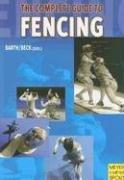
A comprehensive, well-illustrated introduction to all three weapons that covers rules, equipment, and the broad strokes of technique — the ideal first book to build shared vocabulary before any physical training begins.
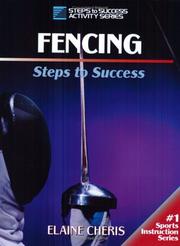
Written by a U.S. Olympian, this beginner-friendly manual breaks the sport into digestible, progressive steps and introduces footwork and blade-work concepts in plain language, bridging overview knowledge into early practice.
Footwork, Blade Work & Physical Fundamentals
BeginnerDevelop correct on-strip movement, guard positions, and the core blade actions for all three weapons — building the physical muscle memory that all tactics depend on.
▸ Study plan for this stage
Pace: 3–4 weeks, ~20–25 pages/day; read each chapter once for comprehension, then re-read technique descriptions slowly while standing in guard position or mirroring the diagrams
- The en garde position: correct foot alignment, knee bend, weight distribution, and upper-body posture as the foundation for all movement
- Advance and retreat: proper sequencing of foot movement, maintaining balance and distance throughout each step
- The lunge: explosive extension of the rear leg, leading heel drive, full arm extension, and recovery back to guard
- Absence of blade vs. engagement: understanding when and why to make or break contact with the opponent's blade
- The three lines of target: high, low, inside, and outside lines and how guard position relates to covering them
- Simple attacks: the straight thrust, disengage, and cut-over (coupé) as the foundational offensive blade actions
- Parries and their numbering: the classical numbered parries (e.g., quarte, sixte, septime, octave) and the defensive line each closes
- The role of point control: keeping the weapon tip on a threatening line during footwork to connect blade work and movement
- What are the key checkpoints of a correct foil en garde position, and why does each one matter for balance and mobility?
- Describe the precise foot sequence of an advance and a retreat — what goes first and why?
- What distinguishes a lunge from a fleche, and what are the most common technical errors Bower identifies in the lunge?
- Name and describe at least four classical parries, identify which line each defends, and explain how the riposte follows each one.
- What is a disengage, and how does it differ from a cut-over in terms of blade path and tactical purpose?
- How does Bower connect footwork distance management to the timing of a simple attack?
- Mirror drill: Stand in front of a full-length mirror and hold the en garde position for 60 seconds, checking every checkpoint Bower lists (foot angle, knee over toe, sword arm relaxed, mask-height chin). Repeat 3×/session until it feels automatic.
- Footwork ladder: Mark two lines on the floor ~2 m apart. Practice advance–advance–retreat–retreat continuously for 3 minutes, saying 'front foot, back foot' aloud on each advance and 'back foot, front foot' on each retreat to reinforce Bower's sequencing.
- Lunge and recovery sets: From guard, execute 10 slow-motion lunges (3-second extension, 3-second recovery), focusing on full arm extension before the foot lands; then 10 at full speed. Record yourself and compare against Bower's technique photographs.
- Parry naming drill: Using a partner or a wall-mounted target, call out a parry number (quarte, sixte, septime, octave, etc.) and physically move the blade to that position, naming the line it closes. Cycle through all parries Bower covers for 5 minutes.
- Shadow fencing sequence: Without a partner, chain together the following sequence Bower introduces — advance, straight thrust; retreat, disengage attack; lunge, recover — repeating the chain 10× to begin linking footwork and blade work in muscle memory.
- Reading log: After each chapter, write 3–5 bullet points in your own words summarising the technique covered, one common error Bower warns against, and one drill she recommends. Review the log before each practice session.
Next up: Mastering the physical fundamentals in Bower's foil text gives the reader a reliable, repeatable movement vocabulary — correct guard, clean footwork, and controlled blade actions — which is the prerequisite for understanding how those actions are combined, timed, and countered in tactical and strategic fencing study.
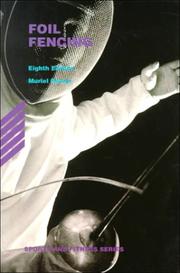
A classic American coaching text that methodically teaches the foil — the traditional starting weapon — with clear progressions for stance, advance, retreat, lunge, and the fundamental blade actions.
Czajkowski is one of the most respected fencing theorists in the world; this text completes the three-weapon survey by explaining the explosive, cutting-and-thrusting dynamics unique to sabre.
Tactics, Timing & the Chess Match
IntermediateMove beyond mechanical technique into the tactical mind — reading opponents, setting traps, controlling distance and tempo, and making split-second decisions under pressure.
▸ Study plan for this stage
Pace: 4–5 weeks, ~20–25 pages/day, with one dedicated review and sparring-application session per week
- Measure (distance management) — understanding and controlling the critical fencing distance at which attacks and parries become viable
- Right-of-way and priority — how tactical initiative is established, maintained, and stolen within a phrase of fencing
- Actions on the blade — pressure, beat, bind, and envelopment as tools to provoke, deceive, or dominate an opponent's weapon
- Preparation of the attack — feints, invitations, and false attacks used to manufacture openings rather than waiting for them
- Second-intention actions — deliberately losing the first exchange to set up a planned counter-response (parry-riposte, counter-attack traps)
- Tempo and timing — the concept of fencing time (one fluid movement), exploiting hesitation, and attacking into preparation
- Reading the opponent — identifying patterns, habits, and tells through observation during a bout to build a real-time tactical model
- Psychological pressure and the 'chess match' mindset — using feints, rhythm changes, and unexpected actions to force mental errors
- How does Evangelista define 'measure,' and what are the three primary distances a fencer must recognize and exploit during a bout?
- What is the difference between a first-intention attack and a second-intention action, and when does Evangelista suggest each is tactically appropriate?
- How do actions on the blade (beat, pressure, bind) serve a tactical rather than purely mechanical purpose — what information or reaction are they designed to provoke?
- Explain the role of the feint in Evangelista's tactical framework: how does a well-executed feint differ from a telegraphed one, and what makes an opponent's reaction exploitable?
- What does Evangelista mean by 'fencing time,' and how does attacking into an opponent's preparation differ from a simple counter-attack?
- How should a fencer systematically observe and adapt to an opponent's patterns mid-bout, according to the tactical principles laid out in the book?
- Distance drilling with a partner: Mark three zones on the strip (long, middle, short measure). Practice advancing and retreating to land in each zone on command, then call out which attack option Evangelista associates with each distance — build automatic spatial awareness.
- Feint-and-find drill: Throw a single feint to four different lines (high inside, high outside, low inside, low outside) against a partner who parries randomly. Record which parry they favor over 20 repetitions, then design a compound attack that exploits their dominant habit.
- Second-intention scenario sparring: Designate one fencer as the 'trapper' for a 3-minute bout. The trapper must score at least 50% of their touches via planned second-intention actions (deliberate invitation → parry → riposte). Debrief aloud after each touch.
- Tempo journal: After every sparring session this stage, write 5–10 sentences identifying one moment where you attacked in the wrong tempo and one where you found the right tempo. Reference Evangelista's language (preparation, development, fencing time) explicitly.
- Blade-action reaction drill: One partner makes slow, exaggerated blade actions (beat, pressure, bind); the other must immediately name the correct tactical response (yield, counter-pressure, disengage) before executing it — trains the cognitive layer above the physical reflex.
- Video self-analysis: Record a 5-touch bout, then watch it back and annotate each phrase: Who held initiative? Was distance controlled or conceded? Was any action a genuine second intention? Compare your annotations to Evangelista's tactical vocabulary to identify gaps.
Next up: Mastering Evangelista's tactical framework — especially second-intention thinking and opponent-reading — gives the reader the strategic vocabulary needed to study more advanced or weapon-specific competitive systems, where these principles are refined under tournament pressure and rule-set constraints.
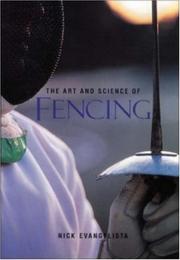
Evangelista weaves historical context with practical tactical principles, helping the intermediate fencer understand why certain actions work and how to build a personal tactical system rather than just copying moves.
The Mental Game & Competitive Mastery
ExpertIntegrate physical skill and tactical knowledge with sports psychology, competition strategy, and the mindset needed to perform under pressure and keep improving as a lifelong fencer.
▸ Study plan for this stage
Pace: 2–3 weeks, ~20–25 pages/day — The Inner Game of Tennis is a short but dense book (~140 pages); read slowly and reflectively, re-reading key chapters on Self 1 vs. Self 2 and relaxed concentration before moving on. Pair each reading session with a fencing practice or visualization session the same da
- Self 1 vs. Self 2: The distinction between the conscious, judging, over-instructing mind (Self 1) and the natural, intuitive, body-knowing mind (Self 2) — and why silencing Self 1 unlocks peak performance in fencing.
- Relaxed Concentration: The paradox that trying harder often produces worse results; learning to stay alert yet calm, especially in high-stakes bouts, is a trainable mental skill.
- Non-judgmental Awareness: Observing errors and successes without labeling them 'good' or 'bad,' replacing self-criticism with neutral, curious observation to accelerate learning and reduce performance anxiety.
- Trust vs. Control: The discipline of trusting the body's trained instincts during a bout rather than consciously controlling every action — critical for fencers whose techniques must be automatic under pressure.
- The Interference Equation: Performance = Potential − Interference. Identifying and reducing internal interference (doubt, fear, anger, over-thinking) is as important as building physical skill.
- Letting Go of Results: Focusing on process and present-moment engagement rather than scoreboard outcomes, enabling consistent performance regardless of the competitive stakes.
- The Role of Images and Feel over Words: Using mental imagery and kinesthetic feel — rather than verbal self-instruction — to communicate with Self 2 and groove correct movement patterns.
- Winning vs. Competing: Redefining success as full engagement and self-mastery rather than defeating an opponent, which paradoxically produces better competitive results.
- How does the Self 1 / Self 2 framework explain why a technically proficient fencer might underperform in competition compared to practice, and what can be done about it?
- What is 'relaxed concentration,' and how would you deliberately cultivate it during a tense direct-elimination bout at a tournament?
- Gallwey argues that self-criticism and over-instruction are forms of interference — how would you redesign your internal dialogue between touches in a fencing match to reduce this interference?
- How can the principle of non-judgmental observation be applied when reviewing video footage of your own bouts or when receiving coaching feedback?
- Describe a concrete pre-bout or between-period mental routine, grounded in Gallwey's principles, that a competitive fencer could use to stay in a 'Self 2' state.
- How does Gallwey's redefinition of 'winning' change the way you should approach a bout against a significantly stronger or weaker opponent?
- Self 1 Audit During Sparring: In your next three practice bouts, keep a small notebook nearby. Immediately after each bout, write down every self-critical or over-instructing thought you noticed mid-bout ('keep your arm straight,' 'you idiot, you fell for that again'). Categorize them as Self 1 interference and brainstorm a neutral, observational replacement for each.
- The 'Bounce-Hit' Focus Drill (Fencing Adaptation): Borrow Gallwey's attention-anchoring technique. During a bout or drill, silently say 'step' on every advance and 'hit' on every attack landing. This occupies Self 1 with a simple task and frees Self 2 to fence fluidly. Practice for 10-minute blocks and note any change in fluidity or reaction speed.
- Visualization with Kinesthetic Feel: Before each practice session, spend 5 minutes in a quiet space visualizing a complete bout — not as a movie, but as a felt experience. Feel the grip, the footwork rhythm, the timing of a successful parry-riposte. Use images and sensations, no verbal instructions. Journal what you noticed afterward.
- Non-Judgmental Video Review: Record a sparring session and watch it back twice — first as you normally would, then a second time where you are only allowed to describe what you see in purely neutral, factual language ('blade went high,' 'distance was close,' 'reaction came late') with zero evaluative words. Notice how your emotional response and learning quality differ between the two viewings.
- Pre-Bout Mental Routine Design: Write out a personalized 3–5 minute pre-bout routine using Gallwey's principles: a physical relaxation cue (e.g., a slow breath), an attention anchor (a word or image that signals 'Self 2 is in charge'), and a process goal (one thing to be curious about, not a result to achieve). Test it at your next competition or hard sparring session and refine it.
- Post-Competition Reflection Journal: After every competition, write a one-page entry answering three questions: (1) When did I feel 'in the zone' and what was my mental state? (2) When did Self 1 take over and what triggered it? (3) What is one thing I am genuinely curious to explore — not fix — in my next training block? Review entries monthly to track mental-game patterns over time.
Next up: Internalizing Gallwey's mental framework transforms how a fencer approaches every future training session and competition, creating the self-aware, process-focused mindset needed to continuously integrate new physical and tactical skills at the highest levels of the sport.
Though written for tennis, this landmark sports-psychology text is universally applied by elite fencing coaches to teach self-awareness, focus under pressure, and trusting trained instinct — directly transferable to the reactive demands of fencing.
Discussion
Keep reading
Paths that share books, cover the same subject, or open a related topic.