Build a real golf swing
This four-stage curriculum takes a brand-new golfer from the absolute basics of how the game works, through swing mechanics and short-game technique, and finally into the mental and strategic side of the sport. Each stage builds the vocabulary and physical intuition needed for the next, so that by the end the reader has a well-rounded, deeply grounded understanding of golf as both a physical skill and a mental discipline.
Foundations: How Golf Works
BeginnerUnderstand the rules, etiquette, basic equipment, and the overall shape of the game so that every later technical concept has a real-world context.
▸ Study plan for this stage
Pace: 6–7 weeks total: Weeks 1–4 cover "Golf for Dummies" (~20–25 pages/day, reading in chapter blocks); Weeks 5–7 cover "Harvey Penick's Little Red Book" (~10–15 pages/day, reading slowly and reflectively — Penick's short lessons reward re-reading each entry before moving on).
- The structure of a round of golf: holes, par, scoring terms (birdie, bogey, eagle), and how a full 18-hole course is organized — as introduced in Golf for Dummies
- Basic rules of play: out-of-bounds, water hazards, unplayable lies, and the penalty stroke system explained accessibly in Golf for Dummies
- Golf etiquette and course culture: pace of play, tending the flagstick, repairing divots and ball marks, and respecting fellow players — a recurring theme in both books
- The essential equipment: the 14-club limit, the roles of woods, irons, wedges, and the putter, and how to read a basic equipment setup as laid out in Golf for Dummies
- The mental and emotional foundation of golf: Penick's philosophy that golf is a game of feel, patience, and self-trust, not mechanical perfection
- The grip as the single most important physical connection to the club — Penick returns to this repeatedly as the root of nearly every swing problem
- The concept of 'playing your own game': both McCord and Penick emphasize that golf is ultimately a personal journey measured against the course, not other players
- How the short game (chipping and putting) dominates scoring — Penick's lessons consistently redirect beginners away from power and toward finesse around the green
- After reading Golf for Dummies, can you explain what 'par' means for a hole and for a round, and name at least four scoring terms (e.g., birdie, bogey) and what they mean relative to par?
- What are the core rules a beginner must know to play a legal, respectful round — including what to do when a ball is lost, out of bounds, or in a water hazard?
- Based on Harvey Penick's Little Red Book, what does Penick believe is the most important fundamental for a beginning golfer, and why does he keep returning to it throughout the book?
- How do both books describe the role of the short game (putting and chipping) in actually lowering your score, and why do they suggest beginners spend more time on it than on driving?
- What are at least five specific etiquette rules that both books suggest every golfer should follow, and why does golf culture place such strong emphasis on self-policing behavior?
- How does Penick's teaching philosophy — built on feel, simplicity, and encouragement — differ in tone and approach from the rules-and-equipment framework in Golf for Dummies, and what does each approach offer a beginner?
- Course walk (no clubs required): Visit a local golf course or driving range and identify the physical features discussed in Golf for Dummies — tee box, fairway, rough, bunker, green, and flagstick. Sketch a simple diagram of one hole from memory afterward.
- Rules scenario flashcards: Write 10 common on-course situations on index cards (ball in water hazard, lost ball, ball unplayable in a bush, etc.) and write the correct ruling and penalty on the back, drawing directly from the rules chapters in Golf for Dummies.
- Grip check drill: Following Penick's grip instructions in the Little Red Book, practice taking your grip on a club 20 times per day for one week — without hitting a ball. Focus entirely on the feel Penick describes, not on swing mechanics.
- Penick reflection journal: After finishing each chapter or lesson in Harvey Penick's Little Red Book, write 2–3 sentences in your own words summarizing what Penick is really saying beneath the surface. Note which lessons surprised you or contradicted assumptions you had.
- Putting-only practice session: Spend 30 minutes on a practice green doing nothing but putting from 3, 6, and 10 feet — honoring Penick's insistence that the short game is where scores are made. Count how many putts you take per 9-hole simulation (3 putts per hole = 27 total; aim to beat that).
- Equipment audit: Using the club-role framework from Golf for Dummies, visit a golf shop or browse a retailer online and identify a beginner-appropriate set. Write a one-paragraph justification for each club category (woods, irons, wedge, putter) explaining what role it fills and why a beginner needs it.
Next up: By finishing this stage, the reader has a working mental map of the game — its rules, culture, equipment, and scoring — so that when the next stage introduces swing mechanics and ball-striking technique, every new concept can be immediately anchored to a real situation on a real hole rather than learned in a vacuum.

The single most accessible entry point for complete beginners — covers rules, equipment, course etiquette, and a plain-English overview of the swing before any deep-dive technique is introduced.
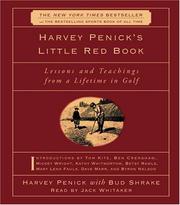
Short, story-driven lessons from one of history's greatest teachers build a feel-first intuition for the game and establish the mindset that golf is learned gradually — the perfect philosophical companion to the Dummies overview.
The Full Swing: Building a Repeatable Motion
BeginnerUnderstand the biomechanics of the golf swing — grip, stance, takeaway, rotation, and impact — and be able to self-diagnose common beginner faults.
▸ Study plan for this stage
Pace: 6–8 weeks total: Weeks 1–4 for "Ben Hogan's Five Lessons" (~20–25 pages/day, re-reading illustrated sections slowly); Weeks 5–8 for "Impact Zone" (~15–20 pages/day, pausing to drill each of Clampett's 5 Impact Factors at the range).
- The Grip as Foundation (Hogan): The overlapping grip, hand pressure, and how grip position directly controls clubface angle at impact
- Stance & Posture (Hogan): Width of stance, spine angle, knee flex, and ball position as the athletic 'address platform' that makes a repeatable swing possible
- The Plane of the Swing (Hogan): Hogan's iconic glass-pane visualization — the inclined plane that defines the correct arc of the club from takeaway through follow-through
- The Pivot & Hip Turn (Hogan): The role of the lower body as the engine — coiling the hips on the backswing and clearing them aggressively on the downswing
- The Five Impact Factors (Clampett): Flat left wrist, clubhead lag, a straight plane line, a square clubface, and a forward swing bottom — the five conditions that must exist at impact for a quality strike
- Clubhead Lag & the 'Loading' Move (Clampett): How lag is created, stored, and released, and why casting (early release) is the single most destructive beginner fault
- Swing Bottom & Divot Location (Clampett): Understanding that the bottom of the swing arc should occur after the ball, and using divot position as real-time feedback
- Self-Diagnosing Common Faults: Mapping beginner errors (slice, fat/thin contact, casting, over-the-top path) back to specific breakdowns in Hogan's fundamentals or Clampett's Impact Factors
- According to Hogan, how should the 'V's formed by the thumb and forefinger of each hand be aligned, and why does this matter for controlling the clubface?
- Describe Hogan's glass-pane visualization. What does it mean for the club to travel 'on plane,' and what are the consequences of swinging above or below the plane?
- What are Clampett's Five Impact Factors, and which one does he argue is the master key that influences all the others?
- Why does Clampett argue that focusing on the impact position — rather than swing mechanics in motion — is a more reliable way for beginners to improve ball-striking?
- A beginner consistently hits fat shots (club strikes the ground before the ball). Using Clampett's concept of swing bottom, what is the likely fault and how would you correct it?
- How do Hogan's hip-turn and pivot concepts connect to Clampett's concept of lag — in other words, how does proper lower-body sequencing help preserve lag into impact?
- Grip Check Ritual (Hogan Ch. 1–2): Before every practice session, build your grip from scratch using Hogan's step-by-step instructions. Take a photo of your grip from both the face-on and trail-side angles and compare it to Hogan's illustrations until it becomes automatic.
- Mirror Plane Drill (Hogan Ch. 4): Set up in front of a full-length mirror. Using a 7-iron, pause at three checkpoints — takeaway (club parallel to ground), halfway back (club on plane), and top of backswing — and visually verify the club matches Hogan's plane illustrations at each position.
- Divot Board / Towel Drill (Clampett Impact Factors 4 & 5): Place a folded towel 4 inches behind the ball. Hit punch shots with a 7-iron, training yourself to miss the towel and strike the ball first. This directly grooves a forward swing bottom and eliminates the 'fat' pattern.
- Lag Preservation Drill (Clampett Impact Factor 1 & 2): Hit 20 balls with a deliberate 'hold the angle' feel — consciously delay the unhinging of the wrists until the hands pass the right thigh. Compare ball flight (trajectory, distance) to your normal swing and note the difference.
- Fault Diagnosis Journaling: After each range session, write down the dominant miss (slice, hook, fat, thin, push, pull). Use a two-column log: Column A maps the miss to the broken Hogan fundamental; Column B maps it to the violated Clampett Impact Factor. Over 4 weeks this builds self-coaching instincts.
- On-Course Checkup Round: Play 9 holes with only a 7-iron, a wedge, and a putter. After each full swing, note where the divot is (or isn't) and whether contact felt solid. This forces you to apply both Hogan's setup fundamentals and Clampett's impact awareness under real playing conditions.
Next up: Mastering the full swing's biomechanics and impact geometry gives the reader a reliable, repeatable ball-striking foundation — the prerequisite for the next stage, where that motion is refined and applied to specific shot-shaping, course management, and the short game.
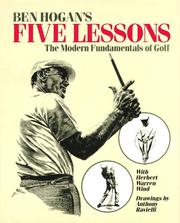
The most celebrated instructional book in golf history; its clear illustrations and logical progression from grip to plane to follow-through give beginners a precise, durable model of the swing to return to again and again.
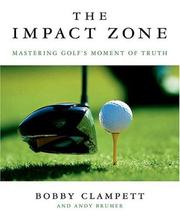
Builds directly on Hogan's framework by zeroing in on the moment of truth — the impact interval — teaching beginners exactly what the club must do at the ball and why, turning abstract swing theory into a concrete, measurable goal.
The Short Game: Where Scores Are Made
IntermediateDevelop a systematic, technique-driven approach to chipping, pitching, bunker play, and putting — the shots that account for the majority of strokes for any golfer.
▸ Study plan for this stage
Pace: 8–10 weeks total: ~5 weeks on Dave Pelz's Short Game Bible (~30 pages/day, 4–5 days/week) followed by ~4–5 weeks on Dave Pelz's Putting Bible (~25 pages/day, 4–5 days/week). Budget extra time for re-reading technical sections and practicing drills on the course or at home between sessions.
- The 'Golden Eight' short-game shots — Pelz's systematic categorization of all shots inside 100 yards and why mastering each individually leads to lower scores
- The Pelz scoring zone philosophy — understanding that roughly 80% of all strokes are taken within 100 yards of the hole, making the short game the highest-leverage area for improvement
- Finesse wedge technique — the clock-system for swing length (7:30, 9:00, 10:30 positions), consistent ball position, and the importance of a flat left wrist at impact for chipping and pitching
- Bunker play mechanics — the open stance, open clubface, sand entry point, and follow-through principles that produce consistent explosion shots from greenside and fairway bunkers
- The Pelz putting stroke model — a pendulum motion driven by the 'Putting Stroke Ruler' concept, with emphasis on a flat left wrist, consistent tempo, and zero manipulation through impact
- Green reading and distance control — Pelz's research-backed approach to reading break, understanding the 'true roll' of a putt, and calibrating feel for lag putting through data-driven practice
- The 'three-foot circle' concept — Pelz's statistical argument for why leaving all approach putts within a three-foot circle of the hole is the single most impactful putting goal
- Practice vs. play mindset — Pelz's distinction between block practice (grooving mechanics) and random/on-course practice, and how to structure both for maximum skill transfer
- According to Pelz's Short Game Bible, what is the clock-system for swing length, and how does a golfer use it to control distance with finesse wedges?
- What are the key setup and swing differences Pelz prescribes for a greenside bunker explosion shot versus a standard chip shot, and why do those differences matter?
- How does Pelz define and measure 'short-game scoring zones,' and what statistical argument does he make for prioritizing practice inside 100 yards over long-game improvement?
- In the Putting Bible, what are the mechanical hallmarks of Pelz's ideal putting stroke, and what common flaws (e.g., wrist breakdown, deceleration) does he identify as the most damaging to consistency?
- How does Pelz recommend reading greens for break, and what does his research reveal about how much amateur golfers typically under-read putts?
- What is the 'three-foot circle' concept from the Putting Bible, and how does it reframe a golfer's goal on lag putts and approach shots around the green?
- Clock-system wedge drill (Short Game Bible): On a practice area, mark distances at 20, 40, 60, and 80 yards. Using one wedge, hit 10 balls each with 7:30, 9:00, and 10:30 backswings. Record carry distances for each swing length to build a personal distance chart — exactly as Pelz prescribes.
- Flat-wrist chipping drill (Short Game Bible): Place a ruler or alignment stick along the back of your left hand and forearm, secured with a rubber band. Hit 20 chip shots, focusing on keeping the stick flush through impact. This directly trains the flat-left-wrist impact position Pelz identifies as the cornerstone of consistent chipping.
- Bunker landing-spot drill (Short Game Bible): Draw a line in the sand 2 inches behind a ball. Practice explosion shots focusing exclusively on entering the sand at that line, not on the ball itself. Hit 15–20 shots and evaluate entry consistency before worrying about distance or direction.
- Pelz putting gate drill (Putting Bible): Set two tee pegs just wider than your putter head, 6 inches in front of the ball on your intended start line. Stroke 30 putts from 6 feet, aiming to pass the putter head cleanly through the gate. This trains the square, pendulum path Pelz emphasizes.
- Lag putting three-foot circle drill (Putting Bible): Place a hula hoop or chalk circle with a 3-foot radius around the hole on a practice green. From 20, 30, and 40 feet, hit 10 putts each and track what percentage finish inside the circle. Set a goal of 80%+ inside the circle, consistent with Pelz's statistical benchmarks.
- On-course short-game audit: During two full practice rounds, record every shot taken from inside 100 yards — club used, shot type, outcome (up-and-down or not, putts per hole). After each round, categorize misses using Pelz's Golden Eight framework to identify which specific shot type needs the most targeted practice.
Next up: Mastering the precision mechanics and statistical mindset Pelz instills in the short game and putting naturally raises the question of how to set up those scoring opportunities in the first place — making the reader ready to tackle full-swing ball-striking, course management, and strategy from tee to green.

The definitive data-driven guide to every shot inside 100 yards; Pelz's research-backed system gives intermediate learners a structured method rather than guesswork, covering wedge play, chipping, and bunker technique in depth.

A natural companion to the Short Game Bible, this book applies the same scientific rigor exclusively to putting — the single most important scoring skill — covering green reading, stroke mechanics, and distance control.
The Mental Game: Thinking Like a Golfer
IntermediateDevelop the focus, emotional resilience, pre-shot routine, and on-course strategy needed to perform under pressure and keep improving over a lifetime.
▸ Study plan for this stage
Pace: 10–12 weeks total, reading ~20–25 pages per day. Week 1–4: "Golf is Not a Game of Perfect" (~200 pages, ~50 pages/week); Week 5–8: "The Inner Game of Golf" (~180 pages, ~45 pages/week); Week 9–12: "Every Shot Must Have a Purpose" (~200 pages, ~50 pages/week). Allow 2–3 days between books to reflect
- Trust vs. Control (Rotella): The distinction between the 'training mind' used on the range and the 'trusting mind' required on the course — over-thinking during play is the enemy of performance.
- Confidence as a Choice (Rotella): Self-confidence is not earned by perfect play but deliberately cultivated through positive self-talk, selective memory of good shots, and a committed pre-shot routine.
- Self 1 vs. Self 2 (Gallwey): Self 1 is the critical, instructional inner voice; Self 2 is the body's natural, learned intelligence. Peak golf performance comes from quieting Self 1 and trusting Self 2.
- Relaxed Concentration (Gallwey): Focused awareness — on a specific target, the feel of the swing, or the flight of the ball — crowds out anxiety and self-judgment without requiring forced effort.
- VISION54 Philosophy (Nilsson): Every golfer is capable of birdieing every hole; playing to your ceiling, not your average, reframes ambition and self-expectation on the course.
- The 'Think Box / Play Box' Framework (Nilsson): Physically and mentally separating the decision-making zone (Think Box) from the execution zone (Play Box) prevents analytical thinking from contaminating the swing.
- Pre-Shot Routine as an Anchor: All three authors converge on the idea that a consistent, personalized pre-shot routine is the single most reliable tool for managing pressure and maintaining focus.
- Process Over Outcome: Across all three books, the shared thread is committing fully to the present shot — target, feel, and routine — rather than scoreboard-watching or swing-fixing mid-round.
- According to Rotella, why is trying to play 'perfect golf' actually counterproductive, and what mental posture should replace it during a round?
- How does Gallwey's Self 1 / Self 2 model explain the 'paralysis by analysis' phenomenon that many intermediate golfers experience, and what practical techniques does he offer to shift control to Self 2?
- Describe Nilsson's Think Box / Play Box framework in your own words: what happens in each zone, what is the 'decision line,' and why does crossing it matter?
- All three authors emphasize a pre-shot routine. How do their specific recommendations differ, and what elements do they share? What would your own synthesized routine look like?
- Rotella argues that emotional resilience after a bad shot is more important than the shot itself. What specific mental strategies does he provide for 'moving on,' and how do they connect to Gallwey's idea of non-judgmental awareness?
- How does the VISION54 philosophy (Nilsson) change the way an intermediate golfer should set goals and measure progress compared to conventional score-based thinking?
- Design Your Pre-Shot Routine: After finishing Rotella, write out a step-by-step pre-shot routine (5–8 steps, under 30 seconds). Take it to the range for one full session using ONLY that routine on every shot — no tinkering between shots. Refine it after reading Gallwey and again after Nilsson.
- Self 1 Journaling (Gallwey): During your next two rounds, carry a small notepad. After each hole, jot down every critical or instructional thought you caught yourself having mid-swing ('keep your head down,' 'don't slice'). At the end of the round, count them. Set a goal to reduce that number by half over the following two rounds.
- The 'One Thought' Range Session: Pick a single, simple swing feel or target focus (e.g., 'feel the clubhead,' 'see the flag'). Hit 50 balls using only that one thought. Notice how ball-striking changes compared to a session where you juggle multiple technical cues — this directly tests Gallwey's relaxed-concentration principle.
- Think Box / Play Box on the Course (Nilsson): Mark a physical 'decision line' with a tee or a step before each shot. Practice fully committing to your club choice and target BEFORE crossing the line, then entering the Play Box with zero analytical thought. After 9 holes, rate your commitment level (1–10) for each shot in a post-round log.
- VISION54 Scorecard (Nilsson): Play a casual 9-hole round tracking two scores simultaneously — your actual score AND your 'ceiling score' (what you would have shot if every shot went as well as your personal best for that shot type). The gap between the two scores becomes your concrete improvement target.
- Bad-Shot Recovery Drill (Rotella): Intentionally hit a poor shot on the range (open face, mishit). Immediately practice the full pre-shot routine for the NEXT shot as if the bad shot never happened. Repeat 10 times. This trains the emotional reset Rotella describes and builds the habit of process-focus after adversity.
Next up: By internalizing trust, focused awareness, and a repeatable pre-shot routine, the reader has built the mental infrastructure needed to absorb and apply advanced technical instruction — making the next stage on swing mechanics, course management, or short-game refinement far more effective and less prone to overthinking.
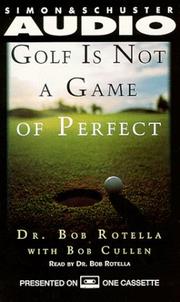
The most widely read sports-psychology book in golf, it teaches beginners and improvers alike how to manage expectations, commit to shots, and build a confident mindset — essential reading before the more advanced mental frameworks that follow.

Gallwey's concept of Self 1 vs. Self 2 — the analytical mind versus the instinctive body — gives golfers a deeper psychological model for quieting self-interference and trusting the swing they have already built in earlier stages.
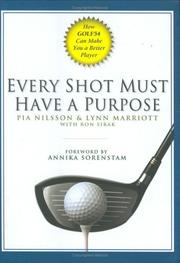
Synthesizes swing technique and mental strategy into a complete on-course process (Think Box / Play Box), tying together all previous stages into a unified, round-by-round performance routine.
Discussion
Keep reading
Paths that share books, cover the same subject, or open a related topic.