The Best Data Warehousing Books, in Order
This curriculum builds a rigorous, end-to-end mastery of data warehousing starting from the two foundational philosophies (Kimball and Inmon), then advancing through dimensional modeling craft, ETL engineering, and finally large-scale analytics and modern architectures. Because the learner starts at an intermediate level, early-stage books are still foundational but move quickly into practical application, with each stage unlocking the vocabulary and mental models needed for the next.
The Two Philosophies — Kimball vs. Inmon
IntermediateUnderstand the two dominant schools of data warehousing design, their trade-offs, and when to apply each — giving you a conceptual map for everything that follows.
▸ Study plan for this stage
Pace: 4–5 weeks, ~40–50 pages/day (focus on Part 1 and Part 2; skim dimensional modeling examples in later parts for now)
- Dimensional modeling as the core design philosophy: facts, dimensions, and their relationships
- Star schema and snowflake schema structures and when each is appropriate
- Conformed dimensions and the role of the bus architecture in multi-subject data warehouses
- The Kimball bottom-up approach: building subject-area data marts that integrate into an enterprise warehouse
- Slowly Changing Dimensions (SCDs) and how to handle dimension attribute changes over time
- Fact table design: additive vs. non-additive measures and grain determination
- The trade-offs between Kimball's dimensional approach and the normalized Inmon approach (even though Inmon's work isn't in this stage, Kimball's philosophy defines itself against it)
- What are the three core components of a dimensional model, and how do facts and dimensions differ in structure and purpose?
- How does a star schema differ from a snowflake schema, and what are the practical trade-offs between them?
- What is a conformed dimension, and why is it critical for building an integrated enterprise warehouse from separate data marts?
- Explain the Kimball bus architecture: how do subject-area data marts connect, and what role does the dimensional bus matrix play?
- What is a Slowly Changing Dimension, and what are the main strategies (Type 1, 2, 3) for handling dimension changes?
- How do you determine the grain of a fact table, and why is this decision foundational to dimensional design?
- Map a simple business process (e.g., retail sales, customer orders) into a star schema: identify facts, dimensions, and their relationships on paper or in a tool like Lucidchart
- Design a conformed dimension (e.g., Customer, Date, Product) that could be shared across two different data marts (e.g., Sales and Returns)
- Create a Slowly Changing Dimension example: document how you'd track a customer's address change over time using Type 1, Type 2, and Type 3 approaches, and explain the trade-offs
- Build a dimensional bus matrix for a multi-subject warehouse (e.g., Sales, Inventory, HR): list subject areas, facts, and shared dimensions to show integration points
- Critique a normalized (Inmon-style) schema you find online or create yourself: remodel it as a Kimball star schema and document the differences in query complexity and storage
- Implement a small fact and dimension table in SQL or a database tool, then write queries that join them—observe how the dimensional structure simplifies analytics compared to a normalized design
Next up: This stage equips you with Kimball's dimensional philosophy and design patterns, providing the conceptual foundation and practical toolkit needed to evaluate the Inmon approach, understand their trade-offs, and make informed architectural decisions for real-world projects in the next stage.
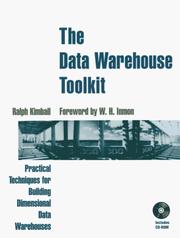
The definitive guide to dimensional modeling and the Kimball bottom-up approach. Reading this first establishes the core vocabulary — facts, dimensions, star schemas, slowly changing dimensions — that every subsequent book assumes you know.
The canonical statement of the Inmon top-down, normalized 3NF approach. Reading it immediately after Kimball lets you directly compare the two philosophies and understand the architectural debates that shape real-world warehouse design.
Dimensional Modeling Mastery
IntermediateGo beyond introductory patterns to handle complex, real-world modeling scenarios: multi-valued dimensions, heterogeneous schemas, enterprise bus matrices, and advanced SCD techniques.
▸ Study plan for this stage
Pace: 8–10 weeks, ~40–50 pages/day (mix of dense technical content and case studies; allow extra time for re-reading complex modeling sections)
- Multi-valued dimensions and bridge tables: handling many-to-many relationships between facts and dimensions without denormalization
- Slowly Changing Dimensions (SCD) Types 1–5: when and how to apply each type for different business requirements and historical tracking needs
- Heterogeneous product dimensions and role-playing dimensions: modeling diverse product lines and multiple foreign key relationships to the same dimension
- The Kimball Bus Matrix: designing conformed dimensions and fact tables across the enterprise to enable integrated analytics
- Conformed dimensions and dimension conformance: ensuring consistency across multiple data marts and enabling drill-across queries
- Junk dimensions and degenerate dimensions: efficiently handling low-cardinality flags and attributes without cluttering the fact table
- Agile dimensional modeling techniques: iterative design, stakeholder collaboration, and incremental schema evolution in fast-moving environments
- Factless fact tables and aggregate fact tables: specialized fact table patterns for event tracking and performance optimization
- When would you use a bridge table instead of a multi-valued dimension, and what are the trade-offs in query complexity and storage?
- How do you decide between SCD Type 2 (slowly changing dimensions with versioning) and SCD Type 3 (current and previous values) for a real business scenario?
- What is a conformed dimension, and why is it critical for building an enterprise bus matrix that supports drill-across analytics?
- How would you model a heterogeneous product dimension where different product types have completely different attributes?
- What is the purpose of a factless fact table, and give an example of when you would use one instead of a traditional fact table?
- Describe the Agile dimensional modeling approach: how does it differ from traditional waterfall design, and what are the benefits and risks?
- Design a multi-valued dimension with a bridge table for a retail scenario (e.g., products with multiple categories); write the DDL and a sample query that correctly aggregates sales across categories without double-counting
- Create a complete SCD Type 2 implementation for a customer dimension: write the INSERT/UPDATE logic, design the surrogate key strategy, and query historical snapshots at specific dates
- Build an enterprise bus matrix for a financial services company with at least 3 data marts (Accounts, Transactions, Customers); identify conformed dimensions and map fact tables to each mart
- Model a heterogeneous dimension scenario (e.g., different insurance product types with unique attributes); design the schema and explain your choice (single table with NULLs, separate tables, or hybrid)
- Design a factless fact table for a student enrollment system; include coverage dimensions (Student, Course, Term, Instructor) and explain what questions it answers
- Refactor an existing star schema using Agile principles: identify one dimension that needs to evolve, propose an incremental change, and document the impact on existing queries and ETL
Next up: This stage equips you with enterprise-scale dimensional modeling patterns and the discipline to design schemas that scale across multiple business processes; the next stage will focus on implementation, performance tuning, and operational best practices to bring these designs into production.
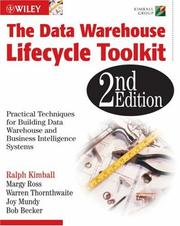
Extends the Toolkit by covering the full project lifecycle — requirements, architecture, design, deployment — turning modeling knowledge into end-to-end delivery skills. Best read after the Toolkit so you can map lifecycle phases to patterns you already know.

Introduces BEAM★, a collaborative, story-driven technique for eliciting and documenting dimensional models. Provides a practical counterpoint to the more prescriptive Kimball lifecycle and prepares you for iterative, stakeholder-driven projects.
ETL Engineering
IntermediateDesign and build robust, maintainable ETL/ELT pipelines — mastering data profiling, cleansing, loading patterns, and pipeline orchestration that feed the warehouse reliably.
▸ Study plan for this stage
Pace: 8–10 weeks, ~40–50 pages/day (alternating between both books; start with Kimball's toolkit for foundational patterns, then layer in Reis's engineering principles)
- ETL vs. ELT paradigms: when to extract-transform-load vs. load-transform-extract, and trade-offs in modern cloud environments
- Data profiling and quality assessment: discovering data patterns, anomalies, and metadata to inform cleansing rules
- Dimensional modeling for ETL: designing conformed dimensions, slowly changing dimensions (SCD Types 0–5), and fact table grain to optimize pipeline logic
- Cleansing and transformation patterns: handling nulls, duplicates, type conversions, and business rule application at scale
- Loading strategies and patterns: full loads, incremental loads, upserts, and late-arriving facts in warehouse contexts
- Pipeline orchestration and scheduling: dependency management, error handling, idempotency, and monitoring for reliable production pipelines
- Data lineage and metadata management: tracking source-to-target mappings, transformation logic, and data provenance for governance
- Performance and scalability: partitioning, parallelization, and resource optimization for high-volume ETL workloads
- When would you choose ELT over traditional ETL, and what are the implications for data quality and transformation logic placement?
- Describe the steps of a data profiling exercise and explain how profiling results inform your cleansing and transformation strategy.
- What is a slowly changing dimension, and how do you implement SCD Type 2 logic in an ETL pipeline to track historical changes?
- Design an incremental load strategy for a fact table that handles late-arriving facts and ensures idempotent reruns without duplicating data.
- How would you architect a pipeline orchestration solution that manages dependencies, retries, and monitoring across multiple ETL jobs?
- Explain the difference between conformed dimensions and non-conformed dimensions, and why dimension conformance matters for enterprise analytics.
- Profile a messy real-world dataset (CSV or database table): identify missing values, outliers, cardinality, and data type mismatches; document findings in a profiling report.
- Build a full ETL pipeline in your tool of choice (SQL, Python, Talend, dbt, or cloud-native service) that extracts from a source, applies 3–5 cleansing rules, and loads into a dimensional model.
- Implement a slowly changing dimension (SCD Type 2) for a customer dimension, including effective-date tracking and historical snapshots; test with dimension updates.
- Design and code an incremental load for a fact table that detects new/changed source records, handles late-arriving facts, and remains idempotent across reruns.
- Create a data lineage diagram for a 3–4 table ETL pipeline, mapping source columns to target columns and documenting all transformation logic.
- Set up a simple pipeline orchestration workflow (using Airflow, dbt, or similar) with 3+ dependent jobs, error handling, and retry logic; test failure scenarios.
Next up: This stage equips you with the engineering discipline and hands-on patterns to build reliable, maintainable pipelines; the next stage will likely focus on advanced warehouse architecture, optimization, and analytics design—building on the assumption that data is flowing cleanly and consistently into the warehouse.
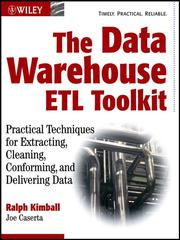
The most comprehensive treatment of ETL patterns written specifically for dimensional warehouses. Covers extraction, cleaning, conforming, and loading in depth; reading it after the modeling stages means every pattern maps directly to structures you already understand.
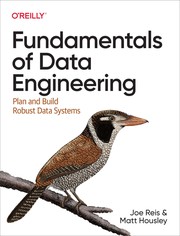
Bridges classic ETL thinking with modern ELT, cloud pipelines, and the data engineering lifecycle. Provides the contemporary framing needed before moving into large-scale analytics platforms.
Analytics at Scale & Modern Architectures
ExpertApply data warehousing principles to massive datasets and modern cloud/distributed platforms, and understand emerging architectural patterns like the data lakehouse and data mesh.
▸ Study plan for this stage
Pace: 8–10 weeks, ~40–50 pages/day (with deep dives on architecture chapters)
- Distributed systems fundamentals: consistency models (ACID, BASE, eventual consistency) and their tradeoffs in data warehouses
- Scalability patterns: horizontal vs. vertical scaling, sharding strategies, and partitioning schemes for massive datasets
- Replication and fault tolerance: master-slave, multi-leader, and leaderless architectures for high availability
- Storage engines and data formats: LSM trees, B-trees, columnar formats, and their impact on analytical query performance
- Stream processing vs. batch processing: event sourcing, change data capture (CDC), and real-time analytics pipelines
- Query optimization at scale: indexing strategies, query planning, and cost-based optimization for distributed queries
- Modern architectural patterns: applying DDIA principles to data lakehouses, data meshes, and cloud-native platforms
- How do different consistency models (strong vs. eventual) affect data warehouse design decisions, and when should you choose each?
- What are the key differences between sharding by range, hash, and directory-based approaches, and how do they impact query performance at scale?
- How do LSM trees and B-trees differ in their write/read performance characteristics, and which is better suited for analytical workloads?
- What role does change data capture (CDC) and event sourcing play in building real-time data warehouses, and what are the architectural tradeoffs?
- How can you apply DDIA's distributed systems principles to design a data lakehouse or data mesh architecture?
- What are the advantages and disadvantages of stream processing vs. batch processing for analytics, and how do you choose between them?
- Design a sharding strategy for a fact table with 100+ billion rows across 5 data centers; document your partitioning key choice and justify it against query patterns
- Implement a simple change data capture (CDC) pipeline using logs or event streams; capture inserts/updates from a source table and apply them to a warehouse replica
- Build a columnar storage simulator: compare query performance (aggregations, filters) between row-oriented and columnar layouts on a sample dataset
- Architect a data lakehouse design document: specify consistency guarantees, replication strategy, and failure recovery for a 10 PB+ dataset
- Analyze a real distributed query plan (from Snowflake, BigQuery, or Redshift documentation); identify bottlenecks and propose optimization strategies
- Design a hybrid batch + stream processing pipeline for a real-time analytics use case; justify your choice of tools and consistency model
Next up: This stage equips you with the distributed systems and architectural foundations needed to evaluate, design, and implement modern data warehousing solutions at enterprise scale—preparing you to tackle specialized topics like specific cloud platforms, advanced optimization techniques, or organizational data strategy in subsequent stages.

Provides deep systems-level intuition — storage engines, replication, partitioning, stream processing — that explains why cloud warehouses behave the way they do at scale. Essential reading before tackling platform-specific analytics engineering.
Discussion
Keep reading
Paths that share books, cover the same subject, or open a related topic.