Best Books on Cubism, in Reading Order
This curriculum takes an intermediate learner from a solid conceptual grounding in Cubism's origins through its analytic and synthetic phases, into its theoretical underpinnings, and finally into its vast historical legacy. Each stage builds the visual vocabulary and critical language needed for the next, moving from accessible narrative histories toward dense primary theory and broad art-historical synthesis.
Foundations & Origins
IntermediateUnderstand the historical moment, key players, and visual logic that gave birth to Cubism — establishing a shared vocabulary for everything that follows.
▸ Study plan for this stage
Pace: 4–5 weeks, ~40–50 pages/day (approximately 250–300 pages total)
- Braque's artistic evolution from Fauvism through early Cubism and the catalysts for his stylistic shifts
- The historical and cultural context of early 20th-century Paris and its influence on modernist innovation
- The visual language of Cubism: multiple viewpoints, fragmentation, and the deconstruction of perspective
- Braque's collaborative relationship with Picasso and how dialogue between artists shaped Cubist development
- The role of African and non-Western art in disrupting European representational traditions
- Braque's technical innovations: papier collé, use of materials, and the integration of text and abstraction
- The distinction between Analytic and Synthetic Cubism through Braque's practice
- Braque's intellectual framework: how he theorized his own work and articulated Cubism's philosophical underpinnings
- How did Braque's early exposure to Fauvism and Post-Impressionism prepare him for the radical break that Cubism represented?
- What specific historical and social conditions in early 20th-century Paris made Cubism possible and necessary?
- How did the encounter with African and non-Western art influence Braque's (and Cubism's) rejection of Renaissance perspective?
- What was the nature of Braque's collaboration with Picasso, and how did their dialogue advance Cubist theory and practice?
- How do Analytic and Synthetic Cubism differ in their visual strategies, and what role did Braque play in developing each phase?
- What technical innovations did Braque introduce (particularly papier collé), and how did these expand what painting could do?
- How did Braque articulate the intellectual and philosophical logic behind Cubism in his own writings and statements?
- How does understanding Braque's life and choices position you to recognize Cubism's influence on subsequent modernist movements?
- Create a visual timeline mapping Braque's stylistic phases (Fauvism → early Cubism → Analytic → Synthetic), annotating key works and dates from the biography
- Write a 500-word analytical essay on one pivotal moment in Braque's career (e.g., his first encounter with African sculpture, his meeting with Picasso, or his invention of papier collé) and its impact on Cubist development
- Collect reproductions of 5–6 Braque paintings spanning different periods covered in the book; create a visual analysis document explaining how each one demonstrates concepts from the reading
- Conduct a close reading of one of Braque's own theoretical statements or interviews cited in Danchev's biography; write a 300-word reflection on what it reveals about his artistic philosophy
- Sketch or collage your own small experimental work inspired by Braque's papier collé technique, documenting your process and how it deepens your understanding of his innovations
- Create a character map or relationship diagram showing Braque's key connections (Picasso, dealers, critics, other artists) and annotate how each relationship influenced his artistic development
Next up: This stage establishes the visual vocabulary, historical foundations, and key figures of Cubism through Braque's biography, preparing you to engage with deeper formal analysis, the broader Cubist movement beyond Braque, and how Cubism's innovations reverberated through subsequent avant-garde movements.
Richardson's magisterial biography places Analytic Cubism inside Picasso's lived experience, studio relationships, and rivalry with Braque. Reading this first gives the human drama and chronological spine the rest of the curriculum hangs on.

Braque is often overshadowed by Picasso; Danchev's biography corrects that imbalance and reveals how the two artists' collaboration was truly co-invented. Reading it immediately after Richardson lets you triangulate the same events from both sides.
Analytic Cubism & the Collage Breakthrough
IntermediateGrasp the formal mechanics of Analytic Cubism — faceting, multiple viewpoints, compressed space — and understand how collage and Synthetic Cubism transformed those ideas into a new pictorial language.
▸ Study plan for this stage
Pace: 4–5 weeks, ~25–30 pages/day, with 2–3 days per week dedicated to visual analysis and note-taking
- Faceting and fragmentation: how Analytic Cubism breaks down objects into geometric planes and reassembles them to show multiple viewpoints simultaneously
- Multiple viewpoints and simultaneity: the rejection of single-point perspective in favor of depicting an object from multiple angles at once
- Compressed and flattened space: how Cubist painters collapse depth and push forms toward the picture plane
- The role of the viewer's eye: understanding how Cubism demands active participation from the viewer to reconstruct meaning
- Collage and material innovation: how papier collé and Synthetic Cubism introduced real materials and simplified forms, moving away from pure abstraction
- Picasso and Braque's dialogue: recognizing how these two artists developed Cubism in tandem, each pushing the other's innovations
- The transition from Analytic to Synthetic Cubism: how collage techniques and brighter colors marked a shift toward legibility and decorative surface
- What is faceting in Analytic Cubism, and how does it differ from traditional perspective in representing three-dimensional objects?
- How do Picasso and Braque use multiple viewpoints in a single composition, and what effect does this have on the viewer's experience?
- What role does compressed space play in Analytic Cubist paintings, and how does it challenge Renaissance spatial conventions?
- How did the introduction of collage and papier collé transform Cubist practice, and what new possibilities did it open?
- What are the key differences between Analytic Cubism and Synthetic Cubism in terms of form, color, and materials?
- According to Apollinaire, what is the relationship between Cubism and the viewer's active participation in constructing meaning?
- Create a detailed visual analysis chart comparing one Picasso and one Braque painting from the Analytic Cubist period, noting how each artist handles faceting, viewpoint, and spatial compression
- Sketch your own faceted still life (using simple objects like a bottle or guitar) from multiple viewpoints, practicing how to integrate 3–4 different angles into a single composition
- Make a collage using torn paper, magazine cutouts, and drawn elements to create a simple subject (a face, instrument, or fruit), experimenting with how Synthetic Cubism balances recognizability with abstraction
- Write a 500-word response to Apollinaire's theoretical statements about Cubism in both texts, explaining how his ideas illuminate the formal choices in specific Picasso or Braque works
- Create an annotated timeline tracing the evolution from Analytic to Synthetic Cubism (1907–1914), marking key works, innovations (faceting, collage, color shifts), and the contributions of both artists
- Photograph or sketch a familiar object from 6–8 different angles, then create a composite drawing that synthesizes these views into a single Cubist-inspired image
Next up: This stage establishes the formal vocabulary and theoretical foundation of Cubism's revolutionary approach to representation, preparing you to explore how these principles influenced Futurism, Constructivism, and abstraction, and how Cubism reshaped twentieth-century art beyond painting.
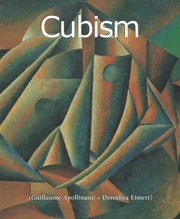
Apollinaire's 1913 text is the first major theoretical defense of Cubism, written by the movement's own poet-champion. Reading it here anchors the analytic phase in its own contemporary rhetoric before modern scholars reinterpret it.
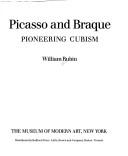
The catalogue for MoMA's landmark 1989 exhibition remains the definitive scholarly account of the analytic-to-synthetic arc. Rubin's close formal analysis of individual works is exactly what an intermediate reader needs to move from biography into visual analysis.

A short, essential primary source that profiles Picasso, Braque, Léger, and others in Apollinaire's own poetic-critical voice. Reading it after Rubin lets you test the artists' self-image against the scholarly record.
Theory & Intellectual Context
ExpertEngage with the philosophical and semiotic theories that explain why Cubism was not merely a style but a rupture in how images mean — connecting it to phenomenology, linguistics, and the broader avant-garde.
▸ Study plan for this stage
Pace: 4–5 weeks, ~25–30 pages/day, with 2–3 days per week dedicated to synthesis and note-taking
- Cubism as epistemological rupture: how Cubism fundamentally altered the relationship between representation, perception, and meaning in visual art
- The rejection of linear perspective and monocular vision: understanding how Cubism dismantled Renaissance optical conventions to embrace multiple simultaneous viewpoints
- Fragmentation and simultaneity as semiotic strategies: how the breakdown of form into facets and planes creates new systems of visual meaning-making
- Cubism's connection to phenomenological philosophy: the shift from depicting objects as they appear to depicting how consciousness encounters and constructs objects
- Language and visual syntax: how Cubist composition parallels linguistic structures—syntax, grammar, and the arbitrary relationship between sign and referent
- The avant-garde impulse: situating Cubism within the broader project of artistic and intellectual modernism as a challenge to bourgeois aesthetic conventions
- Materiality and abstraction: the tension between the painting's physical surface and the conceptual space it opens up
- Historical periodization and the Cubist epoch: understanding the chronological, social, and artistic conditions that made Cubism possible and necessary
- How does Cooper argue that Cubism represents a break from Renaissance perspective, and what philosophical implications does this break carry?
- What role does simultaneity play in Cubist representation, and how does it differ from earlier attempts to depict multiple viewpoints in art history?
- How can Cubism be understood as a semiotic system—that is, how do fragmented forms and multiple planes function as signs that generate meaning?
- What connections does Cooper draw between Cubism and phenomenological approaches to perception and consciousness?
- How does the Cubist treatment of the picture plane and surface materiality challenge the illusionistic space of traditional painting?
- In what ways does Cubism participate in the broader avant-garde project, and what does it share with or differ from other modernist movements of its era?
- Create a detailed timeline of the Cubist epoch as presented by Cooper, marking key artists, works, and theoretical shifts; annotate with the philosophical ideas that correspond to each period
- Select three Cubist paintings discussed in the book and write a 500-word analysis of each, explaining how fragmentation and multiple viewpoints function as meaning-making strategies rather than mere stylistic choices
- Diagram the visual syntax of a Cubist composition: map how planes, lines, and forms relate to one another as you would map grammatical relationships in a sentence; reflect on what this reveals about Cubism's semiotic logic
- Conduct a comparative visual analysis: place a Renaissance perspective painting alongside a Cubist work and write an essay exploring how each constructs spatial and perceptual meaning differently
- Develop a glossary of key theoretical terms from Cooper's text (e.g., simultaneity, faceting, phenomenological perception) with definitions grounded in specific passages and artworks
- Write a philosophical reflection (800–1000 words) on how Cubism's rejection of monocular vision relates to modern theories of consciousness and embodied perception
Next up: By establishing Cubism as a philosophical and semiotic rupture rooted in specific historical and intellectual conditions, this stage prepares you to examine how Cubist principles were adopted, adapted, and contested by subsequent movements—whether through abstraction, Constructivism, or Surrealism—and to understand Cubism's lasting impact on how we theorize representation itself.
Cooper's rigorous art-historical survey distinguishes 'true' Cubism from its many imitators and situates the movement within the full sweep of early 20th-century modernism. It provides the taxonomic clarity needed before tackling denser theory.
Cottington examines Cubism's social and ideological dimensions — its relationship to mass culture, nationalism, and the market — adding the critical-theory layer that Cooper's formalism leaves aside.
Legacy & Long Influence
ExpertTrace how Cubism's formal and conceptual innovations radiated outward into abstraction, architecture, literature, and global modernism across the 20th century.
▸ Study plan for this stage
Pace: 4–5 weeks, ~40–50 pages/day (with 2–3 days per week for synthesis and exercises)
- Cubism as the foundational rupture that enabled abstraction: how the deconstruction of perspective in Cubism created conceptual space for non-representational art
- The formal vocabulary Cubism bequeathed to modernism: fragmentation, multiple viewpoints, flattened picture planes, and geometric reduction as tools adopted across disciplines
- Picasso's role as inventor and perpetual innovator: how his restless experimentation with Cubist principles influenced not just painting but sculpture, collage, and mixed media
- Cubism's radiation into architecture and design: how architects like Le Corbusier and the Constructivists translated Cubist spatial thinking into built form
- Literary and poetic modernism's debt to Cubism: simultaneity, fragmentation, and non-linear narrative as Cubist concepts applied to language and form
- Global modernism and the internationalization of Cubist ideas: how Cubism became a lingua franca for avant-gardes in Russia, Mexico, Germany, and beyond
- The distinction between Analytic and Synthetic Cubism and their divergent legacies: how each phase opened different pathways for subsequent artistic movements
- How did Cubism's deconstruction of single-point perspective create the conceptual conditions for abstract art to emerge?
- What specific formal innovations from Cubism (fragmentation, multiple viewpoints, flattening) were adopted by architects, designers, and writers, and how did they adapt these tools to their own media?
- How did Picasso's continuous evolution within and beyond Cubism shape the movement's legacy differently than Braque's or other Cubists' contributions?
- What is the relationship between Analytic Cubism and Synthetic Cubism, and how did each phase influence different branches of modernism?
- How did Cubist ideas spread globally, and what forms did they take in Russian Constructivism, Mexican Muralism, or German Expressionism?
- How do Barr's and Karmel's arguments differ in explaining Cubism's role as a catalyst for 20th-century modernism?
- Create a visual genealogy: map how one Cubist formal device (e.g., fragmentation, multiple viewpoints) flows from Picasso or Braque into at least three different artistic movements or disciplines (architecture, literature, sculpture). Use images, diagrams, and brief annotations.
- Close-read a passage from Barr's 'Cubism and Abstract Art' that traces the lineage from Cubism to abstraction. Write a 500-word analysis of how Barr constructs this argument and what evidence he marshals.
- Analyze a Picasso work from the Cubist period and a later work (post-Cubist or Synthetic Cubist phase) side by side using Karmel's framework. Write 300–400 words on how Picasso's thinking evolved and what this reveals about Cubism's internal tensions.
- Select one non-painting discipline (architecture, literature, sculpture, or design) and research how Cubist principles were explicitly adopted or adapted. Write a 600-word essay grounding your analysis in specific examples and connecting back to concepts from Barr and Karmel.
- Create a comparative chart: list 5–7 key Cubist innovations (formal, conceptual, material) and track how each appears in at least two subsequent movements or disciplines. Include citations from the texts.
- Conduct a 'translation' exercise: take a Cubist painting and write a short poem or prose passage that captures its fragmentation, simultaneity, or multiple perspectives. Reflect on what gets lost and gained in moving from visual to linguistic form.
Next up: This stage establishes Cubism as the conceptual and formal bedrock of modernism, preparing you to examine how specific 20th-century movements (Constructivism, Surrealism, Abstraction, etc.) either built upon, rejected, or radically transformed Cubist principles in their own contexts.

Barr's 1936 MoMA catalogue — with its famous genealogical diagram — is the foundational document showing how Cubism seeded virtually every subsequent modernist movement. Reading it here, after the theory stage, lets you evaluate his claims critically.

Karmel uses newly discovered photographs of works-in-progress to reconstruct Picasso's actual working process, offering a revisionist close-reading that synthesizes biography, formal analysis, and influence into a single argument — the ideal capstone.
Discussion
Keep reading
Paths that share books, cover the same subject, or open a related topic.