Pablo Picasso: The Best Books to Read, in Order
Picasso produced more work than any artist of the twentieth century, changed direction repeatedly, and left a personal record that is hard to read charitably. This path takes the career in four passes: a short survey to get the shape of it, then the pictures that made him, then the people who lived with him, then the criticism that argues about what the work means. Guernica gets a stage of its own because two whole books are devoted to that one canvas.
Get the shape of the career
BeginnerHold the whole arc — Blue and Rose periods, cubism, neoclassicism, Guernica, the late work — in your head before going deep on any part of it.
▸ Study plan for this stage
Pace: Three weeks for about 740 pages, and half the work is looking rather than reading. Hilton's Picasso is 288 pages in the Thames and Hudson World of Art series, catalogued under the bare title, and is a short illustrated survey of the whole career - read it first and quickly, purely to get the chronol
- The periods as a working chronology - Blue, Rose, the African-influenced work, analytic and synthetic cubism, neoclassicism, surrealist-adjacent 1930s, the war years, the late work - and the fact that the labels are a convenience rather than a description
- That Picasso changed direction repeatedly and deliberately, which is the fact any account of him has to explain
- Berger's thesis: success as a form of isolation, and the argument that after a certain point the work had no world to answer to
- The vertical invader idea - Picasso as an outsider to the tradition he entered - and what Berger builds on it
- Les Demoiselles d'Avignon as a hinge, and Unger's case for reading the early career as leading to it
- The Barcelona and Bateau-Lavoir years: poverty, the circle around him, and the material conditions of the early work
- That the personal record is hard to read charitably, which every later stage on this path has to handle rather than avoid
- Put the periods in order with approximate dates and one painting each, without checking.
- What exactly is Berger's charge against the later Picasso, and what evidence does he offer for it?
- Where does Hilton's account of a given period differ from Berger's assessment of the same work?
- Why does Unger organise a biography of the young Picasso around one painting rather than chronologically?
- Which claims in these three books are about the pictures, and which are about the man? Are the authors consistent about the difference?
- Build a twenty-image chronology from the online collections - one work per year across the whole career - and sort it by eye into date order before checking the labels. Record where you were wrong by more than five years. The mistakes tell you which periods you cannot yet see.
- Read Berger with Hilton's plates open, and for every judgement Berger makes about a specific painting, look at that painting before accepting or rejecting the judgement. Write down three where you think he is wrong and why. Berger invites the argument and the path is better for your having had it early.
- Take Unger's account of the making of Les Demoiselles d'Avignon and write a one-page summary of the story as he tells it. Keep the page: the next stage puts the documentary evidence for the same events in front of you, and comparing a narrative to its evidence base is the most useful thing you can do at this point.
- Write a paragraph on what you currently think happened to Picasso's work after about 1930. Date it and put it aside. You will revise it twice more before the path ends.
Next up: You have the chronology and one strong hostile reading of it; the next stage goes to the pictures themselves, with the technical and documentary evidence behind them.
Published in the Thames and Hudson World of Art series and catalogued under the bare title, this is a short illustrated survey of the whole career. Read it first purely to get the chronology straight; the interpretations here get argued with later in the path.
Berger's 1965 polemic asks the question the rest of the literature dances around: what happened to a painter after he became rich, famous and cut off from the world that produced him. It is short, hostile in places, and the best thing to read second because it stops the survey from feeling like a victory lap.

A narrative biography of the young Picasso built around a single painting, Les Demoiselles d'Avignon. It carries the Barcelona and early-Paris years better than a survey can and sets up the cubism stage.
The early work and the invention of cubism
IntermediateFollow the specific pictures — the blue paintings, the Demoiselles, the years with Braque — closely enough to see why the break with representation happened when it did.
▸ Study plan for this stage
Pace: Four weeks for about 980 pages, and these are exhibition catalogues rather than books to read in an armchair - large, plate-heavy, and designed to be worked through with the images. The Brummel, Frank, McCully, Valles and Webster-Cook volume is 244 pages and is the catalogue of the 2021 Art Gallery
- Technical imaging as evidence: X-radiography and infrared reflectography showing reused canvases and abandoned compositions, and what a painted-over picture tells you about a working method
- The Blue Period as a set of decisions rather than a mood - what the recent scholarship established about how those pictures were actually made
- The preparatory sketchbooks for Les Demoiselles d'Avignon, and how a documented sequence of studies changes the story of a picture said to have arrived whole
- The specific interpretive disputes about the Demoiselles - the sources, the two right-hand figures, the removed sailor and medical student - and what the documents settle and do not
- Analytic cubism as a collaboration: what the 1989 exhibition demonstrated by hanging Picasso and Braque canvas against canvas, month by month
- Passage, faceting, the shallow relief space and the near-monochrome palette - the concrete vocabulary of what analytic cubism actually does to a picture surface
- The move to synthetic cubism, papier colle and collage, and the change from taking a subject apart to building one out of found material
- The difference between reading an argument about a painting and reading the evidence for it, which is the whole reason this stage is made of catalogues
- What did the technical imaging in the Blue Period catalogue reveal, and what does it change about how those pictures were made?
- Trace the Demoiselles through the sketchbook sequence: what was in the composition early that is not in the final canvas, and when did it go?
- In the 1989 pairings, where can you see one painter answering the other within weeks? Name a specific pair.
- Define passage and faceting in your own words, with a named painting for each.
- What changes when collage arrives - not stylistically but in what the picture is claiming to be?
- Work through the Picasso and Braque catalogue in date order rather than by artist, covering the captions and guessing which canvas is whose before checking. Keep score. Most readers are close to chance for the 1911 works, which is the exhibition's argument demonstrated on your own eye.
- Take the Blue Period catalogue's technical images and, for each painting where an underlying composition was found, write down what the reuse suggests about the circumstances - poverty, dissatisfaction, or a change of mind. Then check what the catalogue essays conclude.
- Lay the Demoiselles studies out in sequence - the MoMA volume reproduces them - and write a one-line note on what changes at each step. Then compare the sequence against the one-page narrative you wrote from Unger. The gap between a good story and a documented process is the lesson of this stage.
- Pick one analytic cubist painting and describe it for ten minutes in writing without using the words fragment, shatter or multiple viewpoints. The exercise forces you into the actual vocabulary the catalogue supplies.
Next up: With the pictures and their evidence in hand, the path turns to the people who were in the room when they were made - and to a record that is much harder to read charitably.

The catalogue of the 2021 Art Gallery of Ontario and Phillips Collection exhibition, which used technical imaging to show what Picasso painted over. Open Library files it under the bare display title 'Picasso'; the published title is 'Picasso: Painting the Blue Period'.
The Museum of Modern Art's Studies in Modern Art volume on the single most argued-about painting of the century, with the sketchbooks and the documentary record. Read it directly after Unger, who tells the story; this shows the evidence.
The 1989 MoMA exhibition catalogue that hung the two painters side by side and made the case that analytic cubism was a genuine collaboration. Catalogued as 'Picasso and Braque'. Nothing else makes the year-by-year development this legible.
The man, from people who were in the room
IntermediateRead the primary and biographical record, and form your own view of the gap between the work and the conduct.
▸ Study plan for this stage
Pace: Six weeks for about 1,740 pages, and the stage with the most mixed evidence on this path. Richardson's A Life of Picasso is 548 pages in our record, but note what that record is: this is a multi-volume work, with volumes covering 1881-1906, 1907-1917 and 1917-1932 plus an unfinished final volume, al
- The difference in kind between a biographer working from archives, a participant writing a memoir decades later, and a journal kept at the time
- What Gilot is unusually good on: studio practice, the sequence of a working day, how paintings actually got made, and the fact that she was a painter herself and knew what she was watching
- The suppression attempts against Life With Picasso, and what a legal record of an attempt to stop a book tells you about it
- Olivier's journals as the only contemporaneous account of the Bateau-Lavoir years - the same period the Blue Period catalogue and Unger cover from the outside
- Richardson's access and Richardson's position: the fullest documentary account, written by someone who knew his subject's circle and is not a neutral party either
- Huffington's charge and the dispute over her sources, and how to read a book whose thesis may be right and whose evidence is challenged
- The interpretive problem the whole stage poses: whether and how the treatment of the people around him bears on the pictures
- Reading a memoir for what it is reliable about - scenes witnessed, words heard - as distinct from what it is unreliable about, which is motive and chronology
- What does Gilot describe about the making of a painting that no art historian on this path describes?
- Where do Olivier's journals and Richardson's account of the same years differ, and which do you believe on each point?
- What specifically is disputed about Huffington's sourcing, and does the dispute touch her central claim or her details?
- Does the biographical material change how you see any specific painting? Name one and say exactly how.
- Richardson knew Picasso's circle. Where can you see that access shaping the account, for better and for worse?
- Take one year - 1907 or 1936 or 1943 - and write out what each of these four books says happened in it, in four short paragraphs on one page. The disagreements between an archive, a memoir, a journal and a polemic about a single year is the most efficient lesson in evidence this path offers.
- Read Gilot's descriptions of specific paintings being made with images of those paintings in front of you. She is describing pictures you have already looked at in stage two, and the combination is the closest thing available to watching the work happen.
- Mark every claim in Huffington that you can check against Richardson, and record whether it is confirmed, contradicted or unaddressed. Do at least twenty. The resulting proportion is a fairer verdict on the book than either its supporters or its critics offer.
- Write a page on the question the stage is built around: does what you have read here change how you look at the pictures, and if so, which pictures and how. Date it, and set it beside the paragraph you wrote in stage one.
Next up: One canvas has two entire books devoted to it, and it is the painting where the life, the politics and the pictures are least separable - which is why it gets a stage of its own.
The standard biography, and the reason most later books exist. Note that this is a multi-volume work — volumes covering 1881-1906, 1907-1917, 1917-1932 and the unfinished final volume all catalogue under this one title, so treat the record as the entry point to the set rather than to a single book.

Gilot lived with Picasso for a decade, was a painter herself, and wrote the memoir he tried three times to suppress. The most useful single primary source on how he worked and how he treated people, and the reason to read it here rather than first is that you now know the paintings she is describing.
Olivier's Bateau-Lavoir journals, covering the poor years before the money — the same period Unger and the Blue Period catalogue cover from the outside. Published as 'Loving Picasso: The Private Journals of Fernande Olivier'.

The hostile biography, and the one that put the treatment of the women in his life at the centre of the account. It is contested on sourcing and Richardson attacked it directly; read it as the case for the prosecution, with Richardson in hand as the corrective.
Guernica
IntermediateTake one painting all the way down — its commission, its making, its exile, its return to Spain, and its afterlife as the most reproduced political image of the century.
▸ Study plan for this stage
Pace: Three weeks for about 760 pages, on one painting. Van Hensbergen's Guernica is 460 pages and is a biography of the picture rather than of the painter - the bombing of the town in 1937, the Spanish pavilion in Paris, the decades at MoMA, and the return to Madrid after Franco's death. It is the narrat
- The bombing of Guernica in April 1937 as an event, and the commission Picasso already held for the Spanish pavilion
- Dora Maar's photographs of the canvas at successive states - an almost unique record of a major painting being changed, and the basis of everything Chipp does
- The iconography and its disputes: the bull, the horse, the lamp and the electric light, the fallen warrior, and the fact that Picasso declined to fix their meaning
- The removal of the raised fist and other changes across states, and what a deliberate reduction of explicit political symbolism does to a political painting
- Scale, monochrome and the mural format: decisions about how the picture is seen before any decision about what it depicts
- The canvas's own history as an object - the pavilion, the tour, the long custody at MoMA, the conditional return to Spain - and how a painting acquires meaning by where it hangs
- The gap between an artist's stated intentions and an iconographic reading, and how Chipp handles a painter who refused to explain
- What was Picasso commissioned to do, and when, relative to the bombing?
- Using the state photographs, name three significant changes between the early states and the finished canvas, and say what each removed or added.
- What are the competing readings of the bull, and what did Picasso himself say when asked?
- How did the picture's meaning change with each of its locations - Paris, the tour, MoMA, Madrid?
- Chipp's reading is state-by-state and van Hensbergen's is narrative. Where do the two methods produce genuinely different conclusions?
- Print or open the Maar state photographs in sequence and write one line per state on what changed, before reading Chipp's analysis. Then read him and mark what you missed. This is as close as anyone gets to watching a major painting being made, and doing your own pass first is what makes his pass useful.
- Take the three most-disputed elements - bull, horse, light - and write the strongest version of two opposed readings for each, using Chipp's evidence but not his conclusions.
- Map the canvas's physical itinerary from van Hensbergen as a timeline with locations and dates, and note beside each what the painting was taken to mean at that place and time. The picture's meaning has a travel history, and the timeline makes it visible.
- Look at the finished canvas for twenty minutes with both books closed, and write down what you see in the order you see it. Then read your own list against Chipp's account of how the composition directs attention.
Next up: Guernica is where the life-explains-the-work method reaches its limit; the last stage is written by two critics who refuse that method outright.
A biography of the painting rather than of the painter: the bombing, the Paris pavilion, the decades at MoMA, the return to Madrid after Franco. The narrative account, and the one to read first.

The scholarly counterpart, subtitled 'History, Transformations, Meanings', working through the preparatory studies and the iconography state by state. Slower and more rewarding once van Hensbergen has given you the story.
The arguments about what it means
IntermediateRead two serious critics who disagree about cubism, and be able to say what is at stake in the disagreement.
▸ Study plan for this stage
Pace: Four to five weeks for about 620 pages, and by some distance the slowest reading on this path. Krauss's The Picasso Papers is 272 pages of art-historical theory: she reads the collages and the return to figuration through the sign rather than through biography, which is a deliberate refusal of the m
- Reading a painting as a system of signs rather than as an expression of a life, and what that method makes visible that biography cannot
- Krauss on collage: the papier colle as a demonstration about how signs work, and pastiche and the return to figuration as a problem rather than a betrayal
- The specific charge that Krauss's method is levelled against - the assumption, structuring most Picasso literature, that a change in the work is explained by a change in the woman
- Clark's account of the 1920s and 1930s rooms: space, the interior, and what happens to a picture when the world outside it becomes unbearable
- Truth as Clark uses the term - not accuracy but a claim the picture makes about what a world is like
- The lecture form and its consequences: Clark's arguments are built to be heard in sequence, and the book rewards being read in the same order at the same pace
- The unresolved question the whole path ends on: how much of Picasso's work is explained by his life, and what is left over when the biography has done all it can
- State Krauss's argument about the collages in your own words, without using the word expression.
- What is Krauss's objection to biographical reading, and is it an objection to bad biographical reading or to all of it?
- What does Clark mean by truth in these paintings, and which single canvas is his best example?
- Where do Krauss and Clark disagree about the same body of work, and is the disagreement about method or about the pictures?
- Return to the paragraph you wrote in stage one about what happened to the work after 1930. Rewrite it now. What changed, and which book changed it?
- Pick one collage and one late-1920s canvas and write two accounts of each: one biographical, using everything from stage three, and one in Krauss's terms. Four short pieces on two pictures. This is the exercise that lets you decide the path's central question for yourself rather than adopting a side.
- Read Clark's chapters on a single painting with a large reproduction in front of you, and mark on a printout every feature he refers to. His argument is spatial and it collapses into abstraction if you read it without looking.
- Take Berger's polemic from stage one - which you read before you had seen anything closely - and reread it now against Clark on the same period. Two hostile-to-sympathetic readings of the late work, separated by fifty years and by everything you have learned in between.
- Write the final version of the one-page answer you have now drafted three times: what happened to Picasso's work over sixty years, what explains it, and where your evidence comes from. Naming the source for each claim is the point; by now you should be able to say for every sentence whether it rests on a catalogue, a memoir, a biography or a critic.
Next up: This is the last stage, and it ends where a serious reader of any painter should: with the pictures in front of you and two critics arguing that the life you have just read about explains less than you thought.
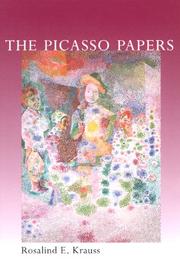
Krauss reads the collages and the return to figuration through the sign rather than through biography — a deliberate refusal of the life-explains-the-work method this path has just spent two stages on.

Clark's A. W. Mellon Lectures, subtitled 'From Cubism to Guernica', and the best writing anyone has done on the late-1920s and 1930s pictures. It rewards everything earlier in the path and is the right place to finish.