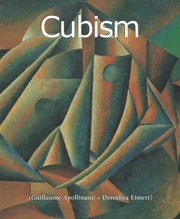
Cubism is one of the hardest movements to enter through reproductions alone. The paintings resist the eye on purpose, and the standard summary — multiple viewpoints, flattened space — explains almost nothing about why a 1911 Braque looks the way it does. What makes it click, for most readers, is realizing that analytic Cubism was a private conversation between two painters working in close daily contact, and that everything else in the movement is a response to what they did.
So the reading order is chronological in a specific way: the making of the thing, then how it was explained at the time, then how it was organized into history afterwards. Reverse that and you get a taxonomy without a story.
Begin with the two painters
Start with Georges Braque a Life by Alex Danchev. Braque is the underread half of the partnership, and Danchev's biography is the best account of the years when he and Picasso were, in Braque's phrase, roped together like mountaineers — showing each other canvases nightly, refusing to sign work, deliberately suppressing individual authorship. It gives you the human texture the theory books lack.
Then read Picasso and Braque by William Rubin, the catalogue of the Museum of Modern Art's landmark pioneering-Cubism exhibition. Rubin puts the two bodies of work side by side, painting against painting, month by month, which is exactly the comparison you need. It is the book that makes the invention of collage and papier collé legible as a sequence of decisions rather than a stylistic leap.
Read the movement explaining itself
Guillaume Apollinaire was the movement's poet-advocate, and his writing is a period document rather than a neutral account. The cubist painters is the canonical text — impressionistic, sometimes maddening, and indispensable for understanding how Cubism was defended while it was still contested. Note that Cubism, also under his name, is closely related material; if you buy the Apollinaire essays once, you have the substance, so do not pay for both editions expecting different books.
Read Apollinaire knowing he was a partisan. He grouped painters by allegiance as much as by practice, and his categories have not survived scholarly scrutiny. That is what makes him useful: he shows you the argument as it was actually conducted.
The curatorial histories
Cubism and Abstract Art by Alfred H. Barr Jr. is the 1936 MoMA catalogue whose famous flowchart of influences shaped how the twentieth century narrated modernism. Read it partly for the scholarship and partly as an artifact — it is where the idea of an orderly progression from Cézanne through Cubism to abstraction was installed.
The Cubist epoch by Douglas Cooper widens the field to Gris, Léger, Delaunay and the movement's spread across Europe, which corrects the impression that Cubism was only two men in Montmartre. Cooper is opinionated about who counts as a real Cubist, and worth arguing with.
Finish with Picasso and the Invention of Cubism by Pepe Karmel, the most technically rigorous of these. Karmel works from drawings and X-rays to reconstruct how the pictures were actually built, and shows that the figures never dissolved as completely as the standard account suggests. It is the book that repays everything you read before it.
If you want a contrast in how movements form, the punk rock hub covers a similar small-scene dynamic in another medium.
Read in this order and the paintings start to open up.
Follow the full ordered path here: How to Understand Cubism Through Books, in Order.