Understand Bitcoin & crypto before you invest
This four-stage curriculum takes a complete beginner from "what even is money?" all the way to a sophisticated, skeptical understanding of Bitcoin, blockchain technology, and the broader crypto landscape. Each stage builds the conceptual vocabulary needed for the next: monetary history and first principles come first, then Bitcoin's mechanics, then the wider ecosystem and its dangers, and finally the deeper technical and economic arguments for those who want to go all the way down the rabbit hole.
Foundations: Money, Trust & Why This Matters
BeginnerUnderstand what money actually is, why people distrust central banks and fiat currency, and what problem Bitcoin was invented to solve — before touching any technical detail.
▸ Study plan for this stage
Pace: 6–8 weeks total. Week 1–4: "The Bitcoin Standard" (~30 pages/day, ~5 days/week). Read Parts I–III slowly; re-read Chapter 1 ("Money") and Chapter 2 ("Primitive Moneys") before moving on. Week 5–8: "Layered Money" (~20 pages/day — it's shorter and denser with diagrams); pause after each chapter to sk
- Salability & the properties of sound money (durability, portability, divisibility, scarcity) as defined in The Bitcoin Standard
- Stock-to-flow ratio as Ammous's core measure of monetary hardness — and why gold won the historical monetary competition
- The 'easy money trap': how expanding the money supply distorts time preference, capital allocation, and civilizational health (Ammous, Chapters 6–7)
- Fiat currency and the end of the Bretton Woods gold standard — why 1971 matters as a turning point in The Bitcoin Standard
- The specific problem Bitcoin was designed to solve: censorship-resistant, permissionless, final settlement without a trusted third party (Ammous, Chapter 8)
- Layered money architecture: how every monetary system in history has operated in hierarchical layers, from gold at Layer 1 to bank notes and deposits at higher layers (Bhatia, Chapters 1–3)
- The Federal Reserve note as a second-layer instrument — and how the dollar became the world's reserve Layer-1 currency after Bretton Woods (Bhatia, Chapters 4–6)
- Bitcoin as a new Layer-1 settlement asset: Bhatia's argument that Bitcoin occupies the same structural role gold once did, enabling future layers to be built on top
- According to Ammous, what is 'hardness' in money, and why did gold outcompete silver and other commodity moneys over centuries?
- What is the stock-to-flow ratio, and how does Bitcoin's supply schedule compare to gold's by this measure?
- What specific trust problem does Bitcoin solve — who or what is being removed from the equation, and why does Ammous argue that matters?
- In Bhatia's layered framework, what distinguishes a Layer-1 monetary asset from a Layer-2 or Layer-3 instrument? Give one historical example of each.
- How did the Bretton Woods system work, why did it collapse in 1971, and what did Bhatia say changed about the dollar's status afterward?
- Both authors are critical of central-bank-issued fiat money. What is the core objection each author makes, and how do their arguments complement each other?
- Stock-to-flow worksheet: Look up the current above-ground gold supply and annual mining output; calculate its S2F ratio. Then do the same for Bitcoin using its current supply and block reward. Write a one-paragraph comparison using Ammous's framework.
- Monetary history timeline: Draw a single timeline from 600 BCE to today marking: the rise of gold coinage, the classical gold standard, Bretton Woods (1944), Nixon shock (1971), Bitcoin genesis block (2009). Annotate each event with one sentence from either book explaining its significance.
- Layered money pyramid diagram: After finishing Bhatia, draw the monetary pyramid for THREE different eras — the classical gold standard, the post-1971 dollar system, and a hypothetical Bitcoin-standard world. Label each layer with the asset or instrument Bhatia associates with it.
- Personal trust audit: List every financial intermediary you currently rely on (bank, payment app, broker, etc.). For each one, write one sentence on what trust assumption you are making and what Ammous or Bhatia would say about that assumption.
- Glossary building: Maintain a running glossary of at least 15 terms (e.g., salability, seigniorage, lender of last resort, settlement finality, rehypothecation) with definitions in your own words, citing the page in the book where you first encountered each.
- Debate-prep exercise: Write a one-page steelman of the opposing view — i.e., the strongest possible argument FOR central banking and fiat currency — then write a one-page rebuttal using only evidence and arguments from these two books.
Next up: By internalizing why sound, layered, trust-minimized money matters — and what structural role Bitcoin is designed to play — the reader is now ready to open the hood and understand *how* Bitcoin actually achieves those properties through cryptography, consensus, and network design.

The single best starting point: it explains the history of money, the flaws of fiat currency, and the monetary case for Bitcoin in plain language. Reading this first gives you the 'why' before the 'how'.

Builds directly on Ammous by showing how monetary systems are structured in layers — from gold to central banks to commercial banks — and where Bitcoin fits as a potential new base layer. Short and accessible.
How Bitcoin Actually Works
BeginnerUnderstand the core technology — blockchains, cryptographic keys, mining, proof-of-work, wallets, and transactions — well enough to explain it to someone else, without needing to write code.
▸ Study plan for this stage
Pace: 8–10 weeks total. Weeks 1–7: "Bitcoin and Cryptocurrency Technologies" by Narayanan (~25–30 pages/day, focusing on Chapters 1–5 for the core technical foundation; skim or skip heavy math proofs on first pass). Weeks 8–10: "The Internet of Money" by Antonopoulos (~20–25 pages/day; essay-based and con
- Cryptographic hash functions: what makes a hash 'good' (deterministic, one-way, collision-resistant) and how Bitcoin uses SHA-256 — grounded in Narayanan Ch. 1
- Public-key cryptography & digital signatures: how a private key proves ownership without revealing itself, and why this secures every Bitcoin transaction — Narayanan Ch. 1
- The structure of a Bitcoin transaction: inputs, outputs, and UTXOs (Unspent Transaction Outputs) — Narayanan Ch. 1–2
- The blockchain as a data structure: how blocks chain together via hash pointers to create a tamper-evident ledger — Narayanan Ch. 2
- Mining & Proof-of-Work: the computational puzzle miners solve, why it is hard to do but easy to verify, and how difficulty adjusts — Narayanan Ch. 2–3
- Consensus and the 51% attack: how the network agrees on one canonical chain and what it would take to subvert it — Narayanan Ch. 2–3
- Wallets and key management: hot vs. cold storage, seed phrases, and why 'not your keys, not your coins' — Narayanan Ch. 4
- Bitcoin as a protocol vs. Bitcoin as money: Antonopoulos reframes the technology as a trust and communication layer, not merely a currency — The Internet of Money, all essays
- Can you explain, step by step, how a Bitcoin transaction is created, broadcast, verified by nodes, included in a block by a miner, and finally confirmed — without using the word 'magic'?
- Why is it computationally infeasible to alter a transaction buried six blocks deep in the blockchain, even if you control significant hashing power?
- What is the difference between a public key, a private key, and a Bitcoin address, and what role does each play in sending and receiving bitcoin?
- What problem does Proof-of-Work solve that a simple voting system among nodes could not, and what is the real-world cost that makes it trustworthy?
- How does the UTXO model differ from a traditional bank account balance, and why does it matter for how transactions are constructed?
- Using ideas from Antonopoulos's essays in 'The Internet of Money', how would you explain Bitcoin's significance to someone who thinks it is 'just digital cash'?
- Hash it yourself: Use an online SHA-256 tool (e.g., emn178.github.io) to hash a sentence, then change one character and observe the completely different output. Write a one-paragraph explanation of why this property is essential to blockchain integrity.
- Draw the blockchain: On paper or a whiteboard, sketch 5 linked blocks. Inside each block draw the previous block's hash, a Merkle root, a nonce, and 2–3 transactions. Explain to a friend or rubber duck why changing any transaction invalidates every subsequent block.
- Trace a real transaction: Look up any recent Bitcoin transaction on a block explorer (e.g., mempool.space). Identify its inputs, outputs, fee, confirmations, and the block it lives in. Map each field back to a concept from Narayanan.
- Wallet setup exercise: Create a non-custodial software wallet (e.g., Sparrow Wallet on desktop or BlueWallet on mobile) on testnet or with zero real funds. Record your seed phrase, derive a receiving address, and reflect in writing on what you would lose if the seed phrase were destroyed.
- Teach-back test: Write a 300-word plain-English explanation of how mining works — covering the puzzle, the nonce, difficulty adjustment, and the block reward — as if writing for a curious 16-year-old. Use no jargon without defining it first.
- Antonopoulos reflection journal: After each essay in 'The Internet of Money', write 2–3 sentences answering: (a) What is the central claim? (b) What analogy does Antonopoulos use? (c) Do you agree — why or why not? Collect these into a single document to review at stage end.
Next up: Mastering how Bitcoin works at the protocol level — hashes, keys, mining, and consensus — gives you the conceptual vocabulary needed to critically evaluate altcoins, smart contracts, and the broader ecosystem in the next stage, where the question shifts from "how does this work?" to "what else can this technology do, and at what trade-offs?"
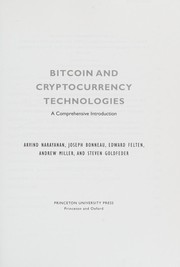
The most rigorous and honest non-hype introduction to the actual technology. Based on a Princeton course, it walks through cryptographic hashing, public-key cryptography, and consensus mechanisms step by step.

A collection of Antonopoulos's talks that translates the technical concepts into vivid, intuitive analogies. Read after Narayanan to consolidate and humanize what you've learned.
The Wild West: Altcoins, DeFi, Scams & Real Risks
IntermediateDevelop a clear-eyed, skeptical view of the broader crypto ecosystem — ICOs, altcoins, stablecoins, DeFi, NFTs — and learn to identify the red flags of fraud before risking any money.
▸ Study plan for this stage
Pace: 8–10 weeks total: Week 1–3 — "Cryptoassets" (~25–30 pages/day, including note-taking on asset taxonomies); Week 4–6 — "Attack of the 50 Foot Blockchain" (~20–25 pages/day, reading critically and annotating claims); Week 7–9 — "Number Go Up" (~25 pages/day, treating it as investigative journalism); W
- Asset taxonomy from Cryptoassets: currencies, platforms, and utility tokens as distinct categories with different investment theses and risk profiles
- The ICO (Initial Coin Offering) boom: how Burniske & Tatar frame fundraising innovation vs. the near-total failure rate exposed by Gerard and Faux
- Volatility and portfolio theory applied to cryptoassets: Burniske & Tatar's framework for position sizing and correlation with traditional assets
- Stablecoins and their structural fragility: from the algorithmic promises analyzed in Cryptoassets to the Tether opacity and Terra/LUNA collapse documented in Number Go Up
- DeFi mechanics and their real risks: smart-contract exploits, rug pulls, and the gap between whitepaper promises and on-chain reality
- NFT market dynamics: the speculative mania, wash trading, and celebrity pump-and-dump schemes Faux investigates firsthand
- Fraud red flags catalogued across all three books: anonymous teams, unaudited code, guaranteed returns, artificial scarcity narratives, and regulatory arbitrage
- The human cost of crypto fraud: Faux's on-the-ground reporting in Cambodia and elsewhere showing real victims behind abstract market numbers
- After reading Cryptoassets, can you explain the difference between a 'currency,' a 'platform,' and a 'utility token,' and give a real-world example of each — and then assess how well those categories held up in light of what Gerard and Faux reveal?
- What specific technical and economic arguments does David Gerard make against the foundational claims of blockchain utility, and which of those arguments do you find most and least convincing, and why?
- How does Zeke Faux's account of Tether's reserve claims in Number Go Up connect to the broader stablecoin risk framework, and what systemic danger does an unbacked or partially-backed stablecoin pose to the entire crypto market?
- Across all three books, what consistent patterns of behavior — by founders, promoters, and exchanges — appear before a project collapses or is revealed as fraudulent?
- How do Burniske & Tatar's portfolio and valuation frameworks from Cryptoassets look in hindsight after reading Gerard's and Faux's critiques? Which parts survive scrutiny and which feel like motivated reasoning?
- What is the difference between a project that fails due to genuine market/technical risk versus one that was fraudulent from inception, and how can you tell them apart before the collapse?
- Build a 'Cryptoasset Taxonomy Table': take 10 real projects (e.g., ETH, BNB, USDT, a defunct ICO token) and classify each using Burniske & Tatar's framework, then annotate each with a 'Gerard Score' — a 1–5 skepticism rating based on Gerard's red-flag criteria.
- Conduct a 'Dead Coin Autopsy': pick one failed ICO or collapsed project (e.g., BitConnect, Terra/LUNA, a random 2017 ICO) and write a 1–2 page post-mortem identifying exactly which warning signs from Attack of the 50 Foot Blockchain and Number Go Up were present in its whitepaper or public communications before collapse.
- Read one current crypto project whitepaper (freely available online) and annotate it in two colors: green for claims that are falsifiable and technically grounded, red for claims that match the hype/fraud patterns described across the three books. Summarize your findings in a short paragraph.
- Create a 'Stablecoin Risk Matrix': compare at least three stablecoins (e.g., USDT, USDC, DAI, and the now-defunct UST) across five dimensions — reserve transparency, audit history, redemption mechanism, regulatory status, and historical de-peg events — using information from Number Go Up and your own research.
- Draft a personal 'Crypto Due Diligence Checklist' of at least 15 questions you would ask before putting any money into a crypto project, drawing one-third of the questions from each book's lessons. Make it specific enough that a 'yes/no' answer to each question is possible.
- Write a one-page 'steelman then rebut' essay: first, present the strongest possible case for a specific DeFi or NFT use case as Burniske & Tatar might frame it, then rebut it using the most pointed arguments from Gerard and Faux. Conclude with your own balanced verdict.
Next up: By finishing this stage with a calibrated skeptic's toolkit — knowing how to classify assets, spot fraud, and weigh hype against on-chain reality — the reader is now ready to engage seriously with Bitcoin's underlying technical architecture and monetary philosophy without being seduced or repelled by the surrounding noise.

Provides a framework for categorizing the hundreds of crypto assets beyond Bitcoin — what they claim to do, how to evaluate them, and what distinguishes genuine utility from speculation. Essential for not being misled by altcoin hype.

A deliberately skeptical, often darkly funny debunking of blockchain hype and crypto scams. Reading this back-to-back with Burniske trains you to hold both the optimistic and the critical view simultaneously.

A journalist's on-the-ground investigation into Tether, FTX, and the fraud at the heart of the 2021 bull market. The most up-to-date and readable account of how ordinary people lose money in crypto.
Going Deep: Technical Mastery & Long-Term Thinking
ExpertAchieve a near-expert understanding of Bitcoin's protocol, security model, and long-term economic implications — enough to evaluate any future claim about Bitcoin or crypto with genuine technical confidence.
▸ Study plan for this stage
Pace: 10–13 weeks total: "Mastering Bitcoin" (~4 weeks, ~25–30 pages/day — dense technical material, budget extra time for re-reads and hands-on experiments); "The Fiat Standard" (~3 weeks, ~20–25 pages/day — economic theory, best read slowly and critically); "Digital Gold" (~3 weeks, ~30–35 pages/day — n
- Bitcoin's full protocol stack: UTXO model, transaction lifecycle, script opcodes, SegWit, and how raw transactions are constructed and validated (Mastering Bitcoin)
- Cryptographic primitives underpinning Bitcoin: elliptic curve cryptography (secp256k1), SHA-256 & RIPEMD-160 hashing, digital signatures, and Merkle trees (Mastering Bitcoin)
- The mining process and Proof-of-Work security model: difficulty adjustment, hash rate, 51% attack economics, and the role of fees in a post-subsidy world (Mastering Bitcoin)
- Bitcoin's peer-to-peer network architecture: node types, SPV vs. full node trust assumptions, bloom filters, and the gossip protocol (Mastering Bitcoin)
- The fiat monetary system as a technology: how central banking, fractional reserve lending, and currency debasement function as a coordinated global standard — and its hidden costs (The Fiat Standard)
- Fiat vs. hard money: Ammous's argument that fiat's 'salability across time' failure produces time-preference distortions, debt dependency, and geopolitical instability (The Fiat Standard)
- Bitcoin as a monetary standard: the long-run case for Bitcoin replacing or coexisting with fiat, including hyperbitcoinization scenarios and second-layer economics (The Fiat Standard)
- The human and political history of Bitcoin's early ecosystem: the cypherpunk origins, Satoshi's disappearance, the Mt. Gox collapse, Silk Road, and the block-size wars as case studies in decentralized governance (Digital Gold)
- Given a raw Bitcoin transaction hex string, can you identify and explain each field — inputs, outputs, locking/unlocking scripts, sequence numbers, and witness data — and trace how a full node validates it? (Mastering Bitcoin)
- How does Bitcoin's difficulty adjustment algorithm maintain a ~10-minute block time, and what are the precise economic incentives that make a 51% attack costly but not impossible? (Mastering Bitcoin)
- According to Ammous in 'The Fiat Standard,' in what specific ways does the fiat system function as a 'technology,' and what are its systemic failure modes compared to a hard-money standard? (The Fiat Standard)
- What is Ammous's critique of international development aid and Keynesian stimulus as seen through the lens of time preference, and do you find the argument technically sound or ideologically overstated? (The Fiat Standard)
- Using 'Digital Gold' as a primary source, how did the Mt. Gox collapse and the Silk Road takedown each stress-test Bitcoin's decentralization, and what did those events reveal about the protocol's resilience vs. the fragility of its surrounding ecosystem?
- How do the technical guarantees described in 'Mastering Bitcoin' (immutability, fixed supply, self-custody) map onto the long-term monetary arguments made in 'The Fiat Standard,' and where do the two books' assumptions diverge or conflict?
- Run a Bitcoin full node (Bitcoin Core on testnet or signet) and use the RPC interface (bitcoin-cli) to inspect real mempool transactions, decode raw transaction hex, and verify a block's Merkle root manually — directly applying the protocol internals from Mastering Bitcoin chapters 6–8.
- Write a minimal Python or JavaScript script (using the 'bitcoinlib' or 'bitcoinjs-lib' library) that generates a key pair, derives a P2PKH and a P2WPKH address, constructs an unsigned transaction, signs it, and serializes it — without using a wallet GUI. This forces mastery of the cryptographic and scripting layers.
- Build a personal 'fiat autopsy': chart the M2 money supply, real interest rates, and purchasing-power loss of one fiat currency (e.g., USD, GBP, or TRY) over 50 years, then write a 500-word analysis applying Ammous's framework from 'The Fiat Standard' to explain the data — and note where you agree or disagree with his interpretation.
- Create a timeline of Bitcoin's political history (2008–2020) using only events documented in 'Digital Gold,' then annotate each event with the relevant technical or economic concept from 'Mastering Bitcoin' or 'The Fiat Standard' it best illustrates (e.g., Mt. Gox → custodial risk vs. self-custody; block-size war → governance without a central authority).
- Conduct a structured 'attack surface audit': using the security model described in Mastering Bitcoin, enumerate at least six distinct attack vectors (e.g., eclipse attack, fee sniping, dusting, BGP hijacking), explain the cryptographic or economic defense against each, and rate the residual risk — producing a one-page reference sheet you can update as the protocol evolves.
- Write a 750-word critical essay taking a position on this prompt: 'The technical guarantees of Bitcoin's protocol are necessary but not sufficient for it to function as a global monetary standard.' Draw specific evidence from all three books, steelman the opposing view, and identify the single biggest open question that neither Antonopoulos nor Ammous fully resolves.
Next up: By combining Antonopoulos's protocol-level precision, Ammous's monetary-historical framework, and Popper's on-the-ground narrative, the reader now possesses the technical vocabulary and critical lens needed to engage with primary sources — whitepapers, BIPs, academic cryptography research, and live on-chain data — which is the foundation for any further specialization in areas like Lightning Netwo

The definitive technical reference for Bitcoin: keys, scripts, the UTXO model, the mempool, SegWit, and the Lightning Network. This is where conceptual understanding becomes precise, protocol-level knowledge.

Ammous's follow-up to The Bitcoin Standard examines the global fiat monetary system in forensic detail, strengthening your ability to evaluate Bitcoin's macro-economic arguments from first principles.
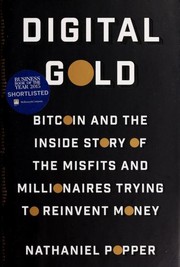
A deeply reported narrative history of Bitcoin's first decade — the cypherpunks, Satoshi, the Silk Road, the early exchanges, and the ideological battles. Reading this last gives the full human and historical context to everything you've learned.
Discussion
Keep reading
Paths that share books, cover the same subject, or open a related topic.