Court reporting career: an ordered reading path to get started
This curriculum takes a beginner from zero knowledge of court reporting through the core skills of stenography, legal vocabulary, transcription accuracy, and professional certification. Each stage builds directly on the last — starting with the profession itself, moving into the technical craft of machine shorthand, then deepening legal and procedural knowledge, and finally preparing for real-world practice and the national certification exam.
Foundations: The Profession & Its World
BeginnerUnderstand what court reporters do, the career landscape, the tools of the trade, and whether this path is right for you — before investing in technical training.
▸ Study plan for this stage
Pace: 2–3 weeks, ~20–25 pages/day, with 2–3 review days built in
- Core legal vocabulary essential to court reporting (procedural, substantive, and evidentiary terms)
- How legal terminology reflects the structure and logic of the legal system
- The relationship between precise language and accurate court records
- Common Latin phrases and abbreviations used in legal proceedings and court documents
- Terminology specific to different types of cases (civil, criminal, family law)
- The role of a court reporter as a linguistic gatekeeper and accurate record-keeper
- What are the key differences between procedural, substantive, and evidentiary legal terms, and why does a court reporter need to distinguish them?
- Why is precise understanding of legal terminology critical to the accuracy and credibility of court records?
- What are 10–15 essential legal terms you would encounter in a typical civil or criminal proceeding, and what do they mean?
- How do Latin phrases and common abbreviations function in legal documents, and what happens if a court reporter misunderstands them?
- What terminology is specific to the type of law you're most interested in (civil, criminal, family, etc.), and how would you explain it to a layperson?
- How does mastery of legal terminology prepare you for the technical demands of real-time court reporting?
- Create a glossary of 50–75 essential legal terms from the book, organized by category (procedural, substantive, evidentiary, Latin phrases). Review it daily.
- Listen to a recorded court proceeding (available online through court websites or legal databases) and identify 20+ terms from the book in context; note how attorneys and judges use them.
- Write brief definitions (2–3 sentences) for 30 key terms, then explain each one to a friend or colleague as if they had no legal background—test your clarity.
- Transcribe a 5–10 minute segment of a recorded deposition or hearing, then cross-reference your transcript against the legal terminology you've learned to ensure accuracy.
- Create flashcards (digital or physical) for the most frequently used terms and Latin phrases; spend 10 minutes daily drilling them until recall is automatic.
- Analyze a sample court document (motion, complaint, or order) and annotate every legal term, explaining its meaning and function in the document's argument or ruling.
Next up: Mastery of legal terminology equips you with the linguistic foundation necessary to understand courtroom dynamics, case law, and the specific language patterns you'll encounter in real-time court reporting, preparing you to move into deeper study of court reporting procedures, ethics, and technology.
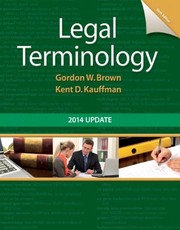
Court reporters must transcribe legal language with perfect accuracy; this widely-used textbook builds the foundational legal vocabulary needed before tackling real transcripts or procedure.
Legal Procedure & the Courtroom
IntermediateUnderstand civil and criminal court procedure, deposition practice, and the legal contexts in which reporters work, so you can follow proceedings accurately and anticipate terminology.
▸ Study plan for this stage
Pace: 8–10 weeks, ~40–50 pages/day (mix of dense legal content and reference work)
- Civil vs. criminal procedure: pleadings, discovery, trial phases, and burden of proof differences
- Deposition mechanics: notice, examination techniques, objections, and the reporter's role in capturing testimony
- Court structure and jurisdiction: federal vs. state courts, trial courts, appellate courts, and subject-matter jurisdiction
- Rules of evidence and admissibility: relevance, hearsay, expert testimony, and how these affect what you record
- Legal terminology and abbreviations: precise definitions and courtroom usage to avoid transcription errors
- Motion practice and pre-trial procedure: how motions shape proceedings and what language signals procedural shifts
- Witness examination: direct, cross, and redirect—understanding attorney strategy to anticipate questions and objections
- The court reporter's ethical and legal obligations: confidentiality, accuracy, and neutrality in the courtroom
- What are the key differences between civil and criminal procedure, and how do these differences affect what you need to capture as a reporter?
- Explain the deposition process from notice to completion, and describe the court reporter's specific responsibilities at each stage.
- How do federal and state court systems differ in structure and jurisdiction, and why does this matter for a court reporter?
- What is the distinction between direct examination, cross-examination, and redirect, and how should you prepare for each?
- Define and provide examples of common objections (e.g., hearsay, relevance, foundation) and explain why attorneys make them.
- What ethical obligations do court reporters have regarding confidentiality, accuracy, and impartiality?
- Read and annotate Hames' chapters on civil and criminal procedure; create a side-by-side comparison chart of key procedural steps.
- Use Black's Law Dictionary to look up 20 terms from Hames' text; write a one-sentence definition in your own words and note how each term appears in courtroom context.
- Study the Redbook's sections on deposition procedure and testimony; outline the reporter's role at each phase and list common objections you should anticipate.
- Watch a recorded deposition or trial excerpt (freely available online); pause frequently to identify procedural elements and terminology from your reading.
- Create flashcards for 30–40 high-frequency legal terms and abbreviations; quiz yourself daily until you can recognize them instantly in context.
- Draft a mock deposition notice and outline the procedural steps a reporter must follow; cross-reference your outline with Hames and the Redbook.
Next up: This stage equips you with the procedural knowledge and legal vocabulary needed to move into specialized reporting contexts—such as real estate closings, administrative hearings, or medical/expert testimony—where you'll apply these foundations to domain-specific language and practice.
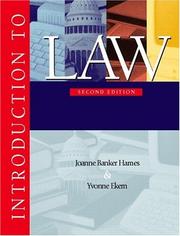
Provides a clear, accessible overview of the American legal system — courts, procedure, and legal reasoning — giving reporters the contextual knowledge to follow any proceeding intelligently.

The authoritative guide to legal writing conventions and citation style; court reporters editing transcripts must understand how legal language is properly structured and punctuated.
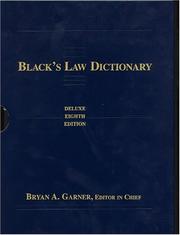
The definitive reference for legal terminology used by every legal professional; reading and regularly consulting it at this stage cements the vocabulary precision that certification demands.
Professional Practice & Certification Readiness
ExpertPrepare for the NCRA RPR and other certification exams, understand professional ethics and business practices, and transition from student to working court reporter.
▸ Study plan for this stage
Pace: 8–10 weeks, ~25–30 pages/day (alternating between both texts; prioritize grammar/mechanics from Gregg first, then business communication from Guffey)
- Grammar, punctuation, and mechanics mastery as the foundation for accurate court reporting transcripts (Gregg Reference Manual)
- Professional editing and proofreading standards to ensure error-free documents ready for legal proceedings
- Business communication principles: professional correspondence, email etiquette, and client interaction (Guffey)
- Document formatting and style consistency for legal transcripts and business reports
- Professional ethics and business practices specific to court reporting and legal environments
- Time management and business operations for independent or freelance court reporters
- Certification exam content alignment: grammar rules, punctuation conventions, and professional standards tested by NCRA RPR
- What are the most common punctuation and grammar errors in court reporting transcripts, and how does the Gregg Reference Manual address correcting them?
- How do you apply Gregg's rules for capitalization, abbreviations, and number usage in legal documents?
- What professional communication strategies from Guffey's Business English would you use when corresponding with attorneys, judges, or clients?
- How do grammar and mechanics standards directly impact your credibility and marketability as a professional court reporter?
- What are the key differences between formal legal writing conventions and general business writing, and when would you apply each?
- How would you handle a situation where a client questions the accuracy or formatting of your transcript, using both technical knowledge and professional communication skills?
- Complete 10–15 practice transcripts from your steno machine, then edit them using Gregg Reference Manual rules; identify and correct all grammar, punctuation, and capitalization errors
- Create a personal style guide for your court reporting practice, documenting your decisions on abbreviations, capitalization, and formatting based on Gregg standards
- Draft professional emails and letters to hypothetical clients, attorneys, and court administrators using Guffey's business communication principles; have an instructor or peer review for tone and clarity
- Take a full-length NCRA RPR practice exam (grammar/mechanics section) and cross-reference every incorrect answer with the relevant Gregg Reference Manual rule
- Proofread 5–10 sample court transcripts (from your school or online sources) using a checklist based on Gregg's most-tested rules; compare your corrections with an answer key
- Role-play difficult professional scenarios (e.g., explaining a billing discrepancy, requesting a deadline extension, clarifying transcript delivery) using Guffey's communication strategies
Next up: This stage transforms you from a student focused on speed and accuracy into a polished professional who produces error-free, ethically sound transcripts and communicates confidently with clients and legal professionals—positioning you to enter the job market, build a sustainable court reporting business, and continue advancing your specialization (e.g., realtime reporting, CART services, or legal
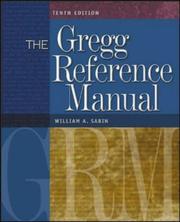
The gold-standard style and grammar reference used across legal and business transcription; mastering it is essential for producing error-free transcripts that meet certification standards.
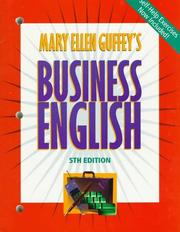
Reinforces grammar, punctuation, and usage at an advanced level — the exact skills tested on the NCRA written knowledge exam and required for professional transcript accuracy.
Discussion
Keep reading
Paths that share books, cover the same subject, or open a related topic.