Start with The Nickel Boys. It runs barely two hundred pages, it is the most controlled thing Whitehead has written, and it does the work he is genuinely great at — taking a documented American atrocity, the Dozier reform school in Florida, and refusing to sentimentalise it — without also asking you to absorb a formal experiment on the same page.
The obvious alternative is The Underground Railroad, which won the Pulitzer first and sold far more copies. Read it second, not first. Its central conceit — the railroad rendered as an actual subterranean train line — is brilliant, but it is also a device you have to accept before the novel works, and readers who start there sometimes spend fifty pages arguing with the premise instead of reading the book.
The two historical novels, in this order
The Nickel Boys then The Underground Railroad. They are the two books that made his reputation outside literary circles, they are the two most likely to be assigned, and they share a method: a real historical machinery of cruelty, described flatly, with the moral weight left for the reader to carry. Taken together they are also the clearest demonstration that Whitehead writes each book as a different kind of novel rather than refining one style across a career.
If you read those two and stop, you have read the essential Whitehead. Everything below is for readers who want the whole range.
Then go backwards to the early, stranger books
The intuitionist — his 1999 debut, catalogued here under that lowercase form and published as The Intuitionist — is the one to try next. It is a noir about elevator inspectors in an unnamed city, split between empiricists who inspect machinery and intuitionists who feel it, and the racial allegory sits inside a genuinely propulsive detective plot. It is the best of the early novels and the one that most rewards rereading.
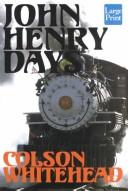
John Henry Days is the ambitious one, and the hardest. It braids the steel-driving folk legend with a contemporary junketeering journalist, and the contemporary strand sags in the middle by a good hundred pages. Most readers find the John Henry sections far stronger than the press-junket satire. Read it if the early style has hooked you; skip it if it has not.
Apex hides the hurt is short, funny and minor — a nomenclature consultant hired to rename a town. Treat it as a palate cleanser rather than a major work.
Where Zone One fits
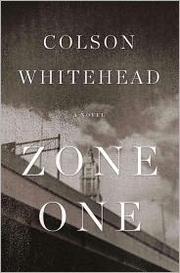
Zone One is his zombie novel, and it is a real zombie novel rather than a wink at one. It is also slow on purpose: the survivor at its centre spends most of the book clearing a few blocks of lower Manhattan and thinking about the world before. Readers who arrive expecting genre pace tend to bounce off it. Readers who arrive from The intuitionist find it obvious that the apocalypse is a setting for a book about ordinariness and grief. Read it late, when you already trust him.
What is missing here, honestly
This path does not include Sag Harbor, his semi-autobiographical Long Island novel, or the Harlem crime books Harlem Shuffle and Crook Manifesto. The crime novels are the most purely enjoyable things he has published and are worth chasing separately if you want to see him having fun. Their absence from the list below is a catalogue gap, not a judgement.
Whitehead is often shelved with Toni Morrison for obvious reasons, but the closer formal relative is the American genre tradition — detective fiction, horror, the heist — which he keeps picking up and using for serious ends.
Follow the full ordered path here: Colson Whitehead Reading Order: Where to Start.
Ready to learn something deeply?
Build a reading path — free