Brew better tea
This four-stage curriculum takes a complete beginner from sensory basics and tea-type literacy all the way to gongfu mastery, professional tasting, and deep cultural history. Each stage builds the vocabulary and palate needed to fully absorb the next, so reading in order is essential.
Foundations: The World of Tea
BeginnerBuild a clear mental map of the six major tea types, how they are made, and how to brew a decent cup at home — establishing the vocabulary needed for everything that follows.
▸ Study plan for this stage
Pace: 6–8 weeks total. Week 1–4: Read "The Story of Tea" by Mary Lou Heiss (~25–30 pages/day, including time to re-read the processing and regional chapters slowly). Week 5–8: Read "Tea" by Kevin Gascoyne (~20–25 pages/day, pausing to cross-reference Gascoyne's tasting notes and brewing charts against wha
- The six major tea types (white, yellow, green, oolong, black, pu-erh) and how oxidation level defines each category — the central taxonomy introduced by Heiss and reinforced by Gascoyne
- The leaf-to-cup processing chain: withering, rolling/shaping, oxidation, firing/drying, and how variations in each step produce different tea styles
- Terroir and origin: how Heiss maps the world's major tea-growing regions (China, Japan, India, Sri Lanka, Taiwan) and why geography, altitude, and cultivar shape flavor
- The role of the tea plant (Camellia sinensis) and its two main varieties — sinensis and assamica — and why the distinction matters for flavor and body
- Core brewing variables: water temperature, leaf-to-water ratio, steep time, and vessel choice — Gascoyne provides the practical reference tables the reader should memorize and test
- Tea vocabulary: the sensory language (astringency, umami, muscatel, roasted, grassy, floral) used by both authors to describe flavor, aroma, and mouthfeel
- Quality indicators: how both authors describe what to look for in dry leaf appearance, wet leaf aroma, and liquor color as proxies for quality
- The historical and cultural arc of tea: Heiss's narrative of tea's spread from China outward, giving context for why regional styles developed as they did
- Without looking at notes, can you name all six major tea types, place them on the oxidation spectrum from least to most oxidized, and give one representative example of each from a specific region?
- Walk through the full processing journey of a green tea versus a black tea — at what exact step do their paths diverge, and what does that mean for the flavor in the cup?
- Heiss devotes significant attention to specific growing regions. Which three regions does she treat most thoroughly, and what does she identify as the defining quality characteristic of each?
- Using Gascoyne's brewing guidelines as your reference, how would you adjust water temperature and steep time if you were brewing a delicate Japanese green tea versus a robust Assam black tea, and why?
- What is oxidation in the context of tea processing, and how is it different from fermentation — a distinction both authors make explicitly?
- After reading both books, how do Heiss and Gascoyne complement each other? What does Heiss provide that Gascoyne does not, and vice versa?
- The Six-Cup Tasting Flight: Buy one representative tea from each of the six major categories (e.g., Bai Mu Dan, Gyokuro or Dragonwell, a yellow tea if accessible, a Taiwanese oolong, a Darjeeling or Assam black, and a shou pu-erh). Brew them side by side using Gascoyne's parameters and write tasting notes for each — color of liquor, aroma, taste, finish. Map each cup back to its position on the ox
- Processing Diagram Exercise: Draw a single flowchart starting from 'fresh-picked leaf' and branch it into all six tea types, labeling each processing step at every fork. Do this from memory after finishing Heiss, then check it against her processing chapters.
- Regional Origin Map: Print or sketch a blank world map. As you read Heiss, plot every tea-growing region she discusses, annotate it with the tea types produced there, and note one flavor characteristic she associates with each. Keep it on your wall for the rest of the curriculum.
- Brewing Variable Experiment: Choose one tea (a mid-range oolong works well). Brew four cups varying only one parameter at a time — try two different temperatures (e.g., 80 °C vs. 95 °C) and two different steep times (e.g., 2 min vs. 4 min). Taste and record the differences. This makes Gascoyne's brewing tables visceral rather than abstract.
- Vocabulary Flashcard Deck: As you encounter sensory or technical terms in both books (astringency, umami, tippy, orthodox, CTC, terroir, cultivar, etc.), create a flashcard for each — definition on one side, an example tea or region from the books on the other. Aim for 40–60 cards by the end of the stage.
- Comparative Book Reflection: After finishing both books, write a one-page note (no more than 400 words) answering: 'What mental model did Heiss give me, and how did Gascoyne's practical focus change or sharpen it?' This forces active synthesis before moving to the next stage.
Next up: ">Mastering the six-type taxonomy, processing logic, and brewing basics from Heiss and Gascoyne gives you the precise vocabulary and mental scaffolding needed to engage with deeper, more specialized reading — whether that means diving into the history, chemistry, or connoisseurship of a single tea category without getting lost in foundational terminology.
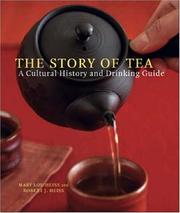
A comprehensive yet accessible introduction covering tea botany, processing, and every major category from green to pu-erh. Reading this first gives you the full landscape before diving into any single area.

A beautifully organized reference that pairs region-by-region terroir with tasting notes and brewing guides. It reinforces Heiss's overview with vivid specifics and trains your eye for origin and quality markers.
Tasting Like a Pro: Sensory and Connoisseurship
IntermediateDevelop a structured tasting vocabulary, learn to evaluate appearance, aroma, liquor, and finish, and understand what separates everyday tea from exceptional tea.
▸ Study plan for this stage
Pace: 6–8 weeks total. Week 1–3: Read "The Harney & Sons Guide to Tea" (~20–25 pages/day), focusing on Harney's tasting notes and regional profiles. Week 4–7: Read "Tea Sommelier" (~15–20 pages/day), a denser, more technical text — slow down for the sensory evaluation frameworks. Week 8: Review, revisit t
- The four evaluation axes — appearance (dry leaf and liquor), aroma (dry, wet, and brewed), taste (flavor, body, astringency, sweetness), and finish (length and aftertaste) — as introduced and applied across both books
- Michael Harney's approachable tasting vocabulary: how he uses everyday flavor analogies (fruit, grass, smoke, earth) to describe teas from specific origins and gardens
- The Tea Sommelier's structured professional framework: how Delmas systematizes sensory evaluation into a repeatable, scoreable methodology analogous to wine sommeliership
- Terroir as a quality differentiator: how geography, altitude, soil, and climate (discussed in both books) translate into detectable sensory differences in the cup
- The role of processing in shaping sensory outcomes: how oxidation, firing, and rolling decisions made at the garden level create the flavor signatures Harney profiles by region
- Distinguishing 'everyday' from 'exceptional' tea: the markers of quality both authors identify — bud-to-leaf ratio, harvest timing (first flush vs. later), garden reputation, and consistency of liquor
- Building a personal flavor lexicon: how to move from vague impressions ('I like this') to precise, communicable descriptions ('muscatel top note, medium body, dry mineral finish')
- Comparative tasting as a learning tool: both authors implicitly or explicitly endorse side-by-side evaluation as the fastest way to calibrate sensory perception
- After reading Harney's regional profiles, can you describe at least three sensory differences between a Darjeeling first flush, a Yunnan black, and a Japanese sencha using specific aroma and flavor terms?
- What does Delmas mean by a 'structured' tasting, and how does his professional evaluation sequence differ from simply drinking and enjoying tea?
- How do both authors connect terroir and processing decisions to the final sensory profile — and where do their emphases differ?
- What specific visual cues in the dry leaf and the brewed liquor indicate a high-quality tea, according to the criteria discussed in both books?
- Can you define and distinguish: astringency vs. bitterness, body vs. finish, and aroma vs. flavor — using examples drawn from teas described in either book?
- What separates an 'exceptional' tea from a merely 'good' one, synthesizing the quality markers both Harney and Delmas identify?
- Structured solo tasting sessions (2–3 per week): Select teas that match Harney's regional profiles (e.g., a Darjeeling, a Keemun, a Taiwanese oolong) and write tasting notes using his vocabulary before cross-checking your impressions against his descriptions in the book.
- Build a personal tasting grid: Create a simple paper or spreadsheet template with columns for Appearance, Dry Aroma, Wet Aroma, Taste (flavor/body/astringency/sweetness), and Finish — modeled on Delmas's evaluation framework — and fill it in for every tea you taste during the 8 weeks.
- Side-by-side comparison tasting: Brew the same tea type from two different origins or grades simultaneously (e.g., a garden-specific Darjeeling vs. a blended Darjeeling) and write a comparative note identifying at least five sensory differences, using language from both books.
- Blind tasting drill: Have someone prepare two or three unlabeled teas for you; attempt to identify the tea type, likely origin, and quality tier using only your senses and the vocabulary frameworks from Harney and Delmas.
- Flavor wheel annotation: Download or draw a tea flavor wheel and, after each tasting session, circle or annotate the terms that matched your experience — tracking over time whether your vocabulary range expands as you progress through both books.
- Re-read and annotate Harney's tasting notes for 5 teas you have physically tasted, then write a one-paragraph 'counter-note' agreeing or disagreeing with his descriptors based on your own palate — this forces active, critical engagement with his connoisseurship language.
Next up: Mastering the sensory vocabulary and quality evaluation frameworks in this stage gives the reader the precise descriptive language and critical palate needed to meaningfully engage with the cultural, historical, and ceremonial dimensions of tea — understanding not just what a tea tastes like, but why it is revered.

Written by a master blender, this book teaches you to taste and evaluate tea the way a professional buyer does — covering flavor descriptors, grades, and what to look for in every category.

Structured around the sommelier's method of systematic sensory evaluation, it gives you a repeatable tasting framework and a rich flavor-wheel vocabulary to apply to any tea you encounter.
Deep Dives: History, Culture, and Pu-erh
ExpertUnderstand tea's sweeping role in world history, its living cultural traditions across Asia, and master the most complex and aged category — pu-erh — with the eyes of an expert.
▸ Study plan for this stage
Pace: 10–13 weeks total: ~3 weeks on "For All the Tea in China" (~25 pages/day), ~4 weeks on "The True History of Tea" (~20 pages/day, denser academic content), and ~3 weeks on "The Book of Tea" (~10–15 pages/day with deliberate slow reading and reflection). Reserve 1–2 weeks for review, tasting sessions,
- The Great Tea Heist: Robert Fortune's industrial espionage mission to steal Chinese tea plants and secrets for the British East India Company, and its geopolitical consequences
- Tea as an engine of empire: how the tea trade shaped colonialism, the Opium Wars, the Boston Tea Party, and global economic power structures
- The linguistic and botanical origins of tea: how Camellia sinensis spread across the world and how the two pronunciation branches ('tea' vs. 'cha') map onto trade routes, as explored by Mair
- Tea's deep roots in Chinese civilization: Mair's tracing of tea from its mythological origins through the Tang, Song, Ming, and Qing dynasties and its role in Chinese medicine, poetry, and daily life
- Pu-erh as a living category: the distinction between sheng (raw) and shou (ripe) pu-erh, the role of microbial fermentation, aging potential, and why pu-erh is treated as an investment-grade commodity
- The Japanese tea ceremony (Chado) and the philosophy of Wabi: Okakura's framing of tea as a religion of aestheticism, impermanence (mono no aware), and the art of the incomplete
- Teaism as a lens on East-West cultural misunderstanding: Okakura's critique of Western imperialism and orientalism through the philosophy of the tea room
- The tea house as sacred space: architecture, ritual, and the role of the host and guest in creating a shared moment of beauty according to Okakura
- How did Robert Fortune's expedition, as detailed by Sarah Rose, permanently shift the balance of global tea production, and what does it reveal about the relationship between botanical knowledge and imperial power?
- According to Mair's linguistic and historical research, what are the two major branches of the word for 'tea' across world languages, and what do they tell us about the routes by which tea spread globally?
- What are the key differences between sheng and shou pu-erh in terms of production, aging, and flavor development, and why does pu-erh occupy a unique position among all tea categories?
- How does Okakura Kakuzō use the philosophy of Teaism in 'The Book of Tea' to mount a cultural and political argument against Western imperialism?
- In what ways do the three books collectively argue that tea is not merely a beverage but a force that has shaped politics, philosophy, art, and international relations?
- What does Okakura mean by 'the art of the incomplete' and the ideal of Wabi, and how are these principles physically embodied in the design of the tea room and the conduct of the tea ceremony?
- Espionage map exercise: After reading 'For All the Tea in China,' trace Robert Fortune's two journeys on a physical or digital map, annotating key locations (Zhejiang, Fujian, Darjeeling) and noting what was taken or learned at each stop — then write a one-page reflection on the modern ethical implications of biopiracy.
- Linguistic etymology chart: Using Mair's research, build a chart of 20+ world languages and their word for tea, color-coded by whether they derive from the Hokkien 'te' (maritime route) or the Mandarin/Cantonese 'cha' (overland route). Identify any outliers and hypothesize why.
- Pu-erh tasting flight: Source and taste at least three pu-erh samples — a young sheng, an aged sheng (5+ years), and a shou — taking structured tasting notes on aroma, texture, taste evolution in the cup, and storage character. Reflect on how fermentation and time function as 'ingredients.'
- Close reading of Okakura: Select any one chapter from 'The Book of Tea' and write a 500-word critical annotation, identifying (a) a philosophical claim, (b) a cultural comparison between East and West, and (c) one passage you find either compelling or problematic — and explain why.
- Synthesis timeline: Create a master timeline spanning from tea's mythological origins (Shennong, ~2737 BCE per legend) through Fortune's 1848 expedition to the present-day pu-erh market, drawing on all three books. Mark events that represent tea as a cultural force vs. tea as an economic/political force.
- Tea room design thought experiment: Based on Okakura's description of the ideal tea room (the Sukiya), sketch or describe your own version adapted to your own living space and cultural context. Write a short justification for each design choice using Okakura's principles of impermanence, simplicity, and asymmetry.
Next up: By mastering tea's historical sweep, its philosophical depths, and its most complex category, the reader has built the expert framework needed to approach any future stage focused on connoisseurship, sourcing, or contemporary tea culture with both critical rigor and aesthetic sensitivity.
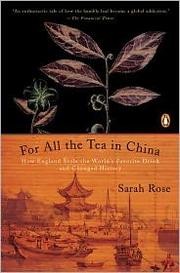
Tells the gripping true story of Robert Fortune's industrial espionage that transplanted tea from China to India — making global tea economics and colonial history viscerally real.

A scholarly yet readable deep-dive into tea's origins in China and its spread across civilizations, grounding your cultural knowledge in rigorous historical and linguistic evidence.
The classic 1906 philosophical essay on Japanese tea culture and Zen aesthetics — now fully intelligible and deeply rewarding after the historical and sensory groundwork laid in earlier stages.
Discussion
Keep reading
Paths that share books, cover the same subject, or open a related topic.