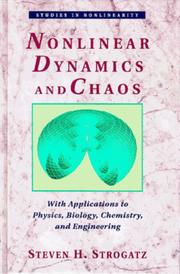
Learn classical mechanics: the best books in order
This curriculum takes an intermediate learner from a solid grounding in Newtonian mechanics through the elegant reformulations of Lagrangian and Hamiltonian dynamics, finishing with the advanced mathematical structures that connect classical mechanics to modern physics. Each stage builds the conceptual vocabulary and mathematical fluency needed for the next, ensuring no leap feels too steep.
Foundations Refreshed
BeginnerSolidify Newtonian mechanics, develop physical intuition, and get comfortable with the energy and momentum frameworks that Lagrangian mechanics will later generalize.
▸ Study plan for this stage
Pace: 4–5 weeks, ~40–50 pages/day. Start with Landau's mechanics chapters (Chapters 1–3, ~100 pages) over 2 weeks, then Kleppner's introduction and core chapters (Chapters 1–6, ~200 pages) over 2–3 weeks. Allocate 2–3 days per chapter for review and problem-solving.
- Newton's laws as the foundation: force, mass, acceleration, and their vector nature in 2D/3D systems
- Inertial frames of reference and Galilean relativity—why Newtonian mechanics works in these frames
- Work, kinetic energy, and the work–energy theorem as a powerful alternative to F=ma
- Conservative forces, potential energy, and mechanical energy conservation—the bridge to Lagrangian mechanics
- Momentum and impulse; conservation of momentum in isolated systems and multi-body collisions
- Rotational motion: torque, angular momentum, moment of inertia, and rotational energy
- Constraints and degrees of freedom—how systems are constrained and why this matters for generalized coordinates
- Physical intuition: why energy and momentum are more fundamental than forces in many contexts
- How do you apply Newton's second law in vector form to a 2D or 3D system, and what does it mean physically?
- Why is mechanical energy conserved for conservative forces, and how does this relate to the concept of potential energy?
- In a collision or explosion, how do you use conservation of momentum to find final velocities, and why does momentum always conserve in an isolated system?
- What is the relationship between torque, angular momentum, and rotational kinetic energy, and how do you calculate moment of inertia for simple geometries?
- How do constraints (like a bead on a wire or a rigid rod) reduce the degrees of freedom of a system, and why is this important?
- When is it easier to solve a problem using energy methods rather than force methods, and what are the trade-offs?
- Solve 5–8 problems from Landau Chapters 1–3 involving kinematics and Newton's laws in 2D/3D (e.g., projectile motion with air resistance, inclined planes, tension in ropes).
- Work through 8–10 problems from Kleppner Chapters 2–3 on forces and Newton's laws, focusing on free-body diagrams and constraint forces.
- Solve 6–8 energy-based problems from Kleppner Chapter 4 (work and energy): use both F=ma and work–energy theorem to verify answers match.
- Complete 5–6 momentum and collision problems from Kleppner Chapter 5, including elastic and inelastic collisions in 1D and 2D.
- Solve 6–8 rotational mechanics problems from Kleppner Chapter 6: calculate moment of inertia, find angular acceleration, and verify energy conservation in rolling motion.
- Tackle 3–4 constraint-based problems (e.g., Atwood machine, pulley systems, bead on a wire) to build intuition for degrees of freedom and how constraints simplify systems.
Next up: By mastering energy, momentum, and the role of constraints, you'll recognize that Lagrangian mechanics is simply a systematic way to exploit these conservation laws and constraints—replacing the need to track individual forces with generalized coordinates and a single scalar function (the Lagrangian).

The first volume of the legendary Landau & Lifshitz Course of Theoretical Physics introduces the principle of least action and Lagrangian mechanics with stunning brevity and physical clarity — reading it early sets the right conceptual tone for the entire curriculum.
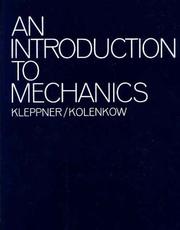
A rigorous yet accessible treatment of Newtonian mechanics that builds strong problem-solving habits and covers rotating frames, oscillations, and central-force motion — all prerequisites for the analytical mechanics ahead.
Analytical Mechanics: Lagrangian Formulation
IntermediateMaster the Lagrangian formalism, generalized coordinates, constraints, and variational principles, and apply them confidently to real mechanical systems.
▸ Study plan for this stage
Pace: 6–7 weeks, ~40–50 pages/day (Taylor chapters 6–7, then Marion chapters 7–8)
- Generalized coordinates and degrees of freedom: how to identify and use coordinates that naturally describe a system's configuration
- The Lagrangian function L = T − V: why this single scalar encodes all dynamics and how it differs from the Hamiltonian
- Euler–Lagrange equations: derivation from the principle of least action and their equivalence to Newton's laws
- Constraints and constraint forces: holonomic vs. non-holonomic constraints, and how the Lagrangian automatically handles constraint forces
- Variational principles and the principle of least action: the physical meaning of δS = 0 and why nature extremizes the action integral
- Symmetries and conservation laws via Noether's theorem: how translational, rotational, and temporal symmetries yield conserved quantities
- Applications to multi-particle and rigid-body systems: using Lagrangian mechanics to solve complex systems efficiently
- What is the Lagrangian, and why is L = T − V the correct form? How does it differ from the Hamiltonian?
- Derive the Euler–Lagrange equations from the principle of least action. Why are they equivalent to Newton's second law?
- How do you identify generalized coordinates for a constrained system? What is the advantage of using them?
- Explain the difference between holonomic and non-holonomic constraints. How does the Lagrangian formalism handle each?
- State Noether's theorem and give three examples of symmetries and their corresponding conserved quantities.
- Solve a multi-particle or rigid-body problem (e.g., coupled pendulums, Atwood machine with pulleys) using the Lagrangian method. Why is this approach cleaner than using Newton's laws directly?
- Work through Taylor's derivation of the Euler–Lagrange equations (Chapter 6) step-by-step; write out the variational argument in your own words.
- For a simple system (e.g., 2D projectile motion, simple pendulum), write down T and V in Cartesian coordinates, then transform to generalized coordinates and verify the Lagrangian is simpler.
- Solve at least 3 problems from Taylor Chapter 6 (e.g., Atwood machine, bead on a wire, particle in a central force field) using the Lagrangian method.
- Identify the symmetries in a system (translational, rotational, temporal) and use Noether's theorem to predict conserved quantities; verify by solving the equations of motion.
- Work through Marion's treatment of constraints (Chapter 7): solve a problem with holonomic constraints (e.g., pendulum on a moving support) and one with non-holonomic constraints (e.g., rolling without slipping).
- Solve a rigid-body problem from Marion (e.g., rotating disk, coupled spinning tops) using the Lagrangian; compare the elegance to a Newtonian force-based approach.
Next up: Mastery of the Lagrangian formalism and variational principles provides the conceptual and mathematical foundation for the Hamiltonian formulation, canonical transformations, and action-angle variables, which reveal deeper symmetries and enable advanced techniques like perturbation theory and chaos analysis.
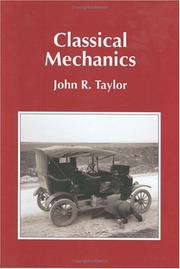
Taylor's textbook is the gold-standard bridge from Newtonian to Lagrangian mechanics, written with exceptional clarity and rich problem sets that make the transition feel natural.
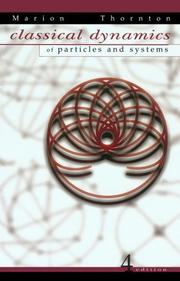
Provides a thorough and methodical treatment of Lagrangian dynamics, coupled oscillators, and rigid-body motion, reinforcing the formalism with a wide variety of worked examples.
Hamiltonian Mechanics & Phase Space
IntermediateUnderstand the Hamiltonian formulation, canonical transformations, Poisson brackets, and phase-space thinking — the bridge between classical and modern (quantum/statistical) physics.
▸ Study plan for this stage
Pace: 8–10 weeks, ~40–50 pages/day (focusing on Chapters 8–10 of Goldstein: Hamiltonian equations, canonical transformations, and Hamilton-Jacobi theory)
- Legendre transformation: deriving the Hamiltonian from the Lagrangian and understanding why H = T + V in conservative systems
- Hamilton's canonical equations: phase-space dynamics as first-order ODEs in (q, p) coordinates and their geometric interpretation
- Canonical transformations: generating functions and the conditions for preserving the canonical form of Hamilton's equations
- Poisson brackets: algebraic structure encoding dynamics, symmetries, and conservation laws; connection to commutators in quantum mechanics
- Phase space: phase-space trajectories, phase-space volume conservation (Liouville's theorem), and the symplectic structure underlying classical mechanics
- Hamilton-Jacobi equation: action-angle variables, adiabatic invariants, and the path to quantum mechanics via the action principle
- Symmetries and conservation: Noether's theorem in Hamiltonian form and the role of ignorable coordinates
- How do you construct the Hamiltonian from a given Lagrangian using the Legendre transformation, and why is this transformation invertible for non-singular systems?
- Write out Hamilton's canonical equations and explain why they are equivalent to Lagrange's equations; what is the advantage of the (q, p) formulation?
- What is a canonical transformation, and what condition (in terms of generating functions) ensures that a transformation preserves the canonical form of Hamilton's equations?
- Define the Poisson bracket {A, B} and show how it encodes the time evolution of any dynamical variable; what is its connection to Lie algebras and quantum commutators?
- State Liouville's theorem and explain its physical meaning: why is phase-space volume conserved under Hamiltonian evolution?
- Derive the Hamilton-Jacobi equation from Hamilton's equations and explain how action-angle variables emerge from its solution; why are adiabatic invariants important?
- Compute the Hamiltonian for 3–4 concrete systems (e.g., harmonic oscillator, central-force problem, charged particle in an EM field) by performing the Legendre transformation; verify that Hamilton's equations recover the correct equations of motion.
- For a simple system (e.g., 1D harmonic oscillator or 2D central force), sketch the phase-space portrait: plot several trajectories, identify fixed points, and verify that phase-space volume is conserved along a bundle of nearby trajectories.
- Construct a canonical transformation using a generating function (e.g., F₁ or F₂) for a chosen system; verify that the new coordinates satisfy canonical equations and that the transformation preserves the Poisson bracket structure.
- Compute Poisson brackets {q, p}, {H, q}, {H, p}, and {H, H} for a given system; use these to verify conservation laws and derive equations of motion without explicitly solving Hamilton's equations.
- Solve the Hamilton-Jacobi equation for a separable system (e.g., harmonic oscillator or central-force problem); extract action-angle variables and verify periodicity and adiabatic invariance.
- Work through a non-trivial example of a canonical transformation (e.g., rotation to action-angle variables for a pendulum or Kepler problem); compute the new Hamiltonian and show that it depends only on the action variables (J), confirming integrability.
Next up: This stage establishes the symplectic and algebraic structure of classical mechanics—Poisson brackets, phase-space geometry, and canonical transformations—which directly parallel the commutator algebra and operator formalism of quantum mechanics, preparing you to understand how classical mechanics emerges from or connects to quantum theory.
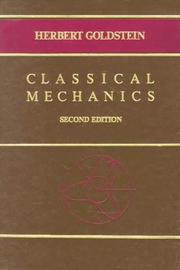
The definitive graduate-level reference for Hamiltonian mechanics, canonical transformations, and Hamilton–Jacobi theory; reading it after Taylor ensures the formalism feels motivated rather than abstract.
Susskind's conversational style makes phase space, Poisson brackets, and the symplectic structure of Hamiltonian mechanics deeply intuitive — an ideal companion to Goldstein's rigor.
Advanced Topics & Mathematical Structures
ExpertExplore integrable systems, chaos, symplectic geometry, and the deep mathematical architecture of classical mechanics that underpins quantum mechanics and field theory.
▸ Study plan for this stage
Pace: 8–10 weeks, ~40–50 pages/day (Arnold: 6 weeks; Levi: 2–3 weeks). Arnold is dense; expect 2–3 passes through key chapters. Levi moves faster and consolidates understanding.
- Phase space, symplectic structure, and canonical transformations as the geometric foundation of mechanics
- Lagrangian and Hamiltonian formalism: equivalence, advantages, and the role of generalized coordinates
- Integrable systems: action-angle variables, Liouville integrability, and the structure of solvable systems
- Perturbation theory and KAM theorem: how integrable systems break down under small perturbations and chaos emerges
- Symplectic geometry: manifolds, differential forms, and Poisson brackets as invariant structures
- Calculus of variations: extremal principles, Euler-Lagrange equations, and the principle of least action
- Optimal control and the Pontryagin maximum principle as extensions of variational mechanics
- Bifurcations and routes to chaos: homoclinic tangles, horseshoes, and the transition from order to chaos
- What is a symplectic manifold and how does the symplectic structure encode the fundamental geometry of classical mechanics?
- Explain the relationship between Lagrangian and Hamiltonian mechanics. When is each formalism preferable?
- What does it mean for a system to be integrable in the Liouville sense, and what are action-angle variables?
- How does the KAM theorem explain the persistence of quasi-periodic motion in nearly-integrable systems, and what does it predict about chaos?
- Derive the Euler-Lagrange equations from the principle of least action and explain why this variational principle is fundamental.
- What is the Pontryagin maximum principle and how does it generalize the calculus of variations to optimal control problems?
- Describe a concrete example of a bifurcation that leads to chaotic behavior (e.g., period-doubling in the logistic map or a mechanical system).
- How do Poisson brackets and canonical transformations preserve the symplectic structure of phase space?
- Work through Arnold's detailed derivations of symplectic geometry (Ch. 5–6): compute the symplectic form in various coordinate systems and verify invariance under canonical transformations.
- Solve 5–8 problems from Arnold involving action-angle variables for integrable systems (e.g., harmonic oscillator, Kepler problem, rigid body rotation).
- Construct a Poincaré section for a near-integrable system (e.g., periodically driven pendulum or Hénon-Heiles system) and observe the KAM tori and chaotic regions numerically.
- Derive the Euler-Lagrange equations for 3–4 non-trivial systems (e.g., spherical pendulum, charged particle in electromagnetic field, system with constraints) and solve them.
- Work through Levi's optimal control problems: formulate and solve 2–3 problems using the Pontryagin maximum principle (e.g., minimum-time control, fuel-optimal trajectory).
- Prove that a given transformation is canonical by verifying it preserves the symplectic form or satisfies the canonical transformation conditions.
- Perform a linear stability analysis and bifurcation analysis on a 2–3 parameter family of dynamical systems (e.g., damped driven oscillator) and identify period-doubling or other routes to chaos.
- Implement a numerical integrator (symplectic or otherwise) and compare its long-term behavior on an integrable vs. chaotic system to understand numerical artifacts and true dynamics.
Next up: This stage equips you with the rigorous mathematical language—symplectic geometry, Poisson structures, and variational principles—that form the foundation for quantization, Hamiltonian field theory, and the path integral formulation, preparing you to understand how classical mechanics transitions into quantum mechanics and modern theoretical physics.
Arnold's masterpiece recasts classical mechanics in the language of differential geometry and symplectic manifolds, revealing the subject's deepest structures and preparing the reader for modern theoretical physics.

Levi illuminates the geometric and variational underpinnings of mechanics with elegant intuition and surprising connections, making it a perfect capstone that ties together everything learned in the curriculum.
Discussion
Keep reading
Paths that share books, cover the same subject, or open a related topic.