Subjects / Classical mechanics
Best books to learn Classical mechanics, in order
Mechanics is the foundation the rest of physics builds on, and its own internal order is the lesson. A good path starts with the Newtonian picture of forces and motion until it's intuitive, then reintroduces the same physics through the Lagrangian and Hamiltonian formalisms, the powerful reframing that makes advanced physics tractable but only clicks once the Newtonian view is solid.
Reading paths for classical mechanics

Learn classical mechanics: the best books in order
Beginner8books94 hrs4 stages
Popular classical mechanics books

Related reading
Frequently asked questions
- How should I approach learning classical mechanics?
- Mechanics is the foundation the rest of physics builds on, and its own internal order is the lesson. A good path starts with the Newtonian picture of forces and motion until it's intuitive, then reintroduces the same physics through the Lagrangian and Hamiltonian formalisms, the powerful reframing that makes advanced physics tractable but only clicks once the Newtonian view is solid.
- What's a good book to start classical mechanics with?
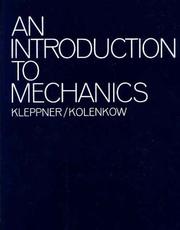
- A strong starting point is An introduction to mechanics by Daniel Kleppner. The ordered reading paths above show exactly where it fits and what to read next.
- What should I read after classical mechanics?
- Once you have the fundamentals, explore closely related subjects like Materials science, Chaos theory and nonlinear dynamics, Information theory.