Learn the drums: an ordered reading path from first beats to grooves
This curriculum takes a complete beginner from zero drum knowledge to confident, groove-oriented playing across multiple styles. Each stage builds directly on the last — starting with the physical and rhythmic fundamentals, moving through reading and coordination, then into real-world grooves and fills, and finally into stylistic depth and musical independence.
Foundations: Sticks, Rudiments & Reading
BeginnerDevelop proper stick technique, learn core rudiments, and read basic rhythmic notation on the snare drum.
▸ Study plan for this stage
Pace: 4–5 weeks, ~15–20 minutes of focused practice daily, working through 2–3 exercises per session
- Proper grip and hand position for control and endurance
- Matched grip vs. traditional grip and when to use each
- Single and double strokes as the foundation for all rudiments
- Accent and tap dynamics—controlling volume and tone variation
- Reading basic rhythmic notation on the staff
- Building muscle memory through repetitive, deliberate practice
- Developing independence between hands and consistency of tempo
- What is the correct hand position and grip for holding drumsticks, and why does it matter for control?
- How do single strokes and double strokes differ, and why are they foundational to drumming?
- What is the difference between an accent and a tap, and how do you execute each?
- How do you read basic rhythmic notation on the snare drum staff?
- What does it mean to play with proper dynamics, and how do you maintain consistency while building speed?
- How can you tell if your technique is improving, and what signs indicate you need to adjust your approach?
- Practice the basic grip and hand position exercises from Stone's opening sections for 5 minutes daily until it feels natural
- Work through the single-stroke roll exercises, starting slowly (60 bpm) and gradually increasing tempo by 5 bpm each session
- Practice double-stroke rolls with the same tempo progression, focusing on even spacing and consistent tone
- Perform accent and tap exercises, playing accented notes at full volume and taps at half volume, maintaining steady tempo
- Read and play the rhythmic notation exercises from the book on a practice pad or snare drum, speaking the rhythm aloud while playing
- Record yourself playing 2–3 exercises and listen back to identify inconsistencies in tempo, dynamics, or tone
- Play each exercise with a metronome at 3–4 different tempos to build adaptability and confidence
Next up: Mastery of stick control and basic rudiments from Stone's exercises creates the technical foundation needed to learn more complex rudiments, syncopation, and eventually apply these skills to full drum kit patterns and musical contexts.

The single most essential rudiment and stick-control book ever written. Starting here builds the hand strength, evenness, and muscle memory that every later book assumes you have.
Coordination & Time: Getting Around the Kit
BeginnerCoordinate all four limbs independently, internalize steady time, and play basic rock and pop beats with confidence.
▸ Study plan for this stage
Pace: 6–8 weeks, ~20–30 minutes daily (mix of reading and playing)
- Four-limb independence: developing the ability to play different rhythmic patterns on kick drum, snare, hi-hat, and tom simultaneously without one limb interfering with another
- Syncopation and rhythmic displacement: understanding how to shift accents and note placements away from the beat to create pocket and feel
- Steady time and internal clock: maintaining rock-solid tempo and pulse as the foundation for all four-limb coordination
- Basic rock and pop beat vocabulary: mastering fundamental grooves, backbeats, and kick drum patterns that form the basis of contemporary music
- Reading and interpreting drum notation: fluency with standard notation to execute written patterns at various tempos
- Vocabulary building through repetition: internalizing rhythmic phrases and patterns so they become muscle memory rather than conscious thought
- Tempo control and metronome work: using a metronome to lock in time and gradually increase speed while maintaining clarity
- How do you maintain independent control of all four limbs when the kick drum and snare are playing syncopated patterns while the hi-hat keeps steady eighth notes?
- What is syncopation, and how does Ted Reed's approach in Progressive Steps help you internalize syncopated rhythms across the kit?
- Can you explain the relationship between the written notation in Progressive Steps and how those patterns translate to actual drum kit application?
- What are the core rhythmic vocabularies and stickings taught by Alan Dawson, and how do they improve your coordination?
- How do you use a metronome to build confidence playing basic rock and pop beats at realistic tempos (90–120 BPM)?
- What is the difference between reading a pattern and truly internalizing it so you can play it without thinking?
- Work through Progressive Steps to Syncopation systematically: spend 1–2 weeks on each major section, playing each exercise on a practice pad first, then translating to the full kit with kick drum and snare
- Metronome practice: start each exercise at 60 BPM and gradually increase by 5 BPM increments until you can play cleanly at 120+ BPM without losing coordination
- Four-limb isolation drills: practice kick drum patterns alone, then add snare, then add hi-hat, then combine all three while reading from Progressive Steps
- Alan Dawson vocabulary application: take the stickings and rhythmic phrases from The Drummer's Complete Vocabulary and apply them to a steady rock beat, focusing on how they sit in the pocket
- Transcription and recreation: pick 3–5 basic rock/pop beats from recordings (e.g., classic rock or pop songs) and notate them, then practice until they feel natural
- Daily coordination warm-up: spend 10 minutes each session on a single syncopated pattern from Progressive Steps, building speed and fluidity before moving to new material
Next up: This stage establishes the physical and mental foundation of four-limb independence and steady time, preparing you to explore more complex polyrhythms, jazz independence, and advanced sticking techniques in the next level.

A legendary text for developing reading and limb independence; its syncopated rhythms are used by teachers worldwide to build coordination between hands and feet.
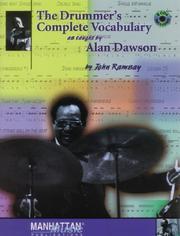
Introduces the 'Rudimental Ritual' and melodic approach to the kit, deepening the connection between rudiments learned in Stage 1 and full-kit musical expression.
Grooves & Feels: Rock, Funk & Beyond
IntermediatePlay authentic grooves in rock, funk, and R&B feels, and understand how to lock in with a band.
▸ Study plan for this stage
Pace: 4–5 weeks, ~20–30 pages/day with daily practice sessions
- The 16th-note grid as the foundation for modern funk and R&B grooves
- Linear drumming and ghost notes as tools for texture and pocket control
- How to lock in the kick drum with the bass player to establish groove pocket
- The relationship between hi-hat patterns and kick drum syncopation in creating feel
- Dynamics and space as essential elements of groove authenticity
- Applying Garibaldi's concepts to rock, funk, and R&B contexts
- Reading and interpreting notation for complex syncopated patterns
- What is the 16th-note grid and why is it fundamental to modern grooves?
- How do ghost notes function in creating pocket and feel, and where do they sit dynamically?
- What does it mean to 'lock in' with a bass player, and how do you achieve it practically?
- How do hi-hat patterns and kick drum placement interact to define a groove's character?
- What role do dynamics and space play in making a groove feel authentic versus mechanical?
- How can you adapt Garibaldi's linear drumming concepts across different genres (rock, funk, R&B)?
- How do you read and execute syncopated notation accurately while maintaining groove feel?
- Play the 16th-note grid on kick drum and hi-hat separately, then in combination, at tempos 80–140 BPM
- Transcribe and play 5–8 grooves directly from Future Sounds, focusing on kick/snare/hat relationships
- Practice ghost notes on snare at varying dynamics (pp to mf) while maintaining steady hi-hat time
- Record yourself playing a basic rock groove, then lock in with a bass player or backing track; identify pocket drift and correct it
- Create 3 original grooves using Garibaldi's linear approach: one rock, one funk, one R&B feel
- Slow down a funk or R&B track to 50% speed and transcribe the drum groove by ear
- Play grooves from the book with a metronome on different subdivisions (quarter-note, eighth-note, 16th-note click) to internalize pocket
- Perform each groove with exaggerated dynamics first, then with minimal dynamics, to understand how feel changes with articulation
Next up: This stage equips you with the pocket awareness, syncopation literacy, and band-locking skills needed to move into advanced topics like polyrhythms, odd meters, and stylistic fusion where groove principles become the foundation for more complex explorations.
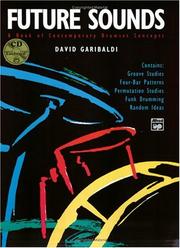
Garibaldi's systematic breakdown of funk and linear drumming expands groove vocabulary far beyond basic beats, introducing the linear patterns used in modern R&B and funk.
Fills, Phrasing & Musical Creativity
IntermediateConstruct musical fills, understand phrasing over the bar line, and make creative decisions that serve the song.
▸ Study plan for this stage
Pace: 4–5 weeks, ~20–25 pages/day with daily practice application
- Fill construction principles: using stickings, rudiments, and dynamic contrast to build tension and release within a 4-, 8-, or 16-bar framework
- Phrasing across bar lines: how to extend melodic and rhythmic ideas beyond traditional 4-bar phrases to create musical continuity
- Rebound control and stick technique: mastering the mechanics that enable clean, controlled fills at varying tempos and dynamics
- Orchestration and voice leading: distributing fills across drums, cymbals, and toms to create texture and serve the song's arrangement
- Listening and transcription: analyzing fills from recordings to internalize vocabulary and understand how fills respond to band dynamics
- Intentional creativity: making deliberate musical choices that complement rather than overshadow the song, with fills that answer or complement the melody
- How do you construct a fill that builds tension through the first half and releases it in the second half, using stickings and dynamics?
- What is phrasing over the bar line, and how does it differ from playing fills that land squarely on beat 1?
- How do rebound control and stick technique directly impact your ability to execute clean, musical fills at different tempos?
- How do you choose which drums and cymbals to voice a fill across, and what effect does that orchestration have on the song?
- What is the relationship between listening to fills in recordings and developing your own creative vocabulary?
- How do you decide whether a fill should be busy and complex or sparse and minimal, based on the song's context?
- Transcribe 5–8 fills from classic rock and modern recordings (Chapin and Appice reference material); notate them and practice until they feel natural
- Build fills using Chapin's sticking and rudiment exercises: create 4-bar, 8-bar, and 16-bar fills that progress from simple to complex, focusing on clean execution
- Practice phrasing across bar lines: play a steady groove, then extend a fill idea across bars 3–4 and into bar 1 of the next phrase without losing pocket
- Orchestration drill: take a single fill idea and voice it three different ways (e.g., kick + snare + hi-hat; kick + toms + crash; kick + snare + toms + cymbals) and compare the musical effect
- Tempo variation: execute the same fill cleanly at 80, 100, 120, and 140 BPM, focusing on rebound control and consistency
- Song-based fills: record or play along with 3–4 backing tracks; construct fills that respond to the arrangement, melody, and dynamics rather than playing pre-planned patterns
Next up: This stage equips you with the technical and creative toolkit to construct intentional, musically coherent fills and phrase across bar lines; the next stage will deepen your ability to apply these fills within specific song contexts, genres, and ensemble dynamics.

The definitive independence method — working through this book unlocks the ability to improvise fills and variations without losing the groove underneath.
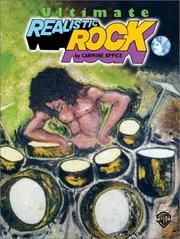
A practical, song-based approach to rock fills and patterns that ties together everything learned so far into real musical contexts and performance situations.
Style Mastery & Deep Listening
ExpertDevelop a personal voice on the kit by studying jazz time, brush playing, and the art of drumming as musical conversation.
▸ Study plan for this stage
Pace: 8–10 weeks, ~40–50 pages/week with daily practice sessions (1–2 hours). Spend 4–5 weeks on Riley's Art of Bop Drumming (including CD transcriptions), then 3–4 weeks on Erskine's Drumset Essentials. Allow overlap for integration.
- Jazz time-keeping fundamentals: the ride cymbal as the heartbeat of the ensemble and the relationship between kick drum, snare, and hi-hat in swing feel
- Brush technique and vocabulary: brush strokes, sweeps, and swells as tools for dynamic control and conversational phrasing in jazz
- Comping and responsiveness: listening to and reacting to soloists and bandmates in real time, understanding the drummer's role as a musical conversationalist rather than a timekeeper
- Coordination independence: developing the ability to play complex polyrhythmic patterns across limbs while maintaining a steady pulse
- Transcription and internalization: learning jazz vocabulary by ear from recordings and transcriptions, then making it your own
- Dynamics and touch: using stick control, grip, and rebound to shape tone and create musical nuance on every surface of the kit
- Personal voice and musical identity: synthesizing influences and technical skills to develop an authentic, recognizable drumming style
- What is the role of the ride cymbal in jazz timekeeping, and how does it interact with the kick drum and snare to create swing feel?
- Describe the fundamental brush strokes and how they differ from stick playing in terms of tone, dynamics, and musical application.
- How does the concept of 'comping' apply to drumming, and what does it mean to listen and respond to other musicians in real time?
- What are the key differences between playing time and playing music, and how does this distinction shape your approach to the kit?
- How can you develop independence between your four limbs, and why is this essential for jazz drumming?
- What is the relationship between transcription, imitation, and developing your own personal voice on the drums?
- Transcribe and learn 3–4 classic jazz drum solos from the CD included with Riley's book; play them daily until they become muscle memory, then vary them slightly to find your own phrasing.
- Practice ride cymbal patterns for 15 minutes daily, focusing on the swing feel and the relationship between the cymbal rhythm and the kick/snare. Record yourself and listen back for evenness and pocket.
- Spend 20 minutes daily on brush technique: master the basic sweep, swirl, and tap strokes on a practice pad, then apply them to a slow jazz standard with a metronome.
- Play along with jazz recordings (Miles Davis, John Coltrane, Thelonious Monk) for 30 minutes, 3–4 times per week, focusing on listening to the soloist and responding with dynamic and rhythmic choices rather than playing predetermined patterns.
- Work through Erskine's exercises on coordination and independence; practice the four-way independence patterns for 15–20 minutes daily, starting slowly and building tempo.
- Record yourself playing a jazz standard with a metronome or backing track; listen critically for pocket, dynamics, and musicality. Identify one area to improve each week.
- Study and transcribe the kick drum and snare patterns from 2–3 recordings of the same tune by different drummers; compare their approaches and experiment with blending elements into your own playing.
Next up: This stage equips you with the foundational language and listening skills of jazz drumming, positioning you to explore advanced concepts like polyrhythmic independence, extended technique, and the ability to lead and shape the sound of an ensemble in real performance contexts.
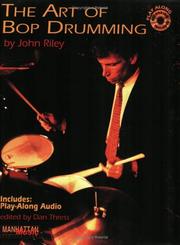
The most thorough and respected guide to jazz drumming — studying bop vocabulary and comping here elevates overall musicality and time feel across every style.
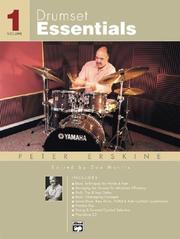
Erskine's three-volume method synthesizes groove, feel, and musical awareness from a world-class perspective, providing the final layer of artistry and stylistic range.
Discussion
Keep reading
Paths that share books, cover the same subject, or open a related topic.