Charles Burns Reading Order: Where to Start and How to Read the X'ed Out Trilogy
Charles Burns has published fewer books than his reputation suggests, and the single thing a new reader needs told is that X'ed Out, The Hive and Sugar Skull are not a trilogy in the usual sense — they are one book issued in three thin hardcovers, and reading only the first is reading a third of a story. This path starts with Black Hole, works backwards through the early strip collections that show where the line came from, reads the three-part book as a unit, and finishes with the late work and the alt-comics scene Burns emerged from.
Start Here
BeginnerRead the book everyone means when they say Charles Burns, and get used to a drawing style that is deliberately airless.
▸ Study plan for this stage
Pace: 1–2 weeks. Black Hole is 368 pages collecting a series serialised over roughly a decade, and it is the only Burns book that is a complete novel in a single object. It reads faster than the page count implies but rewards a slow pass — read it once at whatever pace you like, then reread the first fift
- Burns's line: heavy black spotting, uniform contour weight, no visible mark-making — a drawing style built to feel airless
- The bug as a physical condition with no metaphor stated, and the discipline of leaving it unstated
- Suburban 1970s Seattle as a setting drawn from a specific and remembered place
- Multiple narrators and the dream sequences that cut across them, and how a reader tells which is which
- The visual motif system — the cut, the tail, the hole, the shed skin — which is how the book actually holds together
- Serialisation over a decade and what it does to a work's internal consistency
- Horror produced by rendering rather than by event, which is the thing to watch for in everything else he has made
- What does the bug do, exactly, and what does the book decline to explain about it?
- How do you know whose dream you are in at any given point, and where does Burns make that deliberately unclear?
- Where does the horror actually come from in a given page — name a specific panel and say what makes it work?
- What changes for the characters who are visibly marked versus those who are not, socially rather than physically?
- How does the ending resolve, and what does it leave open on purpose?
- Track the cut or split motif through Black Hole — every appearance of an opening in a surface, in flesh or otherwise. It is the book's central image and the count is high.
- Take any two facing pages and count the panels, then measure the black-to-white ratio by eye. Do the same for two pages from a different chapter. Burns's grid is far more regular than his effect suggests.
- Reread the first chapter after finishing. Note which images you now read as foreshadowing and could not have the first time.
- Pick one page you find genuinely unsettling and write 200 words on what in the drawing is producing that, without referring to the story.
Next up: Black Hole's style and its teenage register did not arrive fully formed — the next stage goes back to the 1980s strips where both were assembled.
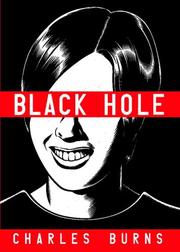
Serialised over a decade and collected in one volume: a sexually transmitted disease mutates teenagers in 1970s suburban Seattle. It is the entry point because it is the only Burns book that is a complete novel in a single object, and the horror is entirely carried by the drawing.
The Early Strips
IntermediateSee the pulp and B-movie sources Burns built the style out of, and how much of Black Hole was already there in the 1980s.
▸ Study plan for this stage
Pace: 2 weeks. These are three thin collections: Big Baby is about 100 pages, Skin Deep 87 and El Borbah 96, and each can be read in a sitting. Read Big Baby first, Skin Deep second and El Borbah last. Skin Deep is where the body horror is most compressed — it collects the mid-career short stories includi
- 1950s monster comics and B-movies as the source material Burns is working from and against
- Big Baby's premise — a suburban child who reads monster comics and cannot separate them from what is happening around him — as the direct ancestor of Black Hole's teenagers
- The short story as Burns's natural length in this period, and the compression it forces on the body horror
- Dog Boy and Burn Again as the pieces where the transformation imagery is at its most concentrated
- El Borbah as pure genre pastiche — a masked wrestler as hard-boiled detective — and what it reveals by being unlike everything else
- How much of the mature line was already in place by the mid-1980s, and what was not
- RAW and the anthology culture these strips appeared in
- What is Big Baby actually about, underneath the monster-movie surface, and how does Burns keep it from being said outright?
- Which of the Skin Deep stories most directly prefigures Black Hole, and in what respect — image, structure or subject?
- What is Burns parodying in El Borbah, and is the parody affectionate?
- Compare the line in Big Baby with the line in Black Hole: what has changed technically in twenty years?
- Is the humour in these strips the same humour that survives into the later work, or a different thing?
- Put a Big Baby page beside a Black Hole page from a comparable scene and list every difference in inking, panel size and lettering. The continuity is stronger than the changes, and both are worth naming.
- Read Dog Boy and then find the Black Hole sequence it most resembles. Write down what the longer form let Burns do with the same material that the short story could not.
- Track the transformation motif across all three collections — who changes into what, and whether the change is ever reversed. Then check the same question against Black Hole.
- Read El Borbah last, in one sitting, and write a paragraph on what a straight genre exercise shows about Burns's drawing that the horror work conceals.
Next up: With the sources in place, the next stage takes on the work that most readers get wrong — three thin hardcovers that are one book.
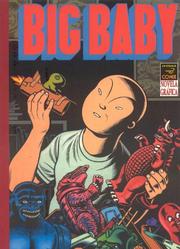
Collected Big Baby stories — a suburban kid who reads monster comics and cannot tell what is real. The direct ancestor of Black Hole's teenage register, and the funniest thing Burns has done.
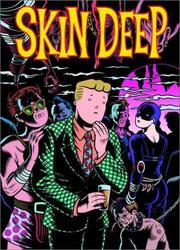
A collection of the mid-career short stories, including Dog Boy and Burn Again. Read it second: these are the pieces where the body horror is at its most compressed.
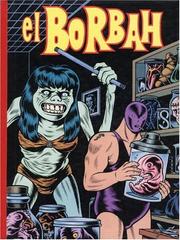
The masked-wrestler detective strips, and the most purely genre-parodic Burns. Placed last in this stage because it is the least like the rest of the work and reads best as a palate cleanser.
One Book in Three Parts
IntermediateRead the Nitnit sequence as the single work it is — do not stop between volumes.
▸ Study plan for this stage
Pace: 1–2 weeks, and get all three volumes before you start. X'ed Out is 56 pages, The Hive and Sugar Skull are comparably short, and each will take under an hour — but they are one work issued in three parts and reading only the first is reading a third of a story. Read them consecutively with no gap. Al
- The two intercut worlds: a Tintin-derived dream landscape and a wrecked 1970s punk-scene past
- Nitnit as a deliberate inversion of Tintin, in both name and drawing style, and what borrowing that specific visual idiom does
- Why part one feels unfinished — it is, and the structure only becomes legible from the end of part three
- Doug and the punk scene: performance, Polaroids and a relationship the reader assembles out of fragments
- Colour, which Burns had barely used before, as a structural device separating the two worlds
- The three-part publication as a commercial format imposed on a single work, and how to read past it
- Reading backwards — the technique this work demands, where the opening is only interpretable once you have the close
- What is the relationship between the dream world and the punk-scene past, and at what point does it become statable?
- What has actually happened to Doug, and how much of it does the book tell you directly?
- Why Tintin — what does that particular borrowed idiom bring that a generic dream world would not?
- How is colour used to distinguish the two strands, and where does Burns deliberately let them bleed?
- Read as one book, does it have an ending? What kind?
- Read all three straight through, then immediately reread X'ed Out. The first volume is a different book on the second pass and this is the fastest demonstration of what the work is doing.
- Build a two-column chronology as you read: dream-world events on one side, waking-world events on the other, in the order the book gives them. Then rewrite the waking column in actual chronological order.
- Compare a Nitnit page with an actual Tintin page if you can lay hands on one. Note what Burns has kept — the clear line, the flat colour, the panel rhythm — and what he has done to it.
- Track the egg motif across all three volumes and write down what it is doing at each appearance.
Next up: The next stage is the recent work, which returns to the same material with a colder eye and rewards having Black Hole behind you.
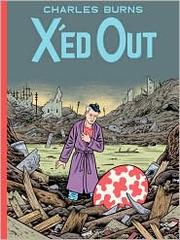
Part one, and it will feel unfinished because it is. A young man in a Tintin-derived dream world intercuts with a wrecked 1970s punk-scene past. All three volumes are also collected together as Last Look, which is the cheaper way to buy them if you can find it.
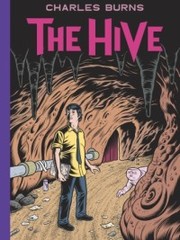
Part two, which fills in the waking-world story the first volume only gestured at. Read it immediately after X'ed Out; there is no natural stopping point between them.

Part three, and the resolution. Only after finishing it does the structure of the first volume become legible — which is the argument for treating all three as one book rather than a series.
The Late Work
IntermediateCatch up with what Burns has done since, which returns to the same obsessions with a colder eye.
▸ Study plan for this stage
Pace: 1 week. Final Cut is a recent full-length book — a single volume about a group of young people making an amateur horror film in the woods, and it reads in one or two sittings. It is the most emotionally direct thing Burns has written, and it works best having read Black Hole first, because it revisi
- The amateur horror film as a frame — a story about young people making the kind of thing Burns's own work is made of
- Emotional directness as a departure: the feeling is stated here rather than displaced into transformation imagery
- The woods as a setting, and how it differs from the suburbs of Black Hole
- Burns's colour work at maturity, after the three-part book taught him the technique
- The same age group, thirty years of drawing later — what the older hand sees that the younger one did not
- Watching versus being watched, which is the persistent Burns subject across all of it
- What does Final Cut do with the film-within-the-book that the Nitnit sequence did with the dream world?
- Where is the horror in this book, given that its events are mostly ordinary?
- How does the drawing differ from Black Hole — line weight, colour, panel size — and to what effect?
- What does the book say plainly that Burns's earlier work would have converted into imagery?
- Is this a horror book? Defend your answer with a specific sequence.
- Read Final Cut, then reread the equivalent stretch of Black Hole — the group of teenagers in a wooded place. Write 300 words on what has changed in the treatment.
- Track the camera motif: every point at which someone is filming, photographing or watching. Then check the same motif in X'ed Out, where it also runs.
- Compare the colour palette of Final Cut with that of Sugar Skull, page by page over ten pages of each. Both are late Burns colour and they are doing different jobs.
- Write down the single most upsetting moment in the book and then identify what is actually happening in it. In Burns the answer is usually smaller than the effect.
Next up: Burns's own bibliography is now complete — the last stage places him among the cartoonists he came up with, which explains the line better than criticism does.

A recent full-length book about a group of young people making an amateur horror film in the woods. It is the most emotionally direct thing Burns has written, and it rewards having read Black Hole first.
The Scene He Came From
IntermediatePlace Burns among the RAW-era cartoonists, whose work explains his line and his subject matter better than any criticism does.
▸ Study plan for this stage
Pace: 3 weeks. Gary Panter's Jimbo is around 86 pages of punk cartooning and is the hardest to read of the four — deliberately so. Daniel Clowes's Like a Velvet Glove Cast in Iron is 142 pages of serialised dream logic; Ghost World is 80 pages and the Clowes book most readers already know. Chris Ware's Ji
- RAW and the anthology culture that produced all of these cartoonists in the same decade
- Panter's ratty line as the exact counterweight to Burns's controlled one — everything Burns's drawing refuses to be
- Clowes's dream logic in Velvet Glove as the closest structural relative to the X'ed Out sequence
- Ghost World and Black Hole as tonal opposites on the same subject: American adolescence as a trap
- Ware's page layout as the site of formal density, against Burns's density in the ink — two different places to put the work
- The alternative comics generation as a scene with shared magazines and genuinely opposed temperaments
- How reading a cartoonist's contemporaries clarifies choices that look like style in isolation
- What is Panter's line doing that Burns's cannot, and vice versa?
- Where does Velvet Glove's structure match X'ed Out's, and where does Clowes resolve what Burns leaves open?
- Ghost World and Black Hole are both about American teenagers — what does each think is the danger?
- How does Ware use page architecture to carry information, and what would Burns have to give up to do that?
- After all four, what is distinctive about Burns as opposed to merely characteristic of the scene?
- Put a Panter page and a Burns page side by side and describe each line — weight, consistency, correction, the presence or absence of the hand. This single comparison is the fastest way to see what Burns's style is a choice about.
- Read Velvet Glove immediately after rereading X'ed Out and chart both as two-column dream-and-waking chronologies, the same exercise you did in stage three. The structures are close and the differences are instructive.
- Take one page of Jimmy Corrigan and diagram the reading path — the order the eye is directed through the panels. Then do the same for a Black Hole page. Ware constructs the route; Burns assumes it.
- Write a final 500 words placing Burns among these four, using one specific page from each book as evidence. If you have done the motif tracking through the earlier stages, most of the material is already in your notes.
Next up: You have read all of Burns in order and placed him in the scene that formed him — Ware's Jimmy Corrigan is the natural next reading path from here.
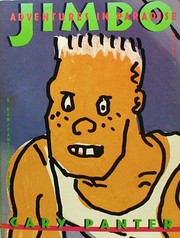
Panter's punk cartooning was the RAW-era counterweight to Burns's controlled line — everything Burns's drawing is not. Read it first here to see what Burns was reacting against and alongside.

Clowes's serialised dream-logic novel, and the closest thing in comics to X'ed Out in structure. Same generation, same magazines, an entirely different temperament.
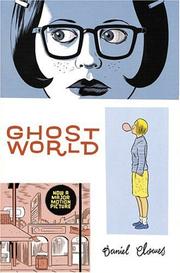
The Clowes book most readers know, and the tonal opposite of Black Hole on the same subject — American adolescence as a trap. Read it after Velvet Glove.
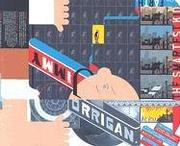
The third of the trio, and the most formally extreme. If Burns's density is in the ink, Ware's is in the page layout — a useful contrast to end on, and a natural next reading path.
Discussion
Keep reading
Paths that share books, cover the same subject, or open a related topic.