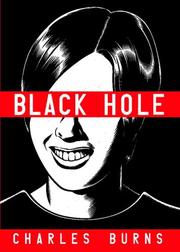
Start with Black Hole. It is Burns's one fully self-contained major work, it was serialised over a decade and collected in 2005, and it is the book everything else in his career is measured against. A sexually transmitted infection is spreading through a group of suburban Seattle teenagers in the mid-1970s, and it makes their bodies change — a tail, a second mouth, shed skin. The disease is not a metaphor the book explains; it is just the world, and the flat affect with which the teenagers accept it is the point.
The obvious alternative is to begin at the beginning of the bibliography, with the 1980s strips. Do not. Those collections are Burns learning to do in short form what Black Hole does at length, and read first they play as pastiche. Read second, they read as apprenticeship.
What you are actually buying: the physical object matters
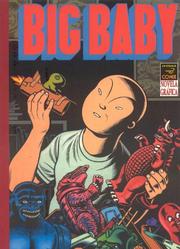
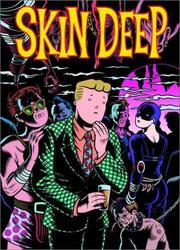
Burns designs books, not just pages. The trim sizes vary enormously between titles, the printing is part of the effect, and the ink coverage is heavy enough that cheap paper ruins it. This matters more than usual for one specific reason: his pre-Black Hole material has been recollected repeatedly under different titles by different publishers, and the contents overlap. Check the story list on the back before buying both Big Baby and Skin Deep, or you will pay twice for the same strips.
Content, stated plainly
This is body horror and it is explicit. Mutation, wounds, insects, sexual content and sexual violence, and — in Black Hole specifically — the deaths of teenagers. Burns draws all of it with the same clean, high-contrast, almost advertising-illustration line, which is exactly what makes it hard to look at. Nothing here is coy.
The early collections
Big Baby gathers the stories built around a small boy who reads too many monster magazines and cannot tell which of the horrors around him are real. Skin Deep collects the doomed-romance stories, including the ones that most clearly anticipate Black Hole. El Borbah is the outlier and the funniest thing he has done: a fat, chain-smoking Mexican wrestler works as a private detective in a rotting future city. Read El Borbah if you want to see Burns being genuinely comic before the horror closed over everything.
The X'ed Out trilogy, in order
X'ed out, The hive and Sugar skull are one book published in three parts between 2010 and 2014, and reading them out of sequence is simply reading the book out of sequence. The format is a deliberate homage — oversized European album, hardcover, flat colour, a protagonist drawn as a Tintin figure — and the story braids a young man's collapsing life in the 1970s with a dream world that keeps rewriting it. Each volume is short. Buy all three at once or wait until you can, because the first on its own resolves nothing and reads as a fragment.
Final Cut is the recent standalone, quieter and sadder than anything before it: a group of friends making an amateur horror film in the woods, and one of them misreading everything about the weekend. It needs no prior reading.
Where the rest of the list comes from
The path closes with the work Burns came up alongside, because the alternative-comics scene of the late 1980s is the context that makes his career legible. Gary Panter's Jimbo is the punk end of it, drawn deliberately ugly where Burns is deliberately clean. Daniel Clowes's Like a velvet glove cast in iron is the closest formal cousin to the X'ed Out books — dream logic, small-town rot, no explanation offered — and Ghost World is the same author writing plainly. Chris Ware's Jimmy Corrigan is included for contrast: the other direction the medium went at the same moment.
Where to stop
Black Hole is a complete reading experience and many people never go further, which is a reasonable outcome. If you want one more, make it the X'ed Out trilogy read as a single unit. Browse more comics reading orders on Discover.
Follow the full ordered path here: Charles Burns Reading Order: Where to Start and How to Read the X'ed Out Trilogy.