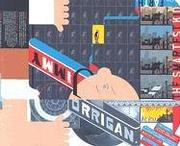
Daniel Clowes Reading Order: Where to Start and What Order to Read His Comics In
Almost everyone arrives at Daniel Clowes through Ghost World, which is misleading — it is his warmest book and one of his least formally strange. This path starts where readers actually start, then goes back to the serialised Eightball years where the voice was formed, then forward through the run of books in which Clowes stopped telling stories straight and began taking comics apart. His work is nearly all standalone graphic novels rather than a numbered series, so the order here is chronological within each stage and there is nothing to keep track of between books.
Start Here
BeginnerRead the two books that define the popular and the critical view of Clowes, and get used to his register — deadpan dialogue, ugly comedy, characters who are not being defended.
▸ Study plan for this stage
Pace: One to two weeks. Ghost World (80 pp) reads in an hour but was serialised in Eightball in instalments and is better read one chapter a night, which is how it was published. David Boring (148 pp) over a few evenings. Ghost World's comedy runs on contempt and both books contain casual cruelty, and Dav
- The deadpan register: flat delivery, ugly jokes, and no authorial signal about how to take them
- Clowes's refusal to defend his characters - the reader is not told whom to like
- Serialised scene structure in Ghost World: episodes rather than a plot, with the seams still visible
- The blue-green duotone wash of Ghost World and what a single non-black colour does to a book
- Noir pastiche in David Boring, and a narration that keeps interrupting to comment on its own genre
- The self-absorbed narrator whose account you are not meant to trust entirely
- Where does Ghost World actually break into its original instalments, and how can you tell?
- What is the book's attitude to Enid and Rebecca, and what in the drawing or dialogue establishes it?
- What does the duotone wash do that full colour or plain black and white would not?
- How does David Boring's narration undercut its own noir plot, and where does that stop being funny?
- Which of the two books would you hand to someone else, and which one told you whether to continue?
- Read Ghost World marking the end of each original Eightball instalment, then check whether the chapter breaks fall where you guessed
- Count the pages of Ghost World that are two characters walking and talking, and note what changes on the pages that are not
- Mark every moment in David Boring where the narration comments on the story's shape rather than advancing it, and see how much of the book that is
- Pick one page from each book and rewrite the dialogue as sincere rather than deadpan, to see how much the register is carrying
Next up: Ghost World and David Boring are the polished versions of a voice that was worked out in a comic book over ten years, which is where the next stage goes.
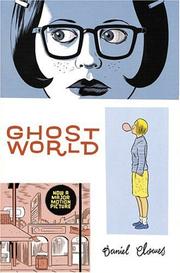
The obvious entry point and still the best one: two teenage girls in a nowhere suburb, drifting apart over one summer. Serialised in Eightball before it was collected, which is why it reads as a series of scenes rather than a plot.
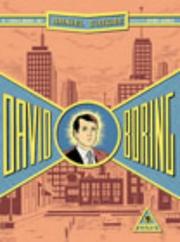
Read second, because it is the same voice pushed into much stranger territory — a noir-shaped story about obsession that keeps stopping to comment on its own shape. This is where you find out whether you want the whole body of work.
The Eightball Years
IntermediateGo back to the comic book Clowes serialised through the late eighties and nineties, where the surreal early mode and the satirical mode both come from.
▸ Study plan for this stage
Pace: Three to four weeks. Like a Velvet Glove Cast in Iron (142 pp) needs two readings and about a week - the plot logic is deliberately unrecoverable and a single pass will feel like failure. Pussey! (64 pp) in an evening, Caricature (105 pp) over a few days as short stories, Twentieth Century Eightball
- Dream logic as a structural choice: Velvet Glove withholds a recoverable plot on purpose
- The recurring uninterpretable image - Clowes uses motifs that resist decoding rather than reward it
- Satire of the comics industry from inside it, in Pussey!, and the disdain that runs under the later books
- The short story as a laboratory for the tonal shifts that later structure Ice Haven and Monica
- The gag strip and the one-page piece as forms Clowes never abandons
- Serialisation shaping the work: an instalment deadline visible in the pacing of everything here
- What is Velvet Glove actually about, and how much of your answer is imported rather than found on the page?
- How does Pussey!'s career arc map onto the real trajectory of an alternative cartoonist?
- Which tonal registers does Caricature move between, and what changes in the drawing at each shift?
- What is the material in Twentieth Century Eightball that Clowes's reputation for cruelty rests on, and is the satire aimed where it claims?
- What did serialisation give this work that a graphic novel commission would not?
- Read Velvet Glove twice, and on the second pass write down every recurring image - the fish, the mask, the letter - without attempting to explain any of them
- Put Pussey!'s four career stages beside Clowes's own publication history and mark the parallels and the deliberate distortions
- Pick two stories in Caricature with opposite tones and describe exactly what changes in the line, the panel size and the lettering
- Find the strips in Twentieth Century Eightball whose targets you recognise as characters or attitudes in the later books
- Take one page of Velvet Glove and one of Ghost World and compare how much information a single panel is asked to carry
Next up: The Eightball years show the range; the next three books are where Clowes stops using form as a delivery mechanism and starts making it the subject.

His first long work, serialised across ten issues of Eightball, and by some distance the most dreamlike thing he has made — the plot logic is deliberately unrecoverable. Read it first in this stage so the later precision reads as a choice.

A savage serial about a comics fan turned comics professional, and Clowes's most direct writing about the industry he works in. Short, funny, and useful context for the disdain that runs under the later books.
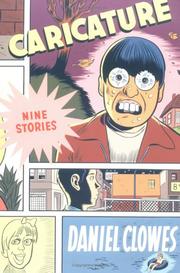
A collection of the standalone short stories from the same period. Placed here because the short form is where he tested the tonal shifts that structure Ice Haven and the later novels.

The gag strips, parodies and one-page pieces from the same magazine, gathered up. Read it last in this stage as a sampler of everything that did not become a novel — including the material his reputation for cruelty rests on.
Taking the Form Apart
IntermediateRead the three books where the page layout, the colour and the strip format become the subject rather than the delivery mechanism.
▸ Study plan for this stage
Pace: Two weeks. Ice Haven (89 pp) is short but should be read twice - once through and once reordering it in your head, which is the work it asks for. The Death-Ray (40 pp) in a sitting. Mister Wonderful (80 pp) in a sitting; it was serialised as a newspaper strip and its wide letterbox panels are a cons
- Multiple drawing styles as multiple narrative voices within one book (Ice Haven)
- The reader as assembler: a crime story that only exists if you put the strips in order yourself
- Superhero colour and iconography used against superhero morality (The Death-Ray)
- The newspaper-strip letterbox as a formal constraint that shapes the emotional pacing of Mister Wonderful
- Serialisation format as the determining fact about a book's shape, twice over in this stage
- Genre as material rather than as container
- How many narrators does Ice Haven have, and what does each style tell you about its speaker before they say anything?
- What is the crime in Ice Haven, and at what point did you assemble it?
- What does The Death-Ray borrow from superhero comics visually, and what does it withhold morally?
- How do the letterbox panels of Mister Wonderful change the rhythm compared with a conventional grid?
- Which of these three would fall apart if it were redrawn in a single uniform style?
- List every strip in Ice Haven with its style and narrator, then reorder them chronologically and write down what the book's published order was doing that yours does not
- Go through The Death-Ray marking each panel where the colour is doing superhero work while the story is doing something else
- Read Mister Wonderful noting where each original strip instalment must have broken, and check the rhythm of the reveals against those breaks
- Draw a two-page sequence from Ice Haven as a single continuous style and see exactly what is lost
Next up: Having taken the page apart, the late books put the pieces back together at novel length and with the joke turned down.
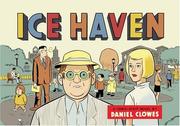
A small town told through a couple of dozen separate strips, each in a different style and register, that only add up to a crime story if you assemble them yourself. The clearest demonstration of what Clowes means by structure.
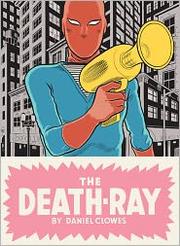
A superhero origin story told with the genre's colour palette and none of its morality — a boy gets a weapon and uses it badly. Read after Ice Haven: it applies the same formal trickery to a single sustained narrative.

A blind date told in the wide, letterboxed panels of a newspaper strip, because that is what it was originally serialised as. Short, and the most sympathetic thing in his bibliography.
The Late Books
IntermediateRead the three long, formally restless works of the last fifteen years, in which the joke gets quieter and the ambition gets much larger.
▸ Study plan for this stage
Pace: Two to three weeks. Wilson (80 pp) reads in an hour and rereads well. Patience (179 pp) over a few evenings - it is his longest sustained single narrative and the fluorescent colour is central, so read a physical copy if you can. Monica in a week, read slowly: nine linked stories in nine genres, and
- The one-page-strip novel: seventy-odd self-contained pages each ending on a punchline that is not funny
- Style change per page as characterisation rather than decoration
- Patience's fluorescent palette and its use as an emotional register rather than a description of light
- Time travel as structure - the story's order and the page order deliberately do not match
- Emotional directness as a late development in a body of work built on withholding it
- Monica's nine genres and the reader's job of assembling one life from them
- What does the gag-strip form do to a novel's emotional pacing in Wilson?
- How many drawing styles does Wilson use, and does any of them belong to the character rather than the author?
- What does the fluorescent colour in Patience do at the moments of greatest violence?
- Which of Monica's nine stories knows the most, and which is most misleading?
- Is the late warmth a genuine change or another pose, and what evidence would settle it?
- Read Wilson straight through, then again reading only the final panel of each page, and compare the two books you get
- Chart Patience's story chronology against its page order and mark where the two diverge most
- Name the genre of each of Monica's nine stories and write one line on what each knows that the others do not
- Find the same character drawn in two different styles in Wilson and describe what each version implies about him
- Put a page of Patience beside a page of Ghost World and note what twenty years did to the colour and the line
Next up: The books are all read; what remains is the serialised original context, which changes how several of them look.
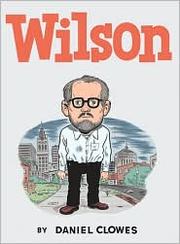
Seventy-odd single-page strips about one insufferable man, each drawn in a different style and each ending on a punchline that is not funny. The gag-strip form from Twentieth Century Eightball turned into a novel.

His first outright science fiction — a time-travel story about a widower — in fluorescent colour and at full length. Read after Wilson: the emotional directness here is new, and it lands harder if you have read the cold books first.

Nine linked stories in nine genres that assemble into one woman's life across the American twentieth century. His most difficult and most ambitious book, and the right place to finish.
For Completists
IntermediateSee the serialised work in its original form and order, which is how most of it was first read.
▸ Study plan for this stage
Pace: Two weeks, or dipped into indefinitely. The Complete Eightball 1-18 (454 pp across a two-volume boxed set) reprints the first eighteen issues exactly as published, letters pages and covers included. It overlaps heavily with the collections in the earlier stages, so read it only after them - its valu
- Serial context: what ran beside what, issue by issue, and how the mix set the tone
- The letters pages as a record of the audience Clowes was actually writing for and against
- How the collected editions re-sequenced and cleaned up material that first appeared interleaved
- Issue-by-issue development of the voice across a decade
- The material from the run that never made it into any collection
- Covers and back matter as part of the work rather than packaging
- Which long stories were running concurrently, and what does reading them interleaved do?
- What do the letters pages tell you about Clowes's readership and his relationship to it?
- Which pieces from issues 1-18 have never been collected elsewhere, and why might that be?
- How does an instalment of Ghost World read when it is followed by a gag strip rather than by the next chapter?
- For three of the collected books, find the issues they ran in and note what shared each issue with them
- Read one letters page and then the strip in the following issue that responds to it
- List the material in issues 1-18 that appears in none of the collections you have already read
- Compare a story's presentation in the original issue with its presentation in the later collection and note every change
Next up: That is the whole body of work in and out of its original context; from here the useful continuation is his contemporaries in the same alternative-comics generation, and his film work on the Ghost World adaptation.

A two-volume boxed reprint of the first eighteen issues of the comic exactly as published, letters pages and covers included. It overlaps heavily with the collections above, so read it only after them — its value is the running context, not new material.
Discussion
Keep reading
Paths that share books, cover the same subject, or open a related topic.