Start with Aura. It runs to about a hundred pages, it is written in the second person, and it does in one evening what Fuentes spends far longer novels arranging: it brings the Mexican past into a room and refuses to let it stay dead. The obvious alternative opening is The death of Artemio Cruz, which is the better novel — but it is a scrambled deathbed monologue told in three grammatical persons, and readers who meet Fuentes there often conclude he is difficult rather than that he is good.
So read Aura first and The death of Artemio Cruz second. That pairing gives you both halves of Fuentes in under four hundred pages: the compressed gothic miniature and the panoramic political novel. Almost everything else he wrote is an extension of one of those two impulses.
The entry point
Aura is a haunted-house story about a young historian hired to edit a dead general's papers. Read it in one sitting. Its effect depends on momentum, and the second-person address stops working if you leave it for a week.
The death of Artemio Cruz is the book he is taught for. A dying press baron reviews his own life, and the Mexican Revolution turns out to be a machine that converted its idealists into landlords. The time-scrambling looks forbidding on page one and stops mattering by page thirty; the three voices are simply the same man at different distances from himself.
The panorama
Where the air is clear was his first novel, and it is the hungrier, messier version of the same project — Mexico City rendered as a whole society, dozens of characters, a structure openly borrowed from the modernists. Read it after The death of Artemio Cruz rather than before. It is more interesting once you can see what he later learned to control.
The Old Gringo is the most immediately readable of the novels and the one many readers arrive from, since it was a rare Mexican bestseller in the United States. Ambrose Bierce rides into the Revolution and vanishes. Use it as a breather between the heavier books.
Distant relations and The crystal frontier extend the range in opposite directions: the first is a slow supernatural puzzle set between Mexico and France, the second is nine linked stories about the border as a working economy rather than a metaphor. The crystal frontier is the more useful of the two for a reader who wants to know what Fuentes thought about the country he actually lived in.
The wall
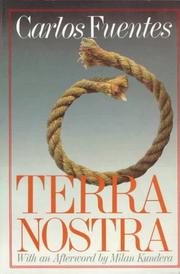
Terra nostra is where Fuentes readers separate from Fuentes completists. It runs past eight hundred pages, folds the Spain of Philip II into a mythic account of the entire Hispanic world, and takes its structural licence from the same modernist tradition that produced Joyce. Some readers consider it his masterpiece. Most readers who love Fuentes never finish it.
The recommendation: do not attempt it until you have read three of his other novels, and do not treat abandoning it as a failure. It is the one book here that genuinely punishes the reader who arrives unprepared.
The late work and the essays
The Years with Laura Díaz runs a century of Mexican history through one woman's life and is the most conventionally satisfying of the late novels. The Buried Mirror is nonfiction — a survey of Spain and the New World written for a general audience — and it is the single best companion to the fiction, because it lays out plainly the historical argument the novels dramatise. A new time for Mexico collects essays from the 1990s and is the most dated item here, valuable mainly as a record of what an engaged novelist thought his country was becoming.
Where to stop
Two books is a legitimate stopping point. If Aura and The death of Artemio Cruz leave you cold, Fuentes is not for you, and no later book will change that. If they work, add The Old Gringo and The Buried Mirror and you have a complete picture of the writer without ever opening Terra nostra.
A note on translations: Fuentes was carried into English by several different hands across four decades, and some of the novels exist in more than one English version. If a sentence reads stiffly, check the copyright page for the translator and the date before blaming the author — the versions currently in print are generally the later ones. You can see the full sequence with study notes on the reading path, or browse more author guides on Discover.