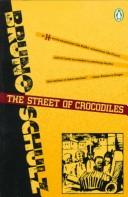
Start with The street of crocodiles. It is 160 pages, it is the first of Bruno Schulz's two books, and it is one of the two things on this path he actually wrote as fiction. There is no other sensible entry point, because there is barely anything else.
Say the shape of this out loud before you begin, because it determines everything about how to read it. Schulz published two thin collections of stories in the 1930s. He was shot dead in the street in his home town of Drohobycz in 1942 by a Gestapo officer. A novel called The Messiah is lost and probably destroyed. That is the whole career: two books, some letters, some drawings. Everything else on this path is by other people.
The two books
The street of crocodiles and Sanatorium under the sign of the hourglass are the complete fiction, and they total under 350 pages. Both are collections of linked stories narrated by a boy watching his father, a shopkeeper who is slowly becoming a bird, or a cockroach, or a heap of dust, depending on the story and on what the prose feels like doing.
Read them slowly. Fifteen or twenty pages a sitting is right, because the sentences are dense with metaphor and reading them at novel speed turns them into fog. Take The street of crocodiles first; the second book is stranger, later and better once you know the family.
A word on translations, since you will have a choice. The long-standing English versions are Celina Wieniewska's, which are beautiful and take real liberties; Madeline Levine's more recent translations are closer to the Polish and less lush. Both are defensible. If you only read one, most readers find the older versions the more seductive introduction.
His own words, and the life
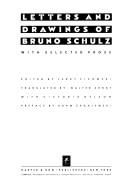
Letters and drawings of Bruno Schulz is the third book on this path that is genuinely his — correspondence, essays and reproductions of his graphic work. It is a collection to move around in rather than read straight through: dip, then read the essays properly.
Regions of the great heresy is Jerzy Ficowski's biography, the work of a man who spent most of his life gathering what survived of Schulz, and it reads steadily. Bruno Schulz - an Artist, a Murder, and the Hijacking of History by Benjamin Balint is the newest and most narrative, and is largely about what happened to his remains and his murals after 1942 — including the dispute over their removal from Drohobycz, which the book lays out without pretending it is settled.
Take those three in that order: his own words, then the life, then the afterlife.
Books about his absence
The Messiah of Stockholm by Cynthia Ozick is 141 pages about a man who believes he is Schulz's son and is offered the lost manuscript. See Under Love by David Grossman is a long, formally wild novel whose Schulz section is the reason it is here and is difficult in a way no summary conveys; allow two weeks. Tree of Codes by Jonathan Safran Foer is The street of crocodiles with most of the words physically die-cut out of the page — a genuine object, unreadable as an ebook, and an hour's experience.
Read Tree of Codes genuinely last. It only works if you know the sentences it is cutting into.
Where to stop
If you want Schulz, you want the two books, and you can be finished in a fortnight. Everything after that is optional and increasingly indirect. The honest description of this path is: two books by a great writer, one volume of his letters, two biographies, and three novels by other people about the fact that there is no more. More single-author reading orders are on Discover.
Follow the full ordered path here: Bruno Schulz Reading Order: Where to Start.