Bruce Chatwin Reading Order: Where to Start
Bruce Chatwin is one of the most elusive and debated writers of the 20th century — a stylist who blurred travel writing, fiction, anthropology, and myth. This curriculum begins with his most accessible and celebrated work, moves through his full body of writing in roughly the order it rewards discovery, and then turns a critical eye on the man himself: his fabrications, his sources, and his contested legacy.
First Encounter: The Essential Chatwin
BeginnerExperience Chatwin's voice and style at its most vivid and accessible, and understand why he became a literary sensation.
▸ Study plan for this stage
Pace: 8–10 weeks total: Weeks 1–4 for "In Patagonia" (~20–25 pages/day, 5 days/week), and Weeks 5–10 for "The Songlines" (~25–30 pages/day, 5 days/week). Allow one buffer day per week for re-reading striking passages and journaling. No prior knowledge of Chatwin is assumed.
- Chatwin's hybrid genre: the blurring of travel writing, fiction, memoir, and journalism into a single restless form
- The fragment as a literary unit: how In Patagonia builds meaning through short, jewel-like chapters rather than sustained narrative
- Obsession and the quest object: the role of the piece of 'brontosaurus skin' in In Patagonia as a structuring myth and metaphor for all Chatwin's wandering
- Nomadism as philosophy: The Songlines' central argument that human restlessness and the compulsion to walk are hardwired into our nature
- The Songlines' dual structure: the narrative travel account of Aboriginal Australia set against the philosophical notebook sections ('From the Notebooks'), and how they illuminate each other
- Chatwin's prose style: extreme compression, cinematic scene-setting, the telling detail, and the aphoristic sentence
- The tension between rootedness and restlessness: how both books dramatize the conflict between settlement and movement as a moral and existential question
- Chatwin as a constructed narrator: the 'Bruce Chatwin' on the page as a literary persona — curious, aesthete, provocateur — rather than a transparent autobiographical self
- In In Patagonia, what is the 'piece of skin' and how does it function both literally as a plot device and symbolically as a key to understanding Chatwin's motivations as a traveller and writer?
- How does Chatwin use the short-chapter, fragmentary structure of In Patagonia to create atmosphere and argument — what would be lost if the book were written in conventional long chapters?
- In The Songlines, what are songlines (Dreaming tracks) and why does Chatwin find in them a confirmation of his own theory about human nomadism?
- How does the 'From the Notebooks' section of The Songlines differ in tone and purpose from the narrative sections set in Australia, and does the book succeed in weaving them together?
- Both books feature Chatwin inserting himself into landscapes and communities as an outsider. How does he handle — or fail to handle — the ethical complexity of that outsider position?
- What specific features of Chatwin's sentence-level prose style (word choice, rhythm, use of dialogue, descriptive detail) make his writing immediately recognizable, and can you find one exemplary passage from each book?
- Keep a 'Chatwin Commonplace Book': as you read, copy out one sentence or short passage per reading session that strikes you as distinctively Chatwinian. After finishing both books, review your collection and write a one-page description of his style in your own words.
- Map the journey in In Patagonia: using a physical or digital map of Patagonia, plot the key locations Chatwin visits in order. Note which chapters feel geographically grounded and which feel more mythological — what pattern emerges?
- Fragment-writing exercise: choose a journey or place you know personally and write about it in the style of In Patagonia — five chapters of no more than one page each, each built around a single object, person, or anecdote. Focus on compression and the telling detail.
- Debate the argument of The Songlines: write a one-page 'for' and one-page 'against' response to Chatwin's central thesis that humans are biologically nomadic and that settlement breeds violence. Use evidence from the book itself on both sides.
- Close-read one chapter from each book (your choice) and annotate it for craft: mark every simile, every piece of dialogue, every moment of scene-setting, and every aphorism. Then write a short paragraph on what the annotation reveals about how Chatwin constructs a page.
- Research one real historical figure who appears in In Patagonia (e.g., Butch Cassidy, Charles Milward, or the Welsh settlers of Chubut) and write a half-page note on what Chatwin includes, what he omits, and what that selectivity tells you about his method.
Next up: Mastering Chatwin's voice and core obsessions in these two landmark works gives the reader the essential reference points — the style, the nomadic philosophy, the hybrid form — needed to appreciate how he pushed, complicated, and sometimes contradicted those same ideas in his fiction and shorter prose.
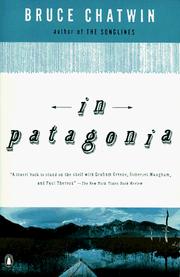
The book that made Chatwin famous and the perfect entry point — a mosaic of travel, myth, and personal obsession that introduces his signature blend of fact and fable. Reading it first lets you fall in love with the prose before you start questioning it.
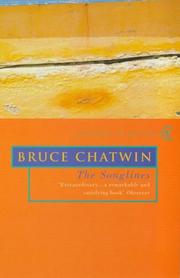
His most ambitious and beloved book, weaving a journey through Aboriginal Australia with a philosophical notebook on nomadism and human restlessness. It builds directly on the wandering sensibility established in In Patagonia.
The Novels: Fiction Wearing Reality's Clothes
BeginnerRead Chatwin's two major novels and see how his obsessions — objects, collectors, exile, violence — translate into pure fiction.
▸ Study plan for this stage
Pace: 5–6 weeks total: Weeks 1–3 for "On the Black Hill" (~20–25 pages/day, including re-reading key passages); Weeks 4–6 for "Utz" (~15–20 pages/day — it's shorter but denser, so slower and more reflective reading is encouraged).
- Rootedness vs. Restlessness: 'On the Black Hill' presents twin brothers who almost never leave their Welsh farm — an inversion of Chatwin's usual nomadic obsession — forcing the reader to ask whether staying put is its own kind of exile.
- The Object as Soul: In 'Utz', Kaspar Utz's Meissen porcelain collection is not mere property but an extension of identity, memory, and resistance; Chatwin argues that what we collect reveals what we cannot say aloud.
- Violence Beneath the Pastoral: 'On the Black Hill' layers generational trauma, war, and repressed desire beneath a seemingly quiet rural surface, showing that Chatwin sees violence as inseparable from attachment to place.
- Collector as Dissident: Utz's obsessive collecting under a Communist regime is a covert act of political and spiritual defiance — the private world of objects becomes a refuge from ideological control.
- Compression and the Novella Form: 'Utz' demonstrates Chatwin's belief that fiction should be stripped to its essentials; every sentence carries weight, and nothing is decorative.
- The Twin as Motif: Lewis and Benjamin Jones in 'On the Black Hill' function almost as a single divided self — one yearning outward, one clinging inward — dramatizing Chatwin's lifelong tension between wandering and belonging.
- Ambiguity of Endings: Both novels close on images that resist easy resolution (the brothers' final flight; the fate of Utz's collection), training the reader to sit with open questions rather than neat conclusions.
- Fiction as Disguised Autobiography: Though neither novel is explicitly autobiographical, both encode Chatwin's personal obsessions — with objects, with Central Europe, with the meaning of home — making them readable as oblique self-portraits.
- In 'On the Black Hill', how does Chatwin use the farm, The Vision, as both a sanctuary and a prison for Lewis and Benjamin — and what does this duality say about his broader theme of rootedness?
- What does Kaspar Utz's relationship to his porcelain collection in 'Utz' reveal about the relationship between ownership, identity, and mortality?
- Both novels feature characters who are, in different ways, trapped — by geography, by regime, by obsession. How does Chatwin generate sympathy rather than judgment for these characters?
- How does Chatwin handle the passage of time differently in 'On the Black Hill' (spanning nearly a century) versus 'Utz' (a compressed, almost claustrophobic timeframe)?
- The endings of both novels are deliberately mysterious. What do you think happens to Utz's collection, and what is the significance of the brothers' airplane ride at the close of 'On the Black Hill'?
- How do these two novels reframe the themes you associate with Chatwin's non-fiction — nomadism, objects, exile — by placing them inside invented characters and plots?
- **Twin Portrait Exercise:** After finishing 'On the Black Hill', write a one-page character sketch of Lewis AND Benjamin as if they were a single person split in two. Identify which half of that person resembles Chatwin himself, and explain your reasoning with specific scenes from the novel.
- **Object Biography:** Choose one object from 'Utz' — a specific piece of porcelain Chatwin describes — and write a 300-word 'biography' of that object: where it came from, what it has witnessed, what it means to Utz. This mirrors Chatwin's own technique of animating things.
- **Sentence Autopsy:** Select one paragraph from 'Utz' and one from 'On the Black Hill' and copy them out by hand. Then annotate every sentence: What is it doing? What is it withholding? What word could be removed? This builds sensitivity to Chatwin's compression.
- **Comparative Timeline:** Draw a simple two-column timeline — one for each novel — marking major events. Then note where Chatwin speeds up, slows down, or skips time entirely. Reflect in a short paragraph on what those choices reveal about what he values.
- **The Ending Debate:** Write two short paragraphs (one per novel) arguing for the most plausible interpretation of each ambiguous ending, then write a third paragraph on why Chatwin might have chosen ambiguity over resolution as a matter of artistic principle.
- **Obsession Inventory:** Make a list of every recurring Chatwin obsession (objects, collectors, exile, violence, twins/doubles, Central Europe, etc.) and track which scenes in each novel embody them. At the end, note any obsession that appears in one book but not the other — and speculate why.
Next up: By seeing how Chatwin's obsessions operate inside pure fiction — stripped of the 'I was there' authority of travel writing — the reader is now primed to return to his non-fiction and essays with sharper eyes, ready to interrogate how he blurred the line between fact and invention across his entire body of work.

His most straightforwardly novelistic work, a tender story of twin brothers on a Welsh hill farm. Reading it here shows the range behind the travel-writer label and is the most conventionally accessible of his fictions.
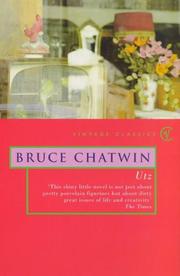
A short, jewel-like novel about a Meissen porcelain collector in Communist Prague — Chatwin at his most compressed and ironic. It rewards the reader who already knows his voice and themes of possession and obsession.
The Stranger Territories: Viceroy and Early Essays
IntermediateEncounter Chatwin's most extreme and contested work, and read his own essays on art, travel, and ideas to understand his intellectual framework.
▸ Study plan for this stage
Pace: 5–6 weeks total: Week 1–2 — Read "The Viceroy of Ouidah" (~100 pages, ~15–20 pages/day, allowing time to pause and re-read dense passages); Week 3–6 — Read "What Am I Doing Here" (~350 pages of essays, ~20–25 pages/day, grouping thematically related essays in single sittings rather than reading stri
- The historical vs. the mythologized: how Chatwin transforms the real life of Francisco Félix de Sousa into a hallucinatory, almost operatic legend in 'The Viceroy of Ouidah', and what that transformation costs in terms of moral clarity
- The slave trade as gothic spectacle: Chatwin's controversial aesthetic choices in depicting atrocity — his use of lush, distanced prose to render violence and complicity, and the ethical questions this raises about the 'beautiful' rendering of horror
- Nomadism as intellectual and spiritual philosophy: across 'What Am I Doing Here', Chatwin's essays reveal a sustained, coherent argument that restlessness and movement are not mere wanderlust but a fundamental human condition rooted in evolutionary and existential necessity
- Portrait as a literary form: 'What Am I Doing Here' is structured largely around vivid portraits of artists, writers, and thinkers (Nadezhda Mandelstam, Madeleine Vionnet, André Malraux, Konrad Lorenz, and others) — understanding how Chatwin uses the individual life as a vehicle for larger ideas abo
- The essay as self-revelation: reading 'What Am I Doing Here' as an indirect autobiography — what Chatwin's obsessions, enthusiasms, and blind spots in his subjects tell us about his own self-conception as a writer and traveler
- Exoticism and its discontents: both books engage with non-Western cultures (Dahomey in 'The Viceroy', various global locales in 'What Am I Doing Here') — tracing where Chatwin's gaze is genuinely curious and where it risks reducing cultures to atmosphere or backdrop
- Chatwin's aesthetic of compression and intensity: how his prose style — short, jewel-like sentences, cinematic scene-setting, abrupt tonal shifts — functions differently in a novel versus in essay and reportage form
- Death, legacy, and the end of an era: 'What Am I Doing Here' was published posthumously and several pieces are elegies — understanding how mortality and the passing of great figures shape the collection's emotional undertow
- In 'The Viceroy of Ouidah', Chatwin strips away conventional novelistic interiority — we rarely know what Francisco de Sousa truly thinks or feels. What effect does this radical narrative distance create, and do you find it an artistic strength or an evasion of moral responsibility toward the subject matter?
- How does 'The Viceroy of Ouidah' use the structure of myth and legend (repetition, genealogy, ritual, prophecy) rather than conventional plot? What does Chatwin gain — and lose — by writing a novel that reads more like a dark folktale than a historical narrative?
- Across the portraits in 'What Am I Doing Here', what consistent values does Chatwin seem to admire in his subjects? What does the pattern of his enthusiasms reveal about his own artistic and moral priorities?
- Chatwin's title 'What Am I Doing Here' is both a traveler's question and an existential one. After reading the collection, how would you answer that question on Chatwin's behalf — what is his implicit answer to why he goes to the places he goes and writes what he writes?
- Both books engage with figures who operate outside or at the edges of conventional society — a slave trader turned king, reclusive artists, political dissidents, nomads. What does Chatwin's persistent attraction to such outsider figures suggest about his worldview?
- Where do you find Chatwin's prose most and least ethically comfortable in these two books? Identify a specific passage from each book where his style either illuminates or, in your view, obscures a difficult human reality.
- Close-reading journal: Select five passages from 'The Viceroy of Ouidah' — at least two depicting violence or the slave trade — and write a paragraph on each analyzing how Chatwin's sentence-level choices (rhythm, diction, point of view, imagery) shape the reader's emotional and moral response. Resist summarizing; focus on the craft.
- Essay mapping: After finishing 'What Am I Doing Here', create a thematic index of the collection. Group the essays under three to five recurring preoccupations (e.g., nomadism, artistic genius, political courage, the nature of collecting). Write a one-paragraph synthesis for each group explaining what Chatwin's essays collectively argue about that theme.
- Comparative portrait exercise: Choose one figure profiled in 'What Am I Doing Here' and spend 30–60 minutes reading one external source about that person (an obituary, a Wikipedia article, a short biography). Then write a 300-word reflection: what did Chatwin emphasize, omit, or distort — and what does that selective vision tell you about Chatwin as much as about his subject?
- Ethical debate: Write a structured 400–500 word response to the following provocation — 'The Viceroy of Ouidah aestheticizes slavery and should not be celebrated as literature.' Argue one side, then write a 200-word rebuttal from the opposing view. Use specific textual evidence from the novel.
- Style imitation: Choose a person, place, or encounter from your own life and write a 300-word Chatwin-style portrait in the manner of the shorter pieces in 'What Am I Doing Here'. Aim for his compression, his eye for the telling physical detail, and his habit of embedding a large idea inside a small observation. Then annotate your own piece: where did you consciously imitate him, and where did you
- Synthesis essay: At the end of the stage, write a 600–800 word essay answering: 'What is Bruce Chatwin's intellectual framework — his core beliefs about human beings, movement, art, and civilization — as revealed by these two books together?' Draw on at least three specific moments from 'The Viceroy of Ouidah' and at least four essays from 'What Am I Doing Here'.
Next up: Mastering Chatwin's intellectual framework and his most extreme stylistic risks in these two books equips the reader to engage critically and with full context with his later, more celebrated and synthesizing works, where his ideas about nomadism, myth, and human restlessness reach their most refined and debated expression.
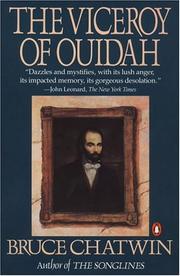
His darkest and most hallucinatory book, based on a Brazilian slave-trader in Dahomey — deliberately difficult and operatic. Best read after the novels, as it sits between travel writing and fiction in the most unsettling way.
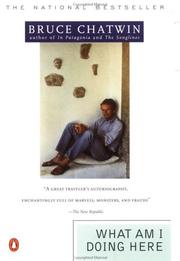
His collected essays and portraits, published just before his death, revealing the wide range of people and places that fed his imagination. Reading his non-fiction prose here illuminates the sources and methods behind all the earlier books.
Behind the Myth: Biography and Criticism
IntermediateUnderstand who Chatwin really was, how much he invented, and why the question of truth in his work matters so deeply.
▸ Study plan for this stage
Pace: 8–10 weeks, ~25–30 pages/day — Shakespeare's biography is dense with archival detail, interviews, and critical reflection; a measured pace allows the reader to pause and cross-reference claims against Chatwin's own texts read in earlier stages.
- The gap between Chatwin's self-mythologizing and the documented biographical record — Shakespeare systematically tests Chatwin's own stories against letters, diaries, and witness testimony
- Chatwin's compulsive reinvention of identity: his shifting personas as art-world prodigy, nomad-philosopher, travel writer, and novelist are shown to be consciously constructed
- The role of sexuality and secrecy in shaping Chatwin's life and work — Shakespeare's biography was the first to address his bisexuality and its relationship to his restlessness and risk-taking
- Fabrication as literary method: the distinction Shakespeare draws between outright invention, selective compression, and imaginative reconstruction across works like In Patagonia and The Songlines
- The ethics of the 'faction' form — why readers, subjects, and critics felt variously betrayed or liberated by Chatwin's blurring of fact and fiction
- Chatwin's relationship to place and the nomadic ideal: how his theory of human restlessness (the 'Songlines' thesis) was as much personal mythology as anthropological argument
- The AIDS diagnosis and its concealment: how the circumstances of Chatwin's death illuminate his lifelong relationship with truth, performance, and public image
- Shakespeare's own methodology as biographer — how he weighs contradictory sources and what that reveals about the difficulty of pinning down any 'true' Chatwin
- According to Shakespeare, which specific episodes in Chatwin's published work can be shown to be invented or significantly distorted, and what sources does he use to demonstrate this?
- How does Shakespeare characterize the relationship between Chatwin's personal restlessness — rooted in biography, sexuality, and temperament — and the philosophical nomadism he preached in his writing?
- What does Shakespeare's biography reveal about how Chatwin managed his public image during his lifetime, and how did friends, editors, and publishers participate in or resist that management?
- Why does the question of truth in Chatwin's work matter beyond mere fact-checking — what is at stake aesthetically, ethically, and for the reader's experience of his books?
- How does Shakespeare handle the tension between admiration for Chatwin's genius and the obligation to expose his deceptions? Where, if anywhere, does the biography seem to pull its punches?
- What does the manner of Chatwin's death, and the stories he told about his illness, add to our understanding of the themes that run through his entire body of work?
- Fact-checking exercise: Choose one chapter of a Chatwin work you read in a prior stage (e.g., a specific encounter in In Patagonia or a scene in The Songlines) and use Shakespeare's footnotes, source notes, and narrative to trace what is documented, what is embellished, and what appears to be invented. Write a one-page annotation.
- Identity-mapping timeline: Build a chronological chart of Chatwin's self-reinventions as documented by Shakespeare — key biographical turning points on one axis, the corresponding persona or public claim on the other. Look for patterns in when and why he reinvented himself.
- Close-reading comparison: Select a passage where Shakespeare quotes directly from Chatwin's letters or diaries and compare it to a published passage on the same subject. Write a paragraph analyzing what was added, removed, or transformed in the move from private to published.
- Ethical debate journal: After finishing the biography, write two short position statements — one defending Chatwin's blending of fact and fiction as legitimate literary art, one prosecuting it as a betrayal of readers and subjects. Then write a third paragraph stating your own considered view.
- Source-criticism exercise: Identify three moments in Shakespeare's biography where he relies on a single witness or contested source. Research whether any published reviews or scholarly responses have challenged those moments, and assess how it affects your trust in the overall portrait.
- Thematic essay (500–700 words): 'Shakespeare's biography does not diminish Chatwin's work — it makes it more interesting.' Argue for or against this claim, drawing exclusively on evidence from Bruce Chatwin by Nicholas Shakespeare.
Next up: Having established a clear-eyed picture of who Chatwin actually was and how deliberately he constructed his literary identity, the reader is now equipped to engage with his individual works at a deeper level of critical sophistication — reading them not as transparent autobiography or reliable travel writing, but as carefully crafted performances whose tension between truth and invention is the ve
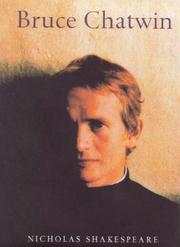
The definitive, exhaustively researched life — Shakespeare interviewed hundreds of people and traces every major journey and claim. This is the essential corrective and companion to reading Chatwin's own books.
Deeper Context: The Genre He Inhabited
ExpertPlace Chatwin within the broader tradition of literary travel writing and understand how his peers and critics have assessed his legacy.
▸ Study plan for this stage
Pace: 2–3 weeks, ~20–25 pages/day — De Botton's chapters are self-contained essays, so read one or two per sitting, pausing to annotate and reflect before moving on.
- The philosophical underpinnings of travel as a mode of self-discovery and meaning-making, as De Botton frames them
- The tension between the romantic anticipation of travel and its often disappointing reality — a lens directly applicable to Chatwin's idealized nomadism
- How canonical travel writers (Flaubert, Wordsworth, Humboldt, etc.) are used by De Botton to construct a literary genealogy of travel writing — and where Chatwin's sensibility fits within that lineage
- The role of the 'guide' or mediating consciousness: how a writer's subjectivity shapes the reader's experience of a place
- Travel writing as a hybrid genre: the blending of autobiography, philosophy, journalism, and fiction — the very hybridity that defines Chatwin's work
- The aesthetics of attention: De Botton's argument that art and literature train us to notice the world, connecting to Chatwin's own highly aestheticized prose style
- Critical reception and legacy: how posterity judges travel writers based on the quality of their ideas, not merely their itineraries
- The ethics of travel writing: whose gaze is centered, and what is omitted or romanticized — a framework for critically assessing Chatwin's blind spots
- According to De Botton, what psychological needs does travel fulfill, and how do those needs illuminate why Chatwin's restless, nomadic narratives resonated so powerfully with readers?
- De Botton draws on multiple historical travel writers to build a tradition. Based on his framework, which strand of that tradition does Chatwin most clearly belong to, and why?
- How does De Botton's concept of the 'anticipatory imagination' help explain both the appeal and the critical controversy surrounding Chatwin's tendency to mythologize places and peoples?
- De Botton argues that artists and writers teach us how to 'see' a landscape. How does this idea apply to Chatwin's prose — and what are its limitations when considering the communities he wrote about?
- What does De Botton's treatment of the relationship between travel and ideas (rather than mere sightseeing) reveal about what separates literary travel writing from journalism or guidebook writing — and how does Chatwin exemplify or complicate that distinction?
- After reading De Botton, how would you characterize Chatwin's legacy within the broader tradition of literary travel writing: as a culmination, an outlier, or a transitional figure?
- Comparative annotation: As you read each chapter of De Botton, write a marginal note (or a sticky note) identifying one Chatwin passage, scene, or theme from your earlier reading that either confirms or challenges De Botton's argument. Compile these into a two-column 'dialogue' document by the end.
- Tradition mapping: Draw a literary family tree of travel writers using the figures De Botton discusses. Then manually place Chatwin on the tree, writing 2–3 sentences justifying his position and noting any figures he most closely resembles in method or philosophy.
- The anticipation vs. reality essay: Write a 400–600 word personal essay applying De Botton's 'anticipatory imagination' concept to one of Chatwin's destinations (Patagonia, the Welsh Marches, Australian outback). Argue whether Chatwin's text is more 'anticipation' or 'arrival.'
- Critical gaze audit: Choose one chapter from De Botton and one corresponding section from any Chatwin work you have read. Write a one-page critique examining whose perspective is centered, what is romanticized, and what voices are absent — using De Botton's aesthetic framework as your analytical tool.
- Genre taxonomy exercise: Using De Botton's implicit definition of literary travel writing, draft a 300-word 'genre definition' of your own. Then test it against Chatwin: does his work fit cleanly, partially, or not at all? Revise your definition accordingly.
- Peer legacy assessment: Write a mock 'literary obituary' (400 words) for Chatwin as if you were a critic steeped in De Botton's tradition — evaluating what Chatwin contributed to the genre, what he failed to do, and what writers might carry his legacy forward.
Next up: Grounding Chatwin in De Botton's broad philosophical and historical framework equips the reader with a critical vocabulary — hybrid genre, aesthetics of attention, romanticized gaze — that will be essential for engaging with primary scholarly criticism and biography in the next stage.
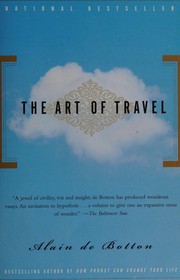
A philosophical meditation on why we travel and what travel writing does — reading it last places Chatwin's entire project in a broader intellectual tradition and invites the reader to form their own final judgment on his achievement.
Discussion
Keep reading
Paths that share books, cover the same subject, or open a related topic.