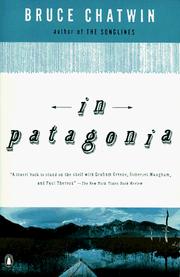
Start with In Patagonia. Ninety-seven numbered fragments, a piece of brontosaurus skin in a grandmother's cabinet, and a journey through southern Argentina and Chile assembled from anecdote, history, exile and rumour rather than itinerary. It is the book that reinvented travel writing in English in 1977, and almost every literary travel book since has borrowed its method. It is also short, which is the practical argument for beginning here.
Begin with a caveat, though, because it belongs at the front rather than buried in a footnote: Chatwin's factual reliability is genuinely disputed. Several people he described in Patagonia objected to how they were rendered, and the boundary between reporting and invention in his work is not where readers usually assume it is. He worked as a novelist would while publishing as a traveller. Whether that is a fatal flaw or the source of the books' power is an argument his readers have never resolved, and you should read him knowing it is live.
The second book, and the difficult one
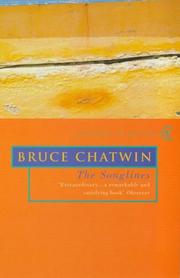
The Songlines is the famous one and the one to read second. Its subject is Aboriginal Australian song cycles that map the country, and its larger argument is that human beings are nomadic by nature and that settlement is the aberration.
Two honest warnings. First, the book breaks in half: about two-thirds through, the narrative stops and gives way to pages of quotations from Chatwin's notebooks on nomadism, gathered over years. Some readers find this the intellectual heart of the book; many find it a collapse of structure. Second, its treatment of Aboriginal belief has been criticised by anthropologists and by Aboriginal writers as a European framework imposed on something more complicated. Read it as Chatwin's thesis, not as ethnography.
The novels
On the Black Hill is the surprise: a quiet, tightly made novel about twin brothers farming on the Welsh border for eighty years, barely leaving the farm. From the great apostle of restlessness, a book about staying put — and many readers, including some who dislike the travel writing, think it is the best thing he wrote.
Utz is the last book and the most perfect. A Prague collector of Meissen porcelain under communism, roughly a hundred and fifty pages, not a wasted sentence. It was shortlisted for the Booker and it is the ideal short introduction if In Patagonia is not available to you.
The Viceroy of Ouidah is the hardest of the four and should be read last. A Brazilian slave trader in nineteenth-century Dahomey, written in dense, stylised, almost hallucinatory prose. It is the least accessible book and the one where his manner tips furthest toward mannerism.
The essays and the biography
What Am I Doing Here collects the journalism, profiles and travel pieces — Werner Herzog, Indira Gandhi, the Great Wall, a Chinese geomancer. It is uneven by nature and it is also a good sampler if you want to test the voice before committing to a book.
Nicholas Shakespeare's biography Bruce Chatwin is the essential companion and the honest one. It is where the questions about what actually happened get worked through carefully by someone sympathetic to the work, and it is a good book in its own right.
The art of travel by Alain de Botton is on this path as a related read rather than as Chatwin — a philosophical essay on why travel disappoints us, drawing on Flaubert, Ruskin and Baudelaire. It is a very different sensibility, and worth knowing that going in.
Where to stop
If you read two Chatwins, read In Patagonia and Utz. That gives you the traveller and the novelist, in about four hundred pages, at the top of his form in both modes. Everything else is for people who want more of a voice they have already decided they like — which is the correct way to read him, since the voice is the whole point.
More travel writing paths are on Discover.
Follow the full ordered path here: Bruce Chatwin Reading Order: Where to Start.