Bone Reading Order and Reading Guide
Bone is one story in nine collected volumes, and the reading order is simply one to nine — the single issues from the 1990s are long out of print and it is the collections that stay in print, in both the Scholastic colour editions and Cartoon Books' black-and-white originals. The thing worth knowing before you start is that the first volume is a broad cartoon comedy and the last is an epic fantasy war, and Smith makes that transition so gradually that you only notice afterwards. This path takes the nine volumes in order, then the prequel and the work Smith did after.
Start Here: The Valley
BeginnerMeet the three Bone cousins and let the comedy establish itself before the plot arrives.
▸ Study plan for this stage
Pace: A week to ten days for Out From Boneville, The Great Cow Race and Eyes of the Storm — about 460 pages, and quick pages, since Smith's storytelling is unusually clean and the dialogue is sparse. Most readers do a volume an evening. One expectation to set now: Bone is shelved with all-ages comics and
- Cartoon bodies in a real world: the Bone cousins are drawn in a rubbery 1940s newspaper-strip style and dropped into a valley drawn with weather, seasons and depth — the whole series runs on that mismatch
- The three cousins as three registers — Fone Bone earnest, Phoney greedy, Smiley oblivious — which lets Smith change tone by changing viewpoint
- Comic timing as craft. Smith's gag pacing across panels is closer to animation than to comics, and it is why the funny material still works on a reread when you know the plot
- The rat creatures' double function: pure slapstick in the first volume, genuinely menacing by the third, with no visible moment where Smith flips the switch
- Thorn and Gran'ma Ben as the real story arriving quietly — the villagers stop being scenery in The Great Cow Race and become the plot in Eyes of the Storm
- The dreams in Eyes of the Storm as the first supernatural machinery, and the point at which the valley acquires a history
- Moby-Dick as a running joke that is also a signal: Smith's comedy keeps pointing at a much longer, heavier book
- Why are the Bones run out of Boneville, and how long does the series make you wait to care about the answer?
- At what specific point do the rat creatures stop being funny? Try to name a page rather than a volume.
- What do you learn about Gran'ma Ben in Eyes of the Storm, and how does it change how you read her earlier scenes?
- How does Smith use the difference between how the Bones are drawn and how the humans are drawn?
- What is the dreaming for, and what has it told you by the end of the third volume?
- Read the first three volumes close together rather than over months. The tonal shift is gradual by design and only registers if the volumes are near each other.
- Pick one page of pure comedy in Out From Boneville and work out how Smith paces the joke across the panels — where the beat panel is, where the punchline sits. It is a short lesson in cartooning.
- Note every mention of Gran'ma Ben's past. There are fewer than you think, and they are all load-bearing.
- If you are reading with a child, read Eyes of the Storm yourself first. It is the volume where the series changes what it is, and knowing that in advance makes it easier to judge the rest.
Next up: The comedy has done its job of making you fond of these people, which is exactly the capital the middle volumes spend when the valley goes to war.
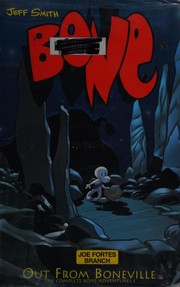
The three cousins are run out of town and separated in an unknown valley. Start here — it reads as pure funny-animal cartooning, which is exactly the expectation the later volumes exploit.
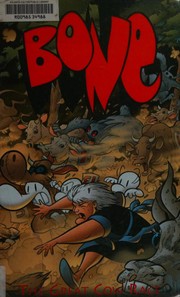
Still mostly comedy, but the villagers, Gran'ma Ben and Thorn become real characters rather than gags. The rat creatures start to look less funny by the end.

The turn. Dreams, a hooded antagonist and Gran'ma Ben's history change the register permanently. Read the first three together to feel the shift happen.
The Middle
BeginnerFollow the story as it becomes an actual fantasy epic with a war and a mythology behind it.
▸ Study plan for this stage
Pace: A week to ten days for The Dragonslayer, Bone 5, Rock Jaw, Master of the Eastern Border and Old Man's Cave — around 430 pages. Rock Jaw is the volume readers most often call the slowest, and it is; read it anyway and read it in one sitting, because it is short and almost everything in it pays off in
- The mythology arriving: The Dragonslayer spells out Thorn's inheritance and the Dragon's role, and the valley acquires a cosmology it did not have three volumes earlier
- Comedy becoming load-bearing — Phoney's schemes stop being self-contained gags and start causing plot, which is Smith's neatest structural trick
- Rock Jaw as a plant-heavy volume: the animal factions and the orphaned rat cub look like a detour and are not
- The moral question the rat cub poses, which is the series' most direct piece of ethics and is aimed squarely at a young reader
- War as a change of stakes rather than of tone. Smith keeps the jokes running through Old Man's Cave, which makes the losses land harder rather than softer
- The Hooded One and the Lord of the Locusts as an antagonist system rather than a villain, introduced in fragments across all three volumes
- The cousins separated and given command, which forces each of them to become something other than their comic type
- What is Thorn's inheritance, and how much of it was visible in the first three volumes once you know to look?
- What does the rat cub subplot ask the reader to decide, and does the series give you an easy answer?
- Why does Rock Jaw feel like a detour, and which of its introductions turn out to matter later?
- How does Smith keep the comedy running once the war starts, and why does that make the serious material work better rather than worse?
- At what point in Old Man's Cave do the stakes stop being reversible — what happens that cannot be undone?
- Write down, after The Dragonslayer, what you think the Dragon actually is. Revise it at the end of the path; the gap between the two answers is most of the series' plot.
- Read Rock Jaw in one sitting and list everything new it introduces. Check the list again after Crown of Horns.
- Track Phoney Bone specifically. He is the most consistent character in the series and the one whose comic vice most directly causes the plot.
- Note where the colour or the shading changes register in the Scholastic editions. The palette darkens across these volumes and it is doing work you can see if you look for it.
Next up: With the mythology stated, the war begun and the cousins scattered into command, the last three volumes can run as a single continuous climax rather than as three more instalments.

The valley's politics and the Dragon's role both come into focus, and Thorn's inheritance is spelled out. The comedy is now load-bearing rather than the point.

A detour up the mountain that introduces the animal factions and the orphaned rat cub. Often called the slowest volume; it plants things that pay off in volumes eight and nine.

The war starts in earnest and the cousins are drawn into command. The tonal midpoint of the series and the volume where the stakes stop being reversible.
The Ending
BeginnerRead the last three volumes as one continuous climax and see the comedy and the epic finally resolve into each other.
▸ Study plan for this stage
Pace: Read Ghost Circles, Treasure hunters and Crown of Horns as one unit — about 520 pages, ideally across two or three sittings within a week. Crown of Horns in particular should be read in one go; it is the payoff for fifty-five issues and it is paced as a single movement. This is also the darkest stre
- Ghost Circles as the tonal floor — the landscape is erased and the cast is reduced to survival, which is as far from Out From Boneville as the series travels
- Atheia and the last of the backstory: the history that has been arriving in dreams and fragments is finally stated outright in Treasure hunters
- Convergence — every thread from the previous eight volumes is pulled together, and the reason to have read in order is that Smith assumes all of it
- The comedy's final function: Smith brings the funny-animal register back at the climax, and whether that lands is the series' central artistic gamble
- Thorn's arc completing, and the question of what she has actually inherited and what it costs
- Phoney's ending as the most quietly considered thing in the series — the greedy cartoon character is given a real moral resolution
- The all-ages contract honoured: Smith takes the story somewhere genuinely dark and still brings it back, which is harder than either extreme
- What happens to the valley in Ghost Circles, and how does Smith make an erased landscape readable rather than confusing?
- What does Treasure hunters finally explain, and which earlier scenes does it retroactively change?
- Does the comic register still work in the climax of Crown of Horns, and is that a flaw or the whole point?
- How does Thorn's ending compare with what The Dragonslayer promised her?
- Having finished, was Bone always an epic pretending to be a comedy, or a comedy that became an epic? Both readings are defensible.
- Read Crown of Horns in one sitting. It is 218 pages and it is the volume the whole series is for.
- Immediately after finishing, reread the first ten pages of Out From Boneville. The distance travelled is the single most impressive thing about Bone and it takes five minutes to feel.
- Compare your answer about the Dragon from the last stage with what the ending gives you.
- Write two sentences on what you would tell a nine-year-old about this series before handing it over. Getting that right is a genuinely useful exercise, because the honest answer is not 'it is a funny comic about cartoon animals'.
Next up: The main story is finished and every backstory hint has been paid, which is the only state in which the prequel material can be read — it spoils in both directions and is worthless before this point.

The bleakest volume, with the valley itself unmade. Read straight on from Old Man's Cave — this is where the series pays for its light beginning.
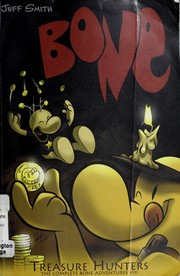
The city of Atheia, the last of the backstory, and every remaining thread pulled together. Essentially the first half of the finale.

The conclusion, and the volume that justifies the fifty-five issues before it. Read it in one sitting.
Around Bone
BeginnerFill in the prequels and see what Smith did with the same craft outside the valley.
▸ Study plan for this stage
Pace: A week or so, and much lighter going than the last stage. Rose is 146 pages and painted rather than cartooned; Stupid Stupid Rat-Tails (Bone Book) (Bone Book) is 104 pages of tall tales and can be read in an hour; RASL is a different proposition entirely — 136 pages in this volume and a genuinely ad
- Rose as a formal contrast: Smith writing and Charles Vess painting, which strips out the cartooning entirely and shows how much of Bone's effect came from the drawing style
- Gran'ma Ben and her sister as young women — the backstory you have been assembling from fragments, told straight
- Prequel risk, honestly stated: knowing the outcome removes suspense from Rose, and the book has to work on character instead
- Stupid Stupid Rat-Tails as a tonal palate cleanser, and as evidence that Smith's original register was always the tall tale
- Big Johnson Bone and the valley's founding as folklore rather than history, which is a different kind of world-building from the main series
- RASL as the argument that Smith's real skill was cartooning rather than whimsy — an adult noir about an art thief crossing parallel worlds, tonally unrelated to Bone
- Reading an artist rather than a series: the through-line from Out From Boneville to RASL is craft, not subject
- What does Rose gain from Vess's painting, and what does it lose without Smith's cartoon line?
- Knowing how Gran'ma Ben's story ends, what is Rose actually able to be about?
- How does Stupid Stupid Rat-Tails treat the valley's history differently from the way the main series treats it?
- What carries over from Bone to RASL, given that almost nothing of the tone does?
- Having read all of it, what would you now say Jeff Smith is good at?
- Put a Vess page from Rose beside a Smith page from Crown of Horns showing the same character. It is the clearest available demonstration of what drawing style does to a story.
- Read Stupid Stupid Rat-Tails last if you want to end the valley on a laugh, or before RASL if you want a clean break between the two halves of Smith's career. Either works; choose deliberately.
- In RASL, note how much of Bone's panel grammar survives into a completely different genre.
- Recommend Bone to someone, in writing, in three sentences that are honest about the darkening. That constraint is harder than it sounds and is the best test of whether you have understood the series.
Next up: This is the end of the path — the whole valley, its prequel and the work that came after — and the natural next move is a full reread of volumes one to nine, which is a different and better book the second time.
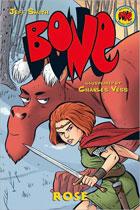
The prequel about Gran'ma Ben and her sister as young women, written by Smith and painted by Charles Vess. Read it after Crown of Horns — it is a spoiler in both directions if taken first.
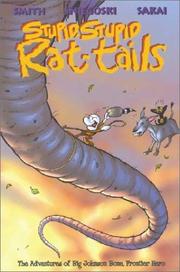
Tall tales of Big Johnson Bone, the valley's founding ancestor. Slight and entirely comic, which makes it a pleasant decompression after the ending.

Smith's next long work: an adult noir about an art thief travelling between parallel worlds. Nothing like Bone tonally, and the best evidence that the cartooning was always the skill rather than the whimsy.
Discussion
Keep reading
Paths that share books, cover the same subject, or open a related topic.