Best Books on Bluegrass Music, in Reading Order
This curriculum takes a bluegrass newcomer from the music's cultural and historical roots all the way through instrument-specific mastery and the modern scene. Each stage builds on the last: you first absorb the story and sound, then go deep on the founding figures, then study the instruments that define the genre, and finally encounter the living tradition as it evolves today.
Foundations: What Bluegrass Is and Where It Came From
BeginnerUnderstand bluegrass as a distinct American music — its Appalachian roots, its relationship to old-time and country music, and the basic vocabulary (breaks, drives, high lonesome sound) needed to read everything that follows.
▸ Study plan for this stage
Pace: 4–5 weeks, ~25–30 pages/day. Start with Rosenberg's "Bluegrass" (weeks 1–2, ~150 pages), then move to Goldsmith's "The Bluegrass Reader" (weeks 3–5, ~200 pages). Allocate 2–3 days per week for listening and exercises.
- Bluegrass as a post-WWII synthesis of Appalachian folk, old-time, and country music traditions, not a direct continuation of any single predecessor
- Bill Monroe's role as the genre's architect and the defining characteristics of his sound (mandolin-driven, high lonesome vocals, driving rhythm)
- The distinction between bluegrass and old-time music: instrumentation, tempo, vocal style, and commercial context
- Core instrumentation and roles: mandolin, banjo, guitar, bass, and fiddle—and how each instrument's 'break' functions in the bluegrass ensemble
- Key vocabulary: breaks, drives, high lonesome sound, and how these technical elements create bluegrass's distinctive aesthetic
- The geographic and cultural roots of bluegrass in Appalachia and its evolution through the 1940s–1950s
- Bluegrass as an American art form shaped by migration, radio, and the recording industry
- The relationship between bluegrass and country music: overlap, divergence, and commercial positioning
- What are the key musical and cultural differences between bluegrass and old-time music, and why did bluegrass emerge as a distinct genre?
- Who was Bill Monroe and what specific musical innovations did he introduce that defined bluegrass?
- What is the 'high lonesome sound' and how is it achieved vocally and instrumentally?
- Describe the role of each instrument in a bluegrass ensemble and explain what a 'break' is in bluegrass performance.
- How did Appalachian migration, radio, and the recording industry shape the development of bluegrass in the 1940s–1950s?
- What is the relationship between bluegrass, old-time music, and country music—how do they overlap and diverge?
- Listen to Bill Monroe's 'Blue Moon of Kentucky' and 'Mule Skinner Blues' (from Rosenberg's era); identify the mandolin, banjo, and vocal elements that define the bluegrass sound.
- Create a comparison chart: old-time vs. bluegrass vs. country music, noting instrumentation, tempo, vocal style, and historical context based on Rosenberg's framework.
- Listen to a bluegrass recording and identify when each instrument takes a 'break'; note the order and duration of breaks.
- Write a one-page summary of Bill Monroe's biography and innovations using Rosenberg's account; explain why he is considered the 'father of bluegrass.'
- Analyze a passage from Goldsmith's 'The Bluegrass Reader' that discusses Appalachian roots or migration; connect it to the musical characteristics described in Rosenberg.
- Listen to an old-time recording (e.g., from the 1920s–1930s) and a bluegrass recording from the 1950s side-by-side; write notes on the differences in energy, instrumentation, and vocal approach.
Next up: This foundation establishes bluegrass's identity and vocabulary, preparing you to explore specific artists, regional variations, and the genre's evolution beyond the 1950s in subsequent stages.
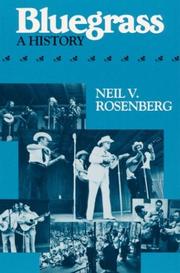
The definitive scholarly history of the genre, written accessibly enough for beginners. Read this first to get a reliable chronological map of the entire tradition before diving into any single artist or instrument.
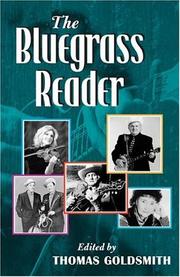
An anthology of key essays, interviews, and journalism spanning decades. Reading it second gives you multiple voices and perspectives that flesh out the single-narrative history you just absorbed.
The Inventor: Bill Monroe and the First Generation
BeginnerUnderstand Bill Monroe's singular role in creating bluegrass, the Blue Grass Boys who shaped the first generation, and the personal, musical, and business forces that drove the music's early decades.
▸ Study plan for this stage
Pace: 10–12 weeks total. Book 1 ("Can't You Hear Me Callin'") — 4 weeks, ~25 pages/day (this is the densest and most foundational read). Book 2 ("Bluegrass Odyssey") — 2 weeks, ~15 pages/day plus extended time with the photographs (treat each photo spread as a primary source). Book 3 ("In the Mountains of
- Bill Monroe as sole architect: how one musician's vision, stubbornness, and grief crystallized a genre — as traced through Smith's biography of Monroe's Kentucky upbringing, Uncle Pen's fiddle influence, and the 1945–1948 Blue Grass Boys lineup that defined the classic sound
- The 'high lonesome sound': Monroe's mandolin innovations, his tenor voice, and the deliberate tension between speed, modal tonality, and emotional rawness that distinguishes bluegrass from its old-time and country cousins
- The Blue Grass Boys as a proving ground: how alumni like Lester Flatt, Earl Scruggs, Don Reno, and Sonny Osborne carried Monroe's template outward and created the first generation of satellite acts
- Earl Scruggs's three-finger banjo style as a catalytic invention: understanding why Scruggs's arrival in 1945 is treated as bluegrass's 'big bang' and how Smith contextualizes it within Monroe's broader ensemble concept
- Personal and commercial forces shaping early bluegrass: Monroe's business acumen, his conflicts with Flatt & Scruggs, the role of the Grand Ole Opry, and the tension between artistic ownership and a music that spread beyond its creator
- Documentary photography as historical evidence: Fleischhauer's 'Bluegrass Odyssey' trains the eye to read performance context, audience demographics, festival culture, and regional identity directly from images of the 1970s–1980s scene
- Ralph Stanley as a first-generation peer and divergent path: Bartenstein's portrait shows how Stanley absorbed Monroe's influence through the Stanley Brothers yet developed a rawer, more Appalachian-rooted aesthetic — illustrating that 'first generation' was never monolithic
- Tradition vs. innovation as a recurring tension: all three books circle the question of what counts as 'authentic' bluegrass, establishing a framework the reader will need for every subsequent stage of the curriculum
- According to Smith's biography, what specific biographical experiences — family loss, regional isolation, the influence of Uncle Pen Vandiver — shaped Monroe's musical personality, and how are those experiences audible in the Blue Grass Boys' sound?
- Why do music historians treat the 1945–1948 Blue Grass Boys lineup as the definitive origin point of bluegrass, and what roles did Lester Flatt and Earl Scruggs each play in completing Monroe's vision?
- How does Fleischhauer's photographic record in 'Bluegrass Odyssey' reveal the social world of bluegrass — who attended festivals, how performers and audiences interacted, and what the visual culture of the scene looked like by the 1970s?
- In what ways does Ralph Stanley's career, as documented by Bartenstein, both confirm and complicate the idea of a unified 'first generation'? Where did Stanley's approach diverge from Monroe's template?
- How did personal and business conflicts — particularly Monroe's bitter falling-out with Flatt & Scruggs — affect the development and spread of bluegrass in its first two decades?
- Across all three books, how is the concept of 'authenticity' invoked, contested, or performed, and why does it matter for understanding how bluegrass defined itself against mainstream country and pop?
- **Primary-source listening log:** While reading Smith's biography, build a chronological playlist of Bill Monroe recordings that correspond to the chapters — starting with pre-war sides and moving through the classic 1945–1948 Decca sessions. After each reading session, listen to 2–3 tracks and write 3–5 sentences connecting what you heard to Smith's narrative (e.g., note where you can hear the 'h
- **Photo analysis journal:** For each double-page spread in Fleischhauer's 'Bluegrass Odyssey,' write a brief caption of your own before reading any supplied text. Note: Who is in the frame? What instruments? What is the setting and apparent audience? Compare your reading to Fleischhauer's context. This trains close visual observation as a historical skill.
- **Blue Grass Boys alumni map:** Using Smith's biography as your source, create a hand-drawn or digital diagram showing every major Blue Grass Boys alumnus mentioned, the years they served, and the acts they went on to lead. Draw arrows to show musical lineage. This makes the 'proving ground' concept concrete and visual.
- **Comparative listening: Monroe vs. Stanley Brothers:** Choose one traditional song recorded by both Bill Monroe and the Stanley Brothers (e.g., 'White House Blues' or a shared gospel number). Listen back-to-back and write a one-page comparison addressing tempo, vocal tone, banjo style, and emotional feel. Use Bartenstein's descriptions of Stanley's aesthetic as your analytical vocabulary.
- **Annotated timeline:** Build a single master timeline across all three books, marking key events: Monroe's birth and early influences, Opry debut, Scruggs's arrival and departure, the Flatt & Scruggs split, the first bluegrass festivals, and Ralph Stanley's career milestones. Color-code by book/source. This reveals how the three authors' narratives overlap and where they leave gaps.
- **Reflection essay (500–700 words):** After finishing all three books, write a response to this prompt: 'Bill Monroe called himself the Father of Bluegrass, but the music quickly became bigger than any one person. Using evidence from Smith, Fleischhauer, and Bartenstein, explain how bluegrass both depended on and escaped Monroe's control.' This synthesizes the stage's core tension before moving fo
Next up: By establishing Monroe's template and the first generation's divergences — especially through Ralph Stanley's traditionalist path — this stage equips the reader to recognize what the next generation of artists were consciously inheriting, rebelling against, or reinventing as bluegrass expanded beyond its Appalachian and Opry origins.
The most thorough and well-researched biography of Monroe — start here to understand the man, his Kentucky upbringing, and the specific musical decisions that invented the bluegrass sound.
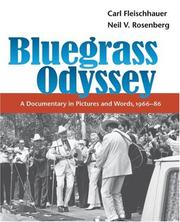
A photographic and narrative documentary of the first-generation bluegrass world, placing Monroe's invention in the living community around it. Best read right after the Monroe biography while those names and faces are fresh.
The Instruments: Banjo and Fiddle Styles
IntermediateDevelop a detailed understanding of the two most distinctive bluegrass instruments — the three-finger banjo and the bluegrass fiddle — including their key innovators, techniques, and regional variations.
▸ Study plan for this stage
Pace: 6–7 weeks, ~25–30 pages/day (approximately 3 weeks for Scruggs, 3–4 weeks for Phillips)
- The three-finger picking technique (Scruggs picking): thumb, index, and middle finger mechanics and how it revolutionized banjo playing
- Earl Scruggs' innovations and his role in establishing the modern bluegrass banjo sound
- Fundamental fiddle techniques in bluegrass: bowing patterns, double stops, and shuffle rhythms
- Regional fiddle styles and their historical development (Appalachian, Texas, and other regional variations covered by Phillips)
- How banjo and fiddle interact rhythmically and melodically in bluegrass ensembles
- The relationship between traditional string band music and modern bluegrass instrumental styles
- Tuning systems and their impact on both banjo and fiddle tone and playability
- Key innovators and their influence on establishing bluegrass instrumental conventions
- What are the three fingers used in Scruggs picking, and how does their coordination create the distinctive bluegrass banjo sound?
- How did Earl Scruggs' approach differ from earlier banjo styles, and why was it revolutionary for bluegrass music?
- What are the primary bowing techniques used in bluegrass fiddle, and how do they differ from classical or other folk fiddle styles?
- Identify at least three regional fiddle styles discussed by Phillips and describe their key characteristics
- How do banjo and fiddle complement each other rhythmically and melodically in a bluegrass band context?
- What role do tuning and tone production play in achieving authentic bluegrass sound on both instruments?
- Transcribe and analyze 3–4 banjo breaks from recordings by Earl Scruggs, identifying the three-finger picking patterns and noting variations in finger rolls
- Practice the basic Scruggs picking patterns (forward roll, backward roll, mixed rolls) on a banjo or through tablature study, focusing on finger independence and timing
- Listen to and document 5 different fiddle recordings from Phillips' book or recommended artists, noting bowing direction, double stops, and shuffle timing in each
- Transcribe one complete fiddle tune from a regional style discussed in Phillips (e.g., Texas shuffle vs. Appalachian style), comparing techniques used
- Create a side-by-side comparison chart of how banjo and fiddle handle the same tune, noting rhythmic roles, melodic variations, and ensemble interaction
- Record yourself or find recordings of a banjo-fiddle duet and annotate where each instrument takes the lead, how they support each other, and how tuning affects the blend
Next up: This stage provides the instrumental foundation and technical vocabulary needed to understand how banjo and fiddle styles shaped specific bluegrass songs and arrangements, preparing you to explore the repertoire, song structures, and ensemble dynamics in the next stage.
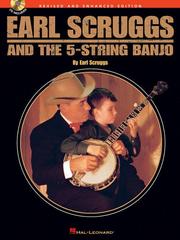
Scruggs's own instructional and autobiographical text is the canonical source on three-finger picking style. Even non-players should read it: the musical explanations illuminate why the banjo sounds the way it does in bluegrass.
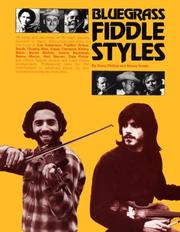
A systematic survey of the major regional fiddle styles — Kentucky, Georgia, Texas, and beyond — that feed into bluegrass. Reading it after Scruggs lets you compare how the two lead instruments approach melody and improvisation differently.
Modern Bluegrass: The Tradition Evolves
ExpertUnderstand how bluegrass has expanded since the 1970s — through newgrass, progressive experimentation, and the contemporary acoustic movement — while still being anchored in its founding values.
▸ Study plan for this stage
Pace: 4–5 weeks, ~40–50 pages/day (approximately 250–300 pages total)
- The role of women in bluegrass history and the barriers they faced in a male-dominated tradition
- How Murphy Henry's career trajectory reflects broader shifts in bluegrass acceptance and professionalization since the 1970s
- The relationship between technical mastery (particularly banjo playing) and artistic innovation in modern bluegrass
- How personal narrative and memoir illuminate the evolution of bluegrass values and community norms
- The intersection of tradition and experimentation: how Henry balanced honoring bluegrass roots while pushing stylistic boundaries
- The role of mentorship, collaboration, and networking in shaping a modern bluegrass career
- How gender, identity, and authenticity are negotiated within bluegrass culture
- What specific barriers did Murphy Henry face as a woman entering bluegrass music in the 1970s, and how did these obstacles shape her approach to the tradition?
- How does Henry's banjo playing style reflect the evolution of bluegrass technique during the modern era, and what innovations did she introduce?
- What role did mentorship and key relationships (with other musicians, producers, or industry figures) play in Henry's career development and artistic growth?
- How does 'Pretty Good for a Girl' illustrate the tension between preserving bluegrass tradition and embracing contemporary musical experimentation?
- What does Henry's memoir reveal about how bluegrass values—authenticity, musicianship, community—have been redefined or reaffirmed in modern times?
- How has the professionalization and commercialization of bluegrass since the 1970s affected both the music itself and the experiences of artists like Murphy Henry?
- Create a timeline of Murphy Henry's career milestones from the book, noting which events coincide with broader shifts in bluegrass (e.g., newgrass movements, festival growth, recording technology changes)
- Listen to recordings of Murphy Henry's banjo playing from different decades (if available) and document how her style evolved; compare her approach to Earl Scruggs and other foundational banjo players
- Write a 2–3 page reflection on one moment in the memoir where Henry had to choose between tradition and innovation—analyze what values guided her decision
- Interview a local bluegrass musician (or find an online interview) about how gender, mentorship, and artistic authenticity factor into their own practice; compare their experience to Henry's
- Create a 'character map' of key figures in Henry's life from the book (mentors, collaborators, rivals, supporters) and annotate how each relationship influenced her musical or professional development
- Research and present on one specific bluegrass subgenre or movement mentioned in the book (e.g., newgrass, progressive bluegrass) and explain how Henry's work either exemplifies or challenges it
Next up: This stage anchors you in the lived experience of a pioneering modern bluegrass artist, providing concrete examples of how tradition and innovation coexist; the next stage will expand outward to examine broader movements, genres, and cultural forces that have shaped bluegrass since the 1970s.

An essential corrective history covering women's overlooked contributions across all eras. Reading it last gives you a more complete and honest picture of the full tradition you've just studied.
Discussion
Keep reading
Paths that share books, cover the same subject, or open a related topic.